How to Keep Your Cat Off the Kitchen Counter (Humanely)
This article may contain affiliate links. If you make a purchase through these links, we may earn a small commission at no extra cost to you. Learn more
Quick Answer
How to Keep Your Cat Off the Kitchen Counter (Humanely)
The most effective humane approach combines two things: make the counter unappealing (double-sided tape, aluminum foil, or a motion-activated deterrent) and provide an attractive alternative nearby (a tall cat tree or shelf near the kitchen window). Cats jump on counters for height, food access, and curiosity — when you satisfy those needs elsewhere, the counter loses its appeal.
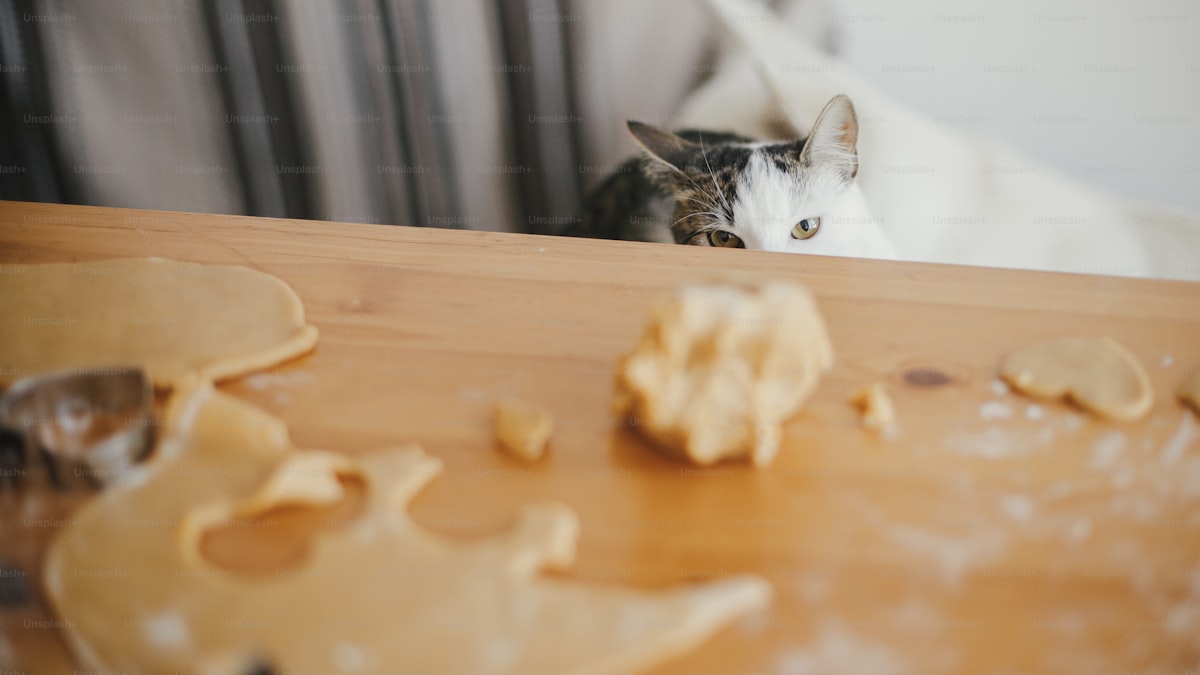
How to Keep Your Cat Off the Kitchen Counter (Humanely)
You walk into the kitchen and there she is — sitting on the counter like she owns the place, casually licking the butter dish. You shoo her down. She jumps right back up five minutes later. You shoo her again. Repeat until the end of time.
If this is your life, you're not alone. Counter surfing is one of the most common cat behavior complaints, and one of the hardest to fix because cats are naturally drawn to high places and food prep areas.
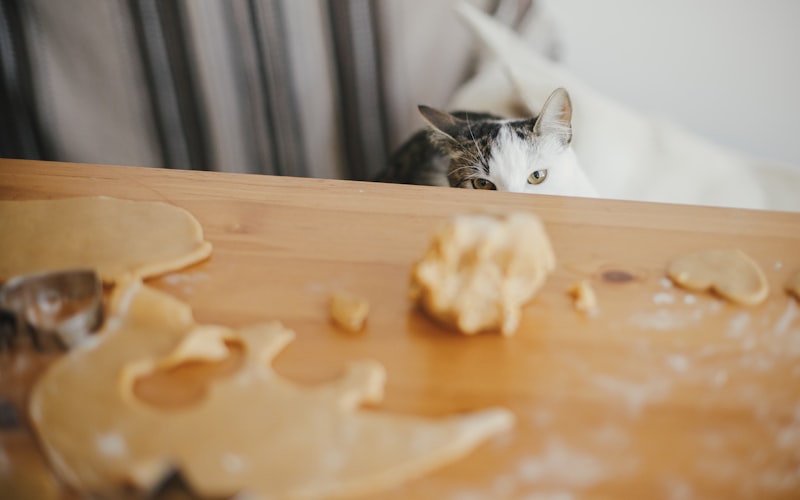
The good news: you can absolutely train your cat to stay off the counters without yelling, spraying water, or anything that damages your relationship with your pet. It just requires understanding why cats love counters and providing better alternatives.
Why Cats Love Counters
Before you can solve the problem, you need to understand the motivation. Cats don't jump on counters to annoy you — they're following deep instincts.
Height Advantage
In the wild, cats climb to high vantage points to survey their territory and spot both prey and predators. Your kitchen counter is the highest accessible surface in many homes. To your cat, it's a watchtower. This instinct is hardwired and can't be trained out — it can only be redirected.
Food Access
Counters are where food lives. Even if you're careful about leaving food out, counters retain the scent of food prep. Your cat's sense of smell is 14 times stronger than yours. To her, the counter smells like a buffet even when it looks clean.
Warmth
Counters near the stove or dishwasher are warm. Cats seek warmth instinctively, and a kitchen counter that retains heat from cooking or dishwashing is an irresistible heated bed.
Running Water
If your cat likes to drink from the faucet (many do), the kitchen sink is a destination, and the counter is the path to get there. Cats often prefer running water over standing water because their instincts tell them moving water is fresher.
Attention
Some cats learn that jumping on the counter gets an immediate reaction from their owner. Even negative attention (being picked up and set on the floor) is attention. Smart cats train their humans this way without anyone realizing it.
Method 1: Make the Counter Unappealing
The most effective first step is making the counter surface itself unpleasant to walk on. You're not punishing the cat — you're making the counter an unattractive option.
Double-Sided Tape
Place strips of double-sided tape (or products like "Sticky Paws" made specifically for this) along the counter edges where your cat usually jumps up. Cats hate the feeling of sticky surfaces on their paws. After landing on tape a few times, most cats will stop jumping up even after the tape is removed.
Leave the tape up for 2-3 weeks to establish the habit, then gradually remove it.
Aluminum Foil
Cover the counter with sheets of aluminum foil. The crinkly texture, unexpected sound, and reflective surface are unpleasant to most cats. This is a quick-and-dirty deterrent that works well as a short-term training aid.
Cookie Sheets on the Edge
Balance lightweight cookie sheets or baking pans halfway off the counter edge. When the cat jumps up and lands on the pan, it tips and clatters to the floor. The startling noise (not pain — the pan is light) teaches the cat that the counter is an unpredictable surface. Most cats only need one or two cookie sheet encounters to lose interest.
Commercial Deterrent Mats
Products like the "ScatMat" deliver a mild static sensation (similar to shuffling on carpet in socks) when the cat steps on them. These are vet-approved and safe but should only be used as a temporary training tool, not a permanent fixture.
Method 2: Provide a Better Alternative
Deterrents alone only solve half the problem. If you don't give your cat a legitimate high perch near the kitchen, she'll keep trying to find one — and the counter is right there.
A Tall Cat Tree Near the Kitchen
Place a cat tree or cat tower in or near the kitchen that's at least as tall as the counter. Ideally, put it near a window so the cat gets the height advantage she craves plus the entertainment of watching birds and outdoor activity.
When your cat uses the cat tree instead of the counter, reward her with treats or praise. Positive reinforcement of the behavior you want is far more effective than punishment of the behavior you don't want.
Wall-Mounted Cat Shelves
If floor space is limited, cat shelves mounted on the wall near the kitchen give your cat a dedicated high perch without taking up any room. These look like floating shelves and can even be an attractive design element.
A Kitchen Window Perch
A suction-cup window perch or a shelf mounted at the kitchen window gives the cat a dedicated kitchen hangout that isn't the counter. Many cats prefer a window perch to a counter because the window offers more stimulation.
Method 3: Remove the Rewards
If the counter never has anything rewarding on it, the motivation to jump up decreases dramatically.
Never Leave Food Out
This is the hardest habit to build but the most impactful. Always put food away immediately after prep. Wipe counters after cooking to remove food residue and scents. Use covered containers for anything that stays on the counter (fruit bowls, bread boxes).
Clean Counters Thoroughly
A daily wipe with a pet-safe cleaner removes the food scents that draw your cat up. A vinegar and water solution works well and is safe for both food prep surfaces and cats.
Address the Water Issue
If your cat is jumping up to drink from the faucet, provide a pet water fountain on the floor. Cat water fountains ($15-30) circulate water continuously, satisfying the instinct for moving water without requiring counter access. Many cats dramatically reduce counter jumping once they have a fountain.
Method 4: Motion-Activated Deterrents
For persistent counter surfers, motion-activated devices work when you're not home to enforce the rules.
Compressed Air Deterrents
Products like the "SSSCat" motion-activated spray detect movement and release a short burst of compressed air (harmless, odorless, and startle-only). Place it on the counter and it teaches the cat that the counter "bites back" even when you're not there.
This is particularly effective because it creates a consistent consequence regardless of whether the owner is present. Cats are smart — many learn that counter rules only apply when humans are watching. A motion-activated deterrent applies the rule 24/7.
Motion-Activated Sound Devices
Some devices emit an ultrasonic sound when they detect motion. Cats find the sound unpleasant (humans can't hear it). These are less startling than air sprays but still effective for many cats.
Method 5: Environmental Management
Sometimes the simplest solution is making it physically harder to reach the counter.
Remove Launch Pads
Look at what your cat uses to jump onto the counter. Chairs pushed up to the counter, kitchen stools, side tables, or even the top of a garbage can can serve as stepping stones. Move these away from the counter to eliminate the easy path up.
Close the Kitchen When Unsupervised
If your kitchen has a door or you can install a baby gate, keeping the cat out of the kitchen when you're not there prevents counter surfing from becoming a reinforced habit. Over time, as the cat develops new habits, you can reopen access.
What NOT to Do
Don't Spray With Water
The spray bottle method is outdated and counterproductive. It doesn't teach the cat that the counter is off-limits — it teaches the cat that you're unpredictable and scary. This damages the trust bond between you and your pet and often increases anxiety-based behaviors.
Cats sprayed with water simply learn to avoid the counter when you're present and jump up the moment you leave the room.
Don't Yell or Punish
Same problem as the water bottle. Your cat doesn't understand that she's being punished for being on the counter — she thinks she's being punished for being near you. Punishment-based approaches consistently fail in long-term studies on cat behavior.
Don't Push or Throw the Cat Off
Beyond being unkind, this can injure your cat if she lands awkwardly and erodes her trust in you. Always gently lift and place her on the floor if you need to remove her.
A Training Timeline
Counter training doesn't happen overnight, but most cats show significant improvement within 2-4 weeks.
Week 1: Set up deterrents (tape, foil, or motion-activated device) and place the alternative perch. Start keeping counters completely clear of food and wiping them daily.
Week 2: The cat begins avoiding the counter more frequently. Reward all floor-level and cat-tree behavior with treats.
Week 3: Reduce deterrents gradually. Start removing tape from some sections. The cat should be choosing the alternative perch naturally.
Week 4: Most deterrents removed. The new habit should be mostly established. Continue rewarding good behavior and keeping counters clean and food-free.
If you're also working on other pet-proofing projects, the counter training fits naturally into a broader effort to create a safe, comfortable home for both your cat and your family.
Frequently Asked Questions
My cat only gets on the counter at night. How do I stop that?
A motion-activated deterrent is the best solution for nighttime counter surfing since you're not there to redirect. Set it up on the counter before bed. Also check that the cat has food, water, and entertainment available at night — boredom drives many nighttime counter expeditions.
Will my cat hate me for using deterrents?
No. The best deterrents (tape, foil, motion-activated sprays) are "environment punishes the behavior" methods — meaning the cat associates the unpleasant experience with the counter surface, not with you. This preserves your relationship while changing the behavior.
I have multiple cats. Will these methods work on all of them?
Usually yes, though you may need different approaches for different cats. One might be deterred by foil while another needs the motion-activated spray. Use multiple strategies simultaneously and observe which cat responds to which method.
Is it really a hygiene issue to let cats on counters?
Yes. Cat paws track litter box bacteria (including potential toxoplasmosis) onto food prep surfaces. Even if your cat is indoor-only and healthy, the litter box connection makes counter hygiene a legitimate food safety concern.
My cat is elderly and has always been on the counter. Is it too late to train her?
It's never too late, though older cats with established habits take longer to change — expect 4-6 weeks instead of 2-4. Be patient, consistent, and focus heavily on providing comfortable alternatives. An elderly cat especially appreciates a heated window perch as a counter substitute.
Patience Wins
Counter training requires consistency more than anything else. The combination of making the counter unappealing and providing a better alternative works on virtually every cat — it just takes time. Stick with the plan for at least a full month before judging results, and remember that every day your cat chooses the cat tree over the counter is a small victory worth celebrating (with treats, of course).
Get weekly home tips that actually work
Join thousands of homeowners getting practical cleaning hacks, DIY fixes, and money-saving tips every week. Free, and you can unsubscribe anytime.

Written by
Beth SullivanFounder & Editor-in-Chief
Beth Sullivan is the founder of Practical Home Guides. With over a decade of hands-on experience tackling every home challenge imaginable, she started this site to share the practical, no-nonsense solutions she wishes she had found years ago. When she's not testing cleaning hacks or organizing pantries, you'll find her in the garden or working on her next DIY project.
Recommended Products
Looking for specific product recommendations? Check out our tested picks.

5 Best Dog Grooming Kits for Home Use (2026)
Save hundreds on groomer visits by doing it yourself. We compared the top dog grooming kits — here are the 5 best for different coat types and budgets.

Best Pet Hair Removers That Actually Work (2026)
We tested the most popular pet hair removers for furniture, clothes, and cars. Here are the 7 best picks that actually get the job done — from lint rollers to rubber brooms.
Related Articles
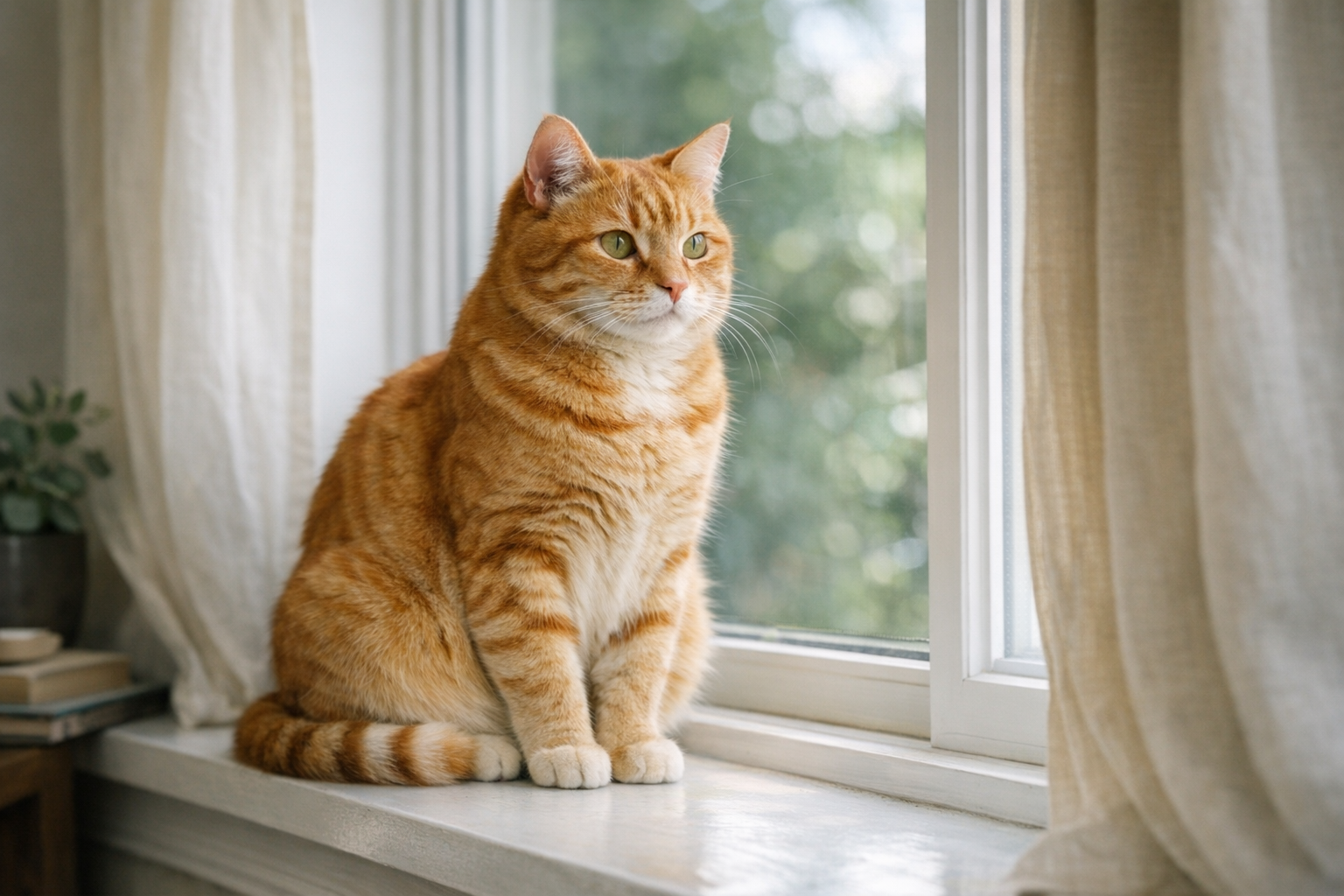
How to Stop a Cat From Spraying (And Why They Start)
Cats spray for specific reasons — and identifying the cause is half the battle. Here's the vet-tech approach to stopping spraying without rehoming the cat.

Dog-Safe Spring Yard Checklist (Lawn Chemicals, Plants, and More)
Spring yard prep can poison your dog faster than you'd expect. Here's the checklist of toxic plants, lawn treatments, and seasonal hazards to remove before letting your dog roam.
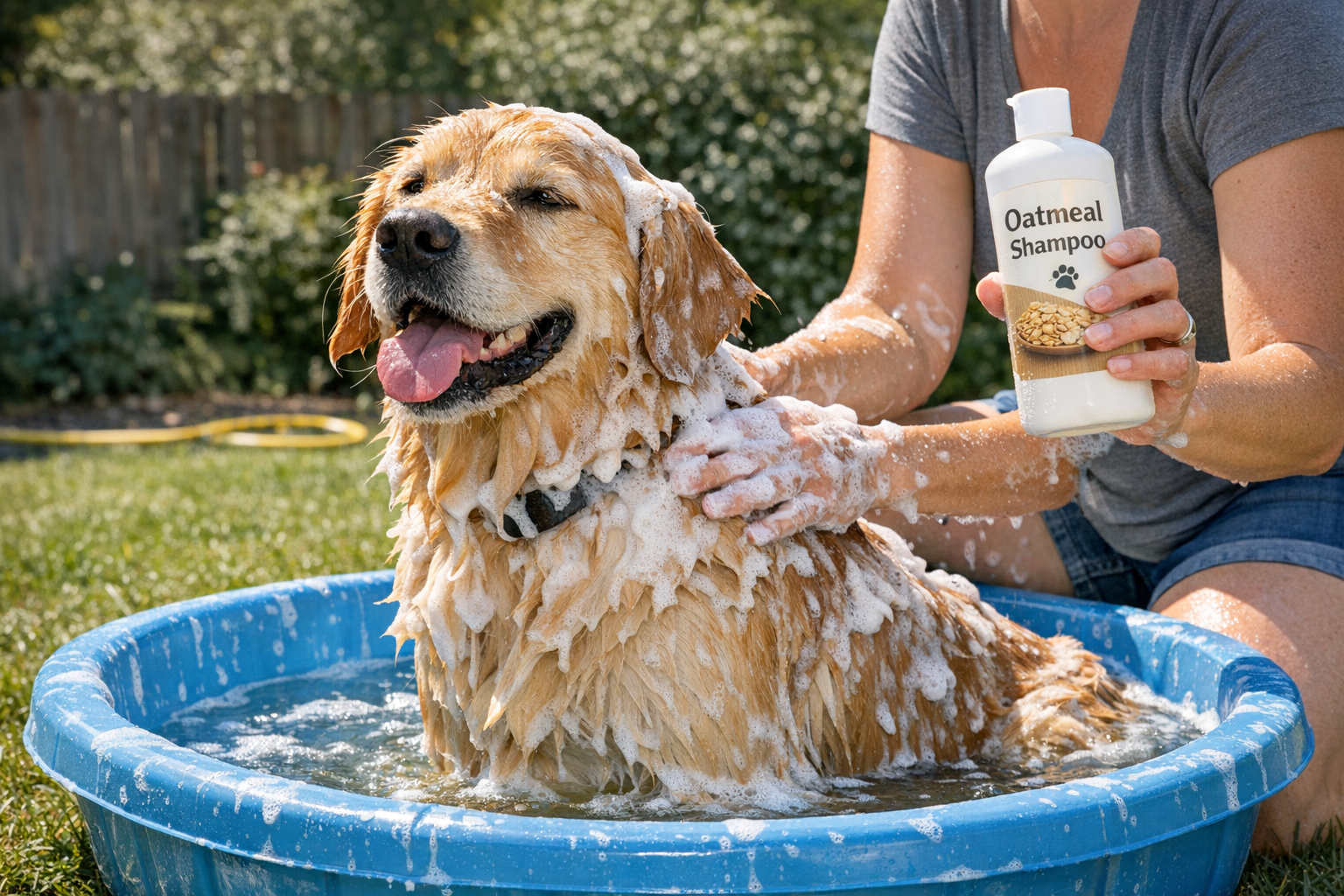
How to Soothe Your Dog's Itchy Spring Skin Naturally
Spring allergies hit dogs hard. These vet-tech-approved natural remedies soothe itchy skin without immediately reaching for prescription meds.

How to Introduce a New Baby to Your Family Pet Safely
A vet tech's step-by-step plan for preparing your dog or cat for a new baby. Start weeks before the due date — not the day you come home from the hospital.