How to Train Your Puppy the 5 Essential Commands
This article may contain affiliate links. If you make a purchase through these links, we may earn a small commission at no extra cost to you. Learn more
Quick Answer
How to Train Your Puppy the 5 Essential Commands
Start with 'sit' — hold a treat above your puppy's nose and slowly move it back over their head. Their bottom will naturally drop. The moment it does, say 'sit,' give the treat, and praise enthusiastically. Keep training sessions to 5 minutes max, 2-3 times per day. Puppies learn fastest with immediate positive reinforcement — treat within 1-2 seconds of the correct behavior. Master one command before moving to the next. Most puppies can learn all five basic commands (sit, stay, come, down, leave it) within 2-4 weeks of consistent daily practice.
How to Train Your Puppy the 5 Essential Commands
Bringing home a new puppy is pure joy -- those wiggly greetings, the soft ears, the clumsy paws. But between the cuddles and the chaos, there's one thing that sets the foundation for your entire relationship with your dog: early training. Puppies who learn basic commands in their first few months grow into confident, well-mannered dogs who are a pleasure to live with. And you don't need a professional trainer to get there.
The five essential commands -- sit, stay, come, down, and leave it -- cover almost every situation you'll face as a dog owner. "Sit" gives you a default behavior when your puppy gets overexcited. "Stay" keeps them safe at open doors and intersections. "Come" could save their life if they ever slip off-leash. "Down" settles them in restaurants, vet offices, and living rooms. And "leave it" stops them from eating things they shouldn't -- which, if you've met a puppy, is basically everything.
The best part? Training isn't just about obedience. Short, positive training sessions strengthen the bond between you and your puppy, tire them out mentally (a tired puppy is a well-behaved puppy), and build the communication skills you'll rely on for the next decade-plus. If you've recently introduced a new pet to your home, starting training right away also helps your puppy understand the household rules and settle in faster.
Before You Start: Training Rules That Make Everything Easier
Before diving into individual commands, a few principles will make your training dramatically more effective.
Keep sessions short. Puppies have the attention span of a goldfish -- sometimes less. Aim for 3-5 minute training sessions, repeated 2-3 times throughout the day. Three short sessions are worth far more than one long, frustrating one.
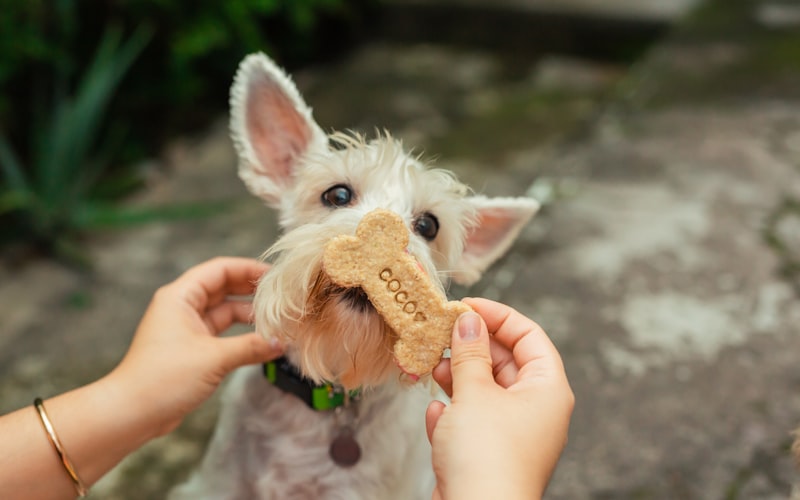
Use high-value treats. Regular kibble won't cut it when you're competing with everything else in a puppy's world. Use small, soft, smelly treats -- think tiny pieces of cooked chicken, cheese, or commercial training treats. The treats should be pea-sized so your puppy can eat them quickly and get back to learning. If you enjoy making your own, our guide to making homemade dog treats has recipes that are perfect for training sessions.
Reward within 1-2 seconds. Timing is everything. Your puppy connects the treat to whatever they were doing the instant they receive it. Wait too long and they'll think they're being rewarded for something else entirely.
End on a win. Always finish a training session with a successful repetition, even if it means going back to an easier command. You want your puppy to associate training with success and fun, not frustration.
One command at a time. Master one command before introducing the next. Trying to teach everything at once confuses your puppy and slows down progress on all fronts.
Say the command once. Repeating "sit, sit, sit, SIT" teaches your puppy to ignore the word until you raise your voice. Say it once, wait, and help them into position if needed.
How Do You Teach a Puppy to Sit?
Sit is the easiest command to teach and the most useful in daily life. It's the perfect starting point because puppies naturally sit all the time -- you're just putting a word to the action.
Step-by-Step
- Get a treat ready. Hold it between your thumb and fingers so your puppy can smell it but not grab it.
- Hold the treat just above your puppy's nose. Close enough that they can sniff it, but not so high that they jump for it.
- Slowly move the treat back over their head toward their tail. As their nose follows the treat up and back, their bottom will naturally drop to the ground.
- The instant their bottom touches the floor, say "sit" in a clear, upbeat voice.
- Give the treat immediately and praise enthusiastically -- "good sit!" with happy energy.
- Release them by tossing a treat a few feet away or saying "okay" so they get up and reset.
- Repeat 5-8 times, then take a break.
Troubleshooting
- Puppy jumps for the treat instead of sitting: You're holding it too high. Keep the treat closer to their nose and move it back more slowly.
- Puppy backs up instead of sitting: Practice against a wall so they can't retreat.
- Puppy doesn't seem interested: Use a higher-value treat or try before mealtime when they're hungrier.
When to Add the Word
Some trainers recommend adding the verbal cue only after your puppy is reliably following the hand motion into a sit. This "lure first, name later" approach can be faster because your puppy isn't trying to figure out a hand signal and a word at the same time. Once they sit smoothly from the lure, start saying "sit" just before you move your hand, and they'll quickly connect the word to the action.
Most puppies reliably respond to "sit" within 3-5 days of consistent practice.
Puppy Training Treat Pouch with Clicker
Clip-on belt pouch with magnetic closure for quick treat access during training. Includes a built-in clicker, waste bag dispenser, and adjustable waist belt. Makes training sessions smooth and hands-free.
Check Price on Amazon →How Do You Teach a Puppy to Stay?
Stay builds on sit. It teaches your puppy to hold a position until you release them -- a skill that's invaluable at front doors, before crossing streets, and when guests arrive. This command requires patience because you're asking a naturally energetic puppy to do nothing, which is genuinely hard for them.
Step-by-Step
- Ask your puppy to sit (they should already know this reliably).
- Hold your palm out in front of you like a stop sign and say "stay" in a calm, steady voice.
- Wait one second, then reward with a treat while they're still sitting. Don't make them come to you for the treat -- bring it to them.
- Use a release word like "okay" or "free" to let them know the stay is over.
- Gradually increase the duration. Start at 1 second, then 2, then 5, then 10, then 30 seconds. Don't rush.
- Once duration is solid, add distance. Take one step back, then return and reward. Then two steps. Then three. Always return to your puppy to reward -- don't call them to you, because that teaches them to break the stay.
- Add distractions last. Once your puppy can stay for 30 seconds with you several feet away, start adding mild distractions -- drop a toy, have someone walk past, practice near an open door.
The Three D's of Stay
Professional trainers talk about building stay with three variables, and you should only increase one at a time:
- Duration -- how long they hold the position
- Distance -- how far you move away
- Distraction -- what's happening around them
If you increase distance, decrease duration. If you add a distraction, decrease both distance and duration. Pushing all three at once is a recipe for failure.
Troubleshooting
- Puppy breaks the stay immediately: You're moving too fast. Go back to 1-second stays and build up more slowly.
- Puppy creeps forward: You may be leaning toward them or holding the treat in a way that draws them forward. Stand up straight and keep the treat hidden until you're ready to reward.
- Puppy breaks the stay when you step back: Try shuffling your feet in place before actually stepping away. Sometimes the visual of you moving triggers them to follow.
Most puppies can hold a 30-second stay at moderate distance within 2 weeks of daily practice.
How Do You Teach a Puppy to Come When Called?
Recall -- coming when called -- is the single most important command your puppy will ever learn. It can prevent them from running into traffic, chasing wildlife, or getting into dangerous situations. Treat this command like gold: never poison it by using "come" to call your puppy for something they don't like (baths, nail trims, crate time). Instead, go get them for those activities. Every single time your puppy comes to you, it should be the best thing that happens to them.
Step-by-Step
- Start indoors in a boring room with no distractions.
- Get your puppy's attention by making a kissing sound or saying their name.
- Say "come" in an excited, happy voice.
- Back away from your puppy as you say it -- movement triggers their chase instinct and makes them want to follow you.
- When they reach you, reward like it's their birthday. Multiple treats, praise, petting -- make it a party. This is the one command where you should over-reward every single time.
- Release them to go play again. This teaches them that "come" doesn't mean the fun is over.
- Practice on a long training lead outdoors before ever trying off-leash recall. A 15-foot training lead lets your puppy feel free while giving you a safety net.
The Recall Rules
- Never call your puppy to punish them. Even if they just chewed your favorite shoes. If you call them and then scold them, they'll learn that "come" leads to bad things.
- Never chase your puppy. If they don't come and you chase them, it becomes a game. Instead, run away from them -- they'll chase you.
- Practice randomly throughout the day. Call your puppy when they're in another room, when they're sniffing in the yard, when they're playing. Reward generously every time.
- Use a consistent word. Pick "come" or "here" and stick with it. Don't alternate between words.
Building Reliability
Start with easy recalls -- calling your puppy when they're already walking toward you or when they're a few feet away in a quiet room. Gradually increase the challenge: more distance, more distractions, new environments. If you're also working on stopping your dog from pulling on the leash, a strong recall gives you a backup tool for managing your dog on walks when distractions appear.
Most puppies respond reliably to recall in low-distraction environments within 1-2 weeks. High-distraction recall (parks, around other dogs) takes 2-3 months of consistent practice.
How Do You Teach a Puppy to Lie Down?
"Down" is a calming position that's useful in dozens of real-life situations -- waiting at a cafe, settling during dinner, relaxing at the vet's office. It's slightly harder to teach than sit because lying down is a more vulnerable position for dogs, so some puppies resist it at first.
Step-by-Step
- Start with your puppy in a sit.
- Hold a treat to their nose, then slowly lower it straight down to the ground between their front paws.
- Once the treat is on the ground, slowly drag it forward away from them along the floor. Their body should follow the treat into a down position -- front legs stretching forward, body lowering.
- The instant their belly touches the floor, say "down" and give the treat.
- Release with your release word and repeat.
Alternative Method: Capture the Down
If luring doesn't work, try "capturing" -- simply wait for your puppy to lie down on their own (they all do eventually), and the instant they do, say "down," toss a treat, and praise. After several repetitions, they'll start lying down deliberately to earn the reward.
Troubleshooting
- Puppy pops back up to standing instead of going down: You're moving the treat forward too quickly. Keep it closer to their body and lower it more slowly.
- Puppy's rear end stays up (play bow position): Try luring under a low object like a coffee table or your bent leg. They'll need to flatten out to follow the treat underneath.
- Puppy just stares at the treat without moving: Be patient. Sometimes it takes 30 seconds of holding the lure before they try something. The moment their body shifts downward at all, reward. Build from there.
Once your puppy knows "down," you can start building a "down-stay" using the same three D's approach from the stay section. A solid down-stay is one of the most practical skills any dog can have -- it turns a rowdy puppy into a dog you can take anywhere.
How Do You Teach a Puppy "Leave It"?
"Leave it" tells your puppy to ignore something -- food on the ground, another dog's toy, a dead squirrel on the sidewalk, your running shoes. It's a safety command as much as a manners one, because puppies will try to eat everything from chocolate to chicken bones to socks. If you've already pet-proofed your home, you know how many hazards exist at puppy level -- "leave it" is your verbal backup for everything you can't physically remove.
Step-by-Step
- Hold a treat in each hand. Close your fist around the treat in one hand.
- Present your closed fist to your puppy and let them sniff, lick, and paw at it. Say nothing. Wait.
- The moment they pull their nose away from your fist -- even for a split second -- say "yes!" and give them the treat from your other hand. This teaches them that ignoring the temptation earns them something even better.
- Repeat until they stop going for the closed fist as soon as you present it. This usually takes 5-10 repetitions.
- Next, place a treat on the floor and cover it with your hand. Same rules -- when they back off, reward from your other hand.
- Then, place a treat on the floor uncovered but be ready to cover it if they lunge. Say "leave it" as you place it. When they look away or look at you instead, reward from your hand.
- Build up to dropping treats on the ground while walking on leash. When they ignore the treat on the floor after hearing "leave it," reward generously.
Key Principles
- The puppy never gets the thing you asked them to leave. They always get a different reward. If they learn that "leave it" eventually leads to getting the forbidden item, the command becomes meaningless.
- Start with low-value items and work up. Begin with boring kibble on the floor and eventually work toward leaving high-value items (real food, other dogs' toys, wildlife).
- Pair it with "look at me." Teaching your puppy to make eye contact on cue gives them something to do instead of staring at the thing they want.
What's the Best Daily Training Schedule for a Puppy?
Consistency matters more than intensity. Here's a realistic daily training schedule that works with a normal human life.
Week 1-2: Foundation (Focus on Sit)
| Time | Activity | Duration |
|---|---|---|
| Morning (before breakfast) | Sit practice | 3-5 minutes |
| Midday | Sit practice in a new location | 3-5 minutes |
| Evening (before dinner) | Sit practice with added distractions | 3-5 minutes |
Week 2-3: Add Stay
Continue practicing sit at the start of each session, then spend most of the time on stay.
Week 3-4: Add Come
Practice sit and stay as warm-ups, then work on recall. Start practicing recall randomly throughout the day beyond formal sessions.
Week 4-5: Add Down
By now, sit, stay, and come should be getting solid. Introduce down using the luring method.
Week 5-6: Add Leave It
The final command. Your puppy should now have a foundation in the first four commands. Add leave it while maintaining daily practice on everything else.
Ongoing Maintenance
Even after your puppy knows all five commands, keep practicing. Use commands in real life -- ask for a sit before meals, a stay at doors, a down during TV time. Training that's woven into daily routines sticks better than isolated practice sessions. As your puppy matures and you start venturing out more, skills like walking without pulling and regular grooming at home all build on this same foundation of communication and trust.
What Mistakes Should You Avoid When Training a Puppy?
Even well-meaning puppy owners make these common errors. Knowing them in advance saves you weeks of backtracking.
Training when frustrated. If you're annoyed, your puppy knows it. They'll shut down, get anxious, or start acting out. If a session isn't going well, end it with an easy win and walk away. Come back later when you're both in a better headspace.
Treating the command like a question. "Sit? Sit? Please sit?" sounds very different from a clear, confident "sit." Use a neutral, upbeat tone -- not pleading, not commanding, just clear.
Skipping socialization. Training and socialization go hand in hand. A puppy who is comfortable with different people, sounds, surfaces, and environments will learn commands faster because they're not distracted by fear or overstimulation.
Punishing mistakes. Punishment -- yelling, leash corrections, nose bopping -- doesn't teach your puppy what to do. It teaches them to be afraid of you. Every study on dog learning confirms that positive reinforcement produces faster, more reliable, and longer-lasting results than punishment-based methods.
Inconsistency between family members. If one person requires a sit before dinner and another lets the puppy jump up for the bowl, the puppy learns that rules are optional. Get everyone in the household on the same page with the same words, hand signals, and expectations.
Not generalizing commands. Your puppy might sit perfectly in the kitchen but act like they've never heard the word at the park. Dogs don't generalize well -- you need to practice each command in multiple locations before it becomes truly reliable. Start in the house, move to the yard, then the sidewalk, then the park.
Frequently Asked Questions
How Old Should a Puppy Be to Start Training?
You can start basic training as soon as your puppy comes home -- typically around 8 weeks old. Puppies this young have short attention spans, so keep sessions to 1-2 minutes. The idea that puppies need to be 6 months old before training is outdated and wrong. Early training during the critical socialization period (8-16 weeks) is actually the most effective time to establish good habits. Just keep it gentle, positive, and brief.
What If My Puppy Won't Focus During Training?
First, check the basics -- are they overtired, overstimulated, or too full? Puppies who just woke from a nap or are slightly hungry before mealtime tend to focus best. Try training in a boring room with no toys, other pets, or family members nearby. If your puppy still won't engage, your treats might not be motivating enough. Upgrade to something irresistible like small pieces of cooked chicken or homemade training treats. Some puppies also focus better with a toy reward instead of food.
Should I Use a Clicker for Puppy Training?
A clicker can speed up learning because it provides a consistent, precise marker that tells your puppy "that exact thing you just did is what earned the treat." The click is always the same sound, unlike your voice, which changes with your mood and energy. That said, clicker training isn't required. A consistent marker word like "yes!" works nearly as well. If you want to try clicker training, the treat pouch recommended above includes a built-in clicker, which makes it easy to experiment. Whether you use a clicker or a verbal marker, the key is the same: mark the correct behavior the instant it happens, then follow with a reward.
Can Older Dogs Learn These Commands Too?
Absolutely. The methods described here work on dogs of any age. Older dogs may actually learn faster than puppies because they have longer attention spans and better impulse control. The only difference is that older dogs may have established habits you need to work around -- a dog who has spent years ignoring "come" will take longer to retrain than a puppy starting fresh. But with patience and consistency, dogs of any age can learn. If you've recently adopted an adult dog, the same process of introducing them to your home and then starting basic training applies.
Final Thoughts
Teaching your puppy these five essential commands -- sit, stay, come, down, and leave it -- isn't about creating a robot dog who obeys your every word. It's about building a shared language between you and your puppy so you can navigate the world together safely and happily. A puppy who knows "come" can enjoy off-leash freedom at the park. A puppy who knows "leave it" won't eat the chocolate bar your kid dropped. A puppy who knows "down-stay" can join you at outdoor restaurants instead of staying home alone.
The method is simple: short sessions, high-value rewards, immediate timing, and endless patience. Your puppy will make mistakes -- lots of them. They'll sit beautifully ten times in a row and then stare blankly at you on the eleventh. That's normal. Training isn't a straight line; it's a zigzag that trends upward over time.
Start today, even if you only have five minutes. Pick up some good treats, find a quiet room, and teach your puppy to sit. Once they nail it, you'll both be hooked. And as your puppy grows, these foundational commands will make everything else easier -- from bath time at home to nail trims to loose leash walking on your daily strolls. You and your puppy are a team now, and this is where the teamwork begins.
Get weekly home tips that actually work
Join thousands of homeowners getting practical cleaning hacks, DIY fixes, and money-saving tips every week. Free, and you can unsubscribe anytime.

Written by
Beth SullivanFounder & Editor-in-Chief
Beth Sullivan is the founder of Practical Home Guides. With over a decade of hands-on experience tackling every home challenge imaginable, she started this site to share the practical, no-nonsense solutions she wishes she had found years ago. When she's not testing cleaning hacks or organizing pantries, you'll find her in the garden or working on her next DIY project.
Recommended Products
Looking for specific product recommendations? Check out our tested picks.
5 Best Dog Grooming Kits for Home Use (2026)
Save hundreds on groomer visits by doing it yourself. We compared the top dog grooming kits — here are the 5 best for different coat types and budgets.
Best Pet Hair Removers That Actually Work (2026)
We tested the most popular pet hair removers for furniture, clothes, and cars. Here are the 7 best picks that actually get the job done — from lint rollers to rubber brooms.
Related Articles
How to Stop a Cat From Spraying (And Why They Start)
Cats spray for specific reasons — and identifying the cause is half the battle. Here's the vet-tech approach to stopping spraying without rehoming the cat.
Dog-Safe Spring Yard Checklist (Lawn Chemicals, Plants, and More)
Spring yard prep can poison your dog faster than you'd expect. Here's the checklist of toxic plants, lawn treatments, and seasonal hazards to remove before letting your dog roam.
How to Soothe Your Dog's Itchy Spring Skin Naturally
Spring allergies hit dogs hard. These vet-tech-approved natural remedies soothe itchy skin without immediately reaching for prescription meds.
How to Introduce a New Baby to Your Family Pet Safely
A vet tech's step-by-step plan for preparing your dog or cat for a new baby. Start weeks before the due date — not the day you come home from the hospital.