How to Clean Ceiling Fans Without a Ladder
This article may contain affiliate links. If you make a purchase through these links, we may earn a small commission at no extra cost to you. Learn more
Quick Answer
How to Clean Ceiling Fans Without a Ladder
The easiest way to clean a ceiling fan without a ladder is to slide an old pillowcase over each blade and wipe inward — it traps dust inside the case instead of dropping it everywhere. For regular maintenance, use an extendable microfiber duster with a bendable head that reaches fan blades from the floor. Both methods take under 5 minutes and save you from dragging out a step stool.
How to Clean Ceiling Fans Without a Ladder
Look up at any ceiling fan that hasn't been cleaned in a month or two, and you'll see it: thick ridges of gray dust lining the top of every blade. Ceiling fans are dust magnets. The spinning motion creates a static charge that pulls dust particles out of the air and glues them to the blade surfaces. And because the dust collects on the top side where you can't easily see it, most people don't notice until the buildup is significant enough to see from below — or worse, until the fan starts flinging dust bunnies across the room when you turn it on.
The standard advice is to grab a ladder or step stool, climb up, and wipe each blade. But dragging a ladder from room to room is a hassle, and climbing up and down repeatedly is a genuine safety risk, especially on hard floors. The truth is, you don't need a ladder at all. Several methods let you clean ceiling fans thoroughly while standing firmly on the ground.
The Pillowcase Method (The Best Trick You'll Learn)
This is the single most effective way to clean a ceiling fan without a ladder, and it's almost embarrassingly simple. You take an old pillowcase, slide it over a fan blade so the blade is fully inside the case, then press the fabric against the top of the blade and slowly pull the pillowcase off toward you. The dust gets wiped off the blade and trapped inside the pillowcase instead of falling onto your furniture, floor, and face.
Why It Works So Well
The pillowcase wraps around both the top and bottom of the blade simultaneously. As you pull it off, the fabric squeezes dust inward and catches it. Nothing falls. No dust cloud. No mess on the bed below the fan. When you're done, just take the pillowcase outside, shake it out or turn it inside out into a trash can, and toss it in the wash.
How to Reach Without a Ladder
The obvious question is: how do you get the pillowcase up to the fan blade if you're not on a ladder? Here are the options that work.
- Use a step stool instead of a full ladder. A small two-step stool gets you close enough to reach most standard-height ceiling fans (8-9 foot ceilings) and is much safer and easier to move between rooms than a ladder.
- Attach the pillowcase to a painter's pole. Rubber-band or clip the open end of the pillowcase around the end of a telescoping painter's pole or a broomstick. Slide it over the blade from the ground and use the pole to press and pull.
- Just reach. If you're reasonably tall and your ceilings are standard 8-foot height, you can reach most fan blades by standing on your toes or on a sturdy chair. The pillowcase makes this safe because even if you wobble, you're only a few inches off the ground.
This method handles moderate to heavy dust buildup. For fans that haven't been cleaned in months, it's the best starting point before doing any wet cleaning.
Extendable Dusters and Cleaning Tools
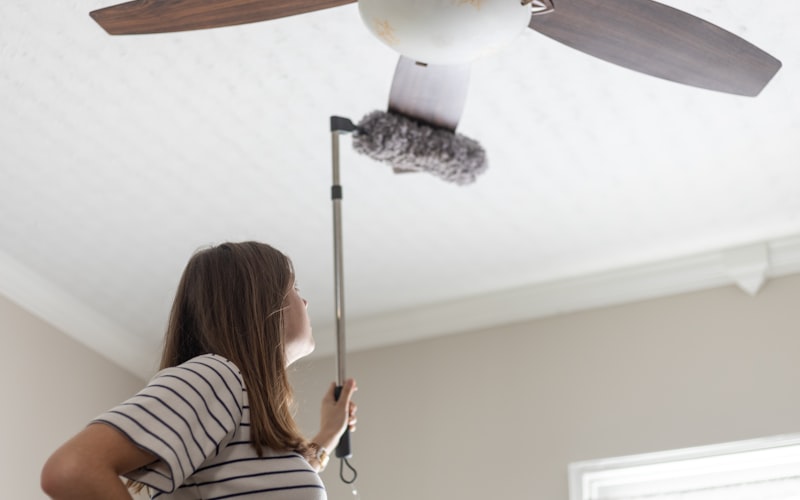
For regular maintenance between deep cleans, an extendable duster is the most practical tool you can own. You stay on the floor the entire time, and most ceiling fans take about 60 seconds to dust.
What to Look For
The best extendable ceiling fan dusters have a few key features: a telescoping handle that extends to at least 4-5 feet beyond your reach, a bendable head that can angle to match the blade surface, and a microfiber cover that traps dust rather than just pushing it around.
Some dusters are specifically shaped to clip around a fan blade and clean the top, bottom, and edges in one pass. These U-shaped or forked designs work well, though a standard bendable microfiber duster does the job just fine for routine dusting.
How to Use an Extendable Duster Effectively
- Turn the fan off and let it stop completely before you start. Dusting a spinning fan is both ineffective and messy.
- Work slowly. The biggest mistake is swiping too fast, which just pushes dust off the blade and into the air. Slow, steady passes let the microfiber grab and hold the particles.
- Dust the top of each blade first, then do a pass along the bottom. The top is where 90% of the dust sits.
- Clean the motor housing too. That dome-shaped cover in the center collects dust as well. A quick wipe with the duster handles it.
- Wash the duster head after every use. Microfiber loses its dust-grabbing ability when it's loaded with debris. Most duster covers are machine washable — just don't use fabric softener, which coats the fibers and reduces their effectiveness.
If you're already using an extendable duster for cleaning your blinds or reaching high baseboards, the same tool works for ceiling fans.
The Vacuum Attachment Method
If your vacuum has a long hose and an upholstery or brush attachment, you can vacuum ceiling fan blades directly. This method is particularly good for fans with heavy dust buildup because the suction pulls dust away instead of letting it fall.
How to Do It
Extend your vacuum hose fully and attach the soft brush head. Reach up to each blade and run the brush along the top surface. Go slowly and let the suction do the work. The brush loosens stuck dust while the vacuum sucks it away immediately.
This works best with canister vacuums that have long, flexible hoses. Upright vacuums with short hose attachments may not reach. If your hose is just barely too short, standing on a sturdy step stool gives you the extra reach without the risk of a full ladder.
For a cordless alternative, some stick vacuums come with extension wands that reach ceiling height. Check your vacuum's accessories — you may already have one and not realize it.
How to Handle Really Grimy or Sticky Fan Blades
Regular dust comes off easily with a dry pillowcase or duster. But kitchen fans, bathroom fans, and fans that haven't been cleaned in a very long time develop a sticky grime layer that dry methods won't fully remove. The dust bonds to grease, moisture, or nicotine residue and forms a film that needs wet cleaning.
The Damp Cloth on a Pole Method
Dampen a microfiber cloth with a solution of warm water and a few drops of dish soap. Wrap the cloth around the end of a microfiber mop with a flat head or clip it to a painter's pole. Reach up and wipe each blade, pressing firmly enough to break through the grime layer. Follow with a dry cloth on the same pole to remove moisture.
Wring the cloth out thoroughly before reaching up. You don't want soapy water dripping down onto your furniture or into your eyes. Barely damp is what you're aiming for.
For Kitchen Fans Specifically
Kitchen ceiling fans are the worst offenders because airborne cooking grease coats the blades, and then dust sticks to the grease like glue. A standard dusting won't cut it. Use the pillowcase method first to remove the bulk, then go back with a damp cloth and a degreasing dish soap. White vinegar mixed with warm water also works well for cutting through kitchen grease, similar to how you'd tackle a greasy stovetop.
Bathroom Fans
Bathroom ceiling fans deal with humidity and moisture, which creates a damp dust layer. This dust can harbor mold spores if left long enough, especially in poorly ventilated bathrooms. Clean these fans with a damp cloth and add a splash of hydrogen peroxide or white vinegar to prevent mold growth. If you're already dealing with mold in the bathroom, the ceiling fan should be part of your cleaning plan.
How Often Should You Clean Ceiling Fans?
The short answer: more often than you currently do. Most people clean their ceiling fans once or twice a year, if that. Here's a more practical schedule.
- Quick dusting every 2-4 weeks — A 60-second pass with an extendable duster prevents visible buildup and keeps dust from getting launched into the room when you turn the fan on. Add this to your regular cleaning routine.
- Full cleaning every 1-3 months — Use the pillowcase method or a damp wipe to remove accumulated grime. Kitchen fans should be on the shorter end of this range, bedroom fans on the longer end.
- Deep cleaning twice a year — Spring and fall are natural times for a thorough fan cleaning, especially if you're switching from heating to cooling season or vice versa.
If you have allergies, cleaning fans more frequently makes a noticeable difference. A dirty ceiling fan circulates dust, pet dander, and allergens every time it runs.
How to Keep Ceiling Fans Cleaner Longer
Cleaning less often starts with slowing down how quickly dust accumulates.
The Dryer Sheet Trick
After cleaning your fan blades, wipe each blade with a dryer sheet. The anti-static coating left behind repels dust, extending the time between cleanings by several weeks. This is the same principle that works for keeping baseboards dust-free — the anti-static charge makes it harder for dust particles to settle and stick.
Run the Fan Regularly
Fans that sit idle collect dust faster than fans that run frequently. The constant airflow from a running fan actually prevents some dust from settling on the blades. If you have a fan in a room you use seasonally, turn it on for a few minutes each week even during the off-season just to keep air moving.
Apply a Light Furniture Polish Coat
Spray a small amount of furniture polish onto a cloth and wipe each blade after cleaning. The slick surface left by the polish makes it harder for dust to grip, and the next time you clean, the dust slides off more easily.
Control Dust at the Source
The less dust in your home overall, the less ends up on your fans. Change your HVAC filter on schedule (every 1-3 months depending on the type), keep windows closed on high-pollen days, and use doormats at every entrance. If dust is a persistent problem throughout your home, a broader approach like a room-by-room declutter reduces the surfaces where dust collects and makes every cleaning task faster.

Frequently Asked Questions
Can I clean a ceiling fan while it's running?
No. Always turn the fan off and wait for the blades to stop completely before cleaning. Trying to dust a spinning fan is dangerous, ineffective, and will fling dust everywhere. If you can't reach the pull chain or switch, turn the fan off at the wall switch or breaker before cleaning.
Do those ceiling fan duster clips that go over the blade actually work?
Yes, the U-shaped or clip-style fan blade dusters that grip around a blade and clean all three surfaces (top, bottom, and edge) at once work well for routine maintenance dusting. They're not as effective as the pillowcase method for heavy buildup, but for weekly or biweekly dusting they save time. Make sure to get one with a washable microfiber cover.
Why does my ceiling fan wobble after I clean it?
Cleaning doesn't cause wobbling — but it can reveal it. If one blade had significantly more dust buildup than the others, removing that weight changes the balance slightly. A wobble after cleaning usually means the blades were already slightly unbalanced. Check that all blades are tight at the mounting screws and sitting at the same angle. Blade balancing kits (usually included with the fan) fix persistent wobble.
Is there a way to prevent dust from collecting on ceiling fan blades at all?
There's no way to completely prevent it since the static charge from spinning naturally attracts dust particles. But you can slow it down significantly with the dryer sheet trick, running the fan regularly, and keeping overall household dust levels low by changing HVAC filters and maintaining clean floors. These steps combined can extend the time between cleanings from a couple of weeks to over a month.
Pick a Fan and Start
You probably have at least three or four ceiling fans in your home, and there's a good chance most of them are overdue for a cleaning. Don't try to do all of them at once. Grab an old pillowcase, pick the fan that bothers you most — usually the one in the kitchen or the bedroom directly above your pillow — and clean just that one. It takes less than five minutes. Once you see how quick and easy it is from the ground, you'll knock out the rest of them before the week is over.
Get weekly home tips that actually work
Join thousands of homeowners getting practical cleaning hacks, DIY fixes, and money-saving tips every week. Free, and you can unsubscribe anytime.

Written by
Beth SullivanFounder & Editor-in-Chief
Beth Sullivan is the founder of Practical Home Guides. With over a decade of hands-on experience tackling every home challenge imaginable, she started this site to share the practical, no-nonsense solutions she wishes she had found years ago. When she's not testing cleaning hacks or organizing pantries, you'll find her in the garden or working on her next DIY project.
Recommended Products
Looking for specific product recommendations? Check out our tested picks.
Best Cordless Stick Vacuums (2026 Buyer's Guide)
We tested cordless stick vacuums on hardwood, carpet, pet hair, and stairs. Here are the picks worth the price for every home and budget in 2026.
Best Pressure Washers for Home Use (2026 Buyer's Guide)
We tested electric and gas pressure washers for siding, decks, driveways, and patio furniture. Here are the best picks for every budget and home size.
Best Self-Emptying Robot Vacuums (2026 Tested)
Self-emptying robot vacuums let you forget about the dust bin for weeks. We tested the top models on hardwood, carpet, pet hair, and floor plans.

5 Best Steam Mops for Tile Floors (2026)
We tested the top steam mops for tile, grout, and hard floors. Here are the 5 best picks with honest pros, cons, and who each one is best for.
7 Best Robot Vacuums Under $300 (2026)
We compared the top robot vacuums under $300 for pet hair, hardwood floors, and carpet. Here are the 7 best picks with pros, cons, and who each is best for.
Related Articles
How to Remove Rust From Grill Grates (Without Replacing Them)
Rusted grill grates can be revived if rust is surface-only. Here's the safe restoration method that gets cast iron and steel grates back to cooking-ready.
How to Remove Grass Stains From Clothes (Even After Drying)
Grass stains are protein and chlorophyll bonded into fabric. Here's the order of treatments that gets them out — even on jeans that already went through the dryer.

How to Refresh Outdoor Rugs Without Replacing Them
Before you toss that faded, grimy outdoor rug, try this simple revival routine. Most polypropylene outdoor rugs come back like new with 30 minutes of work.
How to Deep Clean Window Screens (The Bathtub Method)
Window screens accumulate a winter's worth of dust, pollen, and grime. The bathtub method gets them all clean in one shot — cleaner than cleaning them individually.