How to Cook Perfect Hard Boiled Eggs Every Time (No Green Yolks)
This article may contain affiliate links. If you make a purchase through these links, we may earn a small commission at no extra cost to you. Learn more
Quick Answer
How to Cook Perfect Hard Boiled Eggs Every Time (No Green Yolks)
Place eggs in a single layer in a pot, cover with cold water, bring to a rolling boil, cover with a lid, remove from heat, and let sit covered for 12 minutes. Drain, run under cold water, and refrigerate. The cold-start method gives consistent yolks with no green ring and shells that peel cleanly.
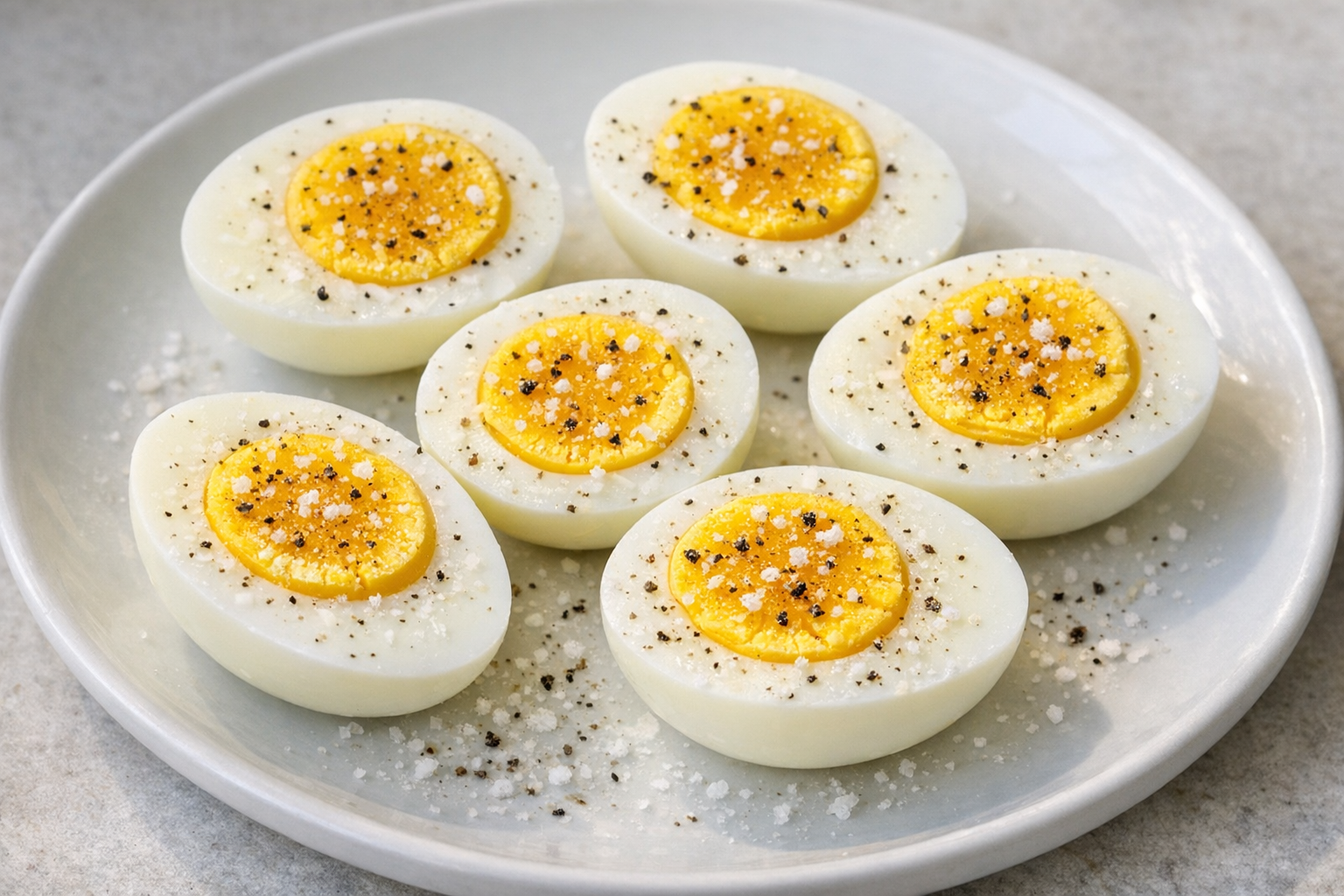
Hard boiled eggs are one of those things everyone thinks they know how to make until you cut into one and see a gray-green ring around the yolk, or you spend 5 minutes peeling shell flakes off a single egg. Both are fixable.
I tested half a dozen popular methods over the years. Here's the one that consistently works for me, plus the steaming method I use when I need eggs that peel cleanly every time (especially fresh eggs from a farmer's market or backyard chickens).
Why Hard Boiled Eggs Get Green Yolks
The green-gray ring around an overcooked yolk is iron sulfide — a reaction between the iron in the yolk and sulfur in the white when eggs are cooked too long or too hot. It's harmless but ugly, and signals slightly rubbery whites and chalky yolks.
Two changes prevent it: cook gently, and stop the cooking immediately when done.
Why Some Eggs Are Impossible to Peel
Fresh eggs are notoriously hard to peel because the membrane between the white and shell sticks tight. As eggs age (1 to 2 weeks in the fridge), the air pocket inside grows and the membrane separates more easily.
If you have farm-fresh eggs, save them for hard boiling at least a week. For weekly meal prep, store-bought eggs are usually 1 to 4 weeks old already and peel fine.
Method 1: Cold-Start Stovetop (My Standard)
This is the method I use 95 percent of the time. Reliable, easy, no special equipment.
What You'll Need
- Eggs (any number that fit in a single layer)
- A saucepan with a tight-fitting lid
- A bowl of ice water (or just cold tap water for everyday use)
- A timer
Step 1: Place Eggs in a Single Layer
Use a saucepan large enough that the eggs sit in a single layer on the bottom. Crowding them stacks them and cooks unevenly.
Step 2: Cover with Cold Water
Add cold water until eggs are covered by about 1 inch.
Step 3: Bring to a Full Rolling Boil
Set the burner to high. Watch for big rolling bubbles, not just simmering.
Step 4: Cover and Remove From Heat
Once at a rolling boil, immediately cover with the lid and turn off the burner. Move the pan off the burner if you have an electric stove.
Step 5: Set a Timer
The eggs sit in the hot water for:
- 9 minutes — slightly soft yolk, jammy in the center
- 11 minutes — fully set yolk, still tender
- 12 minutes — classic hard boiled, fully cooked but no green ring
- 14 minutes — fully cooked with the yolk slightly chalkier
I default to 12 minutes for meal prep, 11 minutes if I'm eating them right away.
Step 6: Drain and Cold Shock
Pour off the hot water. Run cold tap water into the pot for 30 seconds to stop the cooking. Add a few ice cubes if you have them.
Let the eggs sit in the cold water for at least 5 minutes. This stops the cooking and helps the shell separate from the white — easier peeling.
Step 7: Peel or Refrigerate
For meal prep, store eggs unpeeled in the fridge for up to a week. For immediate eating, crack the wide end of the egg on the counter, roll gently to fracture the whole shell, and peel under a thin stream of cold water.
Method 2: Steaming (For Easier Peeling)
Steaming is the hands-down best method for fresh eggs and for getting cleanly peeled eggs every time. The hot steam quickly sets the outer membrane, which then peels off as one piece.
Steps
- Add 1 inch of water to a saucepan.
- Insert a collapsible steamer basket.
- Bring water to a rolling boil.
- Place eggs in the steamer basket.
- Cover, reduce heat to medium-high (still a strong boil).
- Steam for 13 minutes for hard boiled.
- Transfer immediately to a bowl of ice water for 5 minutes.
Peel under cold running water. The shells slide off in big pieces.
Method 3: Instant Pot (5-5-5 Method)
For batch-cooking 6 to 12 eggs at once, the Instant Pot wins. The "5-5-5" method:
- Add 1 cup of water to the Instant Pot.
- Insert the trivet, place eggs on top.
- Pressure cook on high for 5 minutes.
- Natural release for 5 minutes.
- Quick release the rest.
- Transfer eggs to ice water for 5 minutes.
Eggs come out perfect and peel like a dream. Worth getting an Instant Pot just for this if you cook eggs in volume — see options on a 6-quart Instant Pot Duo.
Best Tools for Eggs
A few small kitchen tools make egg cooking easier:
- An egg slicer for clean even slices on salads
- A silicone egg poacher for poached eggs without the vinegar trick
- An egg storage container with lid for meal prep
Storage and Shelf Life
- Unpeeled hard boiled eggs: 1 week in the refrigerator
- Peeled hard boiled eggs: 5 to 6 days in a sealed container with a damp paper towel
- Egg salad or deviled eggs: 3 to 4 days
Don't freeze whole hard boiled eggs — the whites turn rubbery. The yolks freeze fine if you only need yolks for a recipe.
Common Mistakes
- Boiling too long. 13+ minutes overcooks even at low boil. Stick to 11 to 12.
- Skipping the ice bath. Stops residual cooking. Without it, eggs continue cooking past your target.
- Trying to peel right away while hot. Let them cool fully — the membrane releases as the egg contracts.
- Storing peeled eggs without a damp towel. They dry out and the whites get rubbery.
Frequently Asked Questions
Why do my hard boiled eggs sometimes crack while cooking?
Eggs straight from the cold fridge in hot water sometimes crack from temperature shock. Either start with cold water (cold-start method) or let eggs sit at room temperature for 10 minutes before steaming.
Should I add salt or vinegar to the water?
Slight benefit, not necessary. A teaspoon of salt or vinegar can help eggs that crack while cooking by sealing the white before it leaks out — but it doesn't make peeling significantly easier.
How can I tell if an egg is hard boiled or raw without breaking it?
Spin it on the counter. A hard boiled egg spins fast and steady. A raw egg wobbles and stops quickly because the liquid inside resists the spin.
What's the easiest way to peel a hard boiled egg?
Tap the wide end (where the air pocket is) on the counter to crack. Roll the egg between your palms with light pressure to crackle the whole shell. Peel under a thin stream of cold running water — the water gets between the shell and white and slides everything off.
Final Thoughts
Hard boiled eggs are forgiving once you nail the timing. 12 minutes covered after a rolling boil, then ice water — that's the entire recipe. Steam them if peeling matters most, pressure cook them if quantity matters most.
Get weekly home tips that actually work
Join thousands of homeowners getting practical cleaning hacks, DIY fixes, and money-saving tips every week. Free, and you can unsubscribe anytime.

Written by
Priya PatelKitchen & Lifestyle Writer
Priya Patel is a former restaurant pastry chef turned home-cooking obsessive. She writes about meal prep, kitchen organization, and the small appliances actually worth your counter space. Priya tests recipes and gadgets out of a tiny Brooklyn galley kitchen, so she has strong opinions about what earns its footprint.
Recommended Products
Looking for specific product recommendations? Check out our tested picks.
Best Instant Read Meat Thermometers (2026 Tested)
We tested instant read thermometers for grilling, roasting, and candy making. The picks that read in under 3 seconds and don't break after a year.
Best Espresso Machines for Home (2026 Buyer's Guide)
From under-300-dollar starter machines to 2000-dollar prosumer espresso, here are the espresso machines worth your money in 2026.
Best Stand Mixers (2026 Buyer's Guide)
We tested stand mixers from KitchenAid, Cuisinart, and Breville on bread dough, cookie batter, and meringues. Here are the picks worth the counter space.
5 Best Kitchen Knife Sets for Home Cooks (2026)
Stop struggling with dull knives. We compared the top kitchen knife sets for home cooks at every budget — here are the 5 best with honest pros and cons.
Best Air Fryers for Home Cooks (2026 Buyer's Guide)
Find the best air fryer for your kitchen and budget. We compare 6 top-rated air fryers from basket to oven style, with honest pros and cons for each.
Related Articles
Cookout Staples to Prep Ahead (For Stress-Free Summer Entertaining)
The 8 cookout staples you can make 1 to 3 days ahead — better-tasting than last-minute and lets you actually enjoy the party.
Mother's Day Gifts That Ship Well (Last-Minute Friendly)
If Mother's Day snuck up on you, these gift ideas ship in 3 days or less and don't feel last-minute. From specialty foods to thoughtful kitchen tools.
How to Cook Fluffy Rice Every Time (No Sticky Bottom)
Fluffy separate rice grains, no clumping, no scorched bottom. The exact ratios and technique that work whether you use a pot, rice cooker, or Instant Pot.
Best Instant Read Meat Thermometers (2026 Tested)
We tested instant read thermometers for grilling, roasting, and candy making. The picks that read in under 3 seconds and don't break after a year.