How to Deep Clean Outdoor Patio Furniture (Wicker, Metal, Wood, Fabric)
This article may contain affiliate links. If you make a purchase through these links, we may earn a small commission at no extra cost to you. Learn more
Quick Answer
How to Deep Clean Outdoor Patio Furniture (Wicker, Metal, Wood, Fabric)
Brush off loose debris, then use the right cleaner for the material: dish soap and water for plastic and powder-coated metal, oxygen bleach for fabric cushions, mild soap for wood, and white vinegar for wicker. Always rinse and air dry before using or storing.
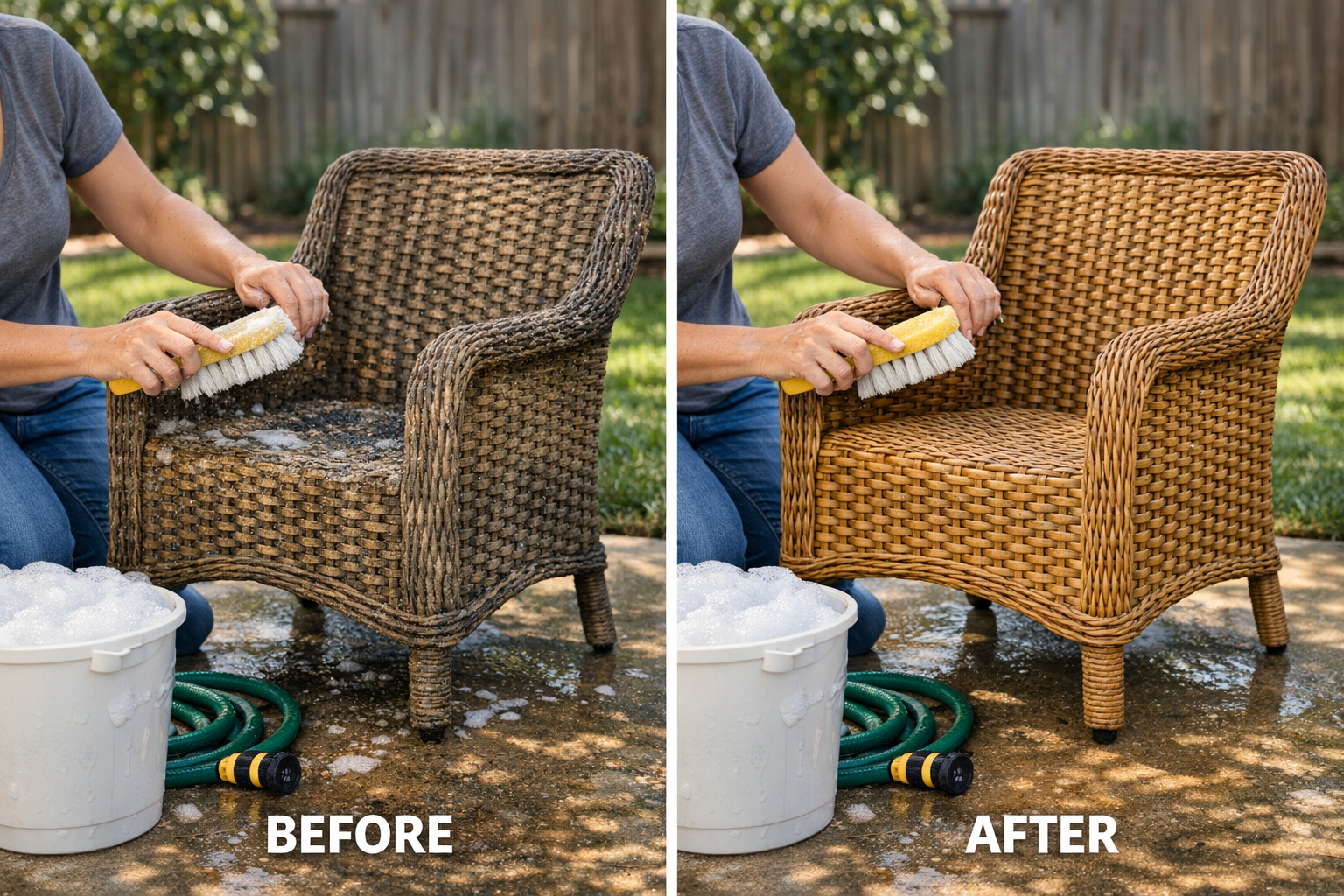
Patio furniture takes a beating from sun, rain, pollen, bird droppings, and the occasional dropped popsicle. Most of it can be revived with 30 minutes of focused work — no replacement needed.
The trick is matching the cleaner to the material. The wrong combination strips finishes, fades colors, or rots fabric. Here's the right approach for every common type.
What You'll Need
- A bucket of warm water
- A few soft-bristle scrub brushes
- Dish soap (Dawn works for almost everything)
- A bottle of OxiClean Versatile Stain Remover
- A gallon of distilled white vinegar
- A garden hose or low-PSI pressure washer
- For wood: outdoor furniture oil
Skip bleach unless absolutely necessary — it fades colored fabric, eats metal welds, and damages wood fibers.
Step 1: Brush Off Everything Loose First
Take a stiff brush or shop vacuum to every piece. Pollen, dirt, leaves, and spider webs come off dry much easier than wet. Skipping this step turns dust into mud streaks the moment you add water.
Pop cushions off and look at the underside — you'll find acorns, leaves, and a small civilization of spiders.
How to Clean Plastic Resin Furniture
Plastic patio chairs are the easiest. A bucket of warm water with a squirt of dish soap and a soft brush handles 90 percent of the grime. Scrub, rinse with the hose.
For yellowed white plastic, mix one part bleach to four parts water, brush on, leave for 5 minutes, rinse thoroughly. Test in a hidden spot first.
For green algae stains, a mold and mildew remover spray wipes it away in minutes.
How to Clean Powder-Coated Aluminum or Steel
Powder coat is durable, but harsh cleaners scratch it.
- Dish soap and warm water with a microfiber cloth
- For chips or rust spots, sand the spot lightly, prime with a rust-stop primer, and touch up with matching outdoor paint
- Apply a thin coat of car wax once a year — it actually protects the powder coat from UV fade
Don't use steel wool or abrasive pads. They strip the finish.
How to Clean Wicker (Real or Resin)
Resin (synthetic) wicker
Hose it down, scrub with dish soap and water using a soft brush, then rinse. Use a hand-held vacuum on the woven gaps to pull out trapped grit.
Natural wicker (rattan or bamboo)
Less water is better. Wipe with a damp cloth and a 50/50 mix of vinegar and water. Never soak natural wicker — it warps and unravels. After cleaning, leave in the sun for a few hours to dry completely.
For mildew on natural wicker, mix one tablespoon of Borax into a quart of warm water. Brush on, let sit 15 minutes, wipe off.
How to Clean Wood Furniture (Teak, Eucalyptus, Cedar)
Teak
Mix a cup of oxygen bleach (OxiClean) into a gallon of warm water. Brush onto the wood with a soft brush, going with the grain. Let sit 15 minutes. Rinse thoroughly with the hose.
This restores the warm honey color teak had when new. Once dry, you can let it weather to silver-gray naturally, or apply a coat of teak oil to keep the warm tone.
Eucalyptus and cedar
Same OxiClean treatment, but rinse fast — these woods are softer and don't like long soaks. Apply teak oil or outdoor wood sealer every spring to extend the life by years.
How to Clean Outdoor Cushions and Fabric
This is where most people give up. Don't.
Removable cushion covers
Check the tag. Most outdoor fabric covers (Sunbrella, Olefin) are machine washable on cold, gentle cycle. Air dry — never put them in the dryer. They shrink.
Non-removable cushions
Vacuum first. Then mix a quart of warm water, two tablespoons of OxiClean, and a tablespoon of dish soap. Spray or brush onto the cushion. Scrub gently. Let sit 15 minutes.
Rinse thoroughly with the hose, then stand the cushions on edge and let them air dry for at least 24 hours. If they smell musty when you bring them out of storage, sprinkle baking soda on, leave overnight, then vacuum off.
For mildew spots, a fabric mildew remover spray works without bleaching the fabric.
How to Prevent Furniture From Getting This Dirty Again
A little prevention saves the spring deep-clean entirely:
- Use waterproof furniture covers when furniture isn't in use
- Apply fabric waterproofing spray to cushions every spring
- Move cushions inside or into a deck box during heavy weather
- Sweep the patio weekly so blowing debris doesn't hit the furniture
Frequently Asked Questions
Can I pressure wash patio furniture?
Yes, but use a wide tip (40-degree) and stay 2 feet back. A 0-degree pencil tip will gouge wood, strip paint, and tear fabric. Plastic resin and powder-coated aluminum take pressure best.
How do I get bird droppings off without scratching?
Soak the spot with warm soapy water for 10 minutes first to soften it. Then wipe with a microfiber cloth — never scrub dry, you'll scratch the finish. Bird droppings are acidic; clean them off the same week if possible.
What's the best way to store cushions in winter?
Clean and dry them completely first. Then store in a zippered storage bag or large deck box with a few silica gel desiccant packs inside. Never store damp.
How do I remove tree sap from outdoor furniture?
Rubbing alcohol on a microfiber cloth lifts sap from most surfaces. For stubborn sap on plastic, a small amount of WD-40 breaks it down — wipe with soapy water afterward to remove the oil residue.
Final Thoughts
A spring clean for the patio takes one Saturday and adds 5+ years to furniture that would otherwise look ready for the curb. Match the cleaner to the material, rinse thoroughly, and let everything dry completely before reassembly.
Get weekly home tips that actually work
Join thousands of homeowners getting practical cleaning hacks, DIY fixes, and money-saving tips every week. Free, and you can unsubscribe anytime.

Written by
Priya PatelKitchen & Lifestyle Writer
Priya Patel is a former restaurant pastry chef turned home-cooking obsessive. She writes about meal prep, kitchen organization, and the small appliances actually worth your counter space. Priya tests recipes and gadgets out of a tiny Brooklyn galley kitchen, so she has strong opinions about what earns its footprint.
Recommended Products
Looking for specific product recommendations? Check out our tested picks.
Best Cordless Stick Vacuums (2026 Buyer's Guide)
We tested cordless stick vacuums on hardwood, carpet, pet hair, and stairs. Here are the picks worth the price for every home and budget in 2026.
Best Pressure Washers for Home Use (2026 Buyer's Guide)
We tested electric and gas pressure washers for siding, decks, driveways, and patio furniture. Here are the best picks for every budget and home size.
Best Self-Emptying Robot Vacuums (2026 Tested)
Self-emptying robot vacuums let you forget about the dust bin for weeks. We tested the top models on hardwood, carpet, pet hair, and floor plans.
5 Best Steam Mops for Tile Floors (2026)
We tested the top steam mops for tile, grout, and hard floors. Here are the 5 best picks with honest pros, cons, and who each one is best for.
7 Best Robot Vacuums Under $300 (2026)
We compared the top robot vacuums under $300 for pet hair, hardwood floors, and carpet. Here are the 7 best picks with pros, cons, and who each is best for.
Related Articles
How to Remove Rust From Grill Grates (Without Replacing Them)
Rusted grill grates can be revived if rust is surface-only. Here's the safe restoration method that gets cast iron and steel grates back to cooking-ready.
How to Remove Grass Stains From Clothes (Even After Drying)
Grass stains are protein and chlorophyll bonded into fabric. Here's the order of treatments that gets them out — even on jeans that already went through the dryer.
How to Refresh Outdoor Rugs Without Replacing Them
Before you toss that faded, grimy outdoor rug, try this simple revival routine. Most polypropylene outdoor rugs come back like new with 30 minutes of work.
How to Deep Clean Window Screens (The Bathtub Method)
Window screens accumulate a winter's worth of dust, pollen, and grime. The bathtub method gets them all clean in one shot — cleaner than cleaning them individually.