How to Deep Clean a Stinky Dishwasher (And Stop the Smell Coming Back)
This article may contain affiliate links. If you make a purchase through these links, we may earn a small commission at no extra cost to you. Learn more
Quick Answer
How to Deep Clean a Stinky Dishwasher (And Stop the Smell Coming Back)
Pull and scrub the filter (most people don't know this exists), clean the spray arms, wipe the door gasket, and run an empty hot cycle with a bowl of vinegar on the top rack followed by a cup of baking soda on the bottom. Total time: 30 minutes. Repeat monthly.
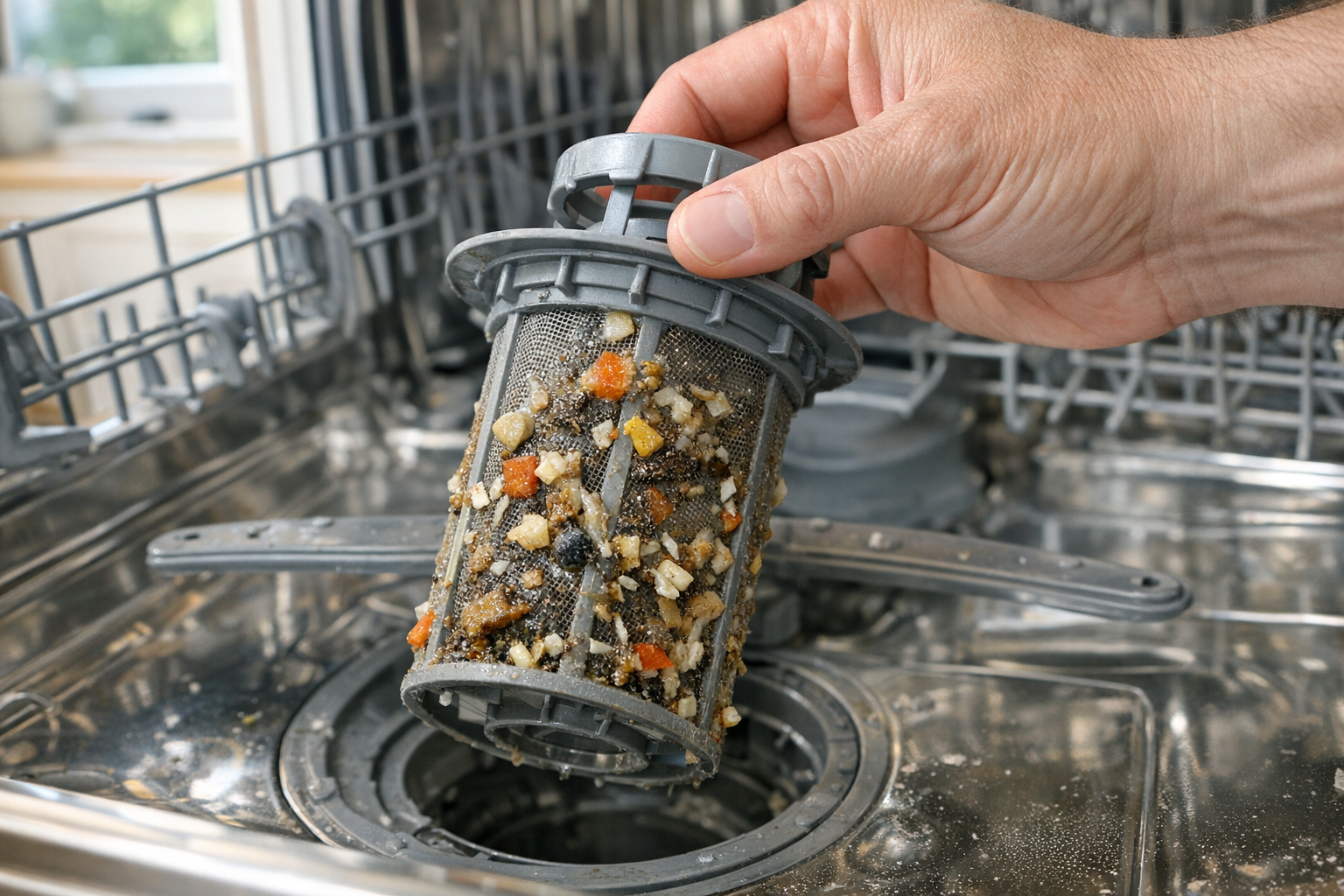
If your dishwasher has a smell — sour, swampy, like wet dog or rotting fruit — the problem isn't your detergent. It's almost always the filter, which most people have no idea exists.
The fix is a 30-minute deep clean that solves the problem permanently if you keep up with it monthly. Here's the routine.
Why Dishwashers Get Smelly
Dishwashers have a small filter at the bottom that catches food bits before they recirculate onto your dishes. That filter needs cleaning every 1 to 2 months. Most homeowners never touch it for years.
Trapped food rots. The rot smells. The smell transfers to your dishes. Add a clogged spray arm and gunky door gasket to the picture and you have a fully fermented appliance.
What You'll Need
- A pair of rubber gloves
- An old toothbrush or small detail cleaning brush set
- A bottle of distilled white vinegar
- A box of baking soda
- A pack of Affresh dishwasher cleaner tablets (optional but worth it)
- A microfiber cloth
- A flashlight (helpful for spotting food in the spray arms)
Step 1: Pull and Clean the Filter
Open the dishwasher and pull out the bottom rack completely. Look at the floor of the dishwasher. You'll see a cylinder or two-piece assembly in the back center or back corner — that's the filter.
Most modern dishwashers have a twist-out filter. Turn the top piece counterclockwise about a quarter turn and lift out. The lower mesh basket usually lifts out with it.
Take the filter to the sink. Run hot water through it. Scrub with the toothbrush and a few drops of dish soap. The grime that comes off is shocking the first time — orange-brown food residue, even in a "well maintained" dishwasher.
Rinse until water runs clear, then drop it back into place and twist to lock.
Step 2: Clean the Spray Arms
Pull out the bottom spray arm (it usually lifts straight off the post or unscrews). Hold it up to the light. The small holes that spray water onto your dishes are often clogged with calcium and food.
Run a paperclip or toothpick through each hole to clear blockages. Rinse the spray arm in hot water. Snap or screw it back in place.
Do the same with the upper spray arm if your dishwasher has one (look up at the underside of the top rack).
Step 3: Wipe the Door Gasket
The rubber seal around the door is a magnet for grime, mold, and gross black stuff. Most of the smell people blame on the dishwasher itself comes from this gasket.
Spray with a 50/50 mix of vinegar and water. Wipe with a microfiber cloth. Use a toothbrush to get into the folds. Run the cloth all the way around — top, sides, and bottom of the door opening.
For black mold, dip the toothbrush in a paste of baking soda and a few drops of dish soap. Scrub gently. Rinse.
Step 4: Run a Hot Vinegar Cycle
Place a glass bowl filled with 2 cups of distilled white vinegar on the top rack. Don't add detergent. Run the dishwasher empty on the hottest setting (sanitize cycle if you have one).
The vinegar circulates and dissolves soap scum, hard water deposits, and remaining funk inside the unit.
Step 5: Follow Up with Baking Soda
When the vinegar cycle finishes, sprinkle a cup of baking soda across the bottom of the dishwasher. Run a short hot rinse cycle.
Vinegar deodorizes by being acidic. Baking soda deodorizes by being alkaline. The two together hit every type of smell.
Don't run vinegar and baking soda in the same cycle — they'll neutralize each other.
Step 6 (Monthly Maintenance): Use a Cleaning Tablet
Once a month going forward, run a single Affresh tablet on a hot empty cycle. It's the easiest version of this whole routine — drop it in the cup, push start, walk away.
Every 2 to 3 months, do the full filter and gasket clean.
Why Your Dishwasher Won't Stay Clean
A few habits keep the smell away:
- Run the dishwasher full, not half empty. Sitting half-loaded for a day is when the smell starts.
- Scrape plates well, but don't pre-rinse. Modern detergent needs food to grab onto. Pre-rinsed dishes mean detergent has nothing to do, and small food bits just clog the filter faster.
- Leave the door cracked after a cycle. The drying steam needs to escape. A closed door traps moisture, which grows mildew.
- Use the right amount of detergent. Too much creates buildup. Too little doesn't clean. A pre-measured detergent pod takes the guesswork out.
What to Do If the Smell Returns Fast
If your dishwasher smells again within a week of cleaning, check these:
- The drain hose under the sink. It can sag and trap water. A high loop or air gap prevents this.
- The garbage disposal connection. Make sure the disposal is empty and rinsed before running the dishwasher — they share a drain line.
- The kickplate at the bottom front. Old water can pool under the dishwasher if there's a slow leak.
Frequently Asked Questions
Why does my dishwasher smell when not running?
Standing water in the bottom (called "the sump") is normal — it keeps the seals from drying out. But it gets stinky if the filter is clogged or the disposal drain is dirty. Clean both.
Is it safe to use bleach in a dishwasher?
Only if you have a stainless steel interior. Plastic interiors and stainless steel parts react badly to bleach over time, ruining seals and corroding metal. Vinegar plus baking soda gets the same result without the risk.
How often should I deep clean my dishwasher?
Filter and basic clean: monthly. Full deep clean (gasket, spray arms, vinegar/baking soda cycle): every 2 to 3 months. If you have hard water, scale up the frequency.
My dishes come out cloudy. Is that the dishwasher?
Cloudy dishes are usually hard water deposits, not a dirty dishwasher. Add a rinse aid like Jet-Dry to the dispenser and run a vinegar cycle to remove existing buildup. If your area has very hard water, a dishwasher salt for hard water helps too.
Final Thoughts
Dishwashers don't need expensive products or complicated routines. Pull the filter monthly, wipe the gasket, and run a vinegar cycle every couple of months. Stay ahead of the smell instead of reacting to it.
Get weekly home tips that actually work
Join thousands of homeowners getting practical cleaning hacks, DIY fixes, and money-saving tips every week. Free, and you can unsubscribe anytime.

Written by
Priya PatelKitchen & Lifestyle Writer
Priya Patel is a former restaurant pastry chef turned home-cooking obsessive. She writes about meal prep, kitchen organization, and the small appliances actually worth your counter space. Priya tests recipes and gadgets out of a tiny Brooklyn galley kitchen, so she has strong opinions about what earns its footprint.
Recommended Products
Looking for specific product recommendations? Check out our tested picks.
Best Cordless Stick Vacuums (2026 Buyer's Guide)
We tested cordless stick vacuums on hardwood, carpet, pet hair, and stairs. Here are the picks worth the price for every home and budget in 2026.
Best Pressure Washers for Home Use (2026 Buyer's Guide)
We tested electric and gas pressure washers for siding, decks, driveways, and patio furniture. Here are the best picks for every budget and home size.
Best Self-Emptying Robot Vacuums (2026 Tested)
Self-emptying robot vacuums let you forget about the dust bin for weeks. We tested the top models on hardwood, carpet, pet hair, and floor plans.
5 Best Steam Mops for Tile Floors (2026)
We tested the top steam mops for tile, grout, and hard floors. Here are the 5 best picks with honest pros, cons, and who each one is best for.

7 Best Robot Vacuums Under $300 (2026)
We compared the top robot vacuums under $300 for pet hair, hardwood floors, and carpet. Here are the 7 best picks with pros, cons, and who each is best for.
Related Articles
How to Remove Rust From Grill Grates (Without Replacing Them)
Rusted grill grates can be revived if rust is surface-only. Here's the safe restoration method that gets cast iron and steel grates back to cooking-ready.
How to Remove Grass Stains From Clothes (Even After Drying)
Grass stains are protein and chlorophyll bonded into fabric. Here's the order of treatments that gets them out — even on jeans that already went through the dryer.

How to Refresh Outdoor Rugs Without Replacing Them
Before you toss that faded, grimy outdoor rug, try this simple revival routine. Most polypropylene outdoor rugs come back like new with 30 minutes of work.
How to Deep Clean Window Screens (The Bathtub Method)
Window screens accumulate a winter's worth of dust, pollen, and grime. The bathtub method gets them all clean in one shot — cleaner than cleaning them individually.