How to Meal Prep for Beginners (Save Time and Money)
Last updated: February 7, 2026
This article may contain affiliate links. If you make a purchase through these links, we may earn a small commission at no extra cost to you. Learn more
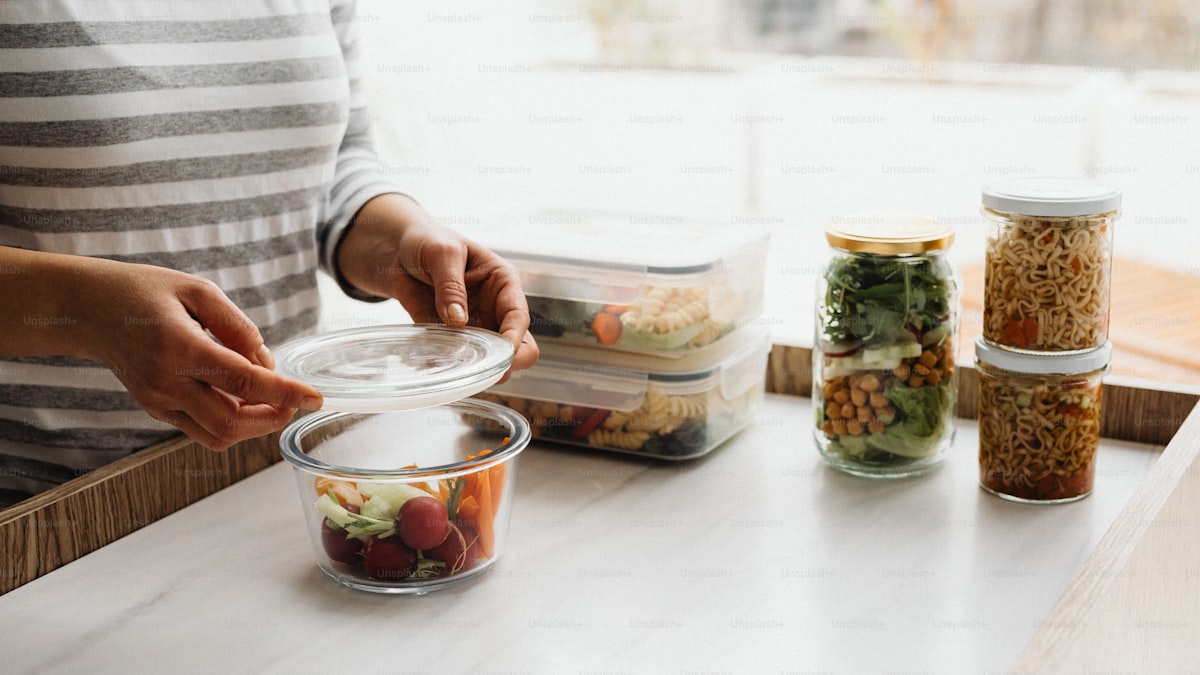
How to Meal Prep for Beginners (Save Time and Money)
If you've ever found yourself staring into the fridge at 6 PM with absolutely no idea what to make for dinner, meal prepping is about to change your life. It's not just a fitness influencer trend or something reserved for people with picture-perfect kitchens. Meal prep is a straightforward, practical system that helps you eat better, spend less, and reclaim hours of your week.
We get it -- the idea of spending an entire Sunday afternoon cooking can sound exhausting. But here's the thing: meal prep doesn't have to mean cooking 15 identical containers of chicken and rice. It can be as simple as washing and chopping vegetables on a Sunday evening, portioning out snacks for the week, or making a big batch of soup that covers four lunches.
The average American household spends over $3,500 per year on takeout and delivery food, much of it driven by those "I don't have time to cook" moments. Meal prepping eliminates that problem at the root. When a ready-to-eat meal is already sitting in your fridge, the temptation to order $18 worth of pad thai evaporates.
Let's walk through everything you need to know to start meal prepping this week, even if you've never done it before.
Why Meal Prep Is Worth Your Time
Before we get into the how, let's talk about the why -- because understanding the real benefits will keep you motivated past the first week.
You Save Real Money
When you plan meals ahead and buy only what you need, grocery waste drops dramatically. Combine that with fewer impulse purchases and near-zero takeout spending, and most people save $200 to $400 per month. If you're already working on cutting your grocery bill in half, meal prep is the natural next step that locks those savings in.
You Save Serious Time
It sounds counterintuitive -- spending 2 to 3 hours cooking on Sunday saves time? Absolutely. Think about it: without meal prep, you're spending 30 to 60 minutes every single night deciding what to eat, prepping ingredients, cooking, and cleaning up. That's 3.5 to 7 hours spread across the week. Batching all that work into one focused session is dramatically more efficient.
You Eat Healthier Without Thinking About It
When healthy meals are already prepared and waiting in the fridge, you eat them. When they're not, you reach for whatever is fastest -- usually something processed, expensive, or both. Meal prep removes the decision fatigue that leads to poor eating choices on busy weeknights.
What You Need to Get Started
You don't need a commercial kitchen or a wall of fancy gadgets. Here's the essentials list for beginners.
Containers
This is the one thing you absolutely need to invest in. A good set of meal prep containers makes the entire process smoother. Look for these features:
- Glass or BPA-free plastic -- glass is heavier but doesn't stain or absorb odors
- Microwave and dishwasher safe -- because convenience matters
- Tight-sealing lids -- leaking containers ruin everything
- Stackable -- fridge space is precious
Start with 10 to 15 meal prep containers in a mix of sizes. Single-compartment containers work for soups and grain bowls, while divided containers are great for keeping proteins, grains, and vegetables separate.
Glass Meal Prep Containers (10-Pack)
Microwave, dishwasher, and freezer safe with snap-lock lids that actually seal. Glass doesn't stain or absorb odors like plastic. The divided compartments keep proteins, grains, and veggies separate.
Check Price on Amazon →Basic Kitchen Tools
You likely already own everything you need. A sharp chef's knife (if yours is dull, learn how to sharpen kitchen knives at home -- it makes prep work twice as fast), a large cutting board, a couple of sheet pans, a big pot, and a skillet. That's really it for the basics.
A few upgrades that aren't essential but make life easier:
- A rice cooker or Instant Pot for hands-off cooking
- A food scale for portion accuracy
- A salad spinner for washing greens quickly
- Freezer bags or reusable silicone bags for longer storage
A Well-Organized Kitchen
Meal prep goes much more smoothly when your kitchen is set up for efficiency. If your pantry is a disaster zone, take an hour to organize your pantry like a pro before your first big prep session. Knowing exactly where your rice, spices, oils, and canned goods are saves you from that frustrating mid-cook scramble.
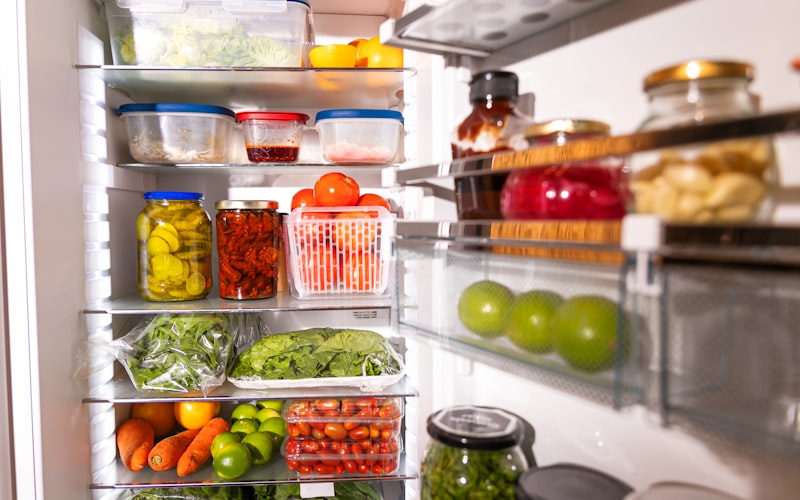
The same goes for your fridge. You're about to fill it with prepped meals, so having a clear system for what goes where makes a real difference. Our guide on organizing your fridge to keep food fresh is a great companion to your meal prep routine since properly stored prepped meals last days longer.
How to Meal Prep: A Step-by-Step Guide
Here's the system we recommend for beginners. It's simple, flexible, and doesn't require you to be a great cook.
Step 1: Pick Your Prep Day and Meals
Sunday is the classic meal prep day, but any day works. Some people prefer Wednesday so they can split the week into two shorter prep sessions. Pick whatever fits your schedule.
For your first week, start small. Don't try to prep every meal for seven days. Instead, aim for:
- 4 to 5 lunches -- this is where meal prep has the biggest impact
- 3 to 4 dinners -- enough to cover weeknights, leaving a couple of nights flexible
- Prepped snacks -- cut vegetables, portioned nuts, washed fruit
That's it. Don't try to prep 21 meals your first time. You'll burn out and never do it again.
Step 2: Plan Your Menu
Choose 2 to 3 main recipes for the week. Keeping the variety limited is important for beginners because it simplifies shopping and reduces prep time. Here's a sample beginner menu:
- Protein: Baked chicken thighs with a simple seasoning (makes about 8 servings)
- Grain: A big pot of rice or quinoa (covers lunches and dinners)
- Roasted vegetables: Two sheet pans of mixed vegetables (broccoli, bell peppers, sweet potatoes)
- Breakfast: Overnight oats in individual jars (5 minutes of work, breakfast for the week)
This single menu gives you enough building blocks for varied meals all week. Monday's lunch might be chicken with rice and broccoli. Wednesday's dinner might be a quick stir-fry using the prepped chicken and vegetables with a different sauce. Same base ingredients, different meals.
Step 3: Write a Focused Grocery List
Once your menu is set, write your grocery list organized by store section: produce, proteins, dairy, pantry items. This keeps you from backtracking through the store and helps you avoid impulse purchases.
Buy only what's on the list. If something's on sale that doesn't fit your plan, leave it. The discipline of sticking to your list is where the financial savings really come from.
Step 4: Prep in the Right Order
On prep day, sequence matters. Start with the items that take the longest to cook, then work on quicker tasks while those are in the oven or on the stove.
A smart prep order looks like this:
- Start grains and proteins first -- put rice on the stove, season and roast chicken in the oven. These take 30 to 45 minutes and need minimal attention.
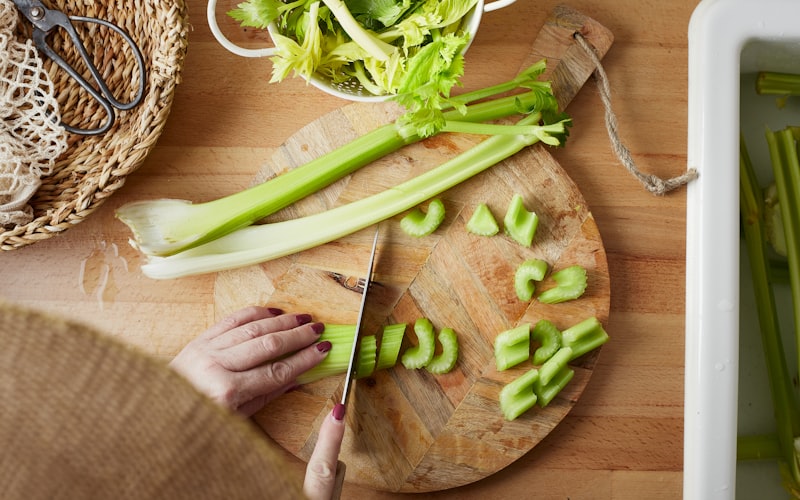
- While those cook, wash and chop all vegetables. Do every single vegetable at once, then sort them into what gets roasted, what goes into containers raw, and what goes into other recipes.
- Toss vegetables onto sheet pans and roast when the chicken comes out of the oven.
- Assemble overnight oats or other no-cook items while waiting for vegetables.
- Let everything cool slightly, then portion into containers.
Following this order, you can realistically prep a full week of lunches and most dinners in about 2 to 2.5 hours.
Step 5: Store Everything Properly
Proper storage is the difference between meals that taste great on Thursday and meals that go soggy and sad by Tuesday. Here are the key rules:
- Let food cool completely before sealing containers and refrigerating. Putting hot food in sealed containers creates condensation that makes everything mushy.
- Keep sauces and dressings separate. Store them in small containers or jars and add them when you're ready to eat. This is the single biggest tip for keeping prepped meals from getting soggy.
- Refrigerate meals you'll eat within 3 to 4 days. Anything beyond that should go in the freezer.
- Label containers with the date and contents. It sounds fussy, but you'll thank yourself on Thursday when you don't have to open every container to figure out what's inside.
- Stack containers by meal type so you can grab and go in the morning.
Five Beginner-Friendly Meal Prep Recipes
You don't need elaborate recipes to meal prep well. In fact, simpler is almost always better. Here are five reliable starting points.
Sheet Pan Chicken and Vegetables
Toss bone-in chicken thighs with olive oil, salt, pepper, garlic powder, and paprika. Spread on a sheet pan with cubed sweet potatoes and broccoli florets. Roast at 425 degrees for 35 to 40 minutes. Makes 6 servings and costs roughly $8 total.
Big-Batch Rice or Quinoa
Cook a full pot of rice or quinoa according to package directions. Portion into individual containers. Rice keeps well for 4 to 5 days refrigerated and reheats perfectly in the microwave with a splash of water. Cost: about $1 for the entire batch.
Overnight Oats
Combine half a cup of rolled oats, half a cup of milk (any kind), a quarter cup of yogurt, a tablespoon of chia seeds, and a drizzle of honey in a mason jar. Add fruit of your choice. Seal and refrigerate overnight. Make 5 jars in under 10 minutes for about $5 total.
Turkey and Black Bean Burrito Bowls
Brown ground turkey with taco seasoning. Prepare a pot of rice. Open and drain canned black beans. Dice tomatoes, shred lettuce, and slice avocado (add avocado fresh when eating, not during prep). Layer components in containers. About $12 for 5 generous servings.
Simple Vegetable Soup
Saute diced onion, carrots, and celery in olive oil. Add canned diced tomatoes, chicken or vegetable broth, canned beans, and whatever vegetables need using up. Season with salt, pepper, and Italian herbs. Simmer for 25 minutes. Makes 8 servings and freezes beautifully. Total cost: around $6.
Common Beginner Mistakes (and How to Avoid Them)
We've watched a lot of people try meal prep and give up after a week or two. Here are the pitfalls to watch for.
Prepping too much at once. Start with lunches only. Add dinners after you've gotten comfortable with the routine. Trying to prep every meal for two people for seven days on your first attempt is a recipe for burnout.
Eating the same exact thing every day. Variety is what keeps you from getting bored. Use the same base ingredients but change the sauces, spices, or accompaniments throughout the week. Chicken and rice with teriyaki sauce on Monday tastes completely different from chicken and rice with salsa and black beans on Wednesday.
Ignoring proper storage. Soggy salads and dried-out proteins are the number one complaint from people who quit meal prep. Keep wet and dry components separate. Store dressings in their own containers. Use airtight containers and eat refrigerated meals within 4 days.
Skipping the planning step. Jumping straight to cooking without a plan leads to buying more groceries than you need, running out of a key ingredient mid-cook, and spending twice as long in the kitchen. Twenty minutes of planning saves two hours of chaos.
Not accounting for eating out. Be realistic. If you know you're going to dinner with friends on Friday, don't prep a Friday dinner. Wasted prepped food is wasted money and motivation.
Scaling Up: Once You've Got the Basics Down
After a few weeks of consistent meal prepping, you'll naturally want to expand. Here's how to level up without overcomplicating things.
Freeze meals for longer storage. Soups, stews, casseroles, and marinated proteins all freeze exceptionally well. Dedicate a few containers each week to the freezer, and within a month you'll have a stash of emergency meals for those weeks when life gets too hectic to prep.
Try themed days. Mediterranean Monday, Taco Tuesday, Stir-Fry Wednesday. Themes make planning faster because you already know the general direction of each meal.
Invest in your tools. Once you know you're committed, a quality cast iron skillet is a meal prep powerhouse. It sears proteins beautifully, roasts vegetables evenly, and goes from stovetop to oven without skipping a beat.
Track your savings. Keep a simple log of what you spend on groceries and how much you save by not ordering takeout. Seeing real numbers -- often $200 to $400 per month -- is incredibly motivating. That pairs well with our broader guide on things to stop buying to save money for a full picture of where your money goes.
Frequently Asked Questions
How long do meal prepped foods last in the fridge?
Most cooked meal-prepped foods stay safe and tasty in the refrigerator for 3 to 4 days when stored in airtight containers. Some items like soups, stews, and grain-based dishes can push to 5 days without a noticeable decline in quality. Raw prepped vegetables (washed and chopped) last 4 to 5 days. If you need meals to last longer than that, freeze them on prep day and thaw in the fridge overnight before eating. Always use clean utensils when serving from containers to avoid introducing bacteria that shortens shelf life.
Is meal prepping actually cheaper than just cooking each night?
Yes, and by a wider margin than most people expect. Meal prepping reduces costs in three ways: you buy ingredients in bulk for planned recipes (lower per-unit cost), you waste dramatically less food because everything has a purpose, and you virtually eliminate impulse takeout orders. The average meal prep costs about $3 to $5 per serving compared to $10 to $20 for takeout. For a single person prepping lunches and dinners, that adds up to roughly $150 to $300 in savings per month. Families see even bigger numbers.
What if I get bored eating the same meals all week?
This is the most common concern, and it has a simple fix: prep components, not complete meals. Instead of making five identical grain bowls, cook a batch of protein, a batch of grains, and a variety of vegetables. Then mix and match throughout the week with different sauces, spices, and garnishes. Monday might be chicken over rice with teriyaki and steamed broccoli. Thursday could be the same chicken shredded into a wrap with salsa and raw peppers. Same ingredients, completely different eating experience. Also, rotating your recipes every two weeks keeps things feeling fresh.
Can I meal prep if I have a small kitchen with limited fridge space?
Absolutely. A small kitchen just means you need to be a bit more strategic. Focus on meals that stack vertically in the fridge -- square or rectangular containers are more space-efficient than round ones. Prep fewer days at a time (3 days instead of 5) so you don't overcrowd your fridge. Use your freezer as overflow storage for anything beyond the next 3 days. For the actual cooking, prep in waves -- finish one recipe completely and clean up before starting the next. You don't need counter space for five recipes simultaneously. A tidy, organized fridge makes all the difference, even a small one.
Do I need to prep breakfast too, or just lunches and dinners?
Start wherever you feel the most pain. For most people, lunch is the highest-impact meal to prep because it's when you're most likely to buy something expensive and unhealthy out of convenience. If mornings are your struggle, overnight oats and egg muffins are the two easiest breakfast preps -- both take under 15 minutes to make a full week's worth. Dinners are the next priority if you tend to order takeout on weeknights. There's no rule that says you must prep all three meals. Even prepping just one meal per day creates meaningful savings in time and money.
Start Small, Start Now
The best meal prep routine is the one you actually stick with. Don't wait until you have the perfect containers, the perfect recipes, or the perfect Sunday afternoon. Start this week with something simple -- even if it's just cooking a double batch of tonight's dinner and portioning the leftovers for tomorrow's lunch.
That tiny step builds the habit. Within a month, you'll wonder how you ever managed without a prep routine. You'll spend less time agonizing over what to eat, less money on food you don't need, and less energy on cooking every single night.
Meal prepping isn't about being perfect. It's about being prepared. And once you feel the relief of opening your fridge on a Wednesday night and seeing a ready-to-eat dinner waiting for you, there's no going back.
Get weekly home tips that actually work
Join thousands of homeowners getting practical cleaning hacks, DIY fixes, and money-saving tips every week. Free, and you can unsubscribe anytime.

Written by
Beth SullivanFounder & Editor-in-Chief
Beth Sullivan is the founder of Practical Home Guides. With over a decade of hands-on experience tackling every home challenge imaginable, she started this site to share the practical, no-nonsense solutions she wishes she had found years ago. When she's not testing cleaning hacks or organizing pantries, you'll find her in the garden or working on her next DIY project.
Recommended Products
Looking for specific product recommendations? Check out our tested picks.
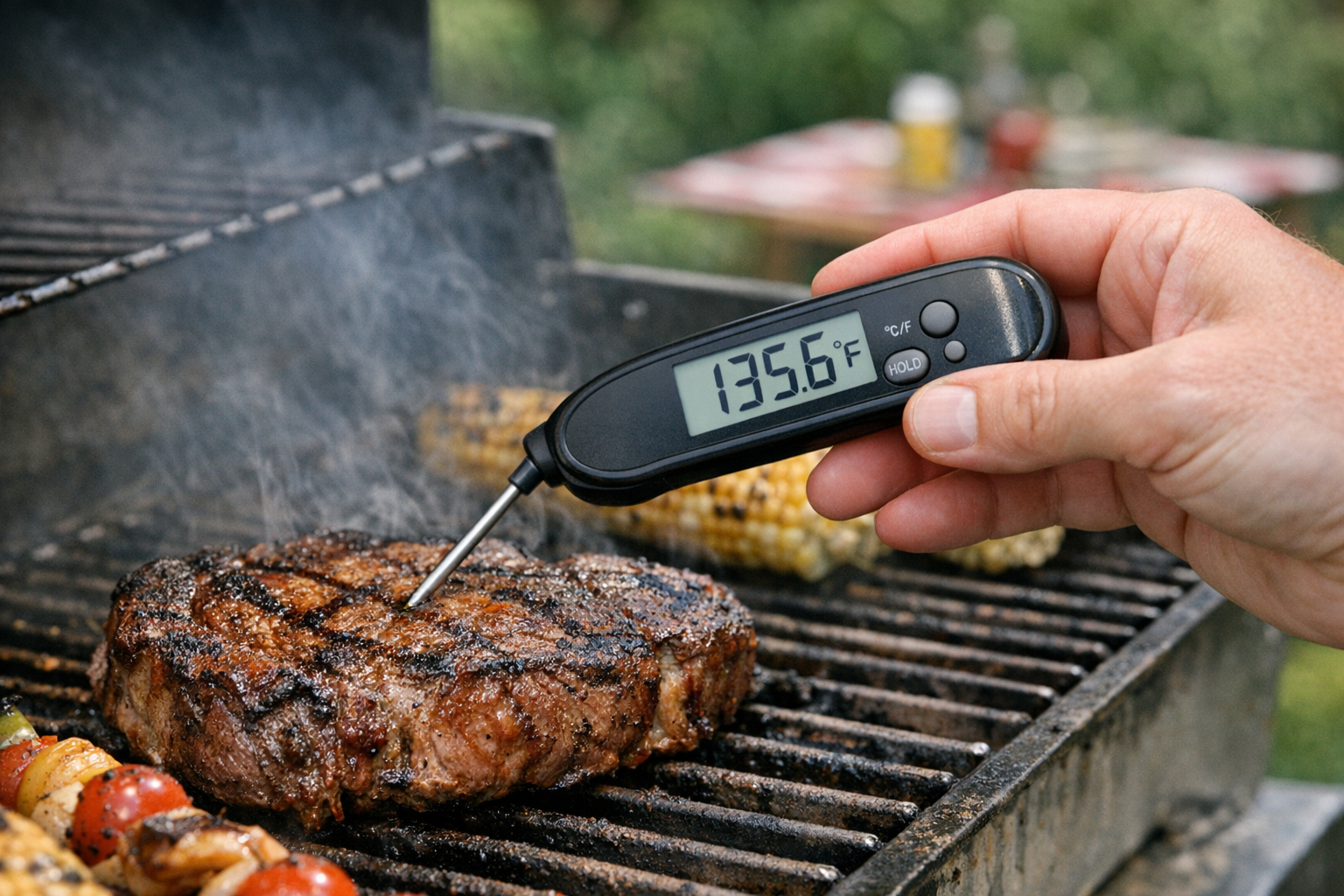
Best Instant Read Meat Thermometers (2026 Tested)
We tested instant read thermometers for grilling, roasting, and candy making. The picks that read in under 3 seconds and don't break after a year.
Best Espresso Machines for Home (2026 Buyer's Guide)
From under-300-dollar starter machines to 2000-dollar prosumer espresso, here are the espresso machines worth your money in 2026.
Best Stand Mixers (2026 Buyer's Guide)
We tested stand mixers from KitchenAid, Cuisinart, and Breville on bread dough, cookie batter, and meringues. Here are the picks worth the counter space.
5 Best Kitchen Knife Sets for Home Cooks (2026)
Stop struggling with dull knives. We compared the top kitchen knife sets for home cooks at every budget — here are the 5 best with honest pros and cons.
Best Air Fryers for Home Cooks (2026 Buyer's Guide)
Find the best air fryer for your kitchen and budget. We compare 6 top-rated air fryers from basket to oven style, with honest pros and cons for each.
Related Articles
Cookout Staples to Prep Ahead (For Stress-Free Summer Entertaining)
The 8 cookout staples you can make 1 to 3 days ahead — better-tasting than last-minute and lets you actually enjoy the party.
Mother's Day Gifts That Ship Well (Last-Minute Friendly)
If Mother's Day snuck up on you, these gift ideas ship in 3 days or less and don't feel last-minute. From specialty foods to thoughtful kitchen tools.
How to Cook Fluffy Rice Every Time (No Sticky Bottom)
Fluffy separate rice grains, no clumping, no scorched bottom. The exact ratios and technique that work whether you use a pot, rice cooker, or Instant Pot.
Best Instant Read Meat Thermometers (2026 Tested)
We tested instant read thermometers for grilling, roasting, and candy making. The picks that read in under 3 seconds and don't break after a year.