How to Organize Your Junk Drawer (And Keep It That Way)
This article may contain affiliate links. If you make a purchase through these links, we may earn a small commission at no extra cost to you. Learn more
Quick Answer
How to Organize Your Junk Drawer (And Keep It That Way)
Empty the entire drawer, toss anything broken or useless, group remaining items into categories (tools, office supplies, batteries, etc.), then use a drawer organizer or small containers to give each category a designated spot. The key to keeping it organized long-term is having a 'one in, one out' rule and doing a 5-minute purge every month.
How to Organize Your Junk Drawer (And Keep It That Way)
Every home has one. That drawer in the kitchen where dead batteries, mystery keys, rubber bands, takeout menus, loose screws, expired coupons, and seven half-working pens go to live their final days. The junk drawer.
It starts as a convenient catch-all. Somewhere to toss things you don't know where else to put. But eventually it becomes an archaeological dig every time you need a pair of scissors or a AA battery.

The good news: organizing a junk drawer takes about 20 minutes and costs under $15. And with a simple system, it stays organized — not for a week, but permanently.
Step 1: The Complete Dump
Start by emptying the entire drawer onto a table or counter. Every last paper clip, twist tie, and mystery cable. You need to see everything at once to make good decisions about what stays and what goes.
While the drawer is empty, wipe it down with a damp cloth. You'll probably find crumbs, dust, and a few things that slid under other items and haven't seen daylight in years.
Step 2: The Ruthless Sort
Go through every item and sort it into three piles:
Keep
Items you've actually used in the last 6 months or would genuinely need in the next 6. Things like scissors, tape, a small screwdriver, working pens, batteries, a flashlight, and takeout menus for places you actually order from.
Relocate
Items that belong somewhere else in the house. The screwdriver set should go with your tools. The charger cable goes by the charging station. The stamps go with the stationery. These items aren't junk — they just ended up in the wrong drawer.
Toss or Recycle
Be aggressive here. If it's broken, dried up, expired, a duplicate, or you have no idea what it is, it goes. Common junk drawer items to toss without guilt:
- Dead batteries (recycle them at any hardware store)
- Pens that don't write
- Expired coupons and old takeout menus
- Mystery keys that don't fit any lock you know of
- Instruction manuals for things you no longer own
- Random screws and nails with no known purpose
- Twist ties and rubber bands beyond a small handful
- Worn-out or duplicate tools
- Old phone cases for phones you no longer have
- Business cards you'll never call
Most people eliminate 40-60% of their junk drawer contents in this step alone. That's not organization — it's liberation.
Step 3: Choose Your Organizer System
Once you know what's staying in the drawer, you need dividers or containers to give each category its own zone. A junk drawer without dividers will return to chaos within a week.
Option 1: Adjustable Drawer Organizer ($8-15)
A bamboo or plastic expandable drawer organizer is the most popular choice. The adjustable compartments let you customize the layout to fit your specific drawer dimensions and the items you're keeping. Available at any home goods store or online.
Option 2: Small Containers You Already Have
You don't need to buy anything. Small containers you likely already own work perfectly:
- Old ice cube trays for tiny items like thumbtacks, paper clips, and small batteries
- Small Tupperware containers or lids as dividers
- Cardboard boxes cut to size (like jewelry boxes or small shipping boxes)
- Egg carton sections for odds and ends
- Mason jar lids for corralling round items
Option 3: Custom DIY Dividers
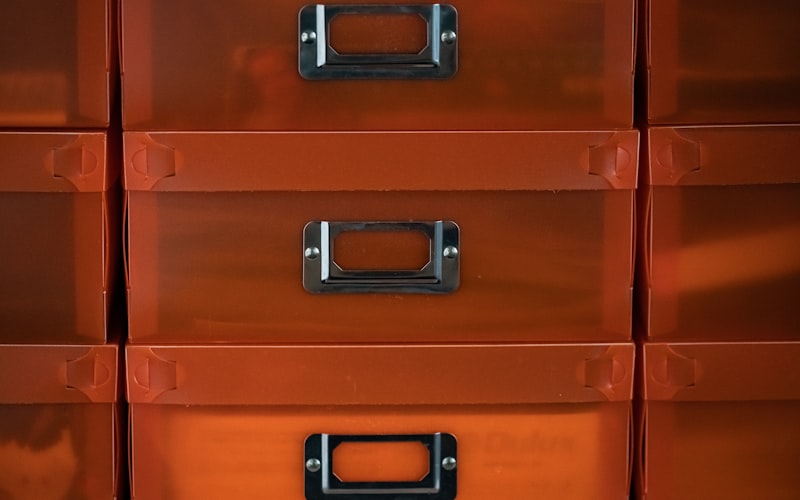
Cut pieces of cardboard or foam board to create a custom grid that fits your drawer exactly. Hot glue the pieces together, slide the grid in, and you have a free, perfectly fitted organizer.
Step 4: Assign Zones
Here's where the magic happens. Each compartment or section gets a specific category. The categories will vary by household, but here's a common layout that works for most kitchens:
| Zone | Contents |
|---|---|
| Tools | Small screwdriver, pliers, measuring tape, Allen wrenches |
| Office | Scissors, tape, pens (2-3 max), permanent marker, notepad |
| Batteries | Spare AA, AAA, and any specialty batteries you use regularly |
| Fasteners | A few rubber bands, binder clips, small bag of assorted screws/nails |
| Light/Fire | Flashlight, matches or lighter, birthday candles |
| Misc | Takeout menus (current ones only), spare keys (labeled), stamps |
The specific categories don't matter as much as the principle: every item has a defined spot. When you need tape, you know exactly which section it's in. When you put it back, it goes in that section. No thinking required.
Step 5: Label (Optional But Powerful)
Labeling the compartments takes an extra two minutes and dramatically increases the chances that everyone in the household puts things back in the right spot.
A label maker works great if you have one, but small pieces of masking tape with marker writing work just as well. The labels aren't about being pretty — they're about removing ambiguity.
If you enjoy labeling and organizing, you'll probably love applying the same approach to your pantry or linen closet.
Keeping It Organized: The Maintenance System
The 20-minute organization session is the easy part. Keeping it organized is where most people fail. Here's a simple system that prevents backsliding.
The One-In-One-Out Rule
Every time something new goes into the junk drawer, something old comes out. New pack of batteries? Toss the old dead ones. New takeout menu? Remove the one you never order from.
The Monthly 5-Minute Purge
Set a recurring calendar reminder on the first of each month. Spend 5 minutes going through the drawer, tossing anything that's accumulated and doesn't belong, and straightening up the compartments. Five minutes a month prevents the slow slide back to chaos.
The "Not Sure" Test
When you're about to toss something in the junk drawer, pause for three seconds and ask: "Does this actually belong here, or does it have a real home somewhere else?" Half the time, it belongs in a toolbox, office desk, or bathroom drawer instead.
Limit What the Drawer Holds
Define what categories are allowed in the junk drawer and stick to it. If it doesn't fit into one of your zones, it doesn't go in the drawer. This prevents the "I'll just put this here for now" items that are the root cause of junk drawer chaos.
What If You Don't Have a Drawer?
Not every kitchen has a spare drawer for miscellaneous items. Here are alternatives:
- Small desktop organizer on the counter — A rotating caddy or tiered organizer tucked in a corner serves the same function as a junk drawer.
- Over-the-door pocket organizer — Hang a clear pocket organizer on the inside of a pantry or closet door.
- Small bin in a cabinet — Dedicate one small bin in a kitchen cabinet for junk drawer items, organized with small containers inside.
- Wall-mounted organizer — Part of a family command center can serve as a vertical "junk drawer" with hooks, small baskets, and a mail slot.
Frequently Asked Questions
How many pens should I keep in the junk drawer?
Two or three that work. Test every pen in the drawer right now — half of them are probably dead or dying. Keep your favorites and toss the rest. Life is too short for pens that skip.
What should I do with mystery keys?
If you don't know what a key opens, label it with today's date using tape and put it back. If you still haven't identified it after 6 months, it's safe to toss. Most mystery keys are for locks that have already been changed or items you no longer own.
Should every house have a junk drawer?
Yes, and that's perfectly fine. The problem isn't having a catch-all drawer — it's having a catch-all drawer with no system. An organized junk drawer is one of the most functional spots in your kitchen.
How do I stop my family from messing up the organized drawer?
Labels help tremendously. Also, make the system intuitive: put things where people would naturally look for them. If the scissors always end up in the wrong spot, move the scissors zone to where people keep putting them. Work with habits, not against them.
Can I have more than one junk drawer?
One is ideal. If you have a second utility drawer (like in a home office or workshop), organize it the same way with categories and dividers. But resist letting every kitchen drawer become a junk drawer — that's how clutter spreads through the whole house.
Twenty Minutes to Sanity
An organized junk drawer is a tiny change that makes daily life measurably smoother. No more digging for scissors. No more testing six dead pens. No more "where did I put that?" for everyday items. Clear out 20 minutes this weekend, dump that drawer, and set up a system that actually lasts.
Get weekly home tips that actually work
Join thousands of homeowners getting practical cleaning hacks, DIY fixes, and money-saving tips every week. Free, and you can unsubscribe anytime.

Written by
Beth SullivanFounder & Editor-in-Chief
Beth Sullivan is the founder of Practical Home Guides. With over a decade of hands-on experience tackling every home challenge imaginable, she started this site to share the practical, no-nonsense solutions she wishes she had found years ago. When she's not testing cleaning hacks or organizing pantries, you'll find her in the garden or working on her next DIY project.
Recommended Products
Looking for specific product recommendations? Check out our tested picks.
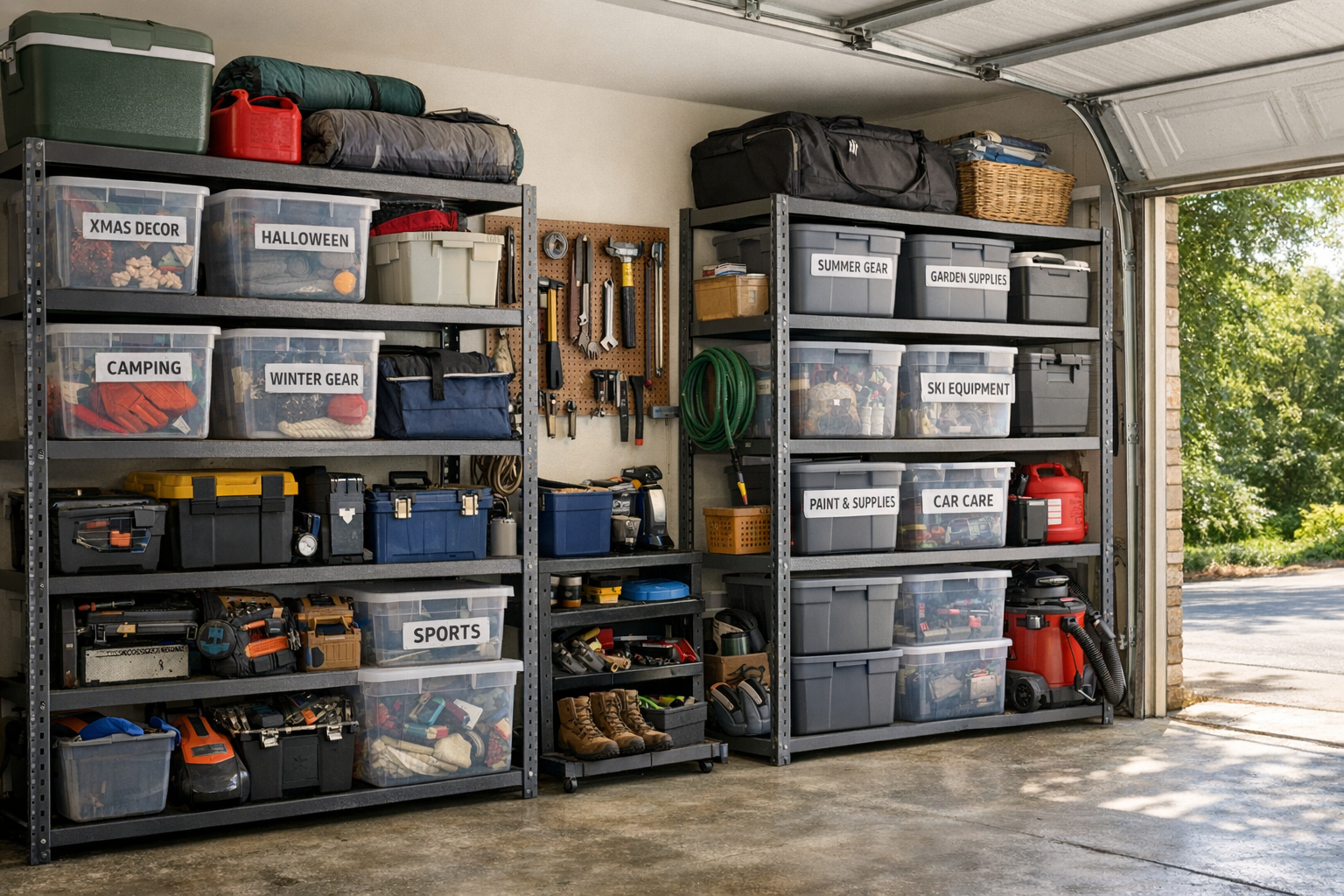
Best Garage Shelving Systems (2026 Tested)
Wire shelving, freestanding steel, wall-mounted, and overhead — we tested the garage shelving systems that hold real weight without sagging.
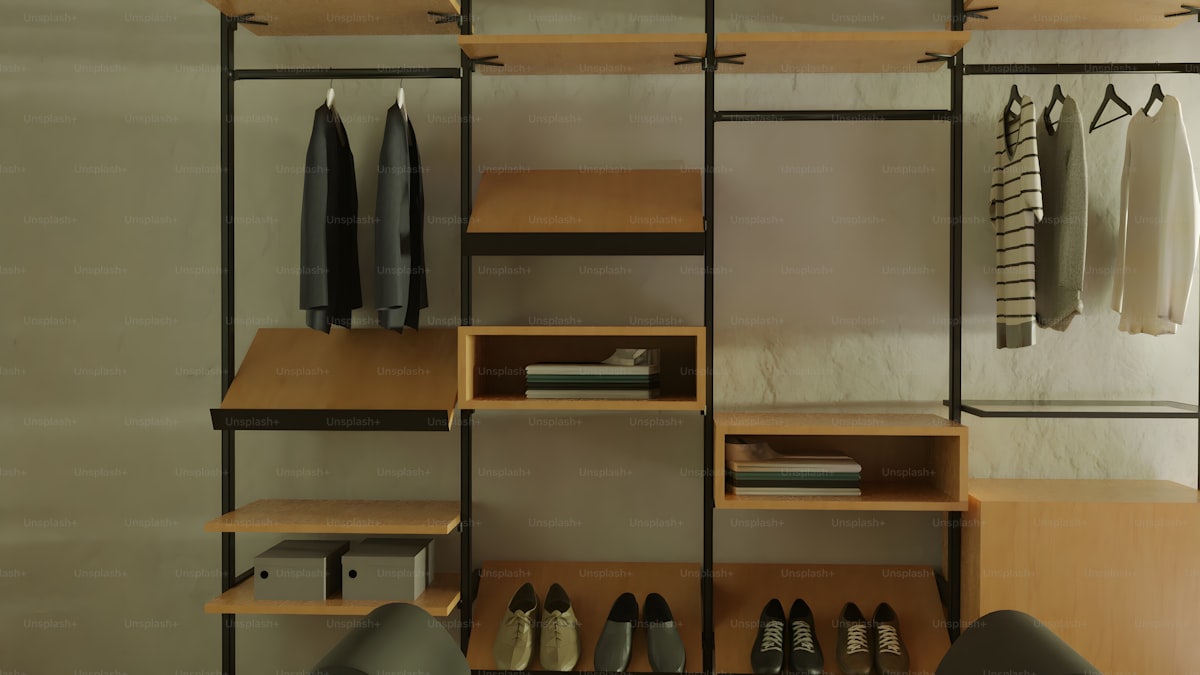
5 Best Closet Organizer Systems Under $100 (2026)
Transform your cluttered closet without spending a fortune. We compared the top closet organizer systems under $100 — here are the 5 best for different closet sizes and needs.
Best Storage Bins and Organizers for Every Room (2026)
The best storage bins, baskets, and organizers for closets, pantries, bathrooms, and garages. Practical picks at every price point to get your home organized.
Related Articles
How to Swap Winter and Summer Wardrobes (And Cut Your Closet in Half)
The seasonal wardrobe swap is the highest-leverage closet declutter you can do. Here's the system that takes 90 minutes and dramatically simplifies dressing for months.
How to Set Up Garage Pegboard Zones (Pro Mechanic Style)
A pegboard wall keeps every tool in its own spot. Here's the zone-based layout pro mechanics use — adapted for home garages.
How to Organize Deep Pantry Shelves Without Wasting Food
Deep pantry shelves are where food goes to be forgotten. Here's the system that keeps everything visible and rotated — even on 24-inch deep shelves.
How to Organize Pet Supplies and Build a Tidy Feeding Station
Stop tripping over kibble bags and digging through a chaotic pet drawer. A simple feeding station system that works for one pet or five.