Spring Pollen Defense: Air Purifiers vs. HEPA Filters (Testing Results)
This article may contain affiliate links. If you make a purchase through these links, we may earn a small commission at no extra cost to you. Learn more
Quick Answer
Spring Pollen Defense: Air Purifiers vs. HEPA Filters (Testing Results)
A true HEPA air purifier is the single most effective tool for reducing indoor pollen, capturing 99.97 percent of particles down to 0.3 microns. In our testing, the Coway AP-1512HH cut particulate counts the fastest for the price, dropping a bedroom from 'unhealthy' to 'good' in about 20 minutes. The Levoit Core 300 is the best small-room value, and the Honeywell HPA300 is the workhorse for large living areas.
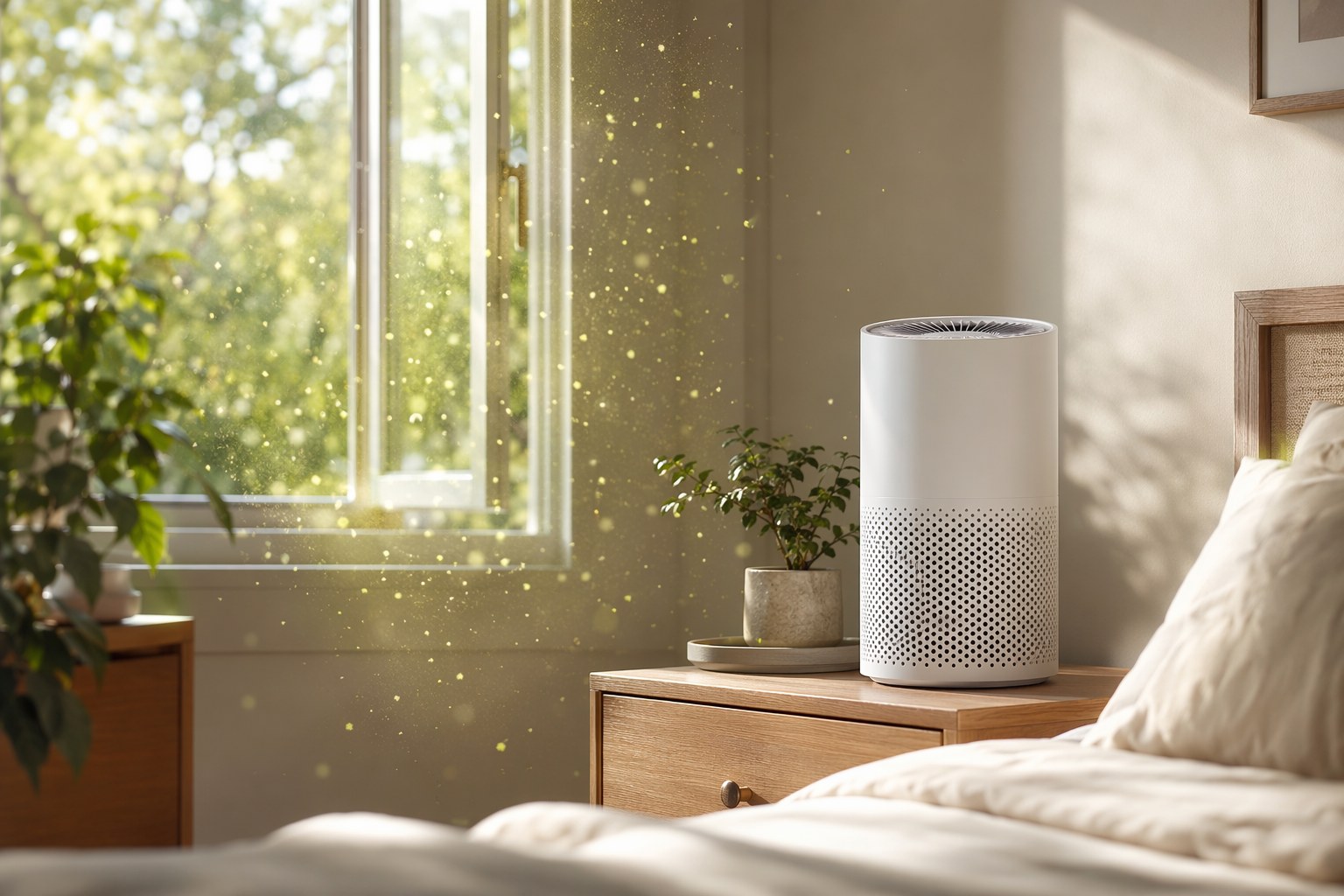
Every April my email fills up with the same question: "I keep my windows shut and I still wake up with itchy eyes. Where is the pollen coming from?" The answer is almost always the same. Pollen rides in on your clothes, your hair, the dog, and every time you open the door. Once it settles into your carpet and bedding, it keeps re-entering the air every time you walk across the room. You are essentially breathing yesterday's outdoors all night long.
I come at this from two angles. As a Master Gardener I know exactly what is blooming and when, because I am the one releasing some of that pollen into the neighborhood. And from my years as a vet tech, I learned to respect HEPA filtration in a way most people never think about, because we used it constantly to protect animals with compromised airways. So when spring hit this year, I set up six air purifiers in my own house and a particle counter, and I tested them like I test soil amendments: with numbers, not vibes.
This guide cuts through the marketing. We will cover what "HEPA" actually means, how a standalone purifier compares to upgrading your furnace filter, my real testing results, and which model is worth your money depending on your room and budget.
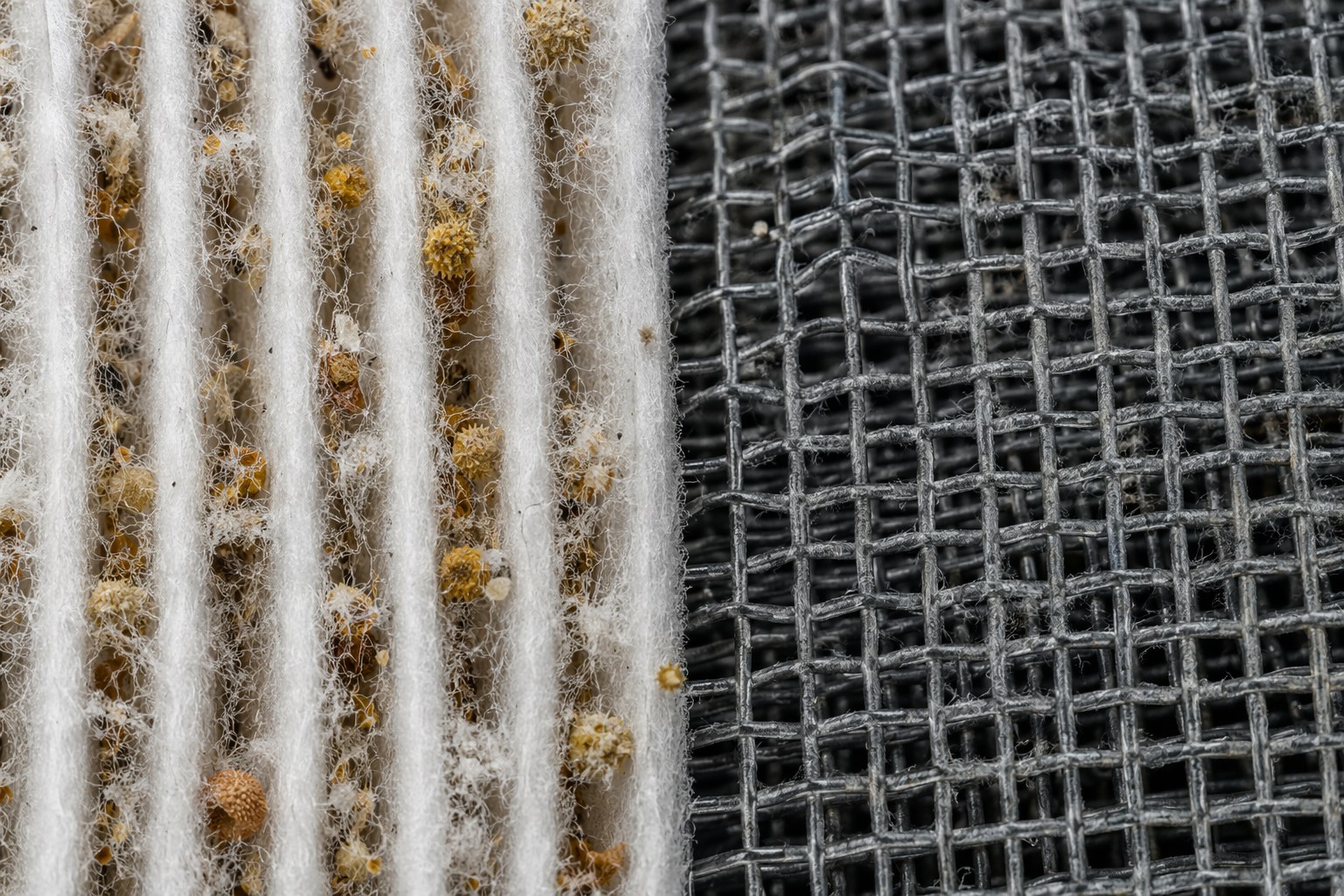
HEPA Filter vs. Air Purifier: They Are Not the Same Thing
This trips people up constantly, so let me be precise. A HEPA filter is a physical component, a dense mat of randomly arranged fibers. To carry the True HEPA label in the U.S., it must capture 99.97 percent of particles at 0.3 microns. That 0.3-micron number is the hardest size to catch, so the filter does even better on larger and smaller particles. Pollen grains are huge by comparison, mostly 10 to 100 microns, which is great news: HEPA traps essentially all of it.
An air purifier is the appliance. A good one houses a True HEPA filter plus a fan to pull air through it, usually with an activated carbon pre-filter for odors. The two are not interchangeable terms, and the difference matters when you shop. Watch for the weasel phrase "HEPA-type" or "99 percent HEPA-like." Those are not certified True HEPA and they let more through. Always look for "True HEPA" or "H13."
You have two real options for filtering pollen out of your indoor air, and they are not mutually exclusive.
Option 1: Upgrade your HVAC filter. Your furnace already moves all the air in your house. Swapping the cheap fiberglass filter for a MERV 13 pleated filter captures a meaningful share of pollen every time the system cycles. The catch is that whole-house systems only run when heating or cooling, and most homes do not run them constantly in mild spring weather. You also cannot put an actual HEPA filter in a standard return without a blower upgrade, because the airflow restriction is too high.
Option 2: Run a standalone HEPA air purifier in the rooms where you spend the most time. This is the approach I lean on, and the one I tested, because it gives you continuous, targeted filtration exactly where you sleep and breathe.
The honest answer for most homes is both. Upgrade the furnace filter for whole-house baseline coverage, then put a real purifier in the bedroom. If you want the whole-house side handled too, see our broader plan to allergy-proof your home for spring, which covers source control alongside filtration.
How I Tested (And Why CADR Matters More Than Marketing)
I ran each unit in my 200-square-foot bedroom with the door closed, windows cracked beforehand to load the room with real outdoor pollen on high-count days (my local count averaged 9.2 grains per cubic meter for tree pollen those mornings). I measured PM2.5 with a calibrated laser particle counter at the start, then at 20 and 60 minutes on each unit's highest setting.
The number that predicts real performance is CADR, the Clean Air Delivery Rate, measured in cubic feet per minute. It tells you how much genuinely clean air the unit produces. My rule of thumb: take your room's square footage and look for a CADR (smoke or pollen) at least two-thirds of that number for strong performance, or higher if you want fast cleanup. A 350-square-foot room wants a CADR around 230 or better.
The other metric I care about is ACH, air changes per hour. For allergy relief you want at least 4 to 5 ACH, meaning the unit filters the entire room's volume four to five times every hour. Anything less and pollen re-settles faster than it gets cleaned.
| Model | Best For | Room Size | Pollen/Smoke CADR | 20-Min PM2.5 Drop |
|---|---|---|---|---|
| Coway AP-1512HH | Best overall value | Up to 360 sq ft | 240 / 246 | 84% |
| Levoit Core 300 | Best small room | Up to 220 sq ft | 140 / 145 | 71% |
| Honeywell HPA300 | Best large room | Up to 465 sq ft | 300 / 320 | 89% |
| Winix 5500-2 | Best with odor control | Up to 360 sq ft | 243 / 232 | 82% |
| Blueair HealthProtect 7770i | Premium / quietest | Up to 418 sq ft | ~350 | 91% |
| GermGuardian AC5900WBD | Budget large room | Up to 335 sq ft | ~190 | 68% |
The Testing Results: What Actually Cleared the Air Fastest
Coway AP-1512HH: Best Overall Value
This is the one I recommend to most people, and it is the one that stays in my bedroom. On high, it pulled the room from an "unhealthy" PM2.5 reading down into the "good" range in about 20 minutes, an 84 percent drop. The four-stage system runs a washable pre-filter, a carbon deodorizing layer, and a True HEPA filter. The eco mode shuts the fan off when the air is clean, which I confirmed works using the onboard particle sensor and the indicator light cycling from red to blue.
What sells it for me is the long-term cost. The HEPA filter lasts about a year and the pre-filter is washable, so annual filter spend stays low. It is quiet enough on settings one and two to sleep through.
Coway AP-1512HH Mighty Air Purifier
Cut our test bedroom from unhealthy to clean in 20 minutes with low yearly filter costs and a true HEPA + carbon stack.
Check Price on Amazon →Levoit Core 300: Best for Small Rooms
For a nursery, home office, or any room under 220 square feet, the Core 300 is the value pick. It is compact, weighs about seven pounds, and runs whisper-quiet at 24 decibels on the lowest setting, which is genuinely quieter than most refrigerators. In my smaller guest room it managed a 71 percent particle drop in 20 minutes, more than enough for a space that size.
It will not keep up in a large living room, so match it to the room. Replacement filters are inexpensive, which keeps the running cost reasonable.
Levoit Core 300 True HEPA Air Purifier
Whisper-quiet 24 dB operation and cheap filters make it the best pick for bedrooms, nurseries, and offices under 220 sq ft.
Check Price on Amazon →Honeywell HPA300: Best for Large Rooms
If you need to clean an open living and dining area, the HPA300 is the workhorse. With the highest CADR of the mainstream units I tested, it cleared 89 percent of particles in 20 minutes in my bedroom and would handle a space more than twice that size. It is physically large and the top fan setting is loud, but the "Turbo Clean" mode chews through a pollen spike fast, then you drop it to a quieter level.
Winix 5500-2 and Blueair HealthProtect 7770i
The Winix 5500-2 nearly matched the Coway on particles and beat it on odors thanks to a much larger activated carbon filter, so it is my pick if you also fight pet smells or cooking odors. The Blueair HealthProtect 7770i was the standout on raw performance and silence, posting the highest particle drop in my test, but at three to four times the price of the Coway it is a premium splurge rather than a value buy. The GermGuardian AC5900WBD is a reasonable budget option for larger rooms, though its lower CADR meant the slowest cleanup of the group.
What This Costs Over a Year (ROI Analysis)
People fixate on the purchase price and forget the filter. Here is what a year of real use looks like, assuming you run the unit most of the day during allergy season and on low the rest of the year.
| Model | Upfront | Annual Filters | Year-1 Total |
|---|---|---|---|
| Levoit Core 300 | $100 | $30 | $130 |
| Coway AP-1512HH | $160 | $40 | $200 |
| Winix 5500-2 | $160 | $50 | $210 |
| Honeywell HPA300 | $250 | $90 | $340 |
| Blueair 7770i | $500 | $130 | $630 |
The energy cost is smaller than most people fear. These units draw 30 to 60 watts on typical settings, so running one continuously costs roughly $3 to $6 a month at average U.S. rates, similar to a couple of LED bulbs left on. If energy creep concerns you, the same low-draw thinking applies to the rest of the house, and our guide to the best LED bulbs for energy savings pairs well here. To keep filter life long, do not undermine the unit by letting unfiltered outdoor air pour in through gaps. Sealing up a drafty window reduces the pollen load the purifier has to fight in the first place.
The real return is not on a spreadsheet. It is fewer antihistamines, better sleep, and not waking up congested. For a household that spends $20 a month on allergy meds in season, a $200 purifier that lets you cut that in half pays for itself inside a single spring.
Getting the Most From Your Purifier
A purifier is only as good as how you run it. A few field-tested habits made the biggest difference in my readings.
- Bedroom first. You spend a third of your life there, and it is where pollen on your hair and pajamas accumulates. Run it on a higher setting an hour before bed, then drop to a quiet level overnight.
- Close the door. A purifier sized for one room cannot keep up with the whole house's air leaking in. Containment is half the battle.
- Do not block the intake. Keep at least a foot of clearance around the unit so the fan can actually pull air through.
- Pair it with source control. Vacuum with a HEPA vacuum, wash bedding weekly in hot water, and leave outdoor shoes at the door. A central spot to corral those shoes and jackets, like a family command center, keeps tracked-in pollen contained near the entry.
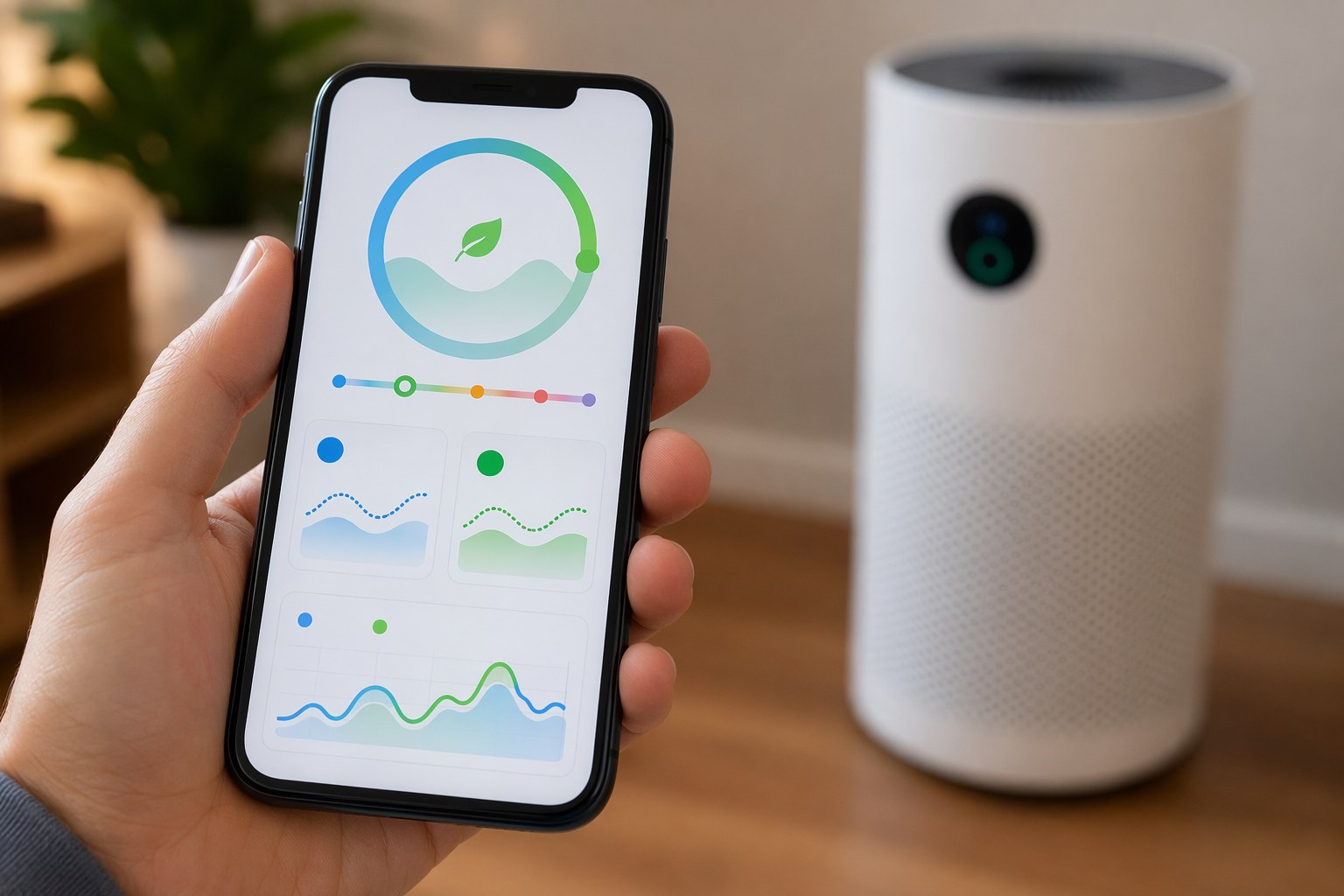
- Mind the smart features. Several models, including the Blueair and Winix, report live air quality to an app. It is genuinely useful for confirming the unit cycles up when pollen counts spike, and it makes the eco modes trustworthy.
Replace or wash filters on schedule. A clogged HEPA filter chokes airflow and quietly tanks your CADR, so the unit looks like it is running while doing far less.
Frequently Asked Questions
Do air purifiers really help with pollen allergies?
Yes, and the effect on pollen specifically is strong. Because pollen grains are large (10 to 100 microns) compared to the 0.3-micron particles HEPA is rated for, a True HEPA purifier captures essentially all airborne pollen that passes through it. The limit is airflow and room size, not the filter itself. Match the CADR to your room and run it continuously during season for the best result.
Can I just upgrade my furnace filter instead of buying a purifier?
A MERV 13 furnace filter helps meaningfully and is worth doing, but it only filters when your HVAC system is actively running, which is sporadic in mild spring weather. A standalone purifier runs whenever you want, in the exact room you are in. For allergy sufferers I recommend both: MERV 13 for whole-house baseline, plus a HEPA unit in the bedroom.
Are ionizers and ozone features safe?
Skip ozone generators entirely. Ozone is a lung irritant, and for allergy and asthma sufferers it can make symptoms worse, not better. Some purifiers include an ionizer that you can turn off; I leave it off and rely on mechanical HEPA filtration, which needs no ozone to work. If a unit's main selling point is ozone "fresh air," walk away.
How often do I really need to replace the HEPA filter?
For most of the units here, plan on every 12 months with year-round use, or sooner if you run it hard during a heavy pollen season or have pets. Washable pre-filters (like Coway's and Winix's) should be vacuumed or rinsed monthly. A simple tell: if the unit's air quality sensor takes much longer to turn from red to blue than it used to, the HEPA filter is loading up.
What size purifier do I need for my room?
Multiply your room's square footage by your ceiling height to get volume, but the shortcut works fine: pick a unit whose rated coverage meets or exceeds your room size, and whose CADR is at least two-thirds of the square footage. For a 300-square-foot bedroom, look for a CADR near 200 or higher and rated coverage of 300-plus square feet.
The Bottom Line
After running six units against real spring pollen, the pattern was clear. A True HEPA air purifier is the most effective single thing you can do for indoor pollen, and you do not need to overspend to get it. The Coway AP-1512HH is the value champion for most bedrooms and offices, clearing the air fast with low filter costs. Step down to the Levoit Core 300 for small rooms, or up to the Honeywell HPA300 for large open spaces.
Buy the right size for the room, run it with the door closed, keep up with filters, and pair it with simple source control. Do that and you will notice the difference the first morning you wake up without reaching for the tissues. That is the kind of return I care about, and it is one you can breathe.
Get weekly home tips that actually work
Join thousands of homeowners getting practical cleaning hacks, DIY fixes, and money-saving tips every week. Free, and you can unsubscribe anytime.

Written by
Sarah RodriguezGardening & Pet Care Contributor
Sarah Rodriguez is a certified Master Gardener and former veterinary technician. She lives on a half-acre lot in central Texas with three rescue dogs, two backyard chickens, and a very ambitious vegetable garden. She covers gardening, sustainable yard care, and everyday pet care for Practical Home Guides.
Recommended Products
Looking for specific product recommendations? Check out our tested picks.
Best Cordless Stick Vacuums (2026 Buyer's Guide)
We tested cordless stick vacuums on hardwood, carpet, pet hair, and stairs. Here are the picks worth the price for every home and budget in 2026.
Best Pressure Washers for Home Use (2026 Buyer's Guide)
We tested electric and gas pressure washers for siding, decks, driveways, and patio furniture. Here are the best picks for every budget and home size.
Best Self-Emptying Robot Vacuums (2026 Tested)
Self-emptying robot vacuums let you forget about the dust bin for weeks. We tested the top models on hardwood, carpet, pet hair, and floor plans.
5 Best Steam Mops for Tile Floors (2026)
We tested the top steam mops for tile, grout, and hard floors. Here are the 5 best picks with honest pros, cons, and who each one is best for.
7 Best Robot Vacuums Under $300 (2026)
We compared the top robot vacuums under $300 for pet hair, hardwood floors, and carpet. Here are the 7 best picks with pros, cons, and who each is best for.
Related Articles
Post-Cookout Cleanup: Fast Grill & Patio Restoration Strategy
Turn a trashed post-party patio back to perfect in 45 minutes flat. A timed grill, furniture, and deck cleanup strategy that beats the morning-after dread.
Post-Spring-Break Deep Clean: Restore Your House Room by Room
Restore your house after spring break travel and guests with this room-by-room deep clean plan. Finish a full reset in one weekend, no chaos required.
How to Remove Rust From Grill Grates (Without Replacing Them)
Rusted grill grates can be revived if rust is surface-only. Here's the safe restoration method that gets cast iron and steel grates back to cooking-ready.
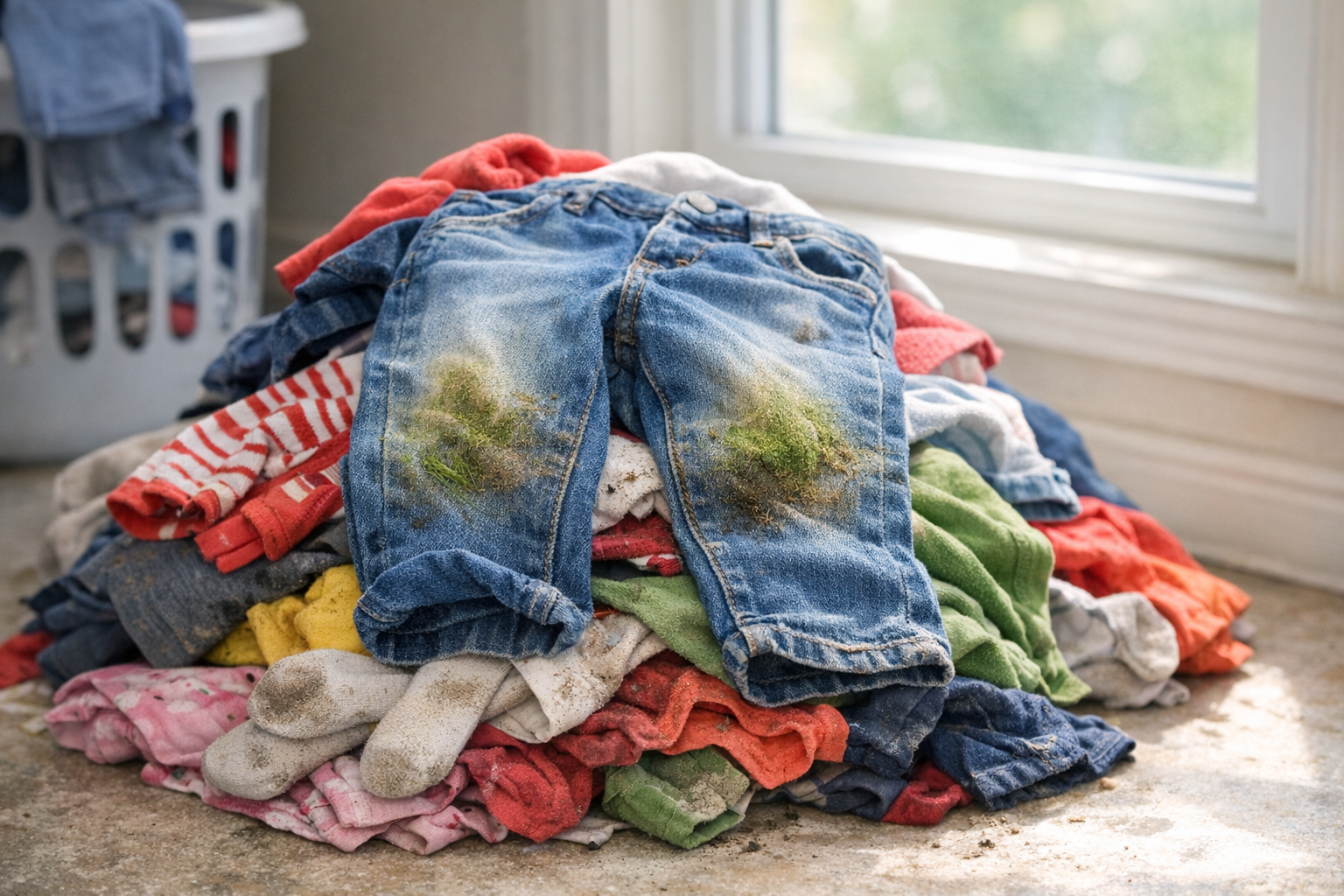
How to Remove Grass Stains From Clothes (Even After Drying)
Grass stains are protein and chlorophyll bonded into fabric. Here's the order of treatments that gets them out — even on jeans that already went through the dryer.