When to Repair vs Replace Major Appliances (A Contractor's Guide)
This article may contain affiliate links. If you make a purchase through these links, we may earn a small commission at no extra cost to you. Learn more
Quick Answer
When to Repair vs Replace Major Appliances (A Contractor's Guide)
Use the 50 percent rule: if the repair costs more than 50 percent of a new appliance's price AND the appliance is past its expected lifespan, replace it. For appliances under 5 years old, repair almost always wins. Common lifespans: refrigerator 12 to 15 years, washer 10 to 12, dryer 12 to 15, dishwasher 9 to 12.
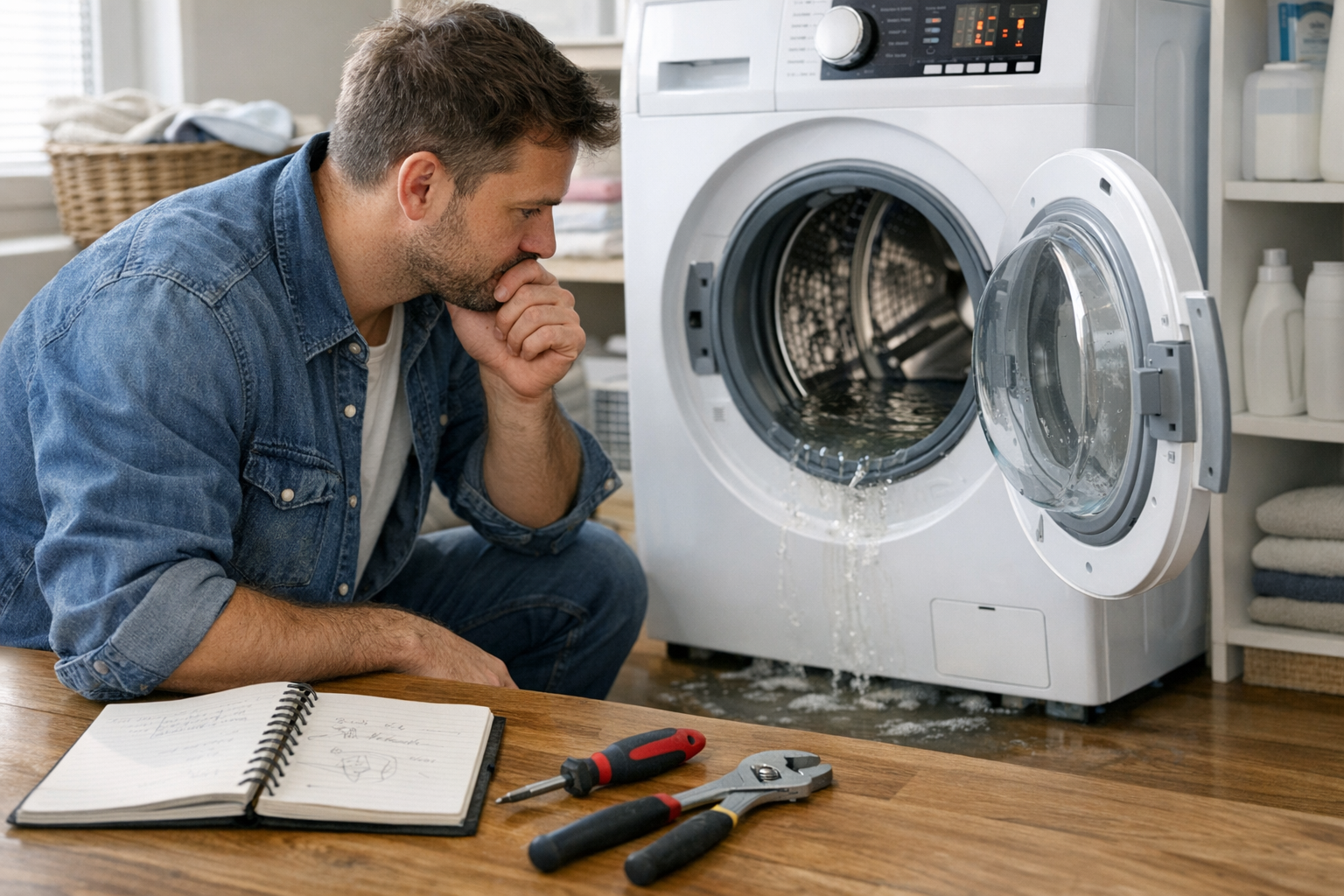
Every broken appliance starts the same internal argument: fix it or replace it? Most homeowners guess wrong in both directions — they replace appliances that had years of life left, or they pour money into machines that should have been replaced two repairs ago.
Here's the framework I use when clients ask. Ten minutes of math beats a 1,500-dollar mistake.
The 50 Percent Rule
The basic decision: if the repair cost is more than 50 percent of a new comparable appliance, AND the appliance is past 75 percent of its expected lifespan, replace.
If either condition fails, repair usually wins. A 4-year-old washer with a 400-dollar repair quote on a 900-dollar replacement? Repair (the appliance still has 6+ years of useful life). An 11-year-old dryer with a 250-dollar repair quote on a 600-dollar replacement? Borderline — energy efficiency of new units may tip toward replacement.
Expected Lifespans of Common Appliances
Use these as your "is it old?" benchmark:
- Refrigerator: 12 to 15 years (top freezer or side-by-side; French door slightly less)
- Washing machine: 10 to 12 years
- Dryer: 12 to 15 years
- Dishwasher: 9 to 12 years
- Range/oven (gas): 15 to 20 years
- Range/oven (electric): 13 to 17 years
- Microwave (over-the-range): 9 to 10 years
- Garbage disposal: 8 to 12 years
- Water heater (tank): 8 to 12 years
- Water heater (tankless): 18 to 22 years
When to Repair (Almost Always)
These situations almost always favor repair:
The Appliance Is Under 5 Years Old
Even an expensive repair on a 3-year-old fridge usually beats replacement. New fridges have shorter lifespans than older models — buying new starts a new aging clock.
The Repair Is a Common Wear Item
Some parts wear out and are designed to be replaced:
- Washer drain pump (100 to 200 dollars)
- Dryer heating element (150 to 250 dollars)
- Dishwasher pump (200 to 300 dollars)
- Refrigerator water valve (100 to 175 dollars)
- Disposal start relay (100 to 150 dollars)
These repairs on newer appliances are cheap insurance.
The Repair Is DIY
DIY repair changes the math entirely. Even on an older appliance, a 50-dollar part you install yourself is a no-brainer compared to even a low-end replacement.
YouTube has a teardown video for nearly every appliance and every common repair. A basic appliance repair tool kit covers 90 percent of jobs.
When to Replace
Some situations make replacement the clear winner:
Multiple Major Components Have Failed
If you've already replaced one major component and another is failing, the rest of the appliance is usually right behind. Cut your losses.
Energy Efficiency Has Improved Dramatically
For washers and dishwashers especially, modern Energy Star models use 30 to 50 percent less water and electricity than units from 15 years ago. The savings on utilities can pay back replacement within 3 to 5 years.
A new Energy Star washing machine uses about 14 gallons per load vs 30+ for older models. That's hundreds of dollars over a few years.
The Compressor or Sealed System Failed (Refrigerator)
Refrigerator compressor replacement costs 400 to 800 dollars and the rest of the fridge isn't far behind. On any fridge older than 10 years, replacement wins.
Major Water Damage or Corrosion
Internal corrosion in dishwashers, water-damaged motors in washers, or rusted refrigerator interiors all signal a unit at end-of-life. Repairing one issue won't stop the next.
Hidden Costs of Repair
Always factor in:
- Service call fee (usually 75 to 150 dollars, sometimes applied to repair if you proceed)
- Diagnosis fee (sometimes separate)
- Parts markup (40 to 100 percent over what you'd pay online)
- Labor (1 to 3 hours typical, 100 to 200 per hour)
- Possible second visit if more issues found
Get a written quote with all costs before authorizing work. A "150-dollar repair" can become 400 dollars by the time everything is added.
Hidden Costs of Replacement
- Delivery (typically 50 to 100 dollars, free for many appliances over 500 dollars)
- Installation (50 to 200 dollars depending on appliance)
- Old appliance haul-away (free with delivery, sometimes)
- New connection lines for washers (water hoses) — replace every 5 years anyway, but factor it in
- New venting for dryers if old venting is damaged
- Time without the appliance (a few days for delivery on most)
The Energy Savings Calculation
Run this math before deciding:
- Find your current appliance's estimated annual energy cost (label or measure with a Kill-A-Watt)
- Find the new model's annual energy cost (Energy Star yellow label)
- Difference times 10 years = lifetime energy savings
- Subtract that from the new appliance price to get "true cost" of replacement
A new dishwasher might cost 600 dollars after savings instead of 800. A new water heater might pay back within 2 years from gas/electric savings.
Specific Decision Trees
Refrigerator Decisions
- Compressor failure on 10+ year old fridge → Replace
- Defrost system failure → Repair (200 to 400 dollars, common fix)
- Door gasket → Repair (DIY, under 50 dollars)
- Ice maker → Repair (typically 150 to 300 dollars)
Washer Decisions
- Drum bearing failure → Replace if older than 8 years (this is a 400 to 600 dollar repair)
- Pump or motor → Repair on units under 8 years
- Shock absorbers → Repair (DIY, 100 to 200 dollars)
- Control board → Borderline — board itself can be 200 to 400 dollars
Dryer Decisions
- Heating element → Repair (DIY, 50 to 100 dollars in parts)
- Drum support rollers → Repair (DIY, 50 dollars)
- Motor failure → Replace if older than 10 years
- Squeaking belt → Repair (DIY, 30 dollars)
Dishwasher Decisions
Most dishwasher repairs run 200 to 400 dollars. New mid-range dishwashers are 500 to 800 dollars. The math is tighter than other appliances — older dishwashers usually lose to replacement.
When to Get a Pro Quote First
Before deciding, get one diagnostic from a local appliance technician. Many charge a flat 75 to 100 dollars for diagnosis (often applied to the repair if you proceed).
A pro can tell you:
- The actual problem (not just the symptom)
- Realistic repair cost
- Other issues likely to come up soon
- Whether the unit has a known problem (some models have systemic failures)
That information usually pays for itself.
Frequently Asked Questions
Are appliance extended warranties worth it?
Usually no. Manufacturer warranties cover most early failures. The biggest expensive failures (compressor, sealed systems) are often excluded from extended warranties. Self-insure by setting aside 10 dollars a month per major appliance.
Where do I find replacement appliance parts?
For DIY repairs, Amazon and dedicated sites like RepairClinic and AppliancePartsPros stock common parts. Search by your appliance's model number for exact-fit parts. A universal appliance repair manual is helpful for older units.
Should I buy a high-end or budget appliance to replace an old one?
Mid-range usually wins. The most expensive appliances often have more electronics, which means more failure points. Mid-range models from established brands (Whirlpool, GE, Bosch, LG, Samsung) hit the sweet spot of features and reliability.
Is it cheaper to repair just the broken part myself?
If you're handy and the repair is straightforward, often yes — by 60 to 80 percent. Watch a YouTube video for your specific model first to gauge difficulty. If it requires removing the cabinet or accessing sealed components, hire it out.
Final Thoughts
The 50 percent rule is the backbone, but adjust for energy efficiency gains and DIY skill. A diagnostic visit is cheap insurance against guessing wrong. Most appliances die earlier than they should because owners give up too soon — and others get expensive repairs they shouldn't have paid for. Run the math.
Get weekly home tips that actually work
Join thousands of homeowners getting practical cleaning hacks, DIY fixes, and money-saving tips every week. Free, and you can unsubscribe anytime.

Written by
Marcus ChenDIY & Home Repair Editor
Marcus Chen spent fifteen years as a licensed general contractor in the Pacific Northwest before joining Practical Home Guides full time. He specializes in plumbing, electrical, and weekend warrior projects that save homeowners thousands. Marcus has personally tested every tool he recommends in his own century-old fixer-upper.
Recommended Products
Looking for specific product recommendations? Check out our tested picks.

Best Outdoor Patio Furniture Deals (2026 Spring Picks)
Late April is the sweet spot for patio furniture deals — pre-summer sales without late-season picked-over selection. Here are the picks worth buying now.

5 Best LED Light Bulbs to Cut Your Electric Bill (2026)
Switch to LED bulbs and save $100+ per year on electricity. We compared the top LED bulbs for brightness, color quality, and longevity — here are the 5 best picks.
Best Smart Thermostats to Lower Your Energy Bill (2026)
The best smart thermostats that actually save money on heating and cooling. We compare 5 top picks from Nest, Ecobee, Honeywell, and more with real energy savings data.
Related Articles
Best Outdoor Patio Furniture Deals (2026 Spring Picks)
Late April is the sweet spot for patio furniture deals — pre-summer sales without late-season picked-over selection. Here are the picks worth buying now.

12 Earth Day Eco Swaps That Save Money All Year
These 12 home swaps reduce waste AND save money — most under 30 dollars upfront and pay for themselves within a few months.

12 Budget Mother's Day Gifts That Actually Feel Thoughtful
Skip the generic flowers-and-card combo. These under-50-dollar Mother's Day ideas feel personal without breaking the budget.
Homemade Cleaning Supplies That Save Real Money (7 Recipes That Work)
Skip the 8-dollar bottles of name-brand cleaner. These 7 homemade cleaner recipes replace everything in the cleaning aisle with 4 basic ingredients.