Best Wet/Dry Shop Vacs (2026 Tested)
This article may contain affiliate links. If you make a purchase through these links, we may earn a small commission at no extra cost to you. Learn more
Quick Answer
Best Wet/Dry Shop Vacs (2026 Tested)
The best wet/dry shop vac for most homeowners is the Ridgid 16-Gallon 6.5 HP — strong suction, large capacity, lifetime warranty on the motor. For smaller spaces, the Craftsman 5-Gallon 4 HP is the right size. For workshops, the Festool CT 26 is the dust-extraction premium pick. Skip 1-2 gallon shop vacs — the capacity is too small for any real cleanup.
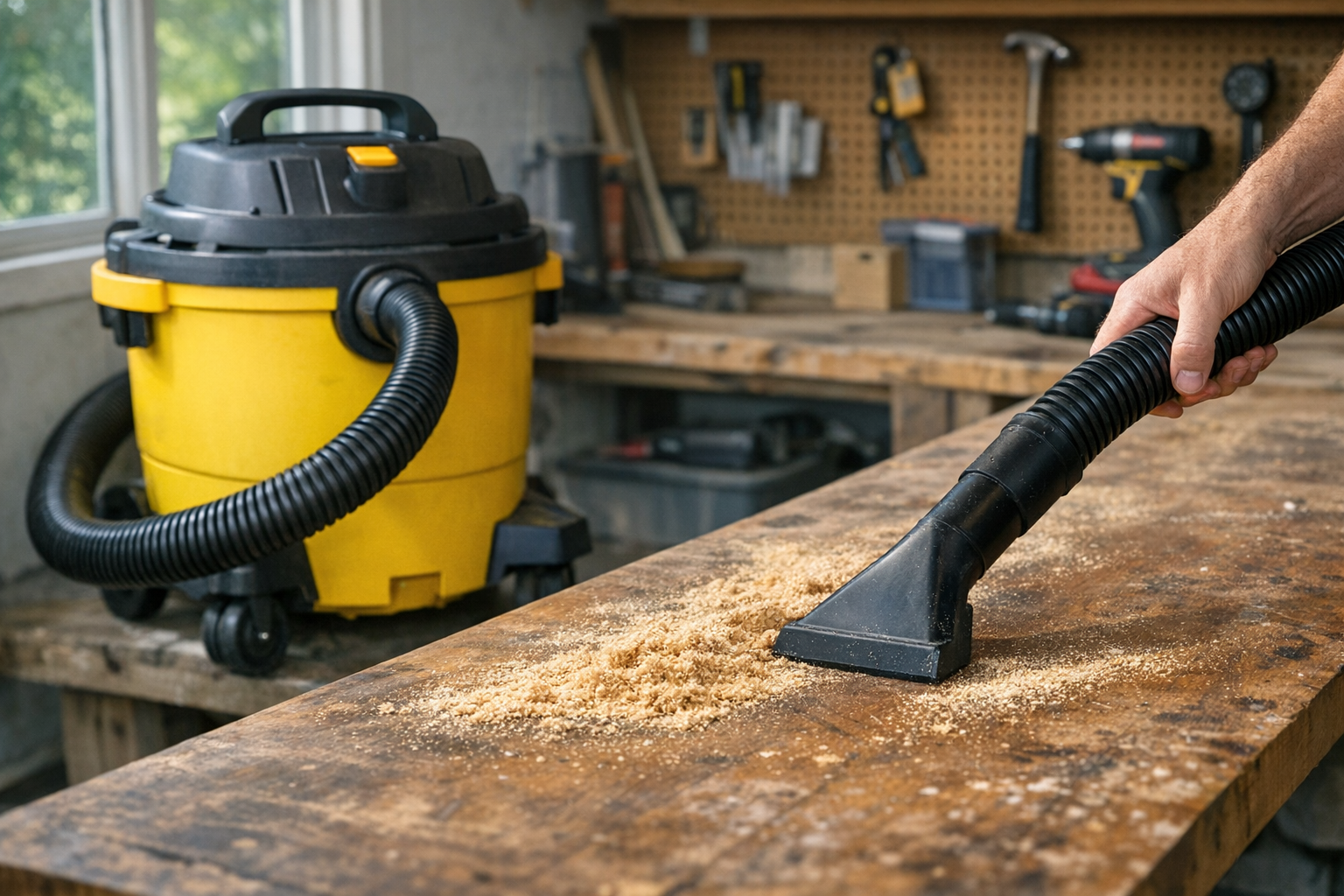
A wet/dry shop vac is one of those tools that sits unused for months, then saves you from a thousand-dollar disaster when the basement floods or the dishwasher overflows. Plus everyday duty cleaning the garage and workshop.
Here are the picks worth the money in 2026.
Quick Picks
- Best Overall: Ridgid 16-Gallon 6.5 HP
- Best Compact: Craftsman 5-Gallon 4 HP
- Best for Dust Extraction: Festool CT 26 E
- Best Cordless: Milwaukee M18 FUEL 9-Gallon
- Best Budget: Stanley 5-Gallon 4 HP
The Picks in Detail
Ridgid 16-Gallon 6.5 HP NXT Wet/Dry Vac
16-gallon capacity, 6.5 peak HP motor, 2.5-inch hose for max suction. Includes lifetime warranty on the motor (yes, lifetime). The default for any homeowner.
Check Price on Amazon →The Ridgid NXT is the shop vac I've owned for 12 years. Suction is strong, the 16-gallon capacity handles real flooding, and the rugged build holds up to abuse. The lifetime motor warranty is real — Ridgid honors it.
The 2.5-inch hose moves more material than the smaller 1.25-inch hoses on cheaper vacs. Worth the upcharge alone.
Around 200 dollars at Home Depot. The right call for most homeowners.
Craftsman 5-Gallon 4 HP Wet/Dry Vac
Compact size, 4 HP motor, includes blower port. Right for apartments, small garages, and quick cleanup tasks.
Check Price on Amazon →If your storage space is limited or you don't have a flooded-basement scenario to plan for, the Craftsman 5-gallon is plenty. Easier to maneuver, fits on a closet shelf.
The blower port is a nice touch — converts to a leaf blower in 30 seconds.
Festool CT 26 E Dust Extractor
HEPA-grade filtration, automatic tool start, ultra-quiet operation. The professional choice for woodworking and dust-sensitive jobs.
Check Price on Amazon →For serious workshop use — woodworking, drywall sanding, anything that creates fine dust — a dust extractor like the Festool CT 26 is dramatically different from a regular shop vac. HEPA filtration captures fine particles that pass through normal vac filters, and the auto-start feature kicks the vac on when you turn on a connected tool.
Around 700 dollars. Only for people who do regular woodworking or sanding. For occasional DIY, the Ridgid handles dust well enough with a HEPA-grade filter upgrade.
Milwaukee M18 FUEL 9-Gallon Wet/Dry Vac
Cordless, 9-gallon capacity, 30+ minute runtime on a high-output battery. The right pick if you already own M18 tools or need a vac far from outlets.
Check Price on Amazon →Cordless shop vacs have caught up to corded performance for short-duration tasks. The Milwaukee M18 FUEL 9-gallon delivers near-corded suction for 30 to 45 minutes per battery — plenty for most jobs.
Best if you're already in the Milwaukee M18 ecosystem (you have batteries). Standalone purchase doesn't make economic sense vs corded.
Stanley 5-Gallon 4 HP Wet/Dry Vac
Solid budget option. 4 HP motor, 5-gallon capacity, includes basic accessories. The right pick for occasional use.
Check Price on Amazon →Under 100 dollars. Performance and durability aren't Ridgid-level, but for occasional use (a few times a year) it's a solid value.
Don't expect this to handle workshop dust extraction or serious flooding. Light to medium duty only.
What "HP" Actually Means on Shop Vacs
Shop vac marketing throws around "Peak HP" numbers (3 HP, 5 HP, 6.5 HP) that have nothing to do with actual continuous power. They're calculated in a specific moment under no load and don't reflect real-world suction.
Better specs to compare:
- Air Watts — actual suction power. 100+ AW is good for home use, 200+ AW for serious cleanup.
- CFM — air volume moved. 150+ CFM handles most jobs.
- Tank size — capacity, in gallons. 5 gallons for occasional use, 12+ for flooding.
- Hose diameter — bigger hose moves more material. 2.5 inch hose is the sweet spot for shop vacs.
Accessories That Make a Real Difference
A few add-ons transform a basic shop vac:
- HEPA filter upgrade — the HEPA Ridgid filter traps fine drywall and sawdust particles
- Reusable cloth filter bag for fine dust — keeps the main filter from clogging
- Wet/dry vac muffler for quieter operation
- Long hose extension — 30+ feet for big garages and basements
Common Use Cases
A shop vac handles:
- Flooded basement / overflowed sink — sucks up dozens of gallons
- Workshop sawdust and metal shavings — main use for woodworkers
- Garage dust and dirt — much faster than sweeping
- Car interior cleaning — with the right attachment, better than gas-station vacs
- Pet hair and pet messes (wet)
- Drywall dust during renovation
What to Skip
- 1 to 2 gallon shop vacs. Capacity is too small for anything real. You'll empty them constantly.
- "Peak 5 HP" units under 80 dollars. The HP number is marketing fiction; actual suction is weak.
- Bagless systems for fine dust. The filter clogs constantly. Use a bag for dust-heavy tasks.
Frequently Asked Questions
Can I use a shop vac on regular carpet?
Yes, but it's not designed for it. Shop vacs lack the brushroll that traditional vacuums use to lift carpet pile. Use a shop vac for spot cleanup or for carpets soiled with wet messes — not for daily carpet vacuuming.
How do I prevent the shop vac from blowing dust everywhere?
Add a pre-filter bag to catch large debris before it hits the main filter. Then upgrade to a HEPA filter. The combination keeps fine dust contained.
Can I use a shop vac to suck up water from a leak?
Yes — that's the "wet" part of wet/dry. Remove any paper bag or filter rated dry-only first. The water goes directly into the tank. Empty before it gets too heavy to lift.
How do I clean a shop vac filter?
For dry use: tap or vacuum the filter clean periodically. For wet use: rinse the filter with a hose and let dry fully before reuse. Replace filters annually for heavy use, every 2 to 3 years for occasional.
Final Thoughts
For most homeowners, the Ridgid 16-gallon 6.5 HP is the right pick — bulletproof construction, lifetime motor warranty, and the capacity to handle a real flood. The Craftsman 5-gallon for tight spaces. Skip cheap small-tank shop vacs — they don't have the capacity to be useful in the moments you actually need a shop vac.
Get weekly home tips that actually work
Join thousands of homeowners getting practical cleaning hacks, DIY fixes, and money-saving tips every week. Free, and you can unsubscribe anytime.

Written by
Marcus ChenDIY & Home Repair Editor
Marcus Chen spent fifteen years as a licensed general contractor in the Pacific Northwest before joining Practical Home Guides full time. He specializes in plumbing, electrical, and weekend warrior projects that save homeowners thousands. Marcus has personally tested every tool he recommends in his own century-old fixer-upper.
Recommended Products
Looking for specific product recommendations? Check out our tested picks.
Best Cordless String Trimmers (2026 Tested)
Battery-powered string trimmers have caught up to gas. We tested the top models on bermuda, fescue, and overgrown areas to find the picks worth your money.
Best Basement Dehumidifiers (2026 Buyer's Guide)
Damp basements destroy stored items, grow mold, and stink. We tested dehumidifiers for capacity, durability, and energy use to find the picks worth the money.
Best Electric Leaf Blowers (2026 Buyer's Guide)
Cordless and corded electric leaf blowers tested for power, runtime, and noise. Our picks for small yards, large yards, and pro-grade home use.
Best Cordless Lawn Mowers (2026 Spring Buyer's Guide)
Battery-powered mowers have caught up to gas. We tested the top cordless mowers on grass length, slopes, and runtime to find the picks worth your money.

5 Best Cordless Drills for Homeowners (2026)
Find the right cordless drill for home projects without overspending. We compared the top drills for DIYers — here are the 5 best for everyday home use.
Best Home Tool Kits for Beginners (2026)
The best home tool kits for new homeowners and renters. We compare 6 tool sets from basic to comprehensive, so you can handle common repairs without calling a handyman.
Related Articles

How to Paint a Front Door (Pro-Quality Result in One Afternoon)
A fresh-painted front door is the highest-impact curb appeal upgrade. Here's the step-by-step that gets a smooth pro finish in 4 hours — no peeling, no brush marks.
How to Prevent Summer AC Breakdowns (April Tune-Up Checklist)
Most AC failures happen in the first 90F week. A 30-minute April tune-up prevents 80 percent of those breakdowns and extends the unit's life by years.
Best Cordless String Trimmers (2026 Tested)
Battery-powered string trimmers have caught up to gas. We tested the top models on bermuda, fescue, and overgrown areas to find the picks worth your money.
How to Fix Sticky Kitchen Cabinet Doors (Without Replacing Hardware)
Cabinet doors that bind, rub, or won't close all the way are almost always a hinge adjustment problem. Here's the 10-minute fix.