How to Prevent Summer AC Breakdowns (April Tune-Up Checklist)
This article may contain affiliate links. If you make a purchase through these links, we may earn a small commission at no extra cost to you. Learn more
Quick Answer
How to Prevent Summer AC Breakdowns (April Tune-Up Checklist)
Replace the air filter, clean the outdoor condenser coils, clear any leaves from the condenser unit, check the condensate drain line, and run a 15-minute test cycle before the first 90F day. Total time: 30 minutes. Skip the tune-up and you risk a 200-500 dollar emergency call in July.
The first 90F day is when AC units fail. They've been sitting unused for 6 months, dust has built up on coils, and pollen has clogged outdoor units. Then full load hits and something breaks.
A 30-minute April tune-up catches problems before they become a stuck-on-summer-night emergency call.
Why Spring Tune-Ups Matter
Three reasons AC units fail in early summer:
- Dirty coils force the system to work harder, overheating the compressor
- Clogged condensate lines cause water damage and trip safety switches
- Worn capacitors that limped through last summer fail on first heavy use
All three are detectable and fixable in 30 minutes with no special tools.
What You'll Need
- A new HVAC filter (one or more depending on your home)
- A garden hose
- A coil cleaner spray
- A wet/dry shop vac or vacuum with hose attachment
- A flashlight
- Optional: HVAC fin straightener for bent fins
Step 1: Replace the Air Filter
The single highest-impact 5-minute task. A clogged filter strangles airflow and forces the system to work harder.
- Most homes need a fresh filter every 2 to 3 months during heavy use
- Use MERV 11 or MERV 13 pleated filters — they trap allergens that lower MERV doesn't
- Note the filter direction (arrow points toward the blower)
Confirm the filter size from the old one before ordering. A common 16x25x1 filter doesn't fit a 20x25x1 slot.
Step 2: Clean the Outdoor Condenser Coils
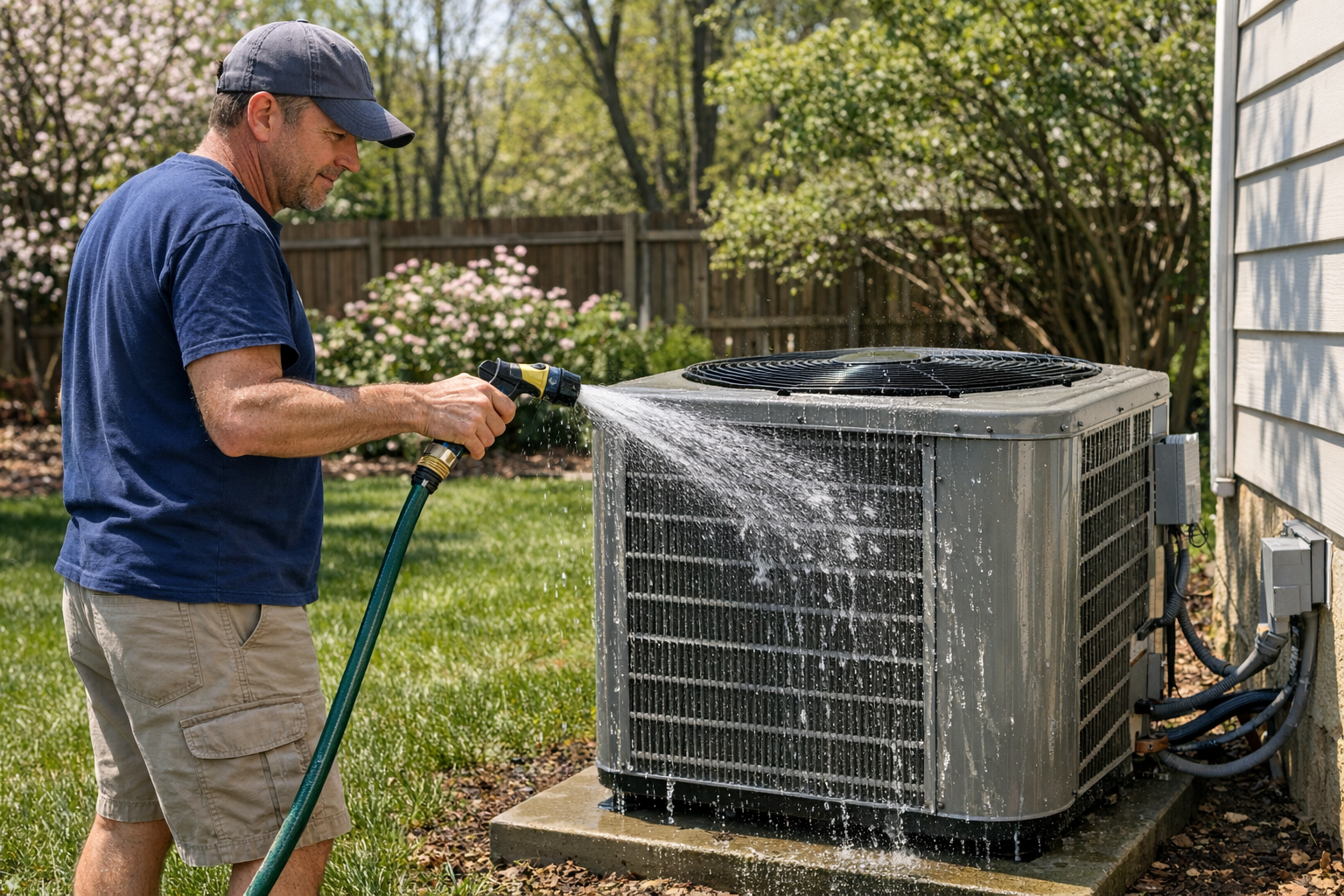
The big metal box outside is the condenser unit. Pollen, leaves, grass clippings, and dust build up on the fins all year.
- Turn off power at the disconnect switch (a small box on the wall near the unit)
- Brush off any visible debris (leaves, grass) with your hand
- Spray the coil cleaner onto the fins per package directions
- Wait 5 to 10 minutes (foam expands and lifts grime)
- Rinse with the hose from the inside out (open the top grille if your unit allows)
Don't pressure wash — bends fins. A garden hose is plenty.
Step 3: Straighten Bent Fins
Look at the fins on the side of the unit. Bent fins block airflow and reduce efficiency.
A fin comb under 10 dollars combs fins back to straight. Slow work but improves efficiency dramatically.
Step 4: Clear Around the Condenser
The condenser needs at least 2 feet of clearance on all sides for proper airflow:
- Trim back overgrown bushes
- Clear any stored items
- Remove leaves from the top grille
- Keep grass clippings from being blown toward the unit during mowing
Restricted airflow = stressed compressor = early failure.
Step 5: Check the Condensate Drain Line
The white PVC pipe coming out of your indoor air handler removes condensation. It clogs with algae and slime over time, then water backs up and triggers a safety shutoff (or worse, leaks into your ceiling).
Pour a cup of diluted bleach (1:8 with water) or white vinegar into the access port (a small T-fitting near where the line exits the unit). It dissolves the slime.
Better: pour a condensate pan tablet into the drain pan monthly during cooling season. Slow-release bleach prevents buildup.
Step 6: Listen and Watch the First Cycle
Restore power and run the AC for 15 minutes. Listen for:
- Smooth steady hum (good)
- Buzzing or grinding (capacitor failing)
- Pulsing noise (refrigerant level low)
- Outdoor fan running but indoor air not cold (compressor problem)
If anything sounds off, call an HVAC tech BEFORE the first 90F day. Spring service calls are 100-150 dollars. Summer emergency calls are 250-500.
Step 7: Set the Right Thermostat Schedule
For most homes, 78F when home and 82F when away is the efficiency sweet spot. Each degree below 78 increases cooling cost about 6 percent.
A smart thermostat automates this. See our smart thermostat roundup.
When to Call a Pro
Some checks need an HVAC technician's tools:
- Refrigerant level (requires gauges)
- Electrical inspection
- Capacitor health test
- Anything inside the air handler
Most homes benefit from a once-per-year professional tune-up (typically 100-150 dollars) on top of the DIY April checklist.
Frequently Asked Questions
How often should I clean the condenser coils?
Once a year is plenty for most homes. Once every 6 months in dusty or pollen-heavy areas.
Why is water leaking from the indoor unit?
Almost always a clogged condensate line. See Step 5. If pouring vinegar doesn't clear it, blow it out with a wet/dry vac on the outdoor end.
How long should an AC unit last?
15 to 20 years for most central AC systems. Beyond 12 to 15 years, repair costs over 1,000 dollars usually mean replacement is the better choice.
Should I cover my AC unit in winter?
Most manufacturers say no — proper covers trap moisture and rust the unit. A fitted top-only cover keeps leaves out without trapping moisture.
Final Thoughts
30 minutes in April saves a 400-dollar emergency call in July. Replace the filter, clean the condenser, clear the drain, and run a test cycle. Most AC failures are preventable with this routine.
Get weekly home tips that actually work
Join thousands of homeowners getting practical cleaning hacks, DIY fixes, and money-saving tips every week. Free, and you can unsubscribe anytime.

Written by
Marcus ChenDIY & Home Repair Editor
Marcus Chen spent fifteen years as a licensed general contractor in the Pacific Northwest before joining Practical Home Guides full time. He specializes in plumbing, electrical, and weekend warrior projects that save homeowners thousands. Marcus has personally tested every tool he recommends in his own century-old fixer-upper.
Recommended Products
Looking for specific product recommendations? Check out our tested picks.
Best Cordless String Trimmers (2026 Tested)
Battery-powered string trimmers have caught up to gas. We tested the top models on bermuda, fescue, and overgrown areas to find the picks worth your money.
Best Basement Dehumidifiers (2026 Buyer's Guide)
Damp basements destroy stored items, grow mold, and stink. We tested dehumidifiers for capacity, durability, and energy use to find the picks worth the money.
Best Wet/Dry Shop Vacs (2026 Tested)
Whether you need to clean a flooded basement, dust the garage, or pick up workshop debris, here are the wet/dry shop vacs worth the money.
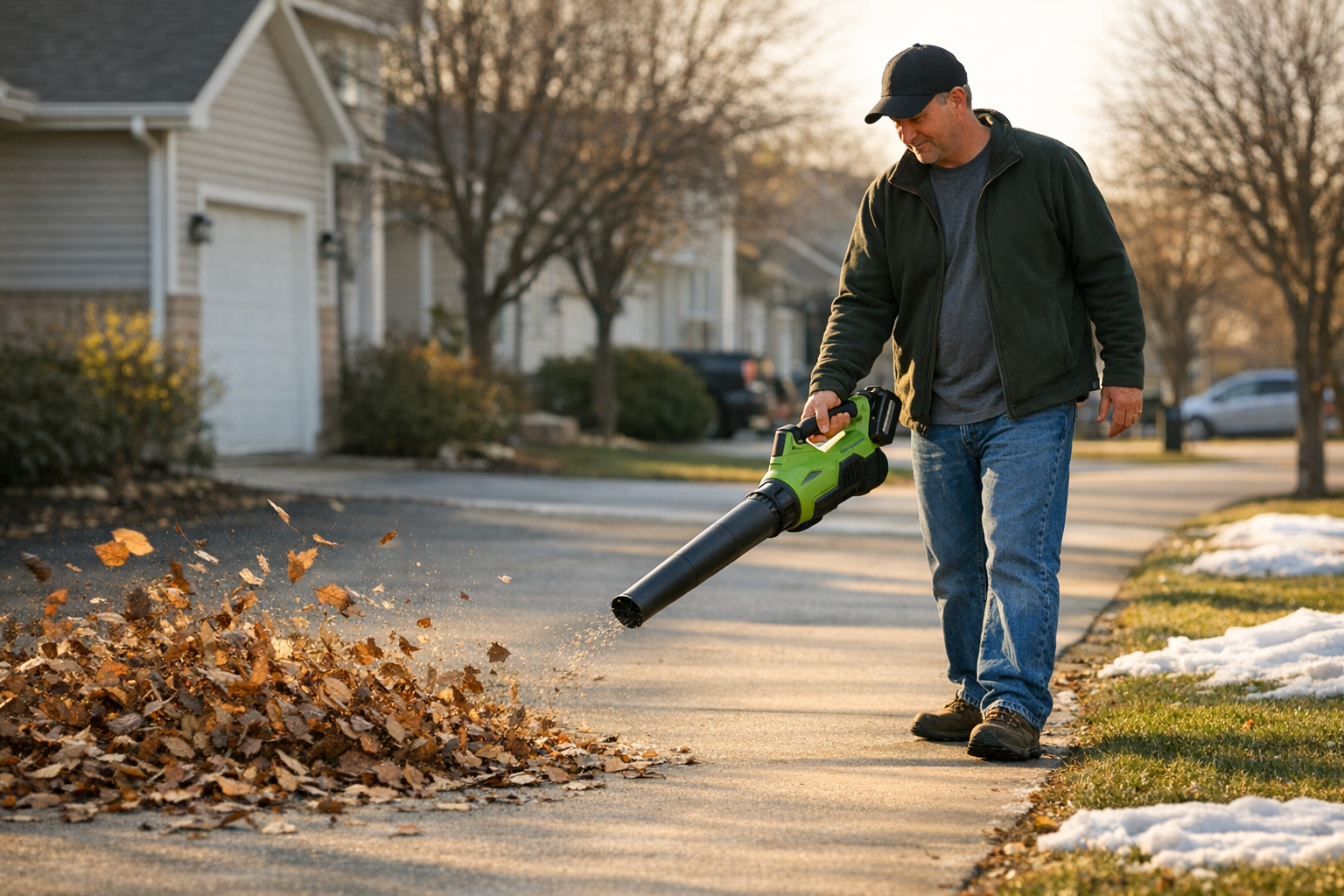
Best Electric Leaf Blowers (2026 Buyer's Guide)
Cordless and corded electric leaf blowers tested for power, runtime, and noise. Our picks for small yards, large yards, and pro-grade home use.

Best Cordless Lawn Mowers (2026 Spring Buyer's Guide)
Battery-powered mowers have caught up to gas. We tested the top cordless mowers on grass length, slopes, and runtime to find the picks worth your money.

5 Best Cordless Drills for Homeowners (2026)
Find the right cordless drill for home projects without overspending. We compared the top drills for DIYers — here are the 5 best for everyday home use.
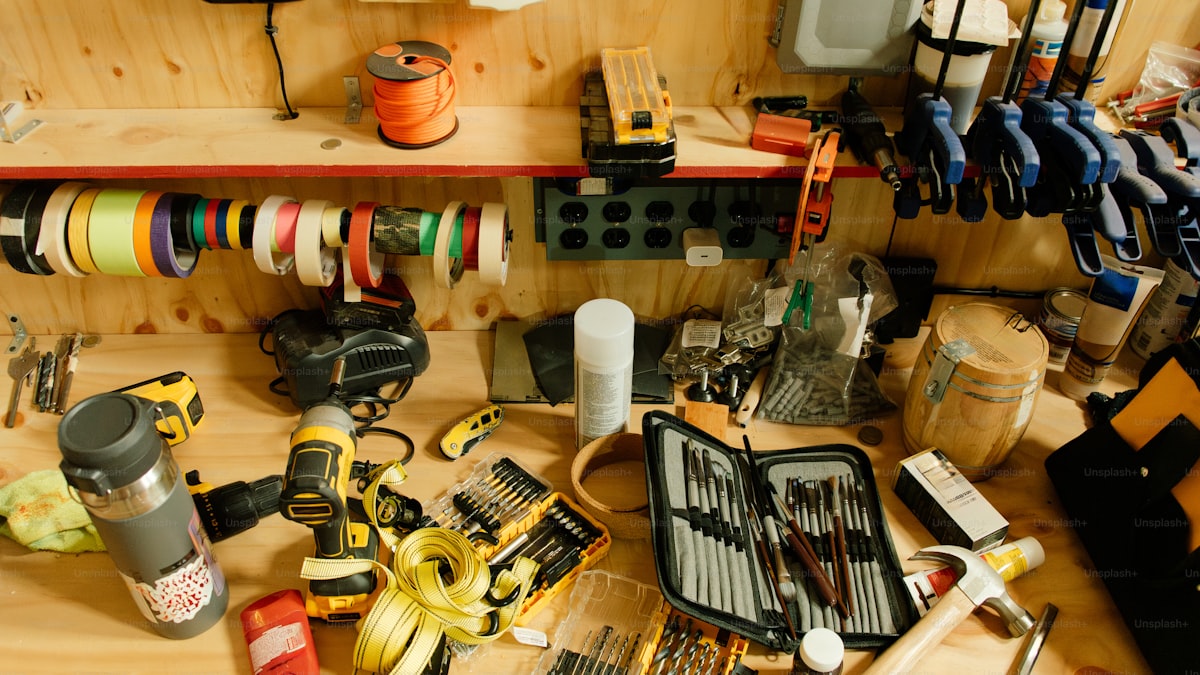
Best Home Tool Kits for Beginners (2026)
The best home tool kits for new homeowners and renters. We compare 6 tool sets from basic to comprehensive, so you can handle common repairs without calling a handyman.
Related Articles
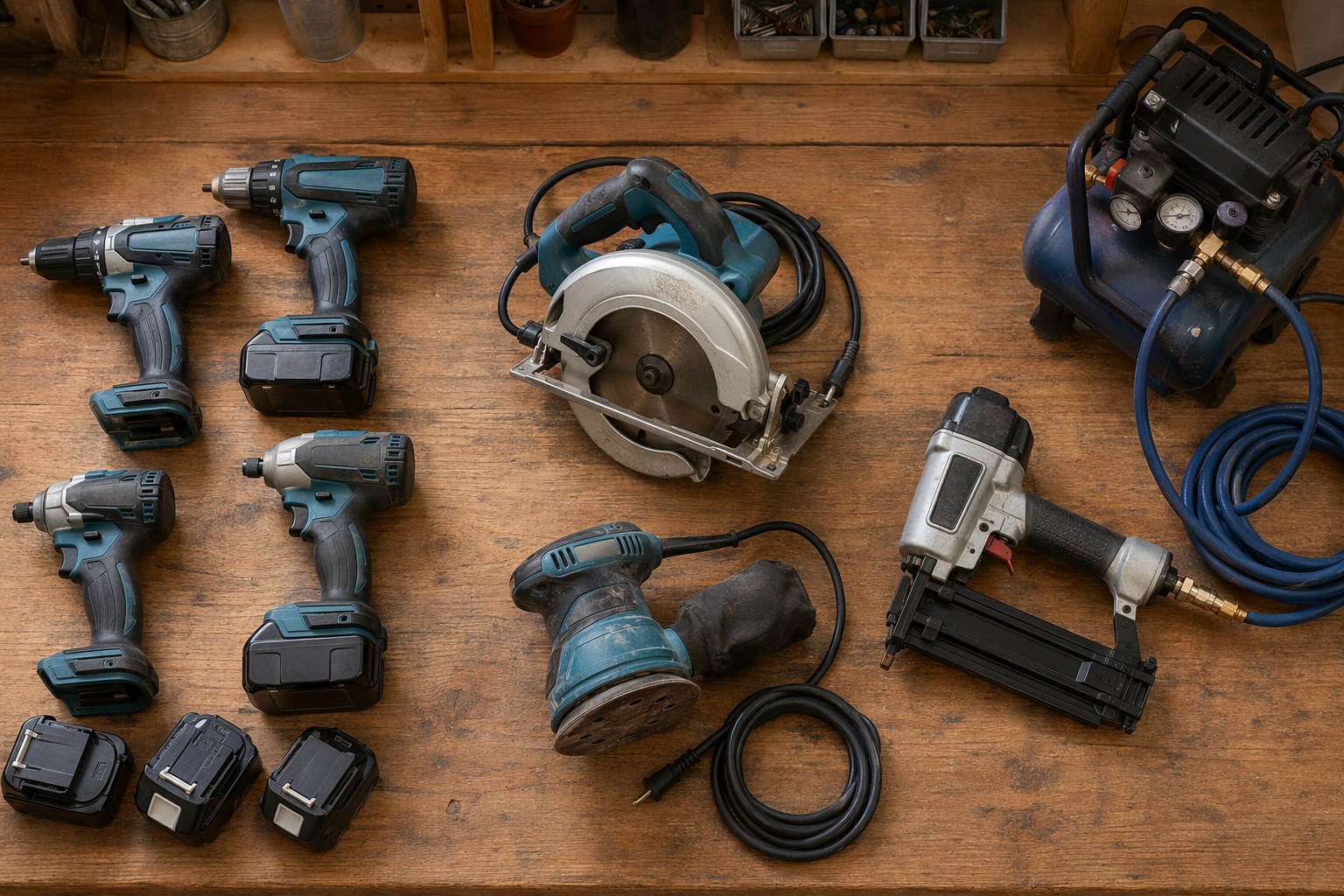
Cordless vs. Corded vs. Pneumatic: The Homeowner's Tool System Buying Guide
Cordless, corded, or pneumatic? A homeowner's guide to choosing a power tool ecosystem (DeWalt, Milwaukee, Makita, Ryobi) with a starter-to-advanced path.
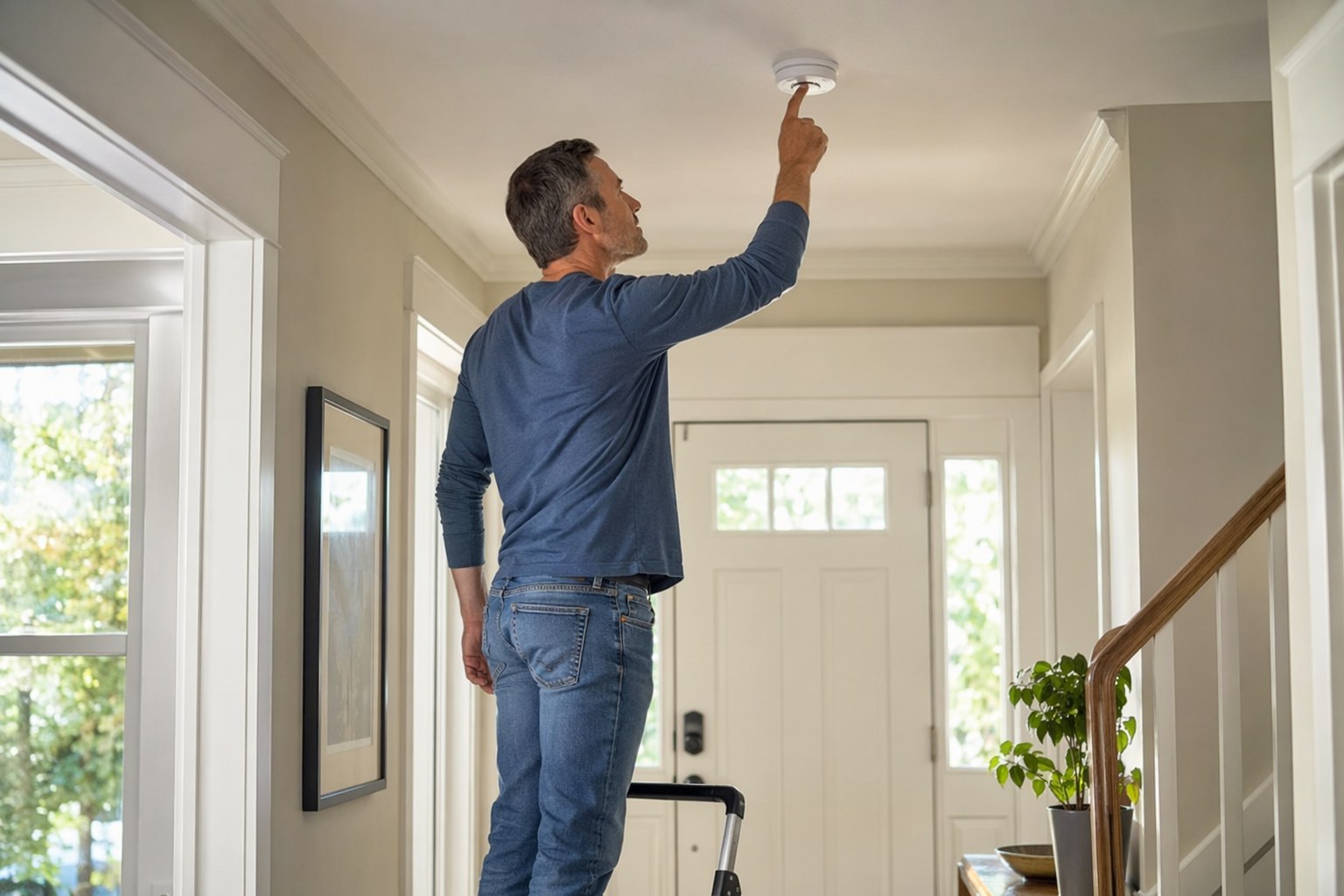
End-of-May Home Audit: Fix 5 Summer Safety Issues Before June Heat
A contractor's final spring safety audit. Five critical ventilation, electrical, plumbing, and cooling checks to fix before extreme June heat hits your home.

Backyard Lighting Design: Create Ambiance for Summer Evenings
An electrician's guide to safe backyard lighting design. Layer string lights, path lights, and uplighting in zones for ambiance plus task lighting that lasts.

Budget Outdoor Dining: Building a Patio Table & Bench Setup
A carpenter's plans for a sturdy 2x4 outdoor dining table and bench set that seats 8, costs about 300 dollars in materials, and lasts 20 years.