15 Cheap Pantry Staples That Stretch Your Grocery Budget
This article may contain affiliate links. If you make a purchase through these links, we may earn a small commission at no extra cost to you. Learn more
Quick Answer
15 Cheap Pantry Staples That Stretch Your Grocery Budget
The highest-value pantry staples for stretching a budget are dried beans, rice, rolled oats, pasta, canned tomatoes, eggs, onions, garlic, frozen vegetables, olive oil, spices in bulk, peanut butter, flour, lentils, and cheap cuts of meat like chicken thighs. These 15 items cover breakfast, lunch, and dinner for most families at under 50 dollars a week.
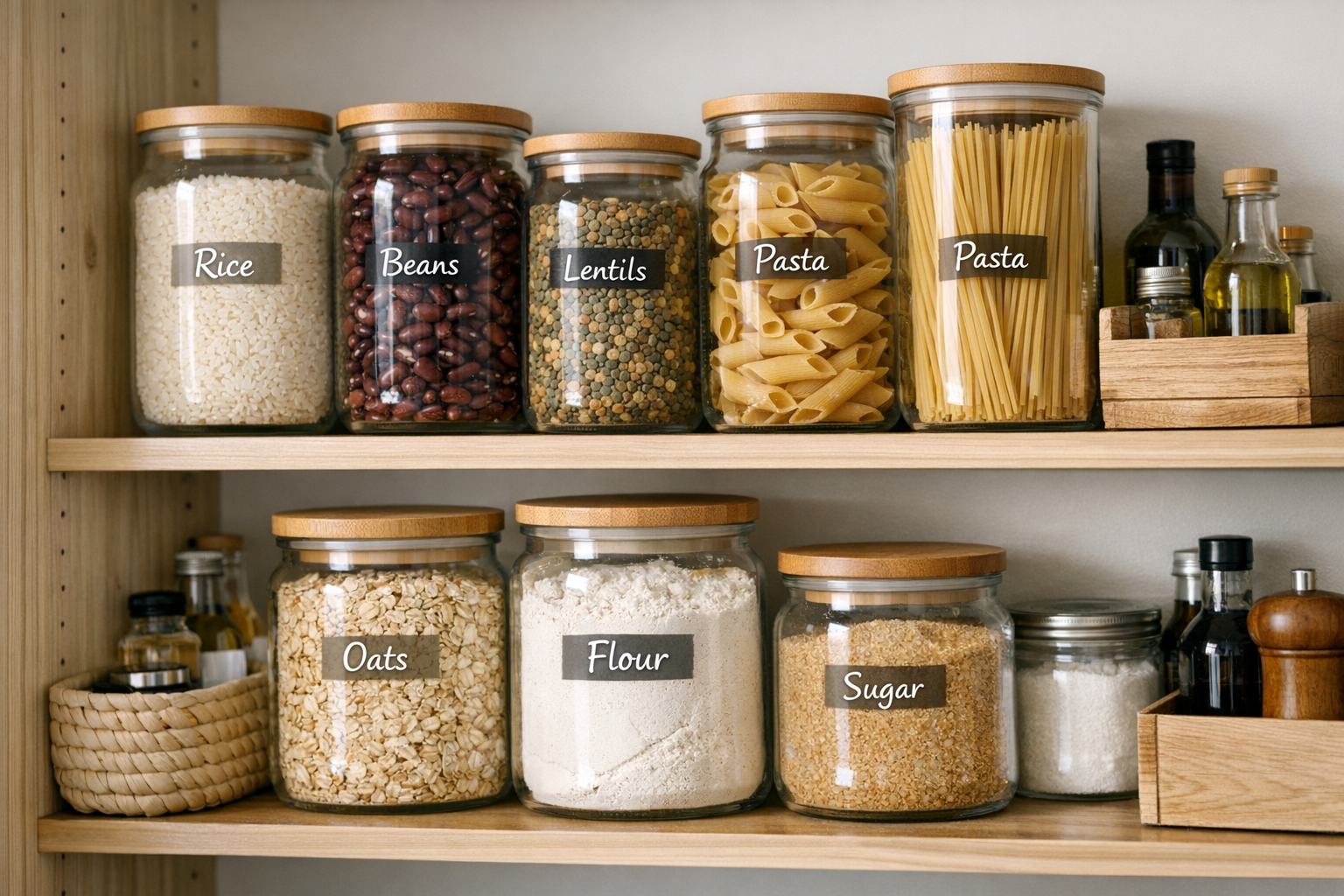
A grocery budget stretches or shrinks based on what you stock. The families I know who eat well on 50 dollars a week aren't clipping coupons — they're building meals around a handful of cheap staples, and adding one small "fresh" item at a time.
Here are the 15 pantry staples that do the real work. Most cost under 4 dollars and last weeks.
The 15 Highest-Value Pantry Staples
1. Dried Beans
Black beans, pinto beans, chickpeas. A 1-pound bag costs 2 dollars and makes 6 cups cooked — enough for 6 meals. See our guide on meal prep for a 50 dollar budget for technique.
2. White or Brown Rice
A 5-pound bag costs 6 to 8 dollars and serves 30+ meals. Buy in bulk from the largest bag you'll finish in a year. See our fluffy rice technique for perfect results.
3. Rolled Oats
A canister of rolled oats makes breakfast for two weeks. Under 4 dollars. Topped with peanut butter and banana — filling, cheap, nutritious.
4. Pasta
A box of pasta serves 6 to 8 people. Stock 3 to 5 varieties (spaghetti, penne, egg noodles). Under 2 dollars per box on generic brands.
5. Canned Tomatoes
Whole peeled, diced, or crushed — builds pasta sauce, chili, curry bases, soups. Stock 8 to 10 cans. Under 1.50 dollars each.
6. Eggs
Cheapest complete protein. A dozen is 3 to 5 dollars. Breakfast, lunch, or dinner. An egg slicer makes them salad-ready in seconds.
7. Onions
Base for almost any savory meal. A 5-pound bag costs 3 dollars and lasts a month in a cool dry pantry.
8. Garlic
Bulk garlic (from the produce section, not jarred) costs 25 cents per bulb. A bulb lasts a week of serious cooking.
9. Frozen Vegetables
Frozen broccoli, mixed vegetables, spinach, and peas. Just as nutritious as fresh, never go bad, and cost half as much. Stock 4 to 6 bags.
10. Olive Oil
Cooking fat and flavor in one. A large bottle of olive oil is 15 to 25 dollars and lasts 2 to 3 months.
11. Spices in Bulk
Buy spices from bulk bins or refill containers — generic brands cost 20 percent of Jar-brand prices. The essentials: salt, black pepper, cumin, paprika, garlic powder, chili powder, oregano, bay leaves.
A basic spice rack with refillable jars keeps bulk-bought spices organized.
12. Peanut Butter
Breakfast, lunch, snacks, and savory recipes (Thai peanut sauce). A large jar costs 4 dollars and lasts 2 weeks for a family of 4.
13. Flour
All-purpose flour for baking, thickening sauces, breading. A 5-pound bag under 4 dollars.
14. Lentils
Faster than beans (30 minutes, no soak). 2 dollars per pound. Green, brown, or red lentils — each cooks differently.
15. Cheap Cuts of Meat
- Chicken thighs (bone-in, skin-on): cheapest chicken cut, most flavor
- Whole chicken: cheaper than any cut pre-broken-down
- Ground turkey or chicken: versatile, often on sale
- Pork shoulder: for slow-cooker recipes that stretch across multiple meals
Skip boneless skinless chicken breast unless on deep sale — most expensive per pound of actual meat.
Storage That Makes Staples Last
Cheap staples are only cheap if they don't go bad. Use:
- Airtight food storage containers for flour, oats, pasta, sugar, rice
- Cool pantry shelf for canned goods and dry goods
- Freezer for meat, butter, and anything you won't use in 2 weeks
Oats in the original bag attract moths. Transferred to an airtight container, they last a year.
The Sample 50 Dollar Week
Based on these staples plus a handful of fresh additions:
- 2 lb chicken thighs: 5 dollars
- 1 dozen eggs: 4 dollars
- 5 lb rice (bulk): 6 dollars
- 1 lb dried beans: 2 dollars
- 1 lb pasta (2 boxes): 3 dollars
- 8 canned tomatoes: 12 dollars
- 5 lb onions: 3 dollars
- Bag frozen broccoli: 3 dollars
- Bag frozen mixed veg: 3 dollars
- Bananas: 2 dollars
- Peanut butter: 4 dollars
- Whole wheat bread: 3 dollars
- Total: 50 dollars
Plus what you already have in the pantry (oil, flour, spices), this feeds a family of 2-3 for the week with leftovers.
What to Skip (Bad Value)
- Pre-made sauces. A jar of pasta sauce is 3 dollars. A can of tomatoes plus garlic is 2 dollars and tastes better.
- Individually packaged snacks. Buy in bulk and portion into reusable snack bags.
- Anything single-serve (coffee pods, individual yogurt cups, 100-calorie snacks). Always a markup.
- Pre-cut vegetables. 2x to 4x the price of whole.
Frequently Asked Questions
Should I buy generic or name-brand staples?
Generic for almost everything. Exceptions where name-brand is sometimes worth it: peanut butter (texture varies), coffee (quality varies), olive oil (quality varies a lot). For everything else on this list, generic is identical.
How do I know if a "deal" is actually a deal?
Calculate unit price (price per ounce or per pound). Sale labels can be marketing — a 2-for-1 deal on a tiny jar is sometimes more expensive per ounce than the regular large jar.
What's the cheapest protein for the budget?
Dried beans and lentils cost 25 to 50 cents per serving of protein. Eggs are 25 to 40 cents per serving. Chicken thighs are 75 cents to 1.50 dollars per serving. Beef is usually 2+ dollars per serving.
How long do these staples last?
- Dried beans, rice, flour: 1 year in airtight containers
- Canned tomatoes: 2+ years
- Frozen vegetables: 6 months in freezer
- Olive oil: 1 year (in dark bottle, cool place)
- Spices: 6 months to 2 years depending on type
Final Thoughts
Cheap doesn't mean boring. 15 staples plus a rotation of fresh items (onions, eggs, one fresh vegetable per week, one cheap meat cut) feeds a family well for weeks on minimal budget. The savings compound every month you stay out of the frozen-dinner aisle.
Get weekly home tips that actually work
Join thousands of homeowners getting practical cleaning hacks, DIY fixes, and money-saving tips every week. Free, and you can unsubscribe anytime.

Written by
Priya PatelKitchen & Lifestyle Writer
Priya Patel is a former restaurant pastry chef turned home-cooking obsessive. She writes about meal prep, kitchen organization, and the small appliances actually worth your counter space. Priya tests recipes and gadgets out of a tiny Brooklyn galley kitchen, so she has strong opinions about what earns its footprint.
Recommended Products
Looking for specific product recommendations? Check out our tested picks.

Best Outdoor Patio Furniture Deals (2026 Spring Picks)
Late April is the sweet spot for patio furniture deals — pre-summer sales without late-season picked-over selection. Here are the picks worth buying now.

5 Best LED Light Bulbs to Cut Your Electric Bill (2026)
Switch to LED bulbs and save $100+ per year on electricity. We compared the top LED bulbs for brightness, color quality, and longevity — here are the 5 best picks.
Best Smart Thermostats to Lower Your Energy Bill (2026)
The best smart thermostats that actually save money on heating and cooling. We compare 5 top picks from Nest, Ecobee, Honeywell, and more with real energy savings data.
Related Articles

DIY vs. Hiring a Pro: The Real ROI of 8 Popular Home Projects (2026)
A contractor breaks down the real DIY vs. pro cost, time, and resale ROI of 8 popular home projects in 2026, with a decision framework and tool picks.

Hurricane Season 2026: Survival Strategy Beyond Basic Emergency Kits
A complete hurricane season survival strategy for 2026: communication plans, insurance gaps, financial recovery, and power backup that go far beyond the basic emergency kit.

Summer Outdoor Living 2026: Patio, Grill, Garden & Decor Buying Guide
A complete 2026 summer outdoor living buying guide covering patio furniture, grills, lighting, plants, and decor, with real prices and the best week to buy each.
Memorial Day Cookout Prep: Food, Decor & Timing for 30 Guests
Host a patriotic Memorial Day cookout for 30 guests under $200. Bulk shopping math, make-ahead strategies, and an hour-by-hour timeline to skip day-of stress.