Hurricane Season 2026: Survival Strategy Beyond Basic Emergency Kits
This article may contain affiliate links. If you make a purchase through these links, we may earn a small commission at no extra cost to you. Learn more
Quick Answer
Hurricane Season 2026: Survival Strategy Beyond Basic Emergency Kits
A water-and-batteries kit keeps you alive for 72 hours, but it won't get you reimbursed or back to normal. The real survival strategy is built around four pillars: a communication plan everyone in the family knows by heart, an insurance review that closes the flood and wind-deductible gaps before a storm forms, a financial recovery folder with documents and cash, and a power backup plan sized to your actual needs. Do these in June, not in the cone.
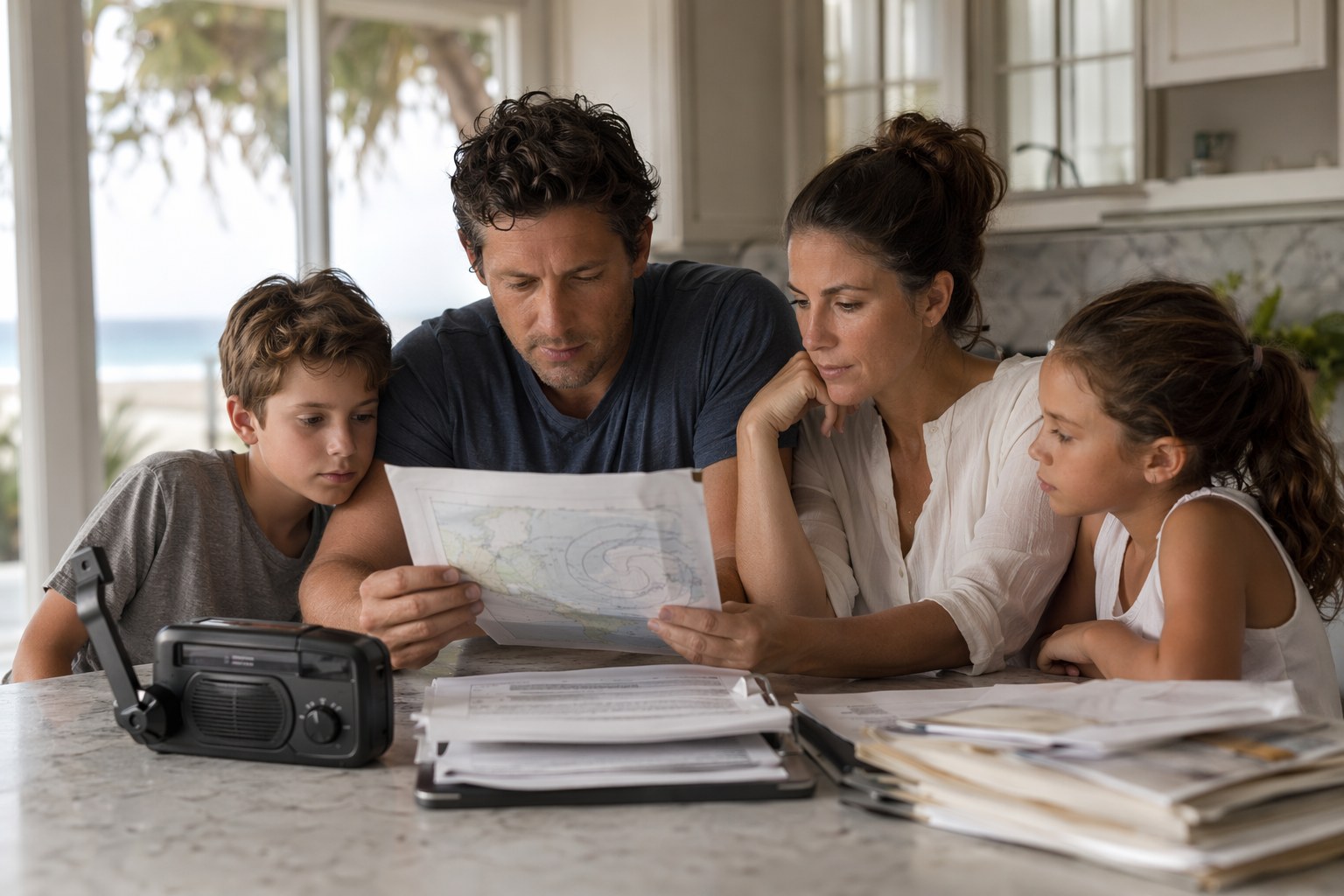
Hurricane Season 2026: Survival Strategy Beyond Basic Emergency Kits
Every June 1, the same routine plays out across the coast. People grab a case of water, a flashlight, and a few cans of beans, and they call themselves prepared. NOAA's 2026 outlook is again calling for an above-average Atlantic season, and I'll be honest with you: that bin of supplies in your garage is the easy 20 percent. It keeps you alive for three days. It does almost nothing for the part that actually breaks families financially and emotionally, which is the weeks and months after the storm passes.
I've watched neighbors who had a beautiful emergency kit still end up fighting their insurer for nine months, draining a retirement account to make a roof repair, and unable to reach a daughter at college for two days because the one phone number everyone memorized was the one that went dead. The kit is table stakes. This article is about everything past the kit.
If you haven't done the physical hardening yet, start with our June 1 home readiness checklist first, then come back here for the strategy layer that turns a survivable storm into a recoverable one.
Pillar 1: A Communication Plan That Survives a Dead Cell Tower
Here's the failure I see most: families assume they'll just call or text each other. Then the storm knocks out local cell sites, the survivors are jammed with traffic, and a simple "I'm okay" can't get through. Your plan has to assume your local network is gone.
Pick an out-of-area contact
The single most effective trick in disaster communication is naming one out-of-state relative or friend as the family hub. Local calls fail when local infrastructure fails, but a text routed to someone three states away often goes through when a call across town won't. Everyone in the family reports their status to that one person, and that person relays it to everyone else. Write the number on a card in every wallet and backpack. Memorize it. Don't trust it to a phone that might be at 4 percent and underwater.
Build a tiered communication ladder
- Text before you call. SMS uses far less bandwidth and queues until it can send. A voice call either connects or fails.
- Use a group messaging app with offline queueing as a backup, but never as the primary plan.
- Keep a battery NOAA weather radio for one-way official information when the internet is down. This is non-negotiable in a serious storm.
Midland NOAA Emergency Weather Radio
Hand-crank and solar-charged radio with NOAA alerts, a phone-charging USB port, and a built-in flashlight, so you stay informed even with zero grid power.
Check Price on Amazon →For true isolation, consider satellite
If you live somewhere that floods and isolates, like a barrier island or a low-lying rural stretch, a satellite messenger is no longer an exotic luxury. Many newer phones include satellite SOS, but a dedicated device with two-way texting works regardless of your phone model and keeps the family hub updated when every tower is down. Test it before the season so you actually know how to send a message under stress.
A communication plan only works if it's posted somewhere everyone sees it. This is a natural extension of a family command center on your kitchen wall, where the contact card, meeting points, and document checklist live year-round instead of getting reinvented in a panic.
Pillar 2: Close Your Insurance Gaps Before a Storm Has a Name
This is the pillar that costs people the most and gets the least attention. Once a named storm enters the basin or a watch is issued for your region, insurers slam a binding moratorium shut, meaning you cannot buy a new policy, add flood coverage, or raise your limits. Everything below has to happen now, in the quiet part of June.
Understand the three gaps that wreck recoveries
- Flood is not in your homeowners policy. Ever. Wind-driven rain through a broken window may be covered, but rising water is excluded. Flood coverage is a separate policy (NFIP or private), and it carries a 30-day waiting period before it takes effect. If you buy it in August when the cone points at you, it does nothing for that storm.
- The hurricane deductible is a percentage, not a flat number. Many coastal policies switch from a fixed deductible (say $1,000) to a 2 to 5 percent of dwelling value deductible the moment a named storm causes the damage. On a $400,000 home, that's an $8,000 to $20,000 surprise. Read your declarations page and know your number today.
- Replacement cost vs. actual cash value. If your roof is insured at actual cash value, the insurer depreciates it before paying, and you eat the difference. Confirm you have replacement-cost coverage on the roof and structure.
Build the claim before you need it
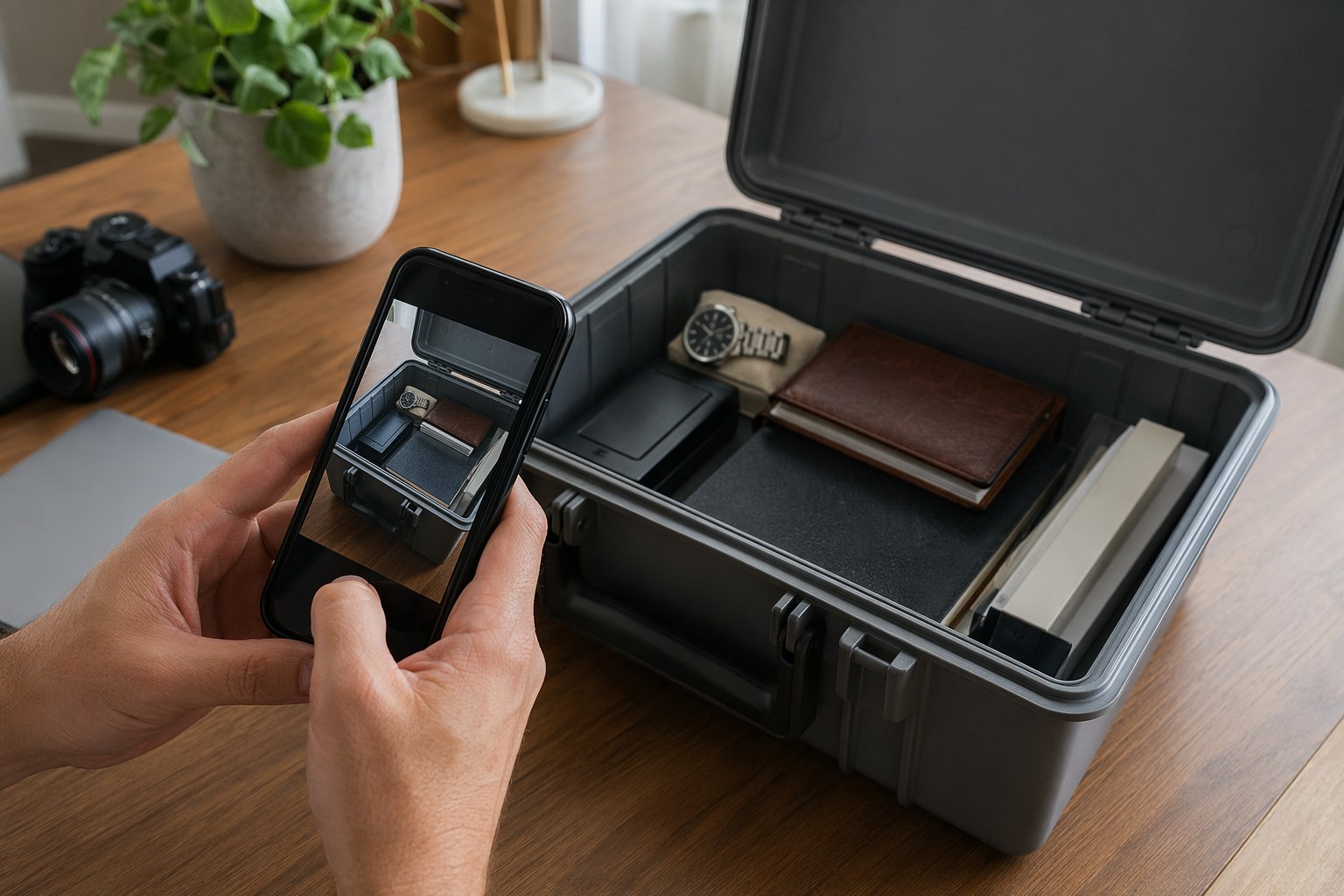
The homeowners who get paid fastest are the ones who can prove what they owned. Do a video walkthrough of your entire home today, narrating the contents of every room, opening drawers and closets, capturing model numbers on appliances and electronics. Store it in the cloud and on a drive in your document safe. When you're choosing what to protect, our guide on the things you should never put in the dishwasher is a decent reminder that the small, irreplaceable items, the cast iron, the wood, the heirlooms, are exactly the ones worth photographing and moving to high ground first.
For the broader money picture, the strategies in saving on home insurance without losing coverage pair perfectly here, because the same review that closes your storm gaps is the one that catches the discounts you've been overpaying to skip.
Pillar 3: A Financial Recovery Folder You Can Grab in 60 Seconds
When you have ten minutes to evacuate, you will not be calmly locating your deed. Recovery starts with paperwork, and paperwork is the first thing people leave behind.
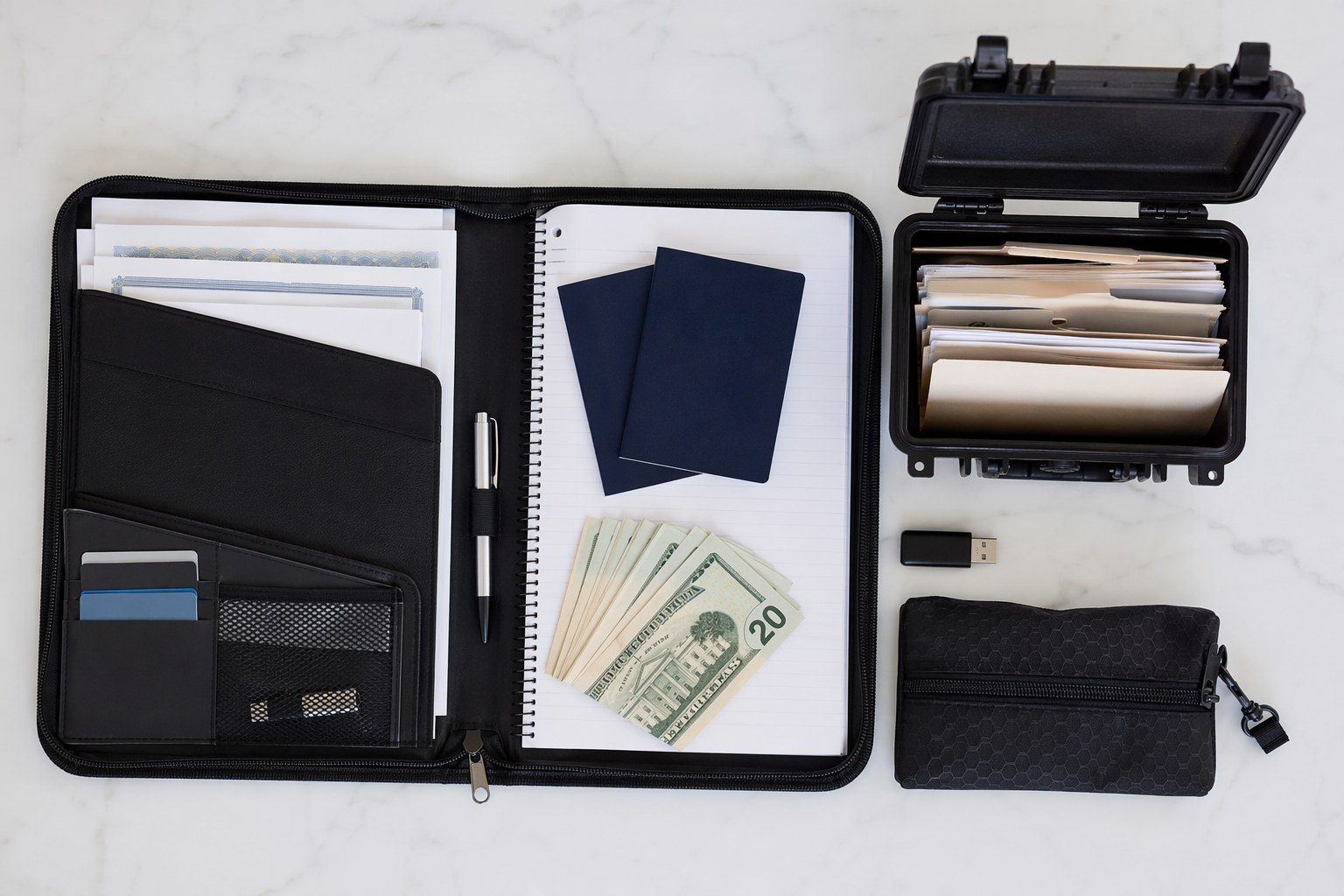
What goes in the grab-and-go folder
| Document | Why it matters |
|---|---|
| Insurance policies (home, flood, auto) | You need policy numbers and the claims phone line on day one |
| Photo IDs and passports | Required for FEMA aid and to re-enter restricted areas |
| Deed, mortgage, and titles | Proves ownership for claims and assistance |
| Birth certificates, SS cards | Replacements take weeks you won't have |
| Medication list and prescriptions | Pharmacies need this to refill out of network |
| Recent bank and tax statements | Establishes income for disaster assistance |
Keep the originals in a waterproof and fireproof box, and keep encrypted digital copies in the cloud. A physical safe survives the house; the cloud survives the safe.
SentrySafe Waterproof Fireproof Document Box
A portable, lockable box rated for both fire and water that holds your entire recovery folder and can be carried out in one hand during an evacuation.
Check Price on Amazon →Carry cash, and know your FEMA timeline
ATMs and card readers fail when the power and networks go down. Keep $300 to $500 in small bills in your folder; a stack of twenties is useless if no one can make change. And set expectations honestly: FEMA assistance is not a fast insurance substitute. It's capped, it's slow, and it's meant to be supplemental. Your own emergency fund and your insurance are the real recovery engine, which is exactly why digitizing your records now, the same way you would when you go paperless and organize your paperwork, pays off the moment you're filing from a hotel room two states away.
Pillar 4: Right-Size Your Power Backup
"I'll just get a generator" is where a lot of money gets wasted on the wrong thing. Match the solution to how long you realistically lose power and what you actually need to run.
Three tiers of backup, and who each is for
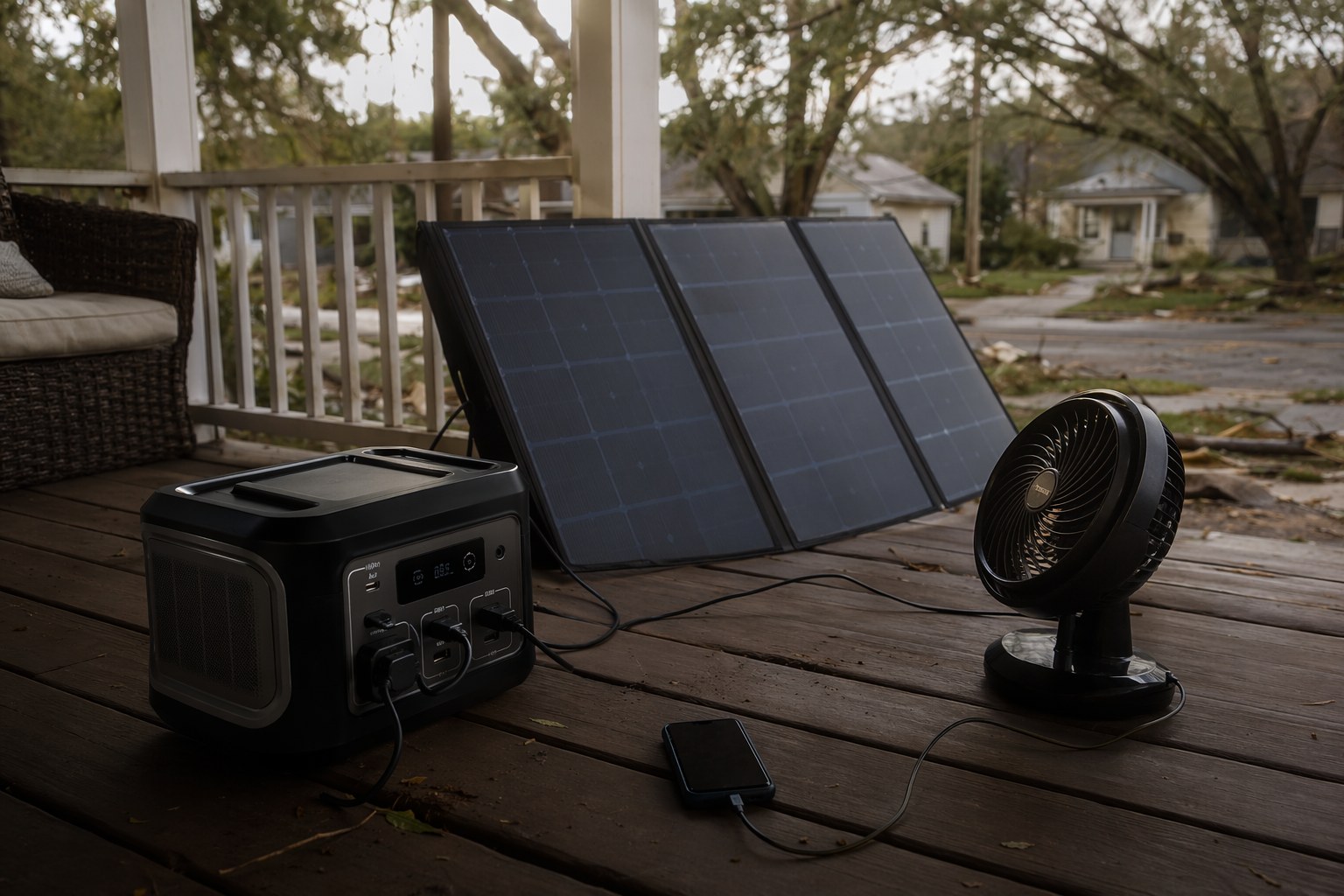
- Battery power station (1,000 to 3,000W): Silent, indoor-safe, and perfect for keeping a CPAP machine, phones, a router, a fan, and a small fridge alive for a day or two. Pair it with a folding solar panel and you can recharge through a multi-day outage. This is my default recommendation for most suburban households because there's no fuel to store and no carbon monoxide risk.
- Portable gas generator (3,500 to 7,500W): Runs more of the house, including a full-size refrigerator and window AC unit, but it's loud, needs fuel stored safely, and must run outdoors, at least 20 feet from windows. Carbon monoxide from generators kills people every single season. Never, ever run one in a garage.
- Standby whole-home generator: The premium option that starts automatically and runs on natural gas or propane. Worth it if you have medical equipment, a well pump, or you simply can't tolerate days without AC in the heat.
Don't forget the heat
Power loss in a coastal summer means no air conditioning, and that's a genuine health hazard, especially for kids, older relatives, and pets. Whatever backup you choose, prioritize at least one room you can keep cool. The same logic in keeping pets cool in summer applies to the whole family: shade, hydration, and a single conditioned space beat trying to cool the whole house off a generator that can't handle the load.
Jackery Solar Battery Power Station
A quiet, indoor-safe lithium power station that recharges from a solar panel, ideal for running medical devices, a router, and a small fridge through a multi-day outage.
Check Price on Amazon →Your June Timeline
Strategy without dates is just a wish. Here's the order I run every year.
- First week of June: Pull your insurance declarations, confirm flood coverage and your hurricane deductible, and buy or adjust anything that needs the 30-day waiting period.
- Second week: Record the home video inventory, assemble the document folder, and pull cash.
- Third week: Establish the out-of-area contact, post the communication card, and test your weather radio and any satellite device.
- Fourth week: Stage and test your power backup, top off fuel, and confirm everyone knows the meeting points.
Do it once, calmly, and your "prep" for the next named storm becomes a 30-minute confirmation instead of a frantic scramble.
Frequently Asked Questions
Isn't a basic emergency kit enough for a hurricane?
A kit keeps you physically safe for about 72 hours, which is genuinely important. But it does nothing for the recovery, which is where most of the lasting damage happens. Insurance gaps, missing documents, and a power outage that stretches into a week are what actually devastate households. The kit is the floor, not the ceiling.
When is it too late to buy flood insurance for the season?
Effectively, the moment a storm is in the basin and threatening your area, because of insurer moratoriums. Even outside a threat window, NFIP flood policies carry a 30-day waiting period before they take effect. Buy it in June if you want it to protect you in August and September.
What size power backup do I actually need?
Start by listing your essentials: medical devices, phone and router, refrigerator, fans, and one AC unit. If that's mostly small electronics and a fridge, a 1,500 to 3,000W battery station with solar will cover you and runs safely indoors. If you need to run AC or a well pump, you're into generator territory, which means outdoor placement and fuel storage.
How much cash should I keep on hand?
I keep $300 to $500 in small bills. When the grid is down, card readers and ATMs stop working, and cash is the only thing that buys gas, ice, and supplies. Small denominations matter because nobody will be making change for a hundred.
What's the one thing most families forget?
The out-of-area contact. Everyone plans to call each other locally, and that's exactly the network that fails. Designate one person far from the storm, make sure every family member can reach them by text, and you've solved the most common point of failure in a disaster.
The Bottom Line
The bin of water and batteries is the part everyone does, which is precisely why it's not where you should spend your energy this June. The families who come through a major storm intact are the ones who closed their insurance gaps before the moratorium, who can grab their entire financial life in a single waterproof box, who have one phone number that connects them no matter what fails, and who sized their power backup to reality instead of panic-buying a generator they can't run safely.
Spend a few focused hours this month on the four pillars and you'll have something far more valuable than a stocked pantry. You'll have a recovery plan. Start by confirming you've handled the physical side with our June 1 home readiness checklist, then work down this list one weekend at a time. The storms are coming either way. Be the household that's ready for the part that comes after.
Get weekly home tips that actually work
Join thousands of homeowners getting practical cleaning hacks, DIY fixes, and money-saving tips every week. Free, and you can unsubscribe anytime.

Written by
Beth SullivanFounder & Editor-in-Chief
Beth Sullivan is the founder of Practical Home Guides. With over a decade of hands-on experience tackling every home challenge imaginable, she started this site to share the practical, no-nonsense solutions she wishes she had found years ago. When she's not testing cleaning hacks or organizing pantries, you'll find her in the garden or working on her next DIY project.
Recommended Products
Looking for specific product recommendations? Check out our tested picks.

Best Outdoor Patio Furniture Deals (2026 Spring Picks)
Late April is the sweet spot for patio furniture deals — pre-summer sales without late-season picked-over selection. Here are the picks worth buying now.
5 Best LED Light Bulbs to Cut Your Electric Bill (2026)
Switch to LED bulbs and save $100+ per year on electricity. We compared the top LED bulbs for brightness, color quality, and longevity — here are the 5 best picks.
Best Smart Thermostats to Lower Your Energy Bill (2026)
The best smart thermostats that actually save money on heating and cooling. We compare 5 top picks from Nest, Ecobee, Honeywell, and more with real energy savings data.
Related Articles

DIY vs. Hiring a Pro: The Real ROI of 8 Popular Home Projects (2026)
A contractor breaks down the real DIY vs. pro cost, time, and resale ROI of 8 popular home projects in 2026, with a decision framework and tool picks.

Summer Outdoor Living 2026: Patio, Grill, Garden & Decor Buying Guide
A complete 2026 summer outdoor living buying guide covering patio furniture, grills, lighting, plants, and decor, with real prices and the best week to buy each.
Memorial Day Cookout Prep: Food, Decor & Timing for 30 Guests
Host a patriotic Memorial Day cookout for 30 guests under $200. Bulk shopping math, make-ahead strategies, and an hour-by-hour timeline to skip day-of stress.
Energy Bills in Summer: 7 AC Tweaks That Cut Cooling Costs 40%
An HVAC contractor's 7 free AC settings and habits that slash July and August cooling bills by up to 40 percent. No new equipment required to start saving.