DIY vs. Hiring a Pro: The Real ROI of 8 Popular Home Projects (2026)
This article may contain affiliate links. If you make a purchase through these links, we may earn a small commission at no extra cost to you. Learn more
Quick Answer
DIY vs. Hiring a Pro: The Real ROI of 8 Popular Home Projects (2026)
Whether DIY beats hiring a pro depends on three numbers: labor saved, your real hourly rate, and the resale value the project returns. The clear DIY wins in 2026 are interior painting, basic landscaping, and small bathroom refreshes, where labor is 60 to 85 percent of the cost and skill risk is low. Hire out anything structural, gas, electrical, or roofing. The biggest mistake is valuing your own time at zero, then losing a weekend to a job a pro finishes in a day.

I spent fifteen years as a licensed general contractor before I started writing about this stuff full time, and the single most expensive question I got from homeowners was never "how do I do this?" It was "should I even be doing this myself?" People would proudly tell me they saved money on a project, and when I ran the actual math, half of them had lost money once you counted the wasted materials, the rental tools, the three weekends, and the pro they eventually called to fix it.
DIY versus hiring a pro is not a moral question. It is a return-on-investment calculation. Some projects return a fortune in saved labor with almost no downside. Others quietly punish amateurs with hidden costs, code problems, and resale headaches. This guide runs eight of the most popular home projects through the same framework so you can tell the difference before you pick up a tool or sign a contract.
The Three-Number Framework I Use on Every Project
Before I quote myself a "savings," I write down three numbers. If you do nothing else from this article, do this.
1. The labor share. Look up the all-in pro price and the materials-only price. Subtract. That difference is the absolute most DIY can save you, and it tells you instantly whether a project is even worth attempting. A job that is 80 percent labor (painting) is a DIY goldmine. A job that is 30 percent labor and 70 percent specialized materials and equipment is usually not.
2. Your real hourly rate. Most people value their own time at zero, which is how a "free" DIY job ends up costing more than hiring out. Pick an honest number, even $20 to $40 an hour. Then estimate the hours, and double your estimate, because you have never done this before and you will. Multiply. That is your time cost.
3. The resale return. Some projects pay you back when you sell; many do not. According to the long-running cost-versus-value research the remodeling industry publishes every year, exterior and curb-appeal projects consistently recoup the highest percentage, while interior luxury upgrades recoup the least. DIY supercharges resale ROI because you remove the labor cost from the "cost" side of that ratio entirely.
Run a project through all three and the decision usually makes itself. Now let's apply it.
The 8 Projects, Side by Side
Here is the bird's-eye view. Costs are 2026 national-average ballparks for a typical mid-size home; your region swings these 20 to 40 percent. "Pro price" is all-in labor plus materials.
| Project | DIY cost | Pro price | Labor share | DIY skill risk | Resale return |
|---|---|---|---|---|---|
| Interior painting (whole floor) | $300-$700 | $3,000-$6,000 | Very high (80%+) | Low | Indirect, helps sale |
| Light landscaping refresh | $400-$900 | $2,500-$6,000 | High | Low | High (curb appeal) |
| Vinyl plank / laminate flooring | $1,500-$3,500 | $4,500-$9,000 | High | Medium | Strong |
| Small bathroom refresh | $600-$2,000 | $4,000-$12,000 | Medium-high | Medium | Strong |
| Building a deck | $4,000-$8,000 | $10,000-$20,000 | Medium | Medium-high | Strong (exterior) |
| Kitchen cabinet refacing/paint | $300-$1,200 | $4,000-$10,000 | High | Medium | Strong |
| Water heater replacement | $600-$1,400 | $1,500-$3,500 | Medium | High (gas/code) | Neutral |
| Electrical panel upgrade | Not advised | $2,000-$4,500 | Medium | Extreme | Neutral |
The pattern jumps out immediately. The top of the table is where DIY prints money. The bottom is where it can hurt you. Let's go project by project.
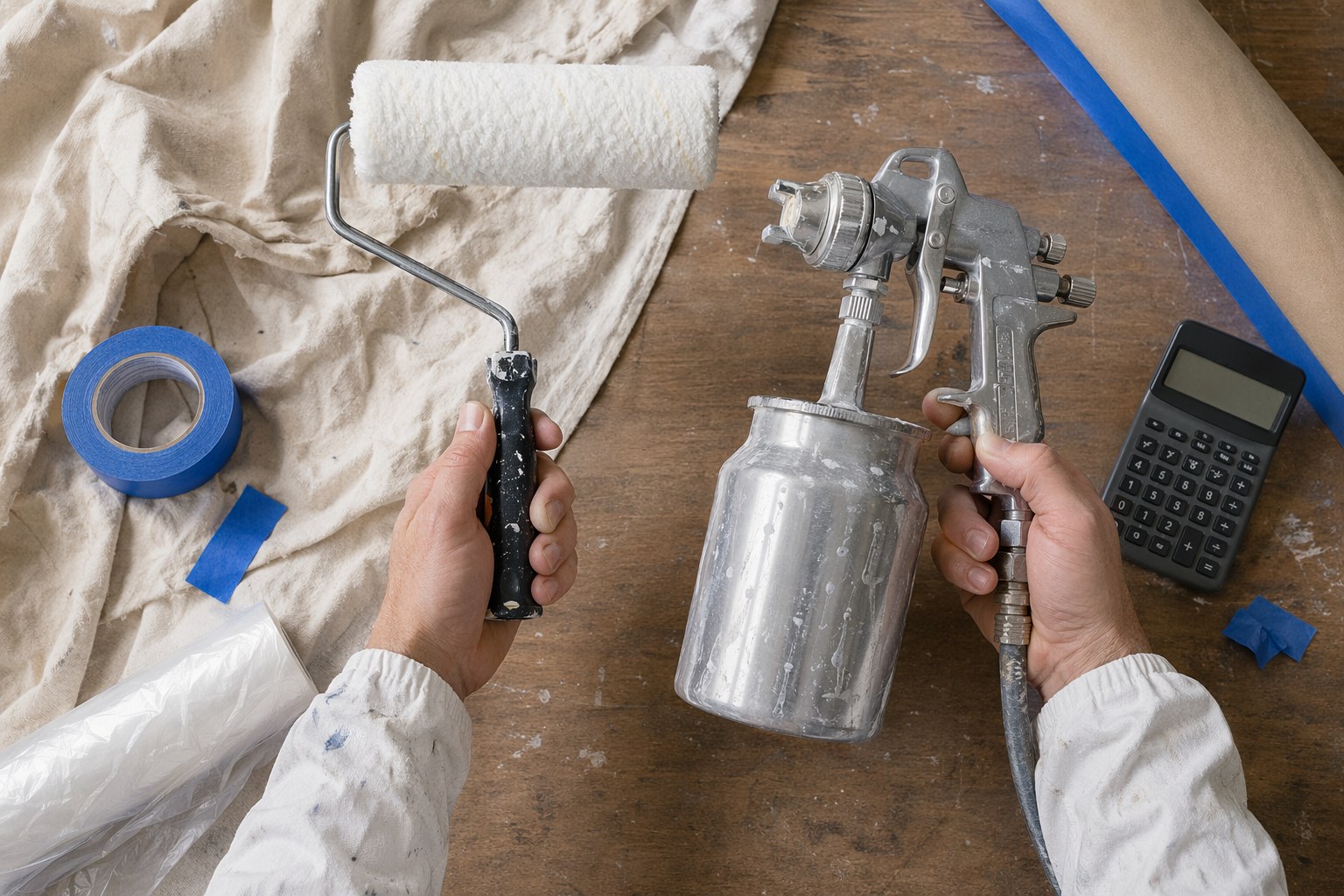
1. Interior Painting — The Best DIY ROI There Is
If I could only recommend one DIY project, it is paint, every time. Professional interior painting runs $2 to $6 per square foot, and labor is the overwhelming majority of that. The materials for an entire floor of a house, good paint, tape, rollers, and drop cloths, rarely top $700. A pro job for the same space is routinely $3,000 to $6,000.
That is a labor share north of 80 percent and a skill risk that is genuinely low. Mistakes are forgiving, you can literally paint over them. The only real cost is your time and your willingness to tape carefully and cut a clean edge. Our full walkthrough on how to paint a room like a pro covers the cutting-in technique that separates an amateur job from one that adds value when you sell.
The verdict: DIY, no hesitation. The math is not close.
Purdy Nylox Glide Angular Sash Brush
A pro-grade angled sash brush that holds a clean line when cutting in along trim and ceilings, the single tool that makes DIY paint look hired-out.
Check Price on Amazon →2. Light Landscaping Refresh — The Hidden Curb-Appeal Win
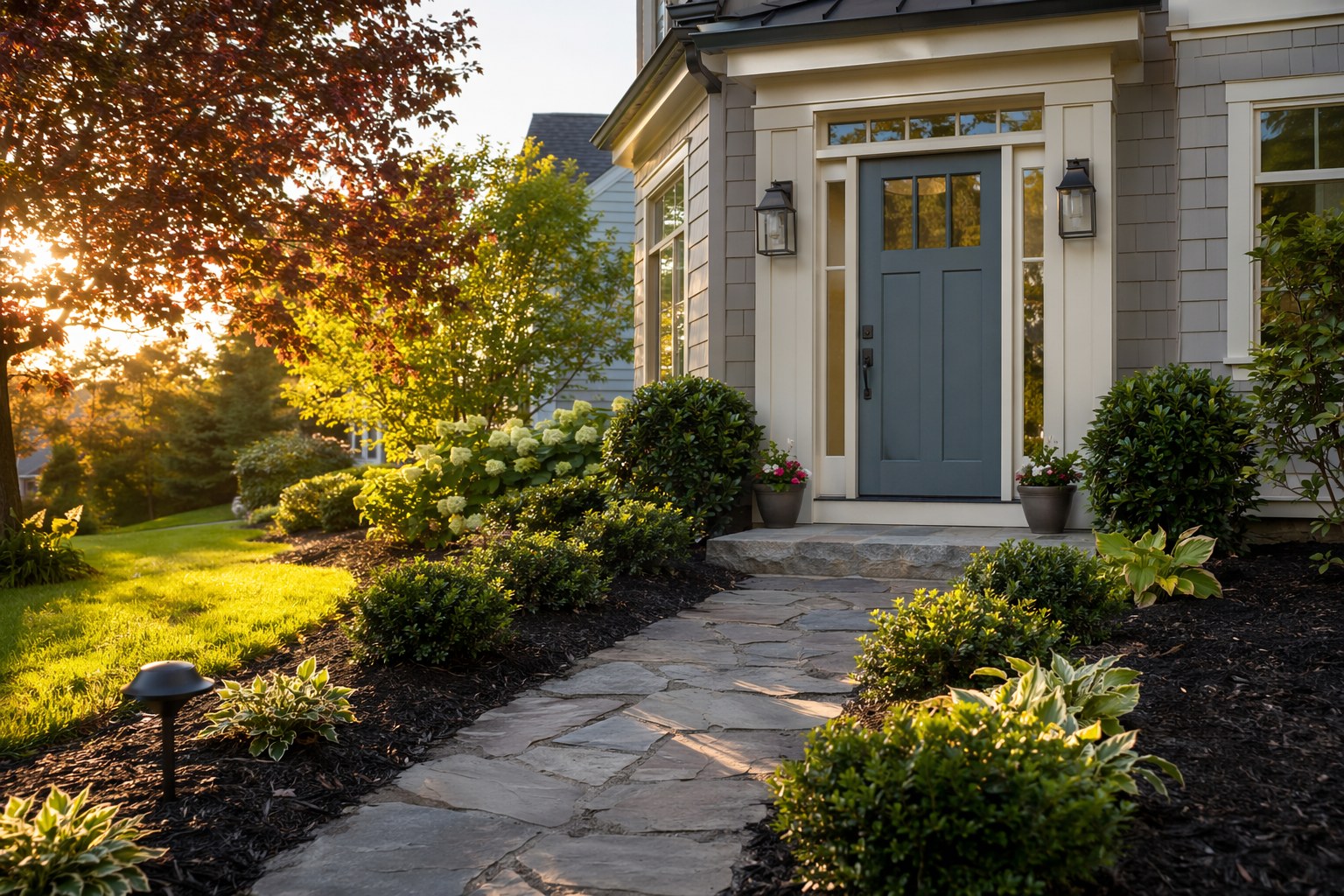
Fresh mulch, trimmed shrubs, a few new plants, a defined bed edge, and a clean walkway. This is the most underrated DIY project in America because the labor share is high and the resale return is enormous. Curb appeal is the first thing a buyer sees, and basic landscaping is one of the most reliably profitable improvements you can make.
A landscaping crew charges $2,500 to $6,000 for a weekend's worth of work you can largely do yourself for the cost of materials, mulch, plants, and a wheelbarrow's worth of effort. Skill risk is low; the worst case is a plant that dies, which you replace for ten dollars. If you want to go further, our guides on starting a backyard vegetable garden and building a raised garden bed on a budget turn the same labor into long-term food savings. Even repainting a tired entry, covered in painting your front door for curb appeal, is a sub-$50 afternoon that punches far above its weight at sale time.
The verdict: DIY. High labor share, low risk, top-tier resale return.
3. Vinyl Plank or Laminate Flooring — DIY If You Have a Weekend
Click-lock luxury vinyl plank changed the DIY flooring game. The planks float over your subfloor, snap together without glue or nails, and forgive a lot. Installed by a pro you are looking at $4,500 to $9,000 for a main floor; DIY materials run $1,500 to $3,500 depending on the product tier.
The catch is prep. The subfloor has to be flat and clean, and the first row has to be dead straight or the whole floor drifts. Skill risk is medium, not because the install is hard but because mistakes compound across the room. Budget a full weekend for an average room, plus a day for trim. Once it is down, our guide on cleaning vinyl plank flooring keeps it looking new and protects the resale value you just built in.
The verdict: DIY for click-lock LVP and laminate. Hire out tile, hardwood nail-down, and anything over an uneven slab.
4. Small Bathroom Refresh — DIY the Cosmetics, Hire the Plumbing
A "refresh" is not a gut renovation. It is new paint, a new vanity and faucet, a fresh mirror and light fixture, re-caulked tub, and updated hardware. Done cosmetically, this is a strong DIY project that dramatically changes how a bathroom shows. A full pro remodel runs $4,000 to $12,000; a DIY cosmetic refresh can land between $600 and $2,000.
The line I draw, and I drew it for fifteen years as a contractor, is anything behind the wall. Swapping a faucet or vanity is DIY. Moving plumbing, relocating a drain, or re-tiling a wet shower wall is where amateurs cause water damage that costs more than the whole project. Our companion piece on a budget bathroom upgrade and the DIY fixes that add resale value breaks down exactly which swaps move the needle.
The verdict: DIY the cosmetic layer; hire any plumbing relocation or shower-pan work.
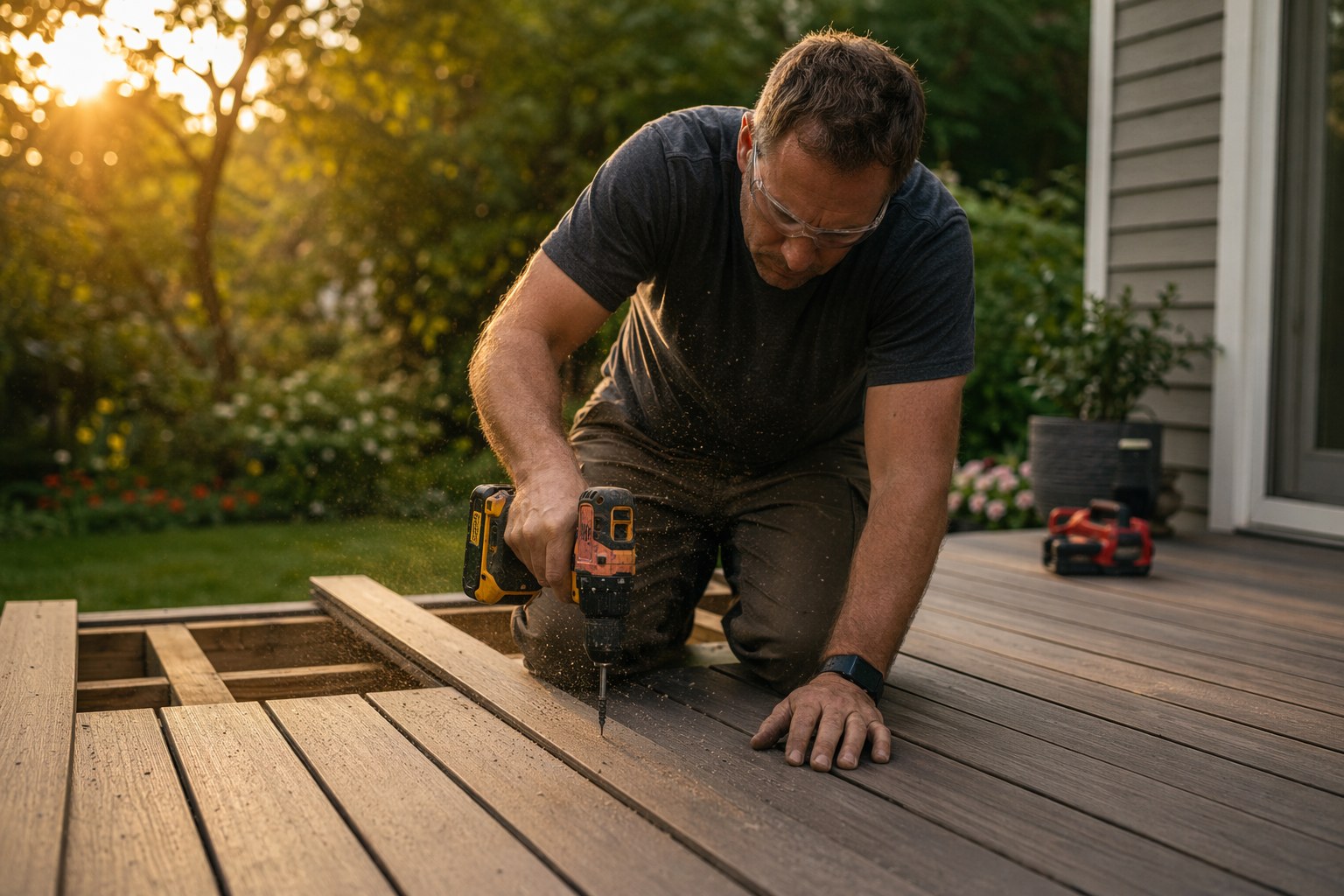
5. Building a Deck — The Ambitious DIY That Can Pay Off
A deck is the project that separates weekend warriors from people who should hand over a check. Materials for a modest 200-square-foot deck run $4,000 to $8,000; a contractor charges $10,000 to $20,000 all in. The labor share is meaningful, and exterior projects like this recoup a strong percentage at resale.
But the skill risk is medium-high and the stakes are real. Footings have to hit the right depth below your frost line, the ledger board has to be flashed and attached correctly (improper ledger attachment is one of the leading causes of deck collapses), and most jurisdictions require a permit and inspection. If you are handy, comfortable with a circular saw and a framing square, and willing to pull the permit, a ground-level deck is a legitimate DIY. A raised, multi-level, or attached deck over a walkout is where I tell people to hire it out. Once it is built, keep it with our spring deck and patio deep-clean and reseal guide, and furnish it on a budget using the plan in building a DIY patio table and bench.
The verdict: DIY a simple ground-level deck with a permit; hire out raised or attached structures.
DEWALT 20V MAX XR Cordless Drill/Driver Kit
A brushless drill with the torque and battery life to drive thousands of deck screws and handle flooring, framing, and cabinet work without stalling.
Check Price on Amazon →6. Kitchen Cabinet Refacing or Painting — The Highest-Leverage Cosmetic DIY
Replacing kitchen cabinets is brutally expensive. Painting or refacing the ones you have is one of the highest-leverage DIY moves in the entire house. New cabinets installed run well into five figures. Painting your existing boxes and doors, with a proper degreasing, sanding, priming, and a hard cabinet-grade enamel, costs $300 to $1,200 in materials and transforms the room.
The labor share is high and the resale return is strong, because the kitchen sells the house. Skill risk is medium: the prep is everything, and rushing it leads to peeling paint within a year. Take the doors off, label them, spray or brush in thin coats, and let each coat cure fully. This is patience work, not skill work, which is exactly why it is such a good DIY value.
The verdict: DIY. Few projects return this much visual impact per dollar.
7. Water Heater Replacement — Right on the Hire Line
Here the framework starts pointing the other way. A standard tank water heater costs $600 to $1,400 in materials; a pro installs it for $1,500 to $3,500. The labor share is real, but so is the skill risk, especially with gas units. You are dealing with gas connections, pressure-relief valves, proper venting to avoid carbon monoxide, and often a permit and inspection.
I have a hard rule on this one. An electric tank swap, if you are confident with the wiring shutoff and the water connections, is a defensible advanced DIY. A gas or tankless unit is a hire, full stop. The downside of a mistake, flooding, a gas leak, or CO poisoning, is catastrophic and dwarfs the savings. This is the same logic in our broader breakdown of which home repairs to DIY versus when to hire.
The verdict: Advanced DIY for electric tanks only; hire out gas and tankless.
8. Electrical Panel Upgrade — Do Not DIY This
I am putting this last because it is the project where the answer is simplest. A panel upgrade or service change costs $2,000 to $4,500 with a licensed electrician, and it is non-negotiable. Working in a live panel risks electrocution and house fires, almost always requires a permit and utility coordination, and unpermitted electrical work can void your homeowner's insurance and tank a sale during inspection.
There is no DIY savings worth those outcomes. Hire a licensed, insured electrician, get it inspected, and keep the paperwork for resale.
The verdict: Always hire a licensed pro.
The DIY Skill-and-Risk Ladder
If you map the eight projects onto a difficulty ladder, a clear progression appears, and it is the order I tell new homeowners to climb.
| Rung | Projects | What it teaches |
|---|---|---|
| Beginner | Interior painting, landscaping refresh | Prep, patience, finishing |
| Intermediate | LVP flooring, cabinet painting, bathroom cosmetics | Measuring, layout, surface prep |
| Advanced | Ground-level deck, electric water heater | Structure, code, permits |
| Pro only | Gas/tankless water heater, electrical panel | Life-safety systems |
Start at the bottom. Each rung builds the judgment you need for the next one. The most expensive DIY failures I ever got called to fix were people who skipped straight to an advanced rung without the reps.
The Tools That Decide Whether DIY Is Actually Worth It
Tool cost is the variable people forget when they calculate savings. A project is "cheap to DIY" only if you already own, or will reuse, the tools. Buying a $300 tile saw for one bathroom destroys the math; buying a drill you will use for the next decade does not.
For the projects above, three tools cover the vast majority of the work: a quality cordless drill/driver, a solid 100-plus-piece hand-tool set, and a circular saw if you are venturing into decking or flooring trim. Our comparison of the best home tool kits for beginners and the best cordless drills for homeowners will get you outfitted without overbuying.
WORKPRO 239-Piece Household Tool Kit
A comprehensive starter set, screwdrivers, wrenches, pliers, hammer, level, and bits, that covers the hand-tool needs for every beginner and intermediate project on this list.
Check Price on Amazon →For larger materials, garden bulk, lumber offcuts, mulch bags, you will also want a way to move and stage it. A simple Amazon search for a folding utility wagon saves your back across landscaping and deck days.
Kreg Pocket-Hole Jig 320
A pocket-hole jig that makes strong, hidden joints for DIY deck benches, furniture, and cabinet face-frame repairs, turning intermediate builds into beginner-friendly ones.
Check Price on Amazon →When Hiring a Pro Is Actually the Frugal Choice
Frugal does not always mean DIY. Hiring is the smarter financial move when any of these are true:
- Life-safety systems are involved. Gas, electrical service, structural load. The downside is not money, it is your house or your life.
- A permit and inspection are required and you cannot pull them yourself. Unpermitted work follows you to the closing table.
- A mistake cascades. A botched shower pan or ledger board causes damage many times the labor you saved.
- Your time is genuinely scarce. If a pro finishes in a day what costs you four weekends, and those weekends have real value to you, hiring can be the cheaper line on the ledger.
Even then, you can cut the bill. Get three written quotes, do the demolition and prep yourself, buy your own materials where the contractor allows it, and schedule non-urgent work in the off-season. Those four moves routinely shave 15 to 30 percent off a pro job, and they are covered in depth in our guide to saving money on home repairs.
Frequently Asked Questions
How do I value my own time when comparing DIY to hiring?
Use an honest, conservative hourly figure, even $20 to $40, and apply it to a realistic, doubled time estimate. The doubling matters: first-timers consistently underestimate hours by half. If the labor you would save (pro price minus materials) is well above your time cost and the skill risk is low, DIY wins. If they are close, the convenience and warranty of hiring usually tip the scale.
Which of these projects adds the most resale value?
Exterior and curb-appeal work leads, landscaping, a clean deck, fresh paint, and an updated front door consistently recoup the highest percentage at sale. Kitchen and bathroom cosmetic refreshes also show well because those two rooms sell homes. DIY boosts the resale ROI of every one of them, because you strip the labor cost out of the equation entirely.
Will DIY work hurt my home's value or sale?
Quality, permitted DIY helps. Sloppy or unpermitted work hurts, sometimes badly. Buyers' inspectors flag amateur electrical and plumbing, and unpermitted additions can derail a closing or void insurance. The rule is simple: DIY the cosmetic and low-risk work to a high standard, and always pull permits for anything that requires one, even if you are doing the labor yourself.
What is the single most common DIY money mistake?
Starting a project you cannot finish, then paying a pro to fix your work and complete the job, which costs more than hiring out from the start. The second most common is ignoring tool and material waste: a "$200 savings" evaporates fast once you buy a single-use specialty tool and redo a botched first attempt.
Is a handyman cheaper than a specialized contractor?
For cosmetic and light work, painting, caulking, fixture swaps, minor carpentry, a handyman at $50 to $100 an hour beats a specialist. But for plumbing, electrical, gas, and structural work, hire the licensed specialist. Handymen may lack the insurance, license, and permitting authority for those systems, and non-code work creates resale and insurance problems later.
The Bottom Line
Run every project through the same three numbers: labor share, your real hourly cost, and resale return. When you do, the eight projects sort themselves cleanly. Interior painting, landscaping, cabinet painting, and cosmetic bathroom and flooring work are DIY goldmines, high labor share, low risk, strong returns. A ground-level deck and an electric water heater are advanced DIY for the genuinely handy with a permit in hand. Gas appliances and electrical panels are always a hire.
The homeowners who come out ahead are not the ones who DIY everything or hire everything. They are the ones who know exactly which is which, and never value their own time at zero. Start on the bottom rung of the ladder, build real skill, and let the math, not your ego, pick the next project.
Get weekly home tips that actually work
Join thousands of homeowners getting practical cleaning hacks, DIY fixes, and money-saving tips every week. Free, and you can unsubscribe anytime.

Written by
Marcus ChenDIY & Home Repair Editor
Marcus Chen spent fifteen years as a licensed general contractor in the Pacific Northwest before joining Practical Home Guides full time. He specializes in plumbing, electrical, and weekend warrior projects that save homeowners thousands. Marcus has personally tested every tool he recommends in his own century-old fixer-upper.
Recommended Products
Looking for specific product recommendations? Check out our tested picks.

Best Outdoor Patio Furniture Deals (2026 Spring Picks)
Late April is the sweet spot for patio furniture deals — pre-summer sales without late-season picked-over selection. Here are the picks worth buying now.

5 Best LED Light Bulbs to Cut Your Electric Bill (2026)
Switch to LED bulbs and save $100+ per year on electricity. We compared the top LED bulbs for brightness, color quality, and longevity — here are the 5 best picks.
Best Smart Thermostats to Lower Your Energy Bill (2026)
The best smart thermostats that actually save money on heating and cooling. We compare 5 top picks from Nest, Ecobee, Honeywell, and more with real energy savings data.
Related Articles

Hurricane Season 2026: Survival Strategy Beyond Basic Emergency Kits
A complete hurricane season survival strategy for 2026: communication plans, insurance gaps, financial recovery, and power backup that go far beyond the basic emergency kit.

Summer Outdoor Living 2026: Patio, Grill, Garden & Decor Buying Guide
A complete 2026 summer outdoor living buying guide covering patio furniture, grills, lighting, plants, and decor, with real prices and the best week to buy each.
Memorial Day Cookout Prep: Food, Decor & Timing for 30 Guests
Host a patriotic Memorial Day cookout for 30 guests under $200. Bulk shopping math, make-ahead strategies, and an hour-by-hour timeline to skip day-of stress.
Energy Bills in Summer: 7 AC Tweaks That Cut Cooling Costs 40%
An HVAC contractor's 7 free AC settings and habits that slash July and August cooling bills by up to 40 percent. No new equipment required to start saving.