Mother's Day Roast: Elegant Main Dish Recipe for Stressed Home Cooks
This article may contain affiliate links. If you make a purchase through these links, we may earn a small commission at no extra cost to you. Learn more
Quick Answer
Mother's Day Roast: Elegant Main Dish Recipe for Stressed Home Cooks
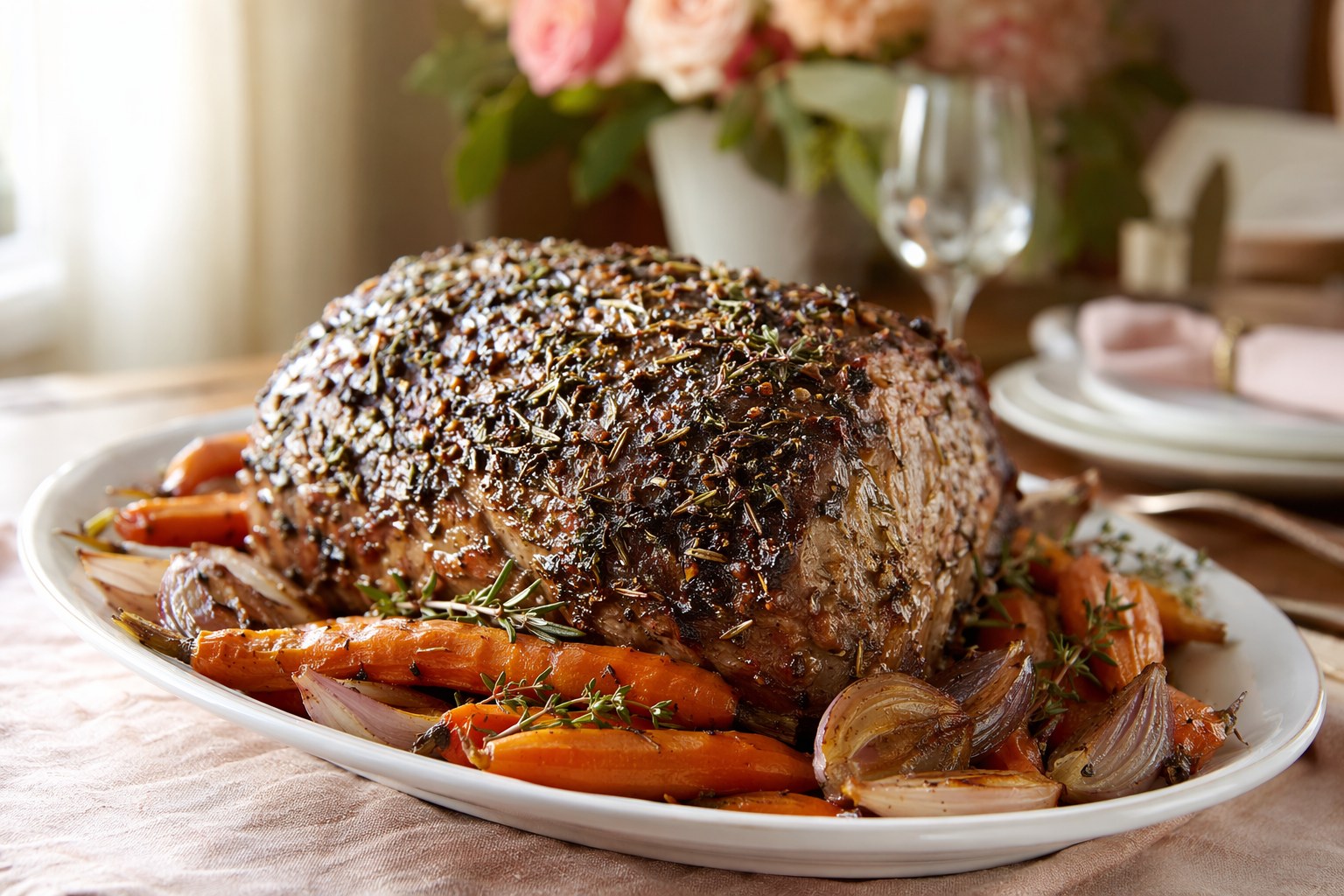
The least-stressful elegant Mother's Day roast is a 3-pound boneless beef ribeye (or top sirloin), salted Friday, herb-crusted and slow-roasted Saturday to 120°F, then sliced and gently reheated in pan jus Sunday. Cooking low at 250°F and pulling at the right internal temperature does 90% of the work — a good instant-read thermometer does the rest.
Mother's Day Roast: Elegant Main Dish Recipe for Stressed Home Cooks
Here's the trap I see every Mother's Day: someone decides to make a special roast, then spends the entire celebration sweating over a hot oven, opening the door every ten minutes, and serving the meal forty minutes late while everyone politely picks at cold rolls. The cook — usually the one being celebrated, or the one trying to celebrate someone — ends up exhausted and a little resentful. Nobody wins.
I spent years on restaurant lines where a single overcooked center could send a whole table back. The secret professional kitchens use is almost insultingly simple: they do the hard, fussy work hours (or days) ahead, then finish gently at the last minute. That's exactly the strategy I'm handing you here. This is a genuinely elegant roast — herb-crusted, pink in the center, with a glossy pan sauce — that you can break across three calm days instead of one frantic afternoon.
Pick the Right Cut (This Matters More Than the Recipe)
The single biggest stress reducer is choosing a forgiving cut. Some roasts punish you for being even slightly off; others give you a wide margin. For a relaxed Mother's Day, you want the forgiving ones.
My top picks, in order of foolproof-ness:
- Boneless beef ribeye roast (a.k.a. ribeye roll): Marbled, rich, and almost impossible to dry out. This is what I'd serve my own mother. Budget 3 pounds for 6 people.
- Top sirloin roast: Leaner and considerably cheaper (often $7–9/lb versus $14–18 for ribeye), still tender when you stop at medium-rare. A smart pick if you're feeding a crowd.
- Beef tenderloin (filet): The most elegant-looking and the leanest, but the least forgiving — it goes from perfect to gray fast. Only choose this if you commit to a thermometer.
- Boneless pork loin roast: A budget-friendly alternative ($3–5/lb) that the slow-roast method handles beautifully. Pull it at 140°F, not the dried-out 160°F your grandmother used.
Ask the butcher to tie the roast at even intervals if it isn't already. An evenly shaped cylinder cooks evenly, which means no thin end overcooking while the center is still rare. This 30-second favor saves you real grief on the day.
The Three-Day Timeline That Keeps You Sane
This is the heart of the method. Spreading the work means that on Sunday — the day that actually matters — you're doing maybe twenty minutes of gentle, low-stakes finishing work.
Friday: The 5-Minute Salt Job
Two days out, pat the roast completely dry with paper towels and salt it generously all over — about 3/4 teaspoon of kosher salt per pound. This is called dry-brining, and it's the closest thing to a cheat code in cooking. The salt draws moisture out, dissolves, then gets reabsorbed, seasoning the meat all the way through and helping it hold water during roasting. Set it on a rack over a plate, uncovered, in the fridge. The exposed surface dries out slightly, which gives you a dramatically better crust later.
That's it for Friday. Five minutes, then you walk away.
Saturday: Roast, Cool, Refrigerate
Saturday is your cooking day, and you do it when the house is quiet and nobody's hungry yet. Mix the herb crust, roast low and slow, then cool and refrigerate. The genius of cooking a day ahead is that a cold, fully-rested roast slices into clean, even rounds — no shredding, no juices running everywhere — and you completely remove the day-of timing panic.
Sunday: Slice and Gently Reheat
On the celebration day, you slice the cold roast, fan the slices in a baking dish, spoon over warm pan jus, cover with foil, and reheat in a 275°F oven for about 20 minutes until just warmed through. Because you reheat gently, the meat stays pink and tender. Meanwhile you make a quick sauce from the saved drippings. Twenty calm minutes, and dinner is on the table looking like you fussed all day.
If this make-ahead philosophy clicks for you, it's the same logic behind smart freezer meal prep hacks — front-load the effort, coast on the day you actually want to relax.
The Herb Crust and Slow-Roast Method (Saturday)
This is the recipe itself. Quantities are for a 3-pound boneless ribeye or top sirloin serving about 6.
For the herb crust:
- 3 tablespoons olive oil or softened butter
- 4 cloves garlic, minced (or microplaned)
- 2 tablespoons fresh rosemary, finely chopped
- 2 tablespoons fresh thyme leaves
- 1 tablespoon Dijon mustard (helps the herbs cling)
- 1 teaspoon freshly cracked black pepper
Fresh herbs make a real difference here — dried rosemary turns to little splinters in a crust. A simple fresh rosemary and thyme bundle from the produce section is all you need, and you'll have leftovers for roasted potatoes.
Fresh Herb Bundle Rosemary & Thyme Set
Sturdy, fragrant fresh herbs that form a proper crust instead of the dusty splinters you get from dried — the backbone of this roast's flavor.
Check Price on Amazon →Method:
- Pull the salted roast out of the fridge 60–90 minutes before cooking. A roast that starts closer to room temperature cooks far more evenly.
- Heat your oven to 250°F. Yes, low. Low and slow is what keeps the meat edge-to-edge pink instead of a sad gray ring around a rare center.
- Stir the crust ingredients into a paste and slather it over the entire roast.
- Set the roast on a rack inside a roasting pan and slide it into the oven. Insert a leave-in probe thermometer if you have one.
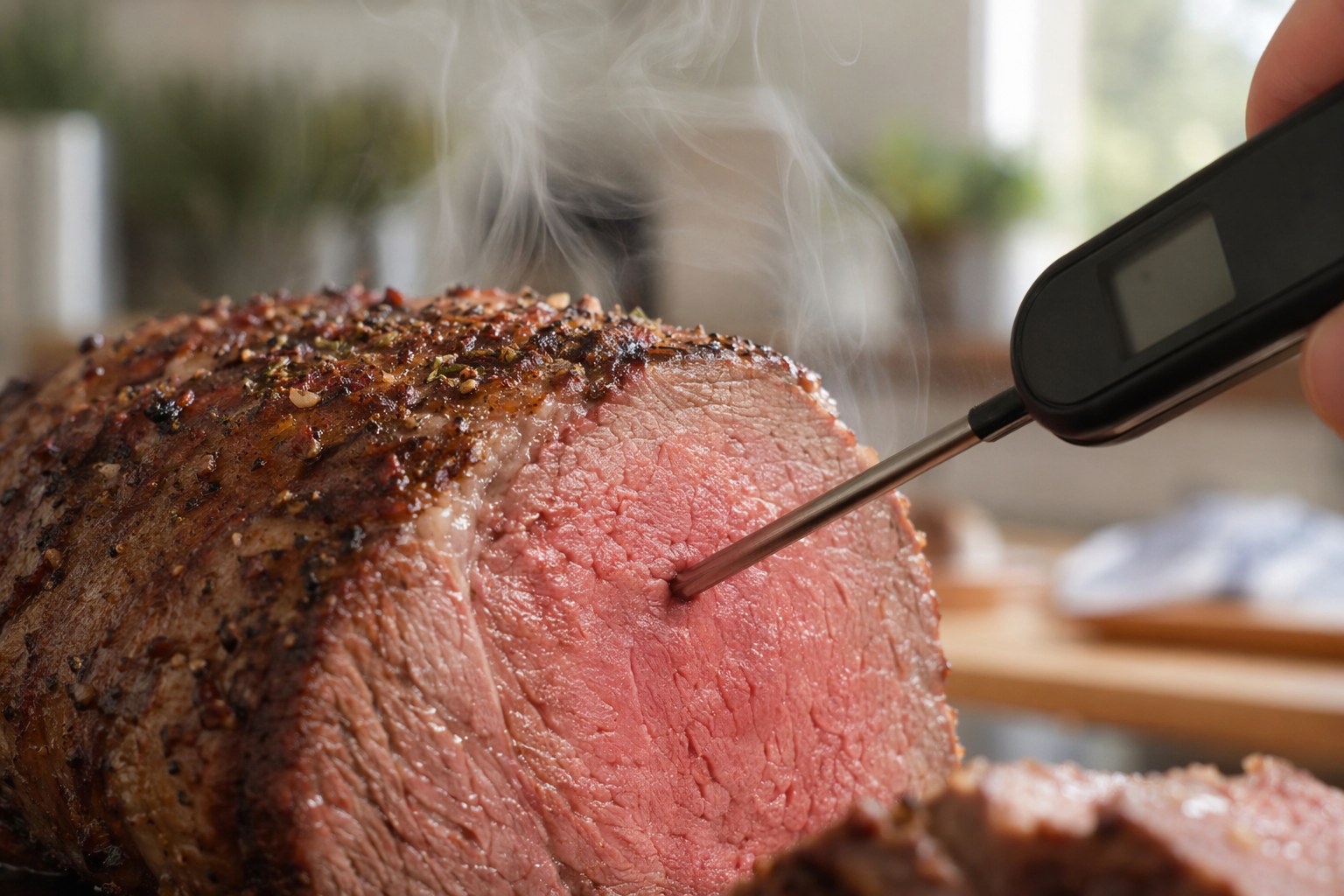
- Roast until the internal temperature hits 120°F for medium-rare (about 1.5–2 hours, but go by temperature, never the clock). For pork loin, aim for 140°F.
- For a deep, restaurant-style crust, crank the oven to 500°F for the last 8–10 minutes, or sear the roast in a screaming-hot skillet. A well-maintained pan helps here — if you cook in cast iron, keeping it properly seasoned gives you that hard, even sear without sticking.
- Rest the roast 20 minutes, then cool to room temperature, wrap, and refrigerate overnight. Save every drop of pan drippings in a separate container.
Temperature Is the Whole Game
I will die on this hill: the difference between an elegant roast and a leathery one is about 10 degrees of internal temperature, and you cannot eyeball it. The pros don't guess, and neither should you on a high-stakes day.
Here's the target chart. Pull the roast about 5°F below your target because it keeps climbing while it rests (this is called carryover cooking):
| Doneness | Pull from oven at | Final temp after rest |
|---|---|---|
| Rare | 115°F | 120–125°F |
| Medium-rare | 120°F | 125–130°F |
| Medium | 130°F | 135–140°F |
| Medium-well | 140°F | 145–150°F |
| Pork loin | 140°F | 145°F |
A cheap dial thermometer lags by a minute and reads inaccurately, which is worse than no thermometer at all because it gives you false confidence. Spend $15–35 on a fast digital instant-read that registers in 2–3 seconds. It's the best cooking-tool purchase under $40 you'll ever make, and it pays for itself the first time it saves a roast.
Digital Instant-Read Meat Thermometer
Reads accurate temps in 2–3 seconds so you pull the roast at the exact right moment — the single tool that makes this recipe foolproof.
Check Price on Amazon →If you want help choosing, I've broken down my favorites in this guide to the best instant-read meat thermometers. The same precision mindset that nails a roast is exactly what lets you nail other temperature-fussy dishes, from custards to perfect hard-boiled eggs every time.
The Sous-Vide Shortcut (For the Truly Anxious)
If even the oven feels like too much to manage, sous vide removes the guesswork entirely. An immersion circulator holds the water at your exact target temperature, so the roast literally cannot overcook. Bag the salted, herb-rubbed roast, drop it in a 130°F bath for 4–6 hours, then sear it hard in a hot skillet to finish. It's genuinely impossible to mess up the doneness.
Anova Culinary Precision Cooker (Bluetooth)
Holds the water bath at an exact temperature so the roast can't overcook — the safety net for cooks who want zero day-of stress.
Check Price on Amazon →Sunday: The 10-Minute Pan Sauce
Don't skip this — a glossy sauce turns "I cooked a roast" into "wow, did you cater this?" While the sliced roast warms in the oven, make a quick jus.
- Pour the saved drippings into a small saucepan. Add 1 cup beef stock and a splash (about 1/4 cup) of dry red wine.
- Simmer and reduce by half, scraping in any browned bits.
- Whisk in 1 tablespoon cold butter at the very end for shine, plus a teaspoon of Dijon and any leftover thyme.
- Taste, adjust salt, and spoon over the platter.
That's a five-ingredient sauce that tastes like it took an hour.
Carving Like You Mean It
A clean, confident carve is half the presentation, and it's where a lot of beautiful roasts get butchered (literally). Two rules: use a long, sharp blade, and always slice against the grain in thin, even slices. Cutting across the muscle fibers shortens them, which is the difference between tender and chewy.
A dedicated carving knife — long, narrow, and thin — glides through where a stubby chef's knife tears. Whatever blade you use, get it truly sharp first; a dull knife crushes the meat and pushes the juices out. If it's been a while, here's how to sharpen your kitchen knives at home in a few minutes.
8-inch High-Carbon Steel Carving Knife
A long, thin, razor-sharp blade that slices clean, even rounds against the grain — the difference between an elegant platter and a shredded mess.
Check Price on Amazon →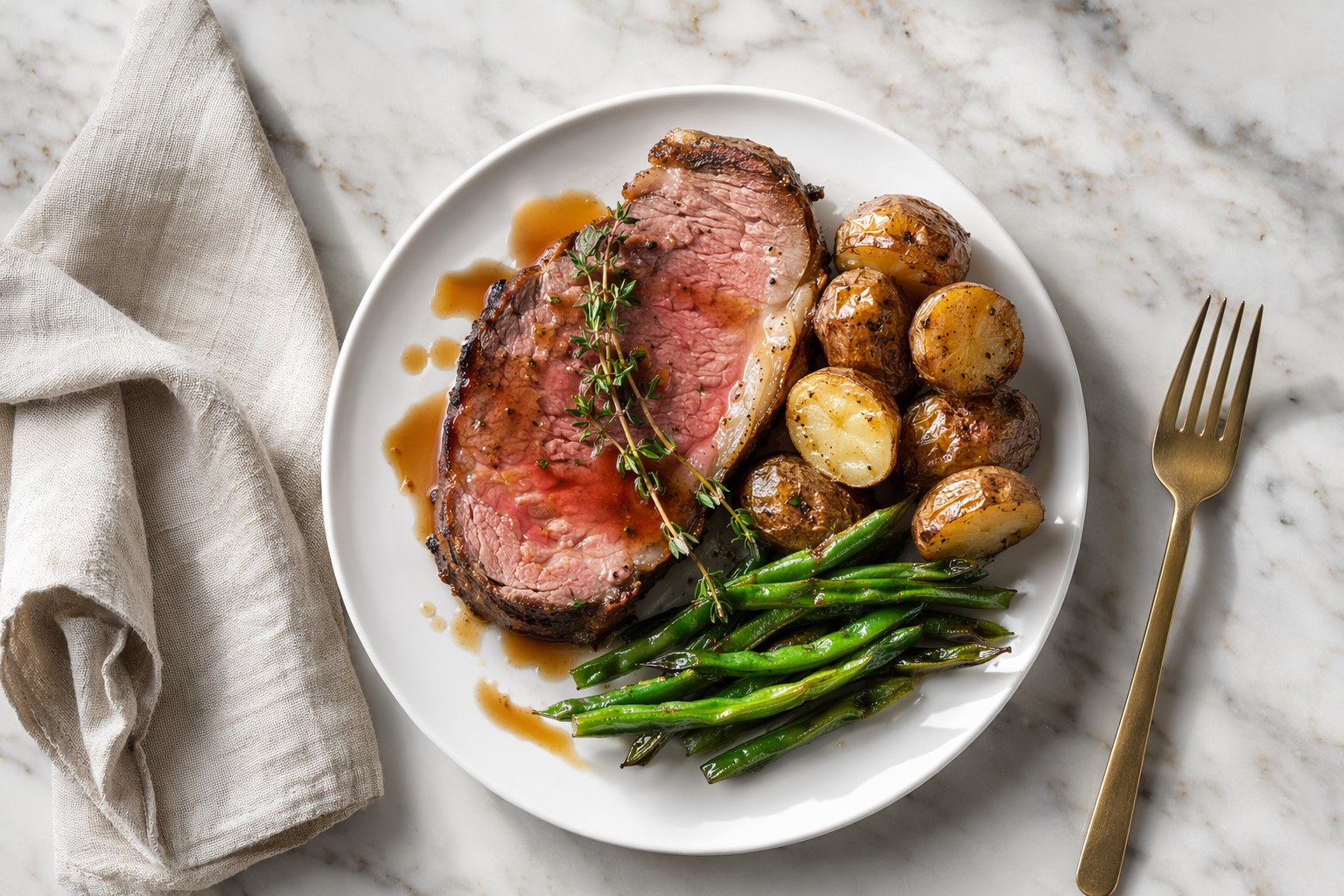
The Stress-Free Menu Around It
Build the rest of the meal from make-ahead and hands-off dishes so nothing competes for your attention on Sunday:
- Roasted vegetables: Toss carrots, shallots, and baby potatoes in the leftover herb oil. Roast on one sheet pan at 425°F while the meat reheats.
- A bright green salad: Wash and dry the greens Saturday; whisk the vinaigrette ahead and dress at the table.
- Crusty bread: Buy it. Truly. No one is judging you for not baking bread.
- Dessert: Anything you can finish Saturday — a tart, a trifle, ice cream with a warm sauce.
The goal is one hot, hands-on dish (the roast, gently reheating) and everything else either cold or roasting unattended.
Frequently Asked Questions
Can I really cook the roast a full day ahead without it tasting reheated?
Yes, and this is the technique caterers and restaurants use for exactly this reason. Because you slow-roast at a low temperature, cool fully, then reheat gently at 275°F in its own jus, the meat never gets a second hard cook. It stays pink and juicy. The trick is the gentle reheat — never blast cold slices at high heat, or you'll lose everything you protected.
What size roast do I need for my group?
Plan for about 1/2 pound of raw boneless roast per person, slightly more if you want leftovers (and you do — cold roast beef sandwiches Monday are a gift). So a 3-pound roast comfortably serves 6, a 4-pound roast serves 8. Bone-in cuts need a bit more per person to account for the bone.
My family likes their meat well-done. Can I still use this method?
You can, though I'd gently push back on a tender ribeye. If well-done is non-negotiable, go to 150–155°F internal and choose a fattier cut like ribeye or chuck roast so it doesn't dry out completely. Better yet, roast to medium and offer the end slices, which are always more done, to the well-done crowd. Everyone gets what they want from a single roast.
Do I need an expensive roasting pan?
No. Any heavy oven-safe pan with a rack works, and a rack just lifts the meat so air circulates underneath for even cooking. A simple stainless steel roasting pan with a rack is a worthwhile $25–40 buy you'll reuse every holiday, but in a pinch a sheet pan with a wire cooling rack set inside does the same job.
What if I don't have a thermometer and the stores are closed?
Use the finger test as a backup: a medium-rare roast feels like the fleshy pad below your thumb when you touch your thumb to your middle finger — soft with a little resistance. It's far less reliable than a thermometer, so cut into the thickest part to check rather than risk it. But honestly, the thermometer is the one tool I'd recommend grabbing before this meal.
Bring It to the Table
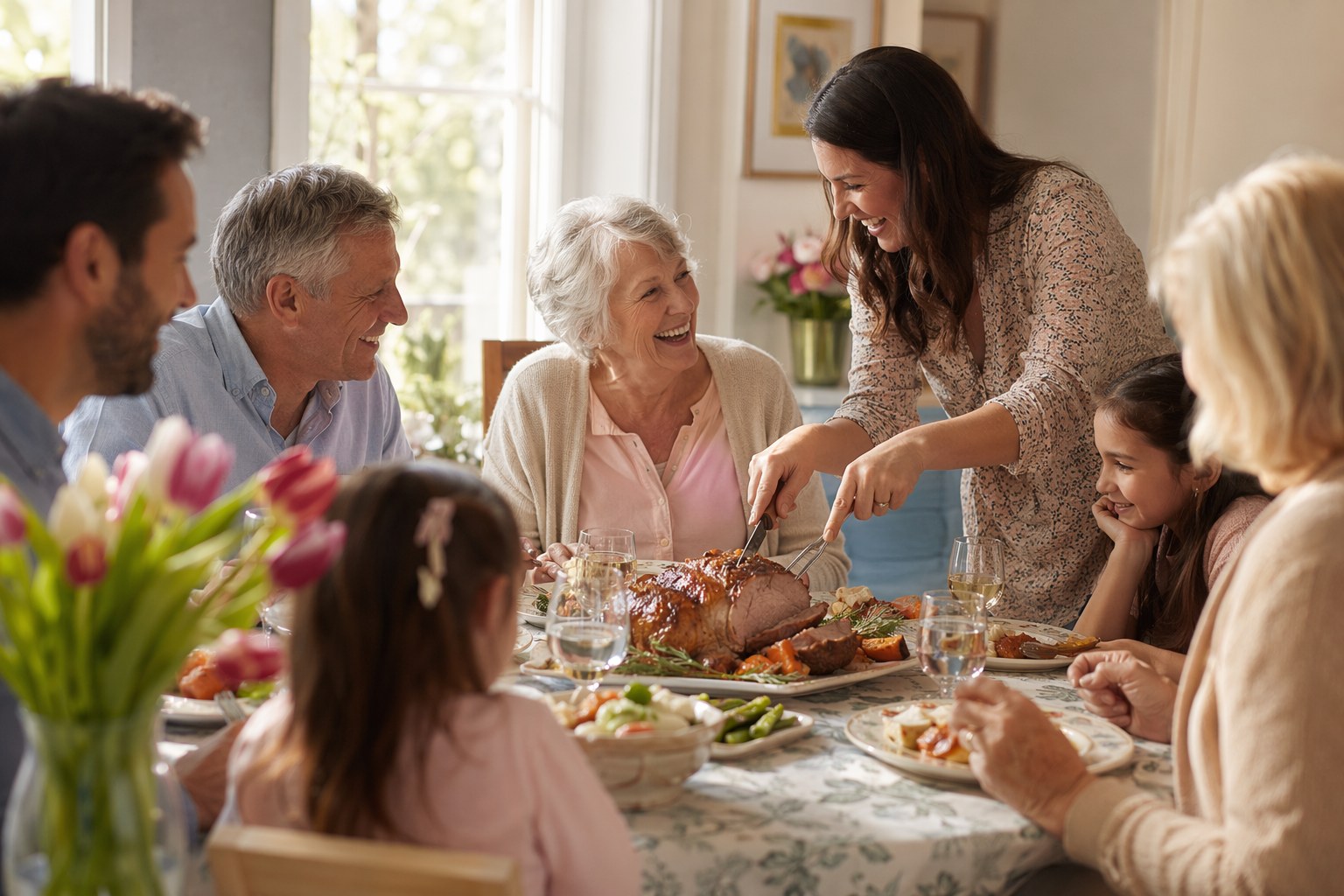
The whole point of cooking for someone on Mother's Day is to actually be present at the table, not trapped at the stove. This three-day roast lets you do exactly that. The hard work happens when no one's watching, and the celebration day asks almost nothing of you but a gentle reheat, a quick sauce, and a confident carve.
Salt it Friday. Roast it Saturday. Slice, warm, and shine it on Sunday. Then sit down, pour a glass of something nice, and enjoy the part that actually matters.
Get weekly home tips that actually work
Join thousands of homeowners getting practical cleaning hacks, DIY fixes, and money-saving tips every week. Free, and you can unsubscribe anytime.

Written by
Priya PatelKitchen & Lifestyle Writer
Priya Patel is a former restaurant pastry chef turned home-cooking obsessive. She writes about meal prep, kitchen organization, and the small appliances actually worth your counter space. Priya tests recipes and gadgets out of a tiny Brooklyn galley kitchen, so she has strong opinions about what earns its footprint.
Recommended Products
Looking for specific product recommendations? Check out our tested picks.
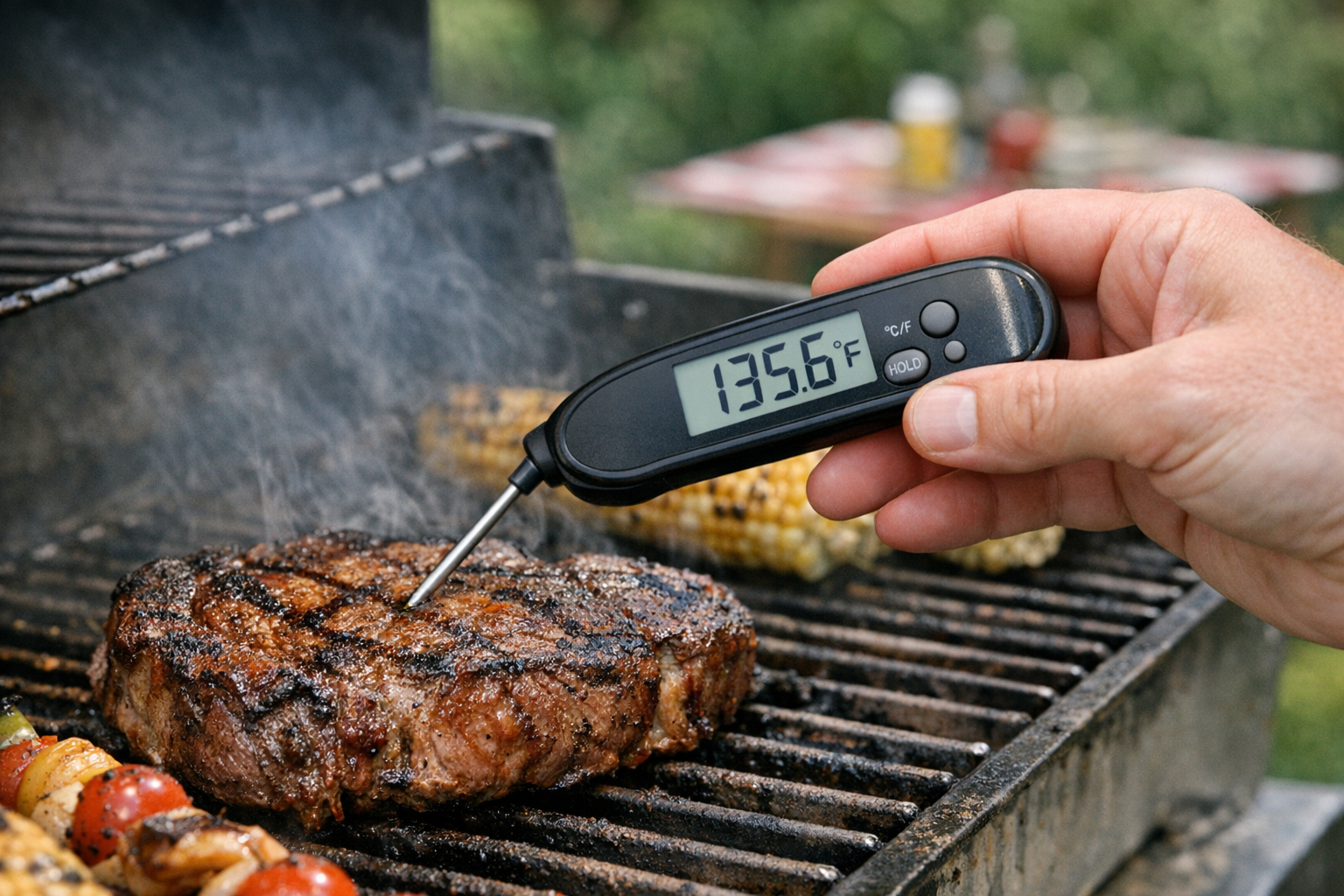
Best Instant Read Meat Thermometers (2026 Tested)
We tested instant read thermometers for grilling, roasting, and candy making. The picks that read in under 3 seconds and don't break after a year.
Best Espresso Machines for Home (2026 Buyer's Guide)
From under-300-dollar starter machines to 2000-dollar prosumer espresso, here are the espresso machines worth your money in 2026.
Best Stand Mixers (2026 Buyer's Guide)
We tested stand mixers from KitchenAid, Cuisinart, and Breville on bread dough, cookie batter, and meringues. Here are the picks worth the counter space.
5 Best Kitchen Knife Sets for Home Cooks (2026)
Stop struggling with dull knives. We compared the top kitchen knife sets for home cooks at every budget — here are the 5 best with honest pros and cons.
Best Air Fryers for Home Cooks (2026 Buyer's Guide)
Find the best air fryer for your kitchen and budget. We compare 6 top-rated air fryers from basket to oven style, with honest pros and cons for each.
Related Articles
Batch Cooking for Summer: Make & Freeze 8 Meals in 3 Hours
A former chef's assembly-line batch system: prep, portion, and label 8 complete summer dinners in one 3-hour Sunday session so weeknights cook themselves.
Freezer Meal Prep for Busy Weeks: 5 Make-Ahead Recipes + Storage Guide
A former chef's 5 freezer meals that reheat like fresh, plus the exact containers and labeling system that actually works in a real kitchen freezer.
Pantry Staples That Ship Well: Build Your Emergency Backup Supply
Build a redundant pantry of shelf-stable staples that ship cheaply and last for years. A former chef's exact list, shelf-life chart, and rotation system.
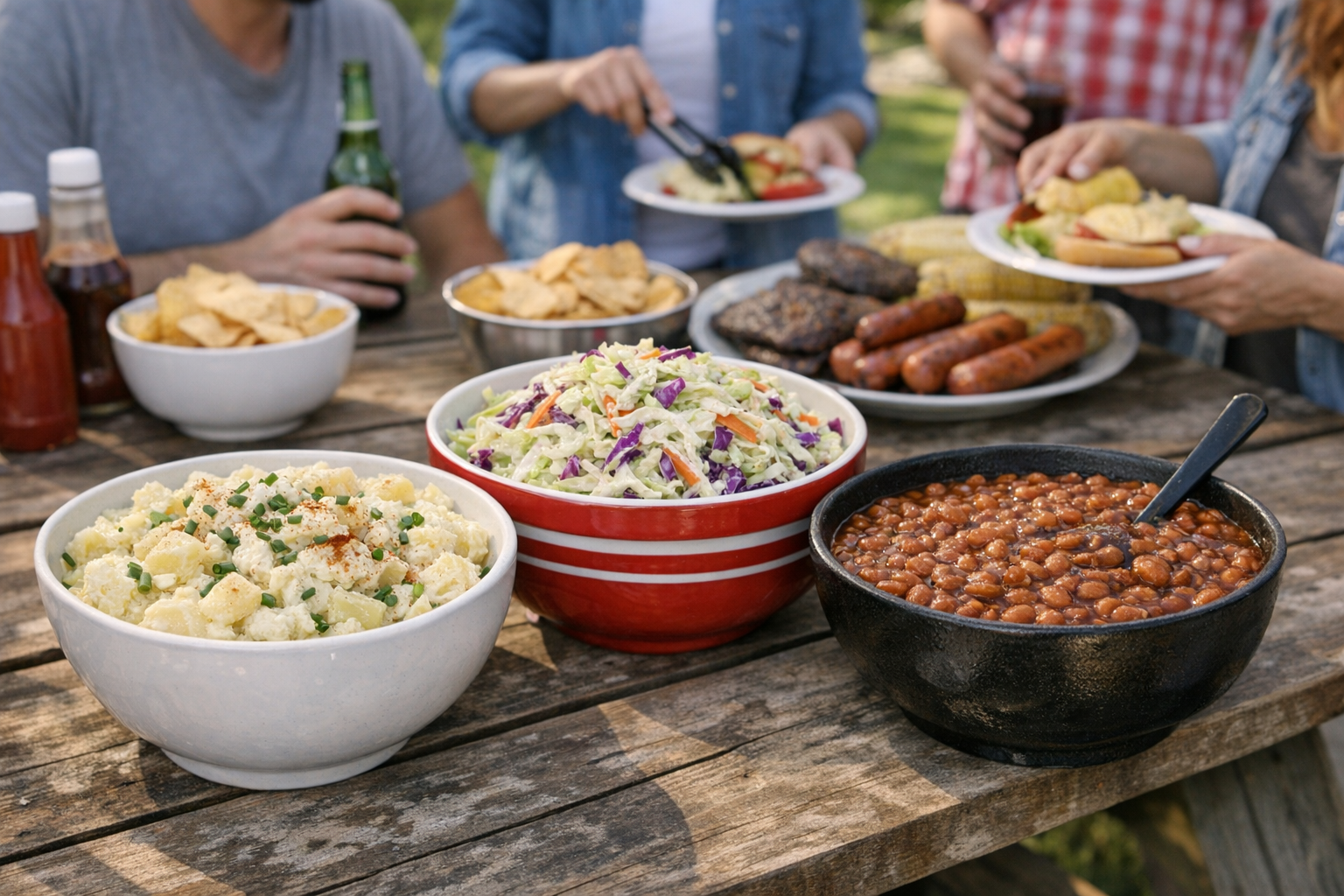
Cookout Staples to Prep Ahead (For Stress-Free Summer Entertaining)
The 8 cookout staples you can make 1 to 3 days ahead — better-tasting than last-minute and lets you actually enjoy the party.