Pantry Staples That Ship Well: Build Your Emergency Backup Supply
This article may contain affiliate links. If you make a purchase through these links, we may earn a small commission at no extra cost to you. Learn more
Quick Answer
Pantry Staples That Ship Well: Build Your Emergency Backup Supply
The best emergency backup staples are dense, shelf-stable, and ship without crushing: all-purpose flour, dried pasta, canned tomatoes and tomato paste, rice, dried beans, cooking oil, salt, baking soda and baking powder, and shelf-stable spices. Buy a second sealed unit of each, store it behind your working supply, and rotate so the oldest gets used first.
Pantry Staples That Ship Well: Build Your Emergency Backup Supply
The first time I ran out of baking soda mid-recipe, I had a sheet pan of cookies waiting and a closed grocery store. The second time, I was halfway through a batch of focaccia and discovered the flour bag was lighter than I thought. That was the moment I built what I now call my backup pantry: a quiet second copy of everything I actually use, sitting behind my working supply, ordered in bulk and shipped to my door for less than I'd pay at the store.
I cooked in restaurant kitchens for nearly a decade, and the one habit that transferred straight into home cooking was par levels. In a professional kitchen, you never let a station drop below a set minimum. The home version is simpler and cheaper than people assume. You are not building a doomsday bunker. You are making sure that a storm, a sick week, or a 9 PM baking emergency never sends you out for a single bag of flour.
This guide is the exact list I order, the shelf-life numbers I plan around, and the rotation system that keeps it all from quietly expiring in the back of a cabinet.
Why a "Ships Well" Pantry Is Different From a Prepper Stockpile
There is a meaningful difference between a backup pantry and a survival stockpile, and it changes what you buy. A survival stockpile prioritizes calories and water for a worst-case scenario. A backup pantry prioritizes the ingredients you cook with every week so you never interrupt your normal life.
The "ships well" filter matters more than people think. Anything you order online has to survive a delivery truck, a conveyor belt, and a porch drop. That rules out a lot of fragile or temperature-sensitive items and steers you toward dense, shelf-stable, sealed staples. Flour, sugar, rice, dried pasta, and canned goods all ship beautifully because they are stable at room temperature and tightly packed. Eggs, fresh herbs, and anything refrigerated do not.
The bulk-shipping math is the other reason to do this online. A 5-pound bag of flour or a 12-box case of pasta costs noticeably less per ounce than buying single units, and you skip the trip entirely. I treat my backup pantry the way I treat any kitchen system: it should save me money and stress at the same time, which is the same logic behind learning to cut your grocery bill in half.
The Core 12: Staples Worth Keeping a Backup Of
After years of tracking what I actually ran out of, my backup list settled on twelve categories. These are the items where a gap genuinely stops me from cooking.
- All-purpose flour — the single most-used baking staple in my kitchen.
- Dried pasta — cheap, dense, and the base of a dozen weeknight dinners.
- Rice — white rice especially, for its long shelf life.
- Canned tomatoes and tomato paste — the backbone of sauces, soups, and braises.
- Dried beans — protein and bulk for pennies per serving.
- Cooking oil — neutral oil for everything, plus olive oil if you can store it cool.
- Salt — effectively immortal, and you use it in everything.
- Sugar — granulated for baking and balancing acidity.
- Baking soda and baking powder — the two leaveners that fail you at the worst moments.
- Shelf-stable spices — the small jars that quietly run dry.
- Stock or bouillon — concentrated flavor that turns water into a meal.
- Canned protein — tuna, chicken, or beans-as-protein for fast meals.
The principle is simple: buy a second sealed unit of each, never the loose working version. The backup stays closed until the front one is empty. This is how restaurants avoid the "we're out" moment, and it works just as well in a home pantry of any size.
Bob's Red Mill Organic All-Purpose Flour 5 lb
A reliable, finely milled all-purpose flour that ships sealed and stores well in an airtight container for months of baking.
Check Price on Amazon →Shelf Life: How Long Each Staple Actually Lasts
Knowing real shelf life is what separates a useful backup pantry from a collection of expired bags. These are conservative, best-quality ranges assuming cool, dry, sealed storage. Most items are safe well past these windows, but quality starts to slip.
| Staple | Pantry Shelf Life (sealed, cool, dry) | Notes |
|---|---|---|
| White rice | 4-5 years | Brown rice is only 6-12 months; oils in the bran go rancid |
| Dried pasta | 2-3 years | Stays safe far longer; texture is the limiting factor |
| All-purpose flour | 8-12 months | Freeze it to extend to 1-2 years and kill pests |
| Dried beans | 2-3 years to cook well | Older beans still cook; they just need longer soaking |
| Canned tomatoes | 1.5-2 years | High acid shortens it; never use a bulging can |
| Tomato paste | 2 years | Tube paste lasts longer once opened than canned |
| Cooking oil | 1-2 years sealed | Store dark and cool; rancid oil smells like crayons |
| Granulated sugar | Indefinite | Hardens but never truly spoils |
| Salt | Indefinite | The one staple you can over-buy without worry |
| Baking soda | 2 years | Cheap; replace yearly for reliable lift |
| Baking powder | 6-12 months | The shortest-lived staple here; test before trusting |
| Ground spices | 1-2 years | Whole spices last 3-4 years and ship just as well |
The two items that surprise people are baking powder and brown rice. Baking powder loses its punch faster than almost anything in your pantry, so it is the staple most worth dating and rotating. And brown rice, despite its healthy reputation, has a fraction of white rice's storage life because of the oils in the bran. For long-term backup, white rice wins.
How to Pack and Store It So It Lasts
Buying the staples is the easy part. Storing them so they reach their full shelf life is where most backup pantries quietly fail. Heat, light, air, and moisture are the four enemies, and they all attack at once in a warm cabinet next to the stove.
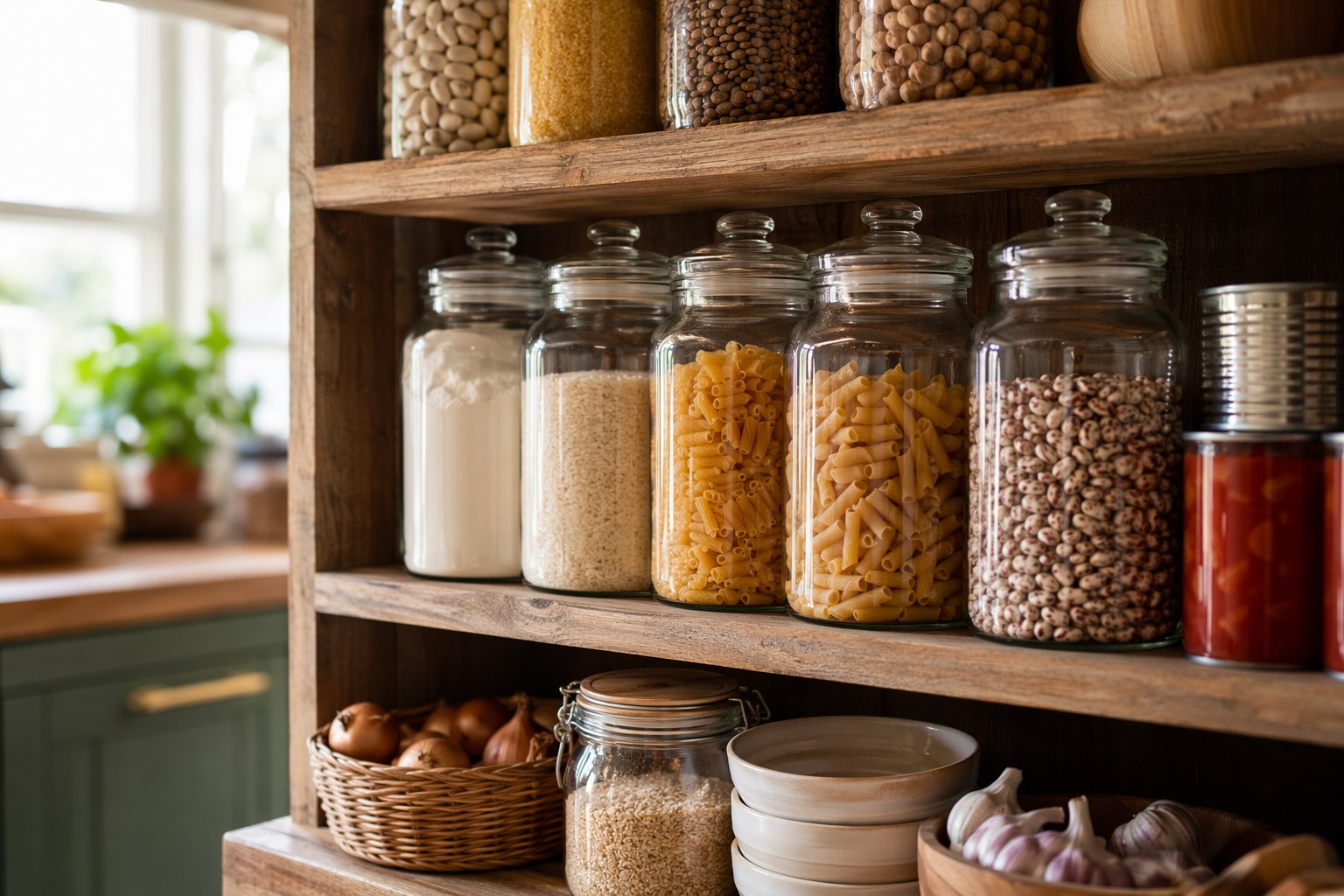
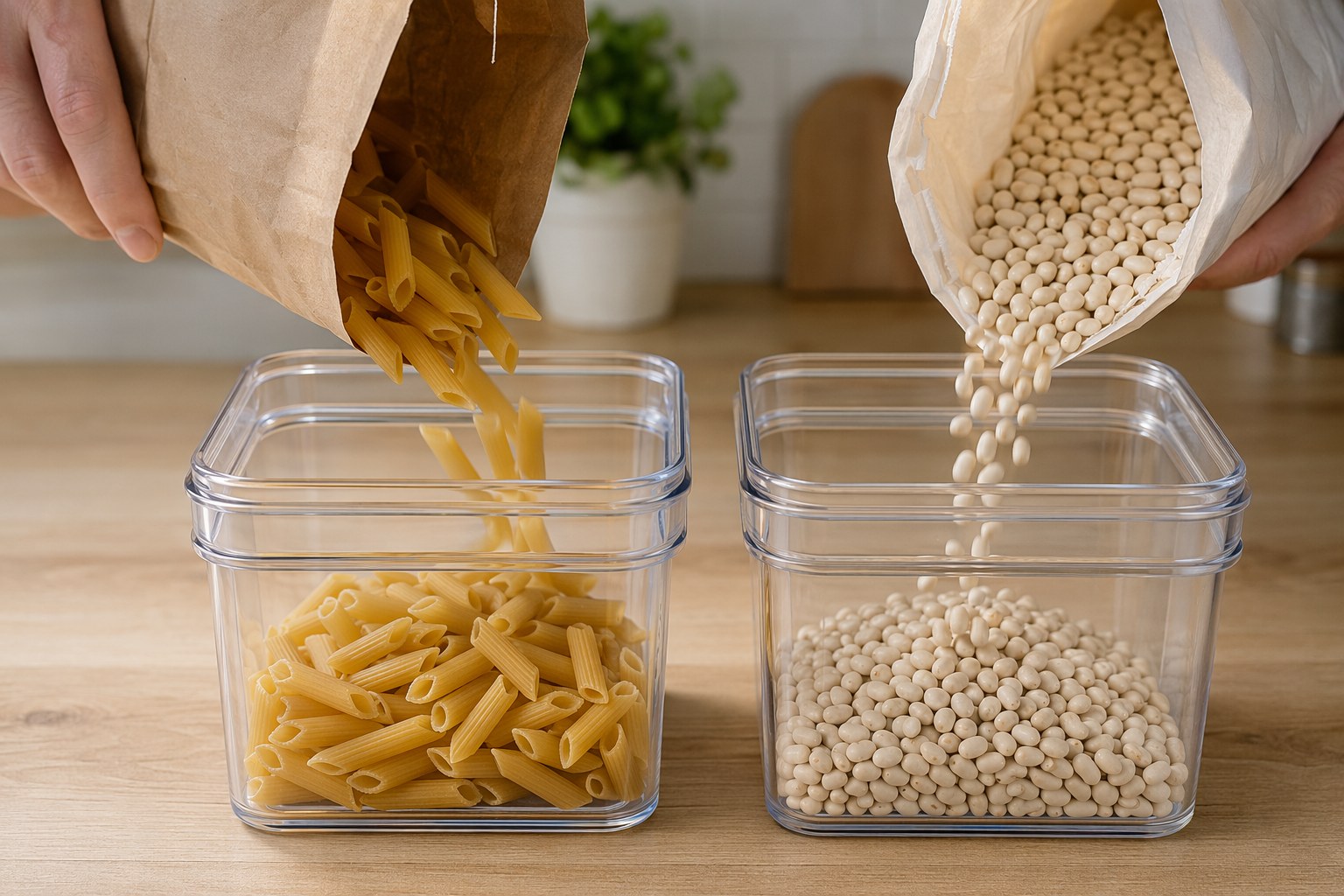
Move flour, sugar, rice, and beans out of their paper or thin plastic bags and into airtight containers as soon as they arrive. Bags breathe, tear, and invite pantry moths. Clear, square, airtight containers stack efficiently and let you see your levels at a glance, which is the same approach I recommend when you organize your pantry like a pro. Square beats round every time because round containers waste the gaps between them.
For anything you want to push past its normal shelf life, the freezer is your secret weapon. A few days in the freezer kills any insect eggs hiding in flour or grains, and long-term freezer storage roughly doubles the life of flour and nuts. This is one of the core ideas behind smart freezer meal prep hacks: cold is the cheapest preservation tool you own.
Keep oils and spices away from the stove. The cabinet directly above your range feels convenient, but it is the hottest, most light-exposed spot in the kitchen, and it ages oil and spices fastest. A cool interior cabinet or a basement shelf does the job far better.
OXO Good Grips POP Container Set
Airtight, stackable, and crystal-clear so you can see exactly how low your backup flour, rice, and pasta are running.
Check Price on Amazon →The Rotation System That Keeps It From Expiring
A backup pantry that you never touch is just a future donation bin of expired food. The fix is the same one grocery stores use: first in, first out, usually shortened to FIFO. Whenever a new shipment arrives, it goes to the back. The older unit moves to the front and gets used first.
I borrow one more trick from restaurant kitchens: I write the purchase date, not just the expiration date, on every item with a marker or a removable label. Expiration dates tell you when quality drops; purchase dates tell you which of two identical bags is older. When you have a working bag and a backup bag of the same flour, the dates are the only way to know which to open.
Set a recurring reminder to check the backup pantry once a season. It takes ten minutes. Pull anything within a few months of its date forward into your everyday cooking, note what needs reordering, and you will essentially never throw food away. Treating the backup as a slow, rotating part of your real kitchen rather than a frozen-in-time stash is what makes the whole system sustainable, and it pairs naturally with a broader habit of reducing food waste.
This rotation is also where the budget payoff shows up. Because you are buying ahead in bulk and using everything before it turns, your cost per meal drops. It is the same principle that makes a 50-dollar weekly meal-prep budget actually work: buy smart, store smart, waste nothing.
A Sample $60 Starter Backup Order
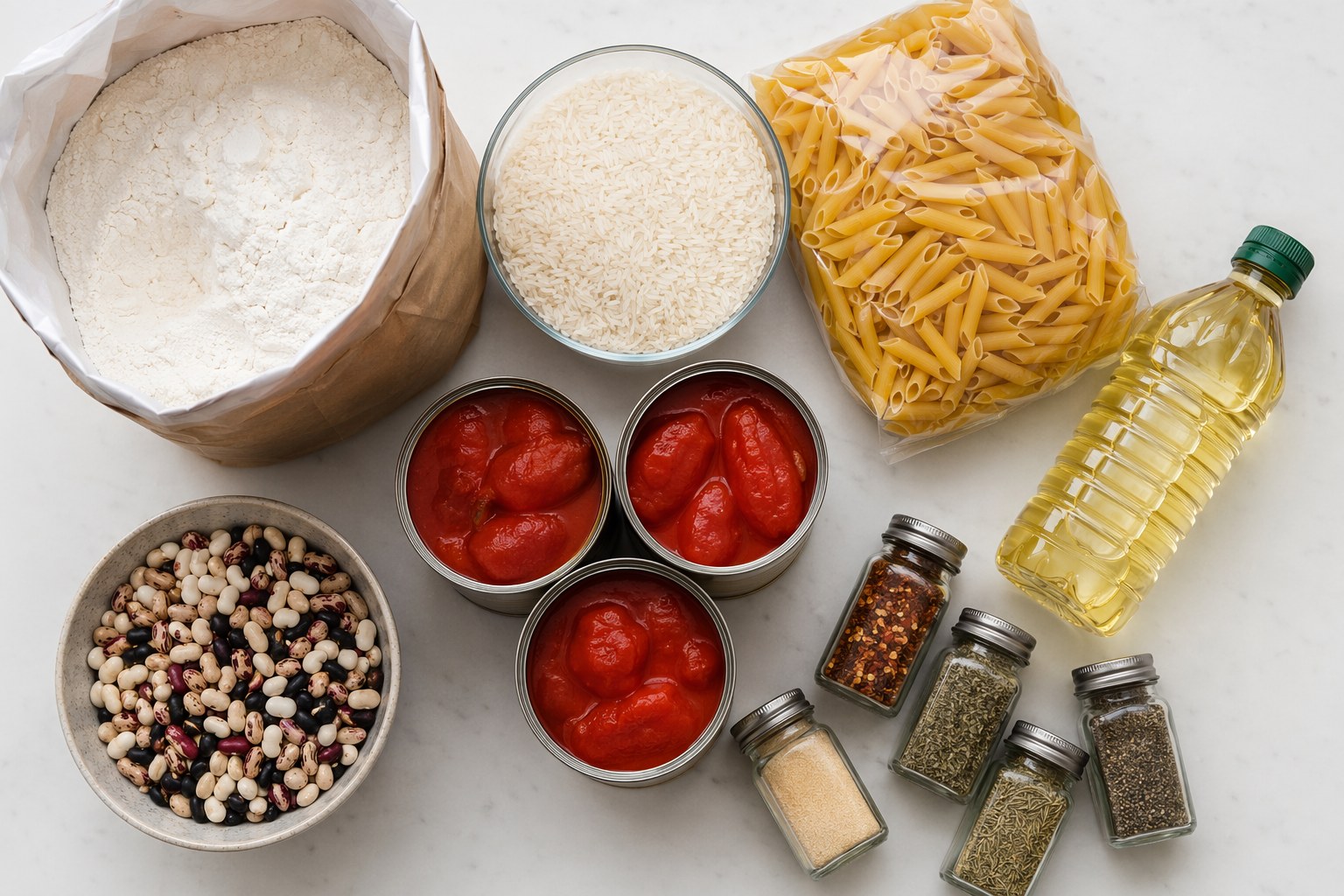
If you want to start this weekend, here is a realistic first order that covers the highest-impact staples without overspending. Prices vary, but this is a reasonable target for a single shipment.
- 5 lb all-purpose flour
- A 12-box case of dried pasta
- 5 lb white rice
- A 6-pack of canned tomatoes plus a 6-pack of tomato paste
- 2 lb dried beans
- One bottle of neutral cooking oil
- Baking soda and baking powder
- A small spice refresh of your three most-used jars
Pomi or Cento Canned Whole Tomatoes (6-Pack)
A clean, low-additive canned tomato that ships safely and forms the base of sauces, soups, and braises for two years on the shelf.
Check Price on Amazon →That single order gives you the backbone of dozens of meals: pasta with tomato sauce, rice and beans, flatbreads, soups, and the baking essentials that always seem to run out first. Add canned protein and stock on your next order and you have a fully redundant working pantry.
Frequently Asked Questions
What pantry staples have the longest shelf life?
Salt and granulated sugar are effectively indefinite when kept dry. White rice, dried pasta, and dried beans all store well for two to five years sealed. These dense, low-moisture staples are the foundation of any backup pantry because they tolerate time better than anything else in your kitchen.
Which staples ship the best without getting damaged?
Dense, sealed, room-temperature items ship best: flour, sugar, rice, dried pasta, canned goods, and bottled oil. They are tightly packed and stable, so they survive handling without crushing or spoiling. Avoid ordering anything fragile, refrigerated, or temperature-sensitive online for backup storage.
How much backup should I actually keep?
For most households, one extra sealed unit of each core staple is plenty. The goal is to never hit zero on something you cook with weekly, not to fill a basement. Start with a single duplicate of your twelve most-used items, then adjust based on what you genuinely run out of.
Does buying in bulk really save money?
Yes, almost always on a per-ounce basis, but only if you use it before it expires. A 5-pound bag of flour or a 12-box case of pasta costs less per serving than single units. The savings disappear the moment food spoils, which is exactly why the rotation system matters as much as the buying.
How do I keep pantry moths and bugs out of stored grains?
Freeze new flour, rice, and grains for three to four days when they arrive to kill any eggs, then store everything in airtight containers, never original paper bags. Bay leaves in the container deter moths, and a quick seasonal inspection catches any problem before it spreads.
Your Kitchen, Quietly Backed Up
A backup pantry is not about fear or hoarding. It is about never letting a small gap, a storm, or a late-night recipe derail a meal you were excited to make. Buy a second copy of the staples you actually use, store them so they last, and rotate them through your real cooking so nothing goes to waste.
Start with one $60 order this week. Move it to the back of the shelf, date everything, and let your working supply pull from the front. The next time you reach for flour at 9 PM, it will be right there. That quiet reliability is the whole point, and once you have it, you will wonder how you cooked without it.
Get weekly home tips that actually work
Join thousands of homeowners getting practical cleaning hacks, DIY fixes, and money-saving tips every week. Free, and you can unsubscribe anytime.

Written by
Priya PatelKitchen & Lifestyle Writer
Priya Patel is a former restaurant pastry chef turned home-cooking obsessive. She writes about meal prep, kitchen organization, and the small appliances actually worth your counter space. Priya tests recipes and gadgets out of a tiny Brooklyn galley kitchen, so she has strong opinions about what earns its footprint.
Recommended Products
Looking for specific product recommendations? Check out our tested picks.
Best Instant Read Meat Thermometers (2026 Tested)
We tested instant read thermometers for grilling, roasting, and candy making. The picks that read in under 3 seconds and don't break after a year.
Best Espresso Machines for Home (2026 Buyer's Guide)
From under-300-dollar starter machines to 2000-dollar prosumer espresso, here are the espresso machines worth your money in 2026.
Best Stand Mixers (2026 Buyer's Guide)
We tested stand mixers from KitchenAid, Cuisinart, and Breville on bread dough, cookie batter, and meringues. Here are the picks worth the counter space.
5 Best Kitchen Knife Sets for Home Cooks (2026)
Stop struggling with dull knives. We compared the top kitchen knife sets for home cooks at every budget — here are the 5 best with honest pros and cons.
Best Air Fryers for Home Cooks (2026 Buyer's Guide)
Find the best air fryer for your kitchen and budget. We compare 6 top-rated air fryers from basket to oven style, with honest pros and cons for each.
Related Articles
Batch Cooking for Summer: Make & Freeze 8 Meals in 3 Hours
A former chef's assembly-line batch system: prep, portion, and label 8 complete summer dinners in one 3-hour Sunday session so weeknights cook themselves.
Mother's Day Roast: Elegant Main Dish Recipe for Stressed Home Cooks
An elegant herb-crusted roast you can prep Friday, rest Saturday, and reheat Sunday. The stress-free Mother's Day main dish a former chef actually relies on.
Freezer Meal Prep for Busy Weeks: 5 Make-Ahead Recipes + Storage Guide
A former chef's 5 freezer meals that reheat like fresh, plus the exact containers and labeling system that actually works in a real kitchen freezer.
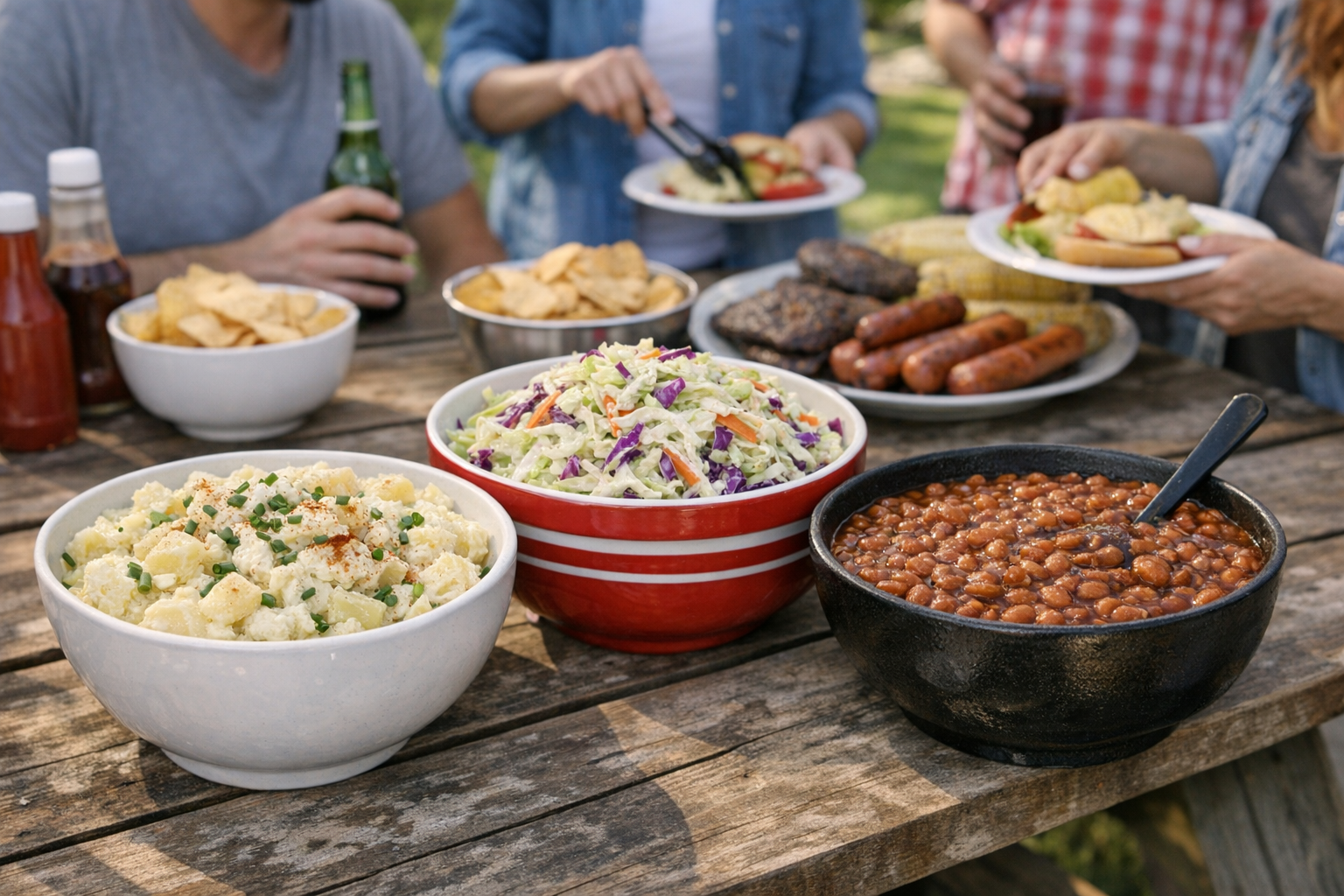
Cookout Staples to Prep Ahead (For Stress-Free Summer Entertaining)
The 8 cookout staples you can make 1 to 3 days ahead — better-tasting than last-minute and lets you actually enjoy the party.