How to Organize Your Medicine Cabinet (And What to Throw Away)
This article may contain affiliate links. If you make a purchase through these links, we may earn a small commission at no extra cost to you. Learn more
Quick Answer
How to Organize Your Medicine Cabinet (And What to Throw Away)
Start by emptying everything out of your medicine cabinet. Throw away anything expired, nearly empty, or that you haven't used in a year. Group what's left into categories: daily medications, first aid, pain relief, cold and flu, and personal care. Use small bins or a lazy Susan to keep categories together. Store daily medications at eye level for easy access, and keep anything children shouldn't reach on the highest shelf. Check expirations every 6 months.
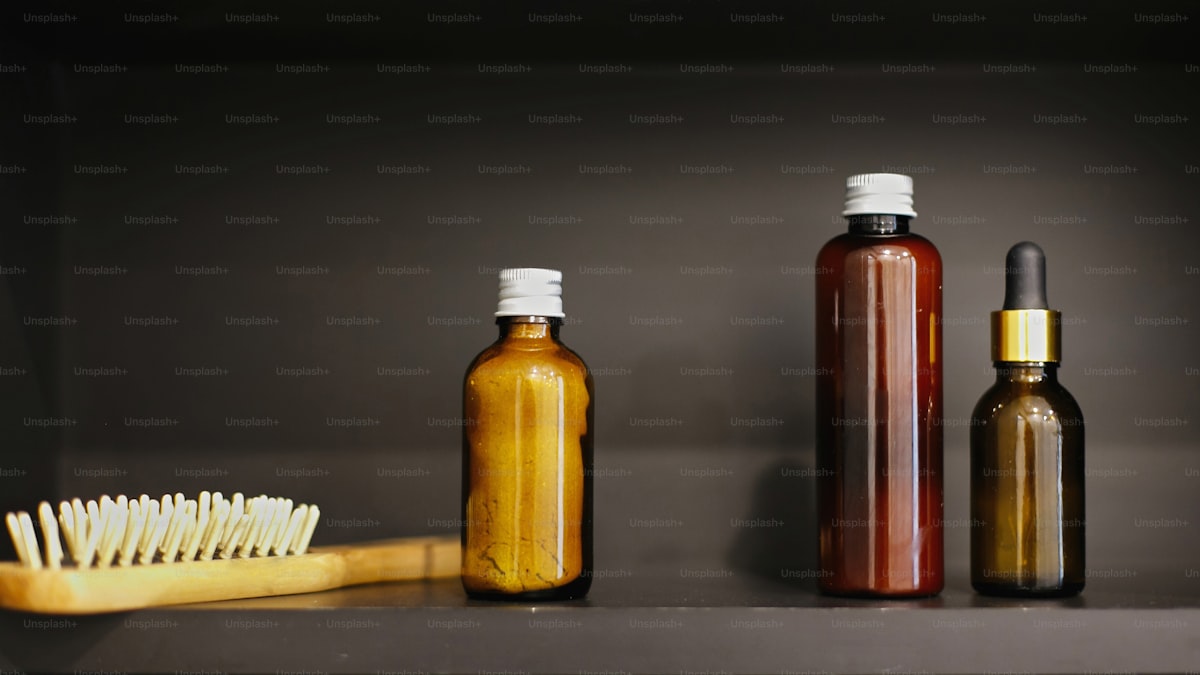
How to Organize Your Medicine Cabinet (And What to Throw Away)
Most medicine cabinets are a mess of expired prescriptions, half-used tubes, random bandages, and bottles you can't identify. The average household has medications that expired years ago sitting next to current prescriptions, which isn't just cluttered — it can be dangerous if someone grabs the wrong thing.
Organizing your medicine cabinet takes about 30 minutes and the result is a system where you can find what you need in seconds, nothing is expired, and everything is safely stored. Here's how.
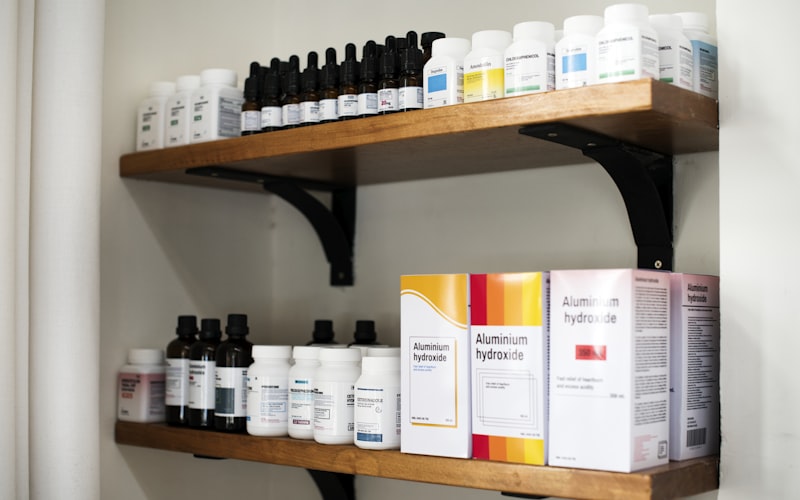
How Do You Start Organizing a Medicine Cabinet?
Take everything out. Every bottle, tube, bandage, and random item. Lay it all out on a towel on the counter so you can see what you're working with.
Most people are surprised by how much they have — and how much of it is expired or unnecessary. Don't try to organize while items are still on the shelves. A complete reset is faster and more effective.
While the cabinet is empty, wipe down every shelf with a disinfecting wipe. Medicine cabinets collect dust and residue from leaking bottles more than you'd think.
What Should You Throw Away?
This is the most important step. Be ruthless.
Throw away immediately:
- Expired medications — Check every bottle and box. Prescription and over-the-counter medications lose effectiveness after expiration and some can become harmful. This includes eye drops, ointments, and creams.
- Prescriptions for conditions you no longer have — Leftover antibiotics, old prescriptions from past injuries, medications from a condition that's resolved.
- Anything without a label — If you can't identify it, throw it out. Unlabeled pills and unmarked bottles are a safety hazard.
- Nearly empty containers — That tube with one squeeze left or the bottle with three pills rattling around. Use it or lose it.
- Duplicates — Three bottles of ibuprofen open at once? Consolidate into one and toss the rest.
- Old first aid supplies — Dried-out antiseptic wipes, yellowed bandages, and adhesive that no longer sticks.
How to dispose of medications safely: Don't flush medications or throw them loose in the trash. Mix pills with coffee grounds or kitty litter in a sealed bag before trashing. Many pharmacies and police stations have drug take-back programs — check if yours does.
How Should You Organize What's Left?
Group everything into categories, then assign each category a shelf or zone.
Common categories:
- Daily medications — Prescriptions and vitamins you take every day
- Pain relief — Ibuprofen, acetaminophen, aspirin
- Cold and flu — Decongestants, cough medicine, throat lozenges
- First aid — Bandages, antibiotic ointment, gauze, medical tape
- Digestive — Antacids, anti-diarrheal, fiber supplements
- Personal care — Contact solution, lip balm, specialized creams
Small drawer organizer bins or a lazy Susan for cabinets work perfectly for keeping categories separated. Without containers, everything slowly migrates into one jumbled pile again.
Shelf placement:
- Eye level (middle shelf) — Daily medications and most-used items
- Top shelf — Anything children shouldn't access (medications, sharp items)
- Bottom shelf — First aid supplies, personal care items used less frequently
This is the same zone principle that works for organizing your bathroom cabinet and pantry — things you use most go where they're easiest to reach.
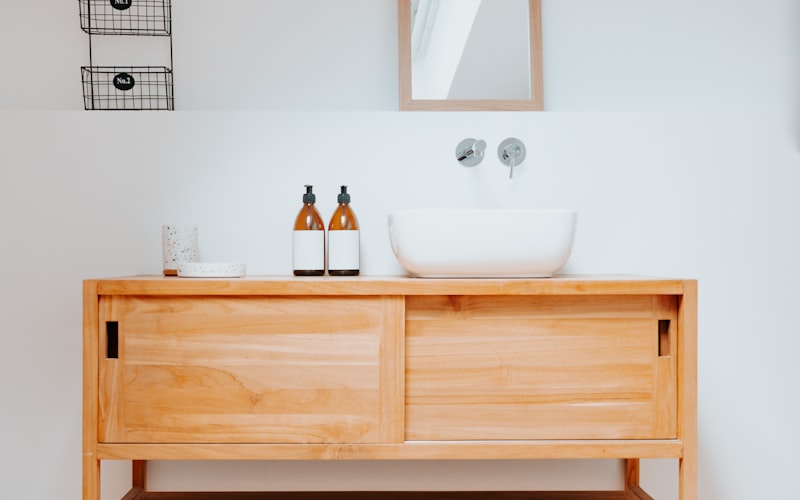
Where Should You NOT Store Medications?
The medicine cabinet in your bathroom might actually be the worst place to store medications. The heat and humidity from showers can degrade medications faster than normal.
Better storage locations:
- A high kitchen cabinet — Away from the stove, cool and dry
- A bedroom closet shelf — Consistent temperature, out of children's reach
- A dedicated storage bin in a hallway closet — Easy to access, away from moisture
If your bathroom is the only practical option (it is for most people), keep the cabinet door closed during showers and ensure good ventilation. Medications that specifically say "store in a cool, dry place" — like certain prescriptions — should definitely live outside the bathroom.
For households with children, a medicine lock box provides an extra layer of safety. Keep it out of sight and out of reach.
How Do You Keep It Organized Long-Term?
The biggest challenge isn't organizing — it's maintaining the system. These habits prevent the slow return to chaos.
The 6-Month Expiration Check
Set a calendar reminder every 6 months (January and July are easy to remember). Pull everything out, check dates, and toss what's expired. This takes 10 minutes twice a year and prevents the expired medication buildup that causes most medicine cabinet clutter.
One In, One Out
When you buy a new bottle of something you already have, finish or toss the old one first. Two open bottles of the same medication is how duplicates accumulate.
Return Items After Use
The habit that matters most: put things back where they belong immediately after use. It sounds obvious, but most medicine cabinet chaos comes from tossing things back on any available space instead of their designated spot. The bins and organizers help — dropping something into the right bin is nearly as easy as dropping it anywhere.
Keep a Running List
Tape a small notepad or sticky note inside the cabinet door. When something runs low, write it on the list. Check the list before your next store trip. This prevents buying duplicates and ensures you always have what you need.

Frequently Asked Questions
How long are medications good after they expire?
Most medications remain safe and somewhat effective for 1-2 years past their printed expiration date, according to FDA research. However, potency decreases over time, meaning they may not work as well. The exceptions are liquid medications, eye drops, and certain critical prescriptions (insulin, nitroglycerin, EpiPens) — these should be replaced when expired.
Should you organize medications by person or by type?
For households with multiple people on different medications, organizing by person is usually easier — each person gets their own bin or shelf section. For shared over-the-counter items (pain relief, first aid), organize by type in a common area. Use a label maker to make each section clear.
What's the best way to organize vitamins and supplements?
Keep daily vitamins and supplements in a small tray or basket on the counter near where you eat breakfast — out in the open where you'll see them. A weekly pill organizer pre-loaded on Sunday makes daily dosing automatic. Store backup bottles with the rest of your organized medications.
How often should you replace first aid supplies?
Check first aid supplies every 6 months during your expiration review. Replace adhesive bandages that have lost their stickiness, antiseptic wipes that have dried out, and any ointments past their expiration. A well-stocked first aid section should include bandages in multiple sizes, antibiotic ointment, gauze, medical tape, tweezers, and an instant cold pack.
Thirty Minutes to a Safer Cabinet
This is one of those projects where the payoff far exceeds the effort. Half an hour of sorting, tossing, and organizing gives you a medicine cabinet where everything is safe, accessible, and current. You'll know exactly what you have, find what you need instantly, and never wonder whether that bottle of cough syrup expired during the last administration.
Get weekly home tips that actually work
Join thousands of homeowners getting practical cleaning hacks, DIY fixes, and money-saving tips every week. Free, and you can unsubscribe anytime.

Written by
Beth SullivanFounder & Editor-in-Chief
Beth Sullivan is the founder of Practical Home Guides. With over a decade of hands-on experience tackling every home challenge imaginable, she started this site to share the practical, no-nonsense solutions she wishes she had found years ago. When she's not testing cleaning hacks or organizing pantries, you'll find her in the garden or working on her next DIY project.
Recommended Products
Looking for specific product recommendations? Check out our tested picks.
Best Garage Shelving Systems (2026 Tested)
Wire shelving, freestanding steel, wall-mounted, and overhead — we tested the garage shelving systems that hold real weight without sagging.

5 Best Closet Organizer Systems Under $100 (2026)
Transform your cluttered closet without spending a fortune. We compared the top closet organizer systems under $100 — here are the 5 best for different closet sizes and needs.
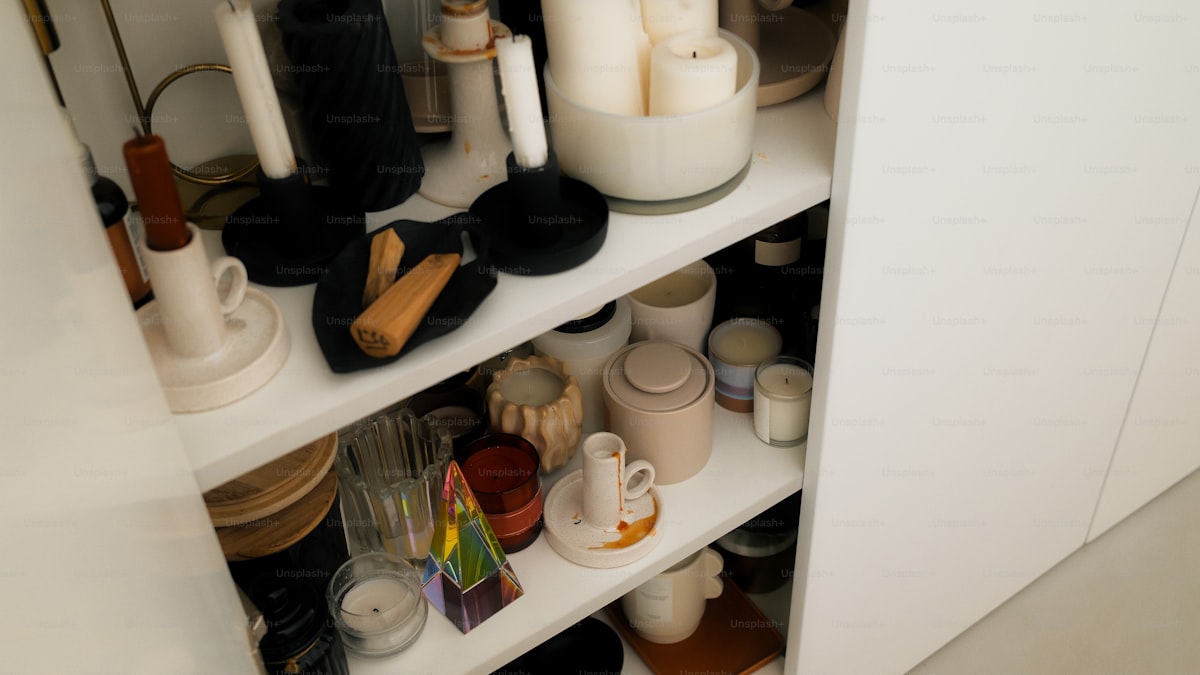
Best Storage Bins and Organizers for Every Room (2026)
The best storage bins, baskets, and organizers for closets, pantries, bathrooms, and garages. Practical picks at every price point to get your home organized.
Related Articles
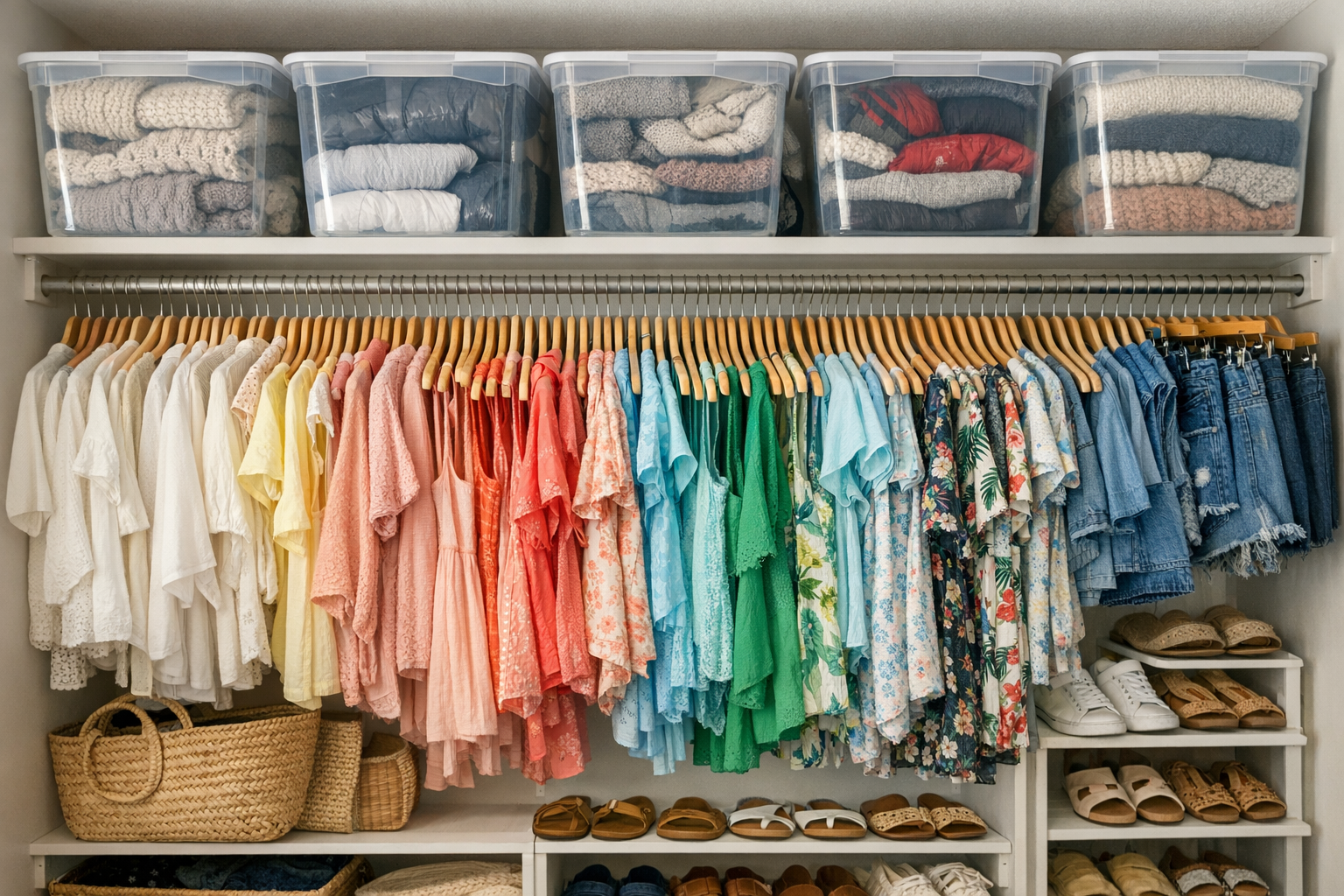
How to Swap Winter and Summer Wardrobes (And Cut Your Closet in Half)
The seasonal wardrobe swap is the highest-leverage closet declutter you can do. Here's the system that takes 90 minutes and dramatically simplifies dressing for months.
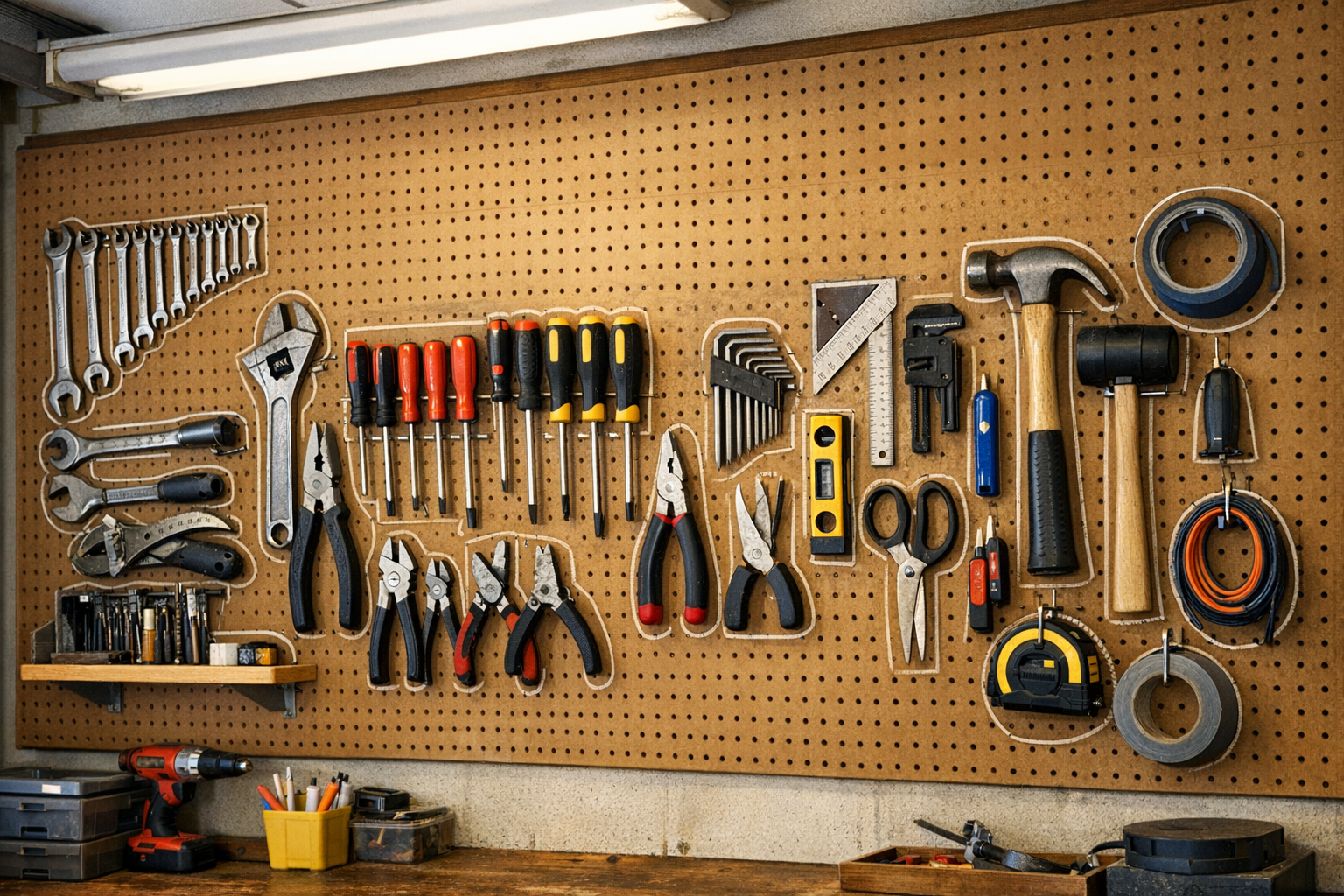
How to Set Up Garage Pegboard Zones (Pro Mechanic Style)
A pegboard wall keeps every tool in its own spot. Here's the zone-based layout pro mechanics use — adapted for home garages.
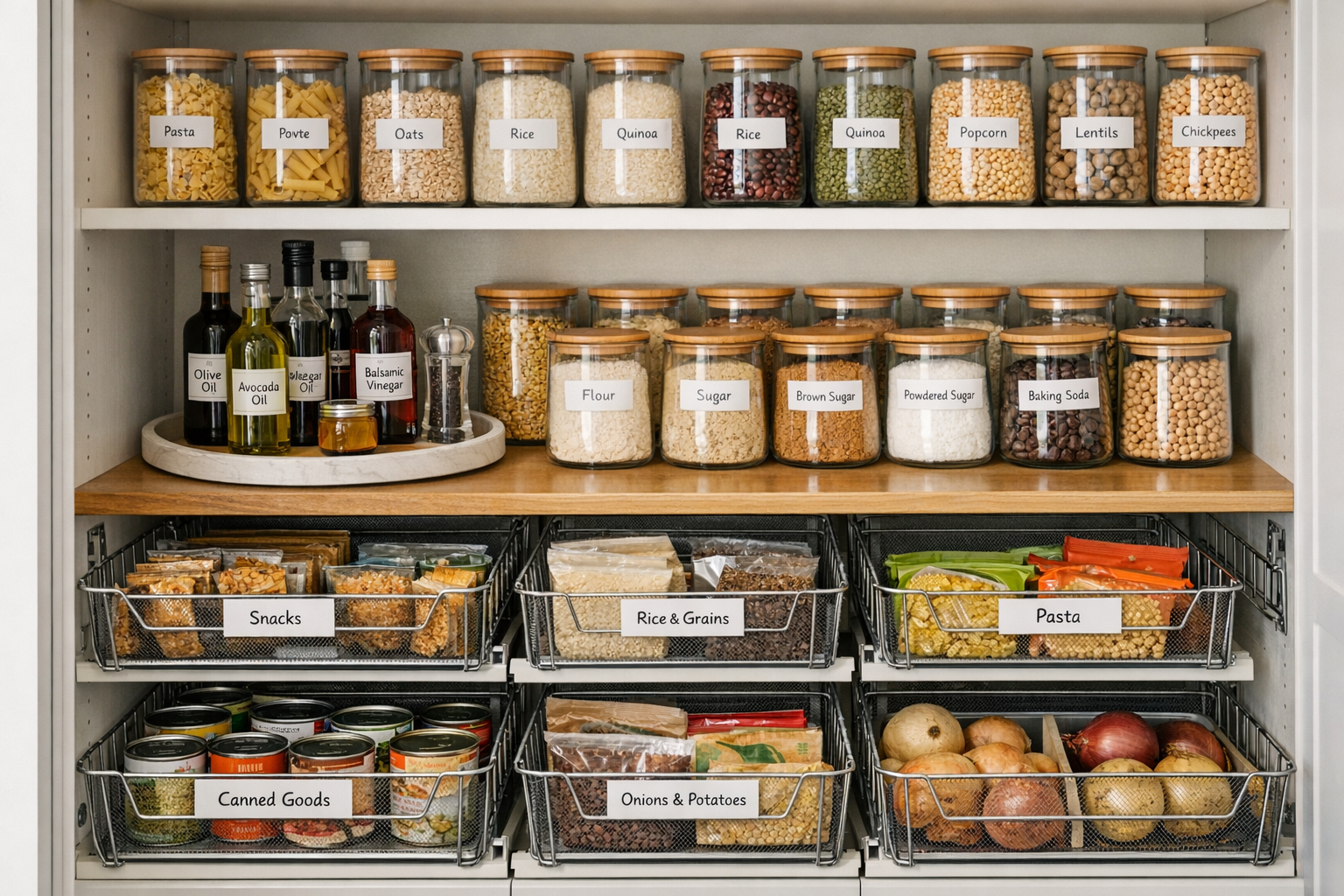
How to Organize Deep Pantry Shelves Without Wasting Food
Deep pantry shelves are where food goes to be forgotten. Here's the system that keeps everything visible and rotated — even on 24-inch deep shelves.
How to Organize Pet Supplies and Build a Tidy Feeding Station
Stop tripping over kibble bags and digging through a chaotic pet drawer. A simple feeding station system that works for one pet or five.