How to Soothe Your Dog's Itchy Spring Skin Naturally
This article may contain affiliate links. If you make a purchase through these links, we may earn a small commission at no extra cost to you. Learn more
Quick Answer
How to Soothe Your Dog's Itchy Spring Skin Naturally
Most spring itching in dogs is environmental allergies. Bathe weekly with an oatmeal shampoo, wipe paws after every walk, add omega-3 fish oil to food, and try an OTC antihistamine like Benadryl or Zyrtec at vet-approved doses. If symptoms persist or skin breaks open, see the vet — chronic allergies often need prescription help.
Spring brings the same misery to dogs that it brings to people, but they can't tell you about it. They scratch, lick paws raw, get red bellies, and rub their faces against the carpet. Most owners reach for prescription medication when often a few simple at-home interventions do most of the work.
I've coached a lot of pet owners through allergy season as a former vet tech. Here's the order I work through. Always loop in your vet for any persistent or worsening symptoms — but most cases improve dramatically with these basic steps.
Identify What Kind of Itching It Is
Three main causes of itchy dogs:
- Environmental allergies (pollen, grass, dust mites) — symptoms peak in spring/fall, paws and belly are reddest
- Food allergies — symptoms persist year-round, often digestive issues too
- Parasites (fleas, mites) — visible bites, scabs, often along the back near the tail
If your dog is suddenly itchy in March or April and you live where things are blooming, environmental allergy is by far the most likely cause.
If you see fleas or flea dirt (small black specks at the base of the fur that turn red on a wet paper towel), see our guide on getting rid of fleas naturally.
Step 1: Wipe Paws After Every Walk
Pollen sticks to paws. Dogs lick paws. Pollen gets into them more.
Keep hypoallergenic pet wipes by the door. Wipe each paw plus the belly after every walk.
For dogs that hate paw wiping, a shallow tray of warm water plus a quick towel dry works — they walk through the water on the way in.
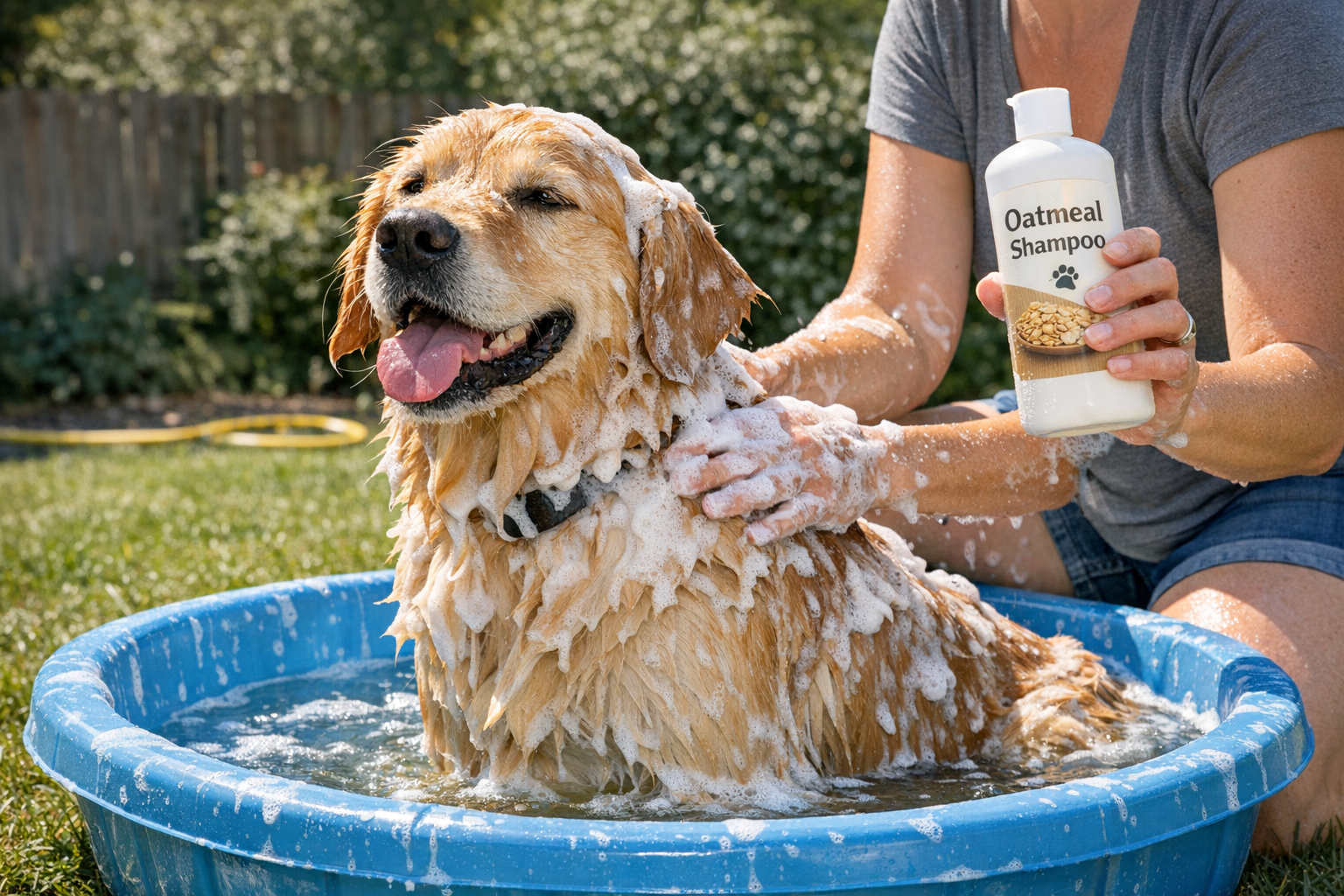
Step 2: Bathe Weekly with Oatmeal Shampoo
Bathing rinses pollen and other allergens off the fur and skin. Weekly baths during peak allergy season are not too much — they help.
Use a colloidal oatmeal-based dog shampoo. The oatmeal is genuinely soothing to itchy skin.
After shampoo, a final rinse with cool water (not warm) closes pores and feels good on inflamed skin.
For dogs with very dry skin between baths, a leave-in oatmeal spray misted on the belly and itchy spots gives quick relief.
See our full guide on washing your dog at home for the technique.
Step 3: Add Omega-3 Fish Oil to Food
Omega-3 fatty acids reduce inflammation throughout the body, including in the skin. Most dogs benefit from a daily fish oil supplement, especially during allergy season.
Look for a pure salmon or krill oil dog supplement. Dose by your dog's weight per the label.
It takes 4 to 8 weeks of consistent use to see the full effect. Start now if your dog historically struggles with spring itching.
Step 4: Try a Vet-Approved OTC Antihistamine
Two human antihistamines are generally safe for dogs at the right dose:
- Benadryl (diphenhydramine): 1 mg per pound, twice a day. So a 50-pound dog gets one 25mg pill twice a day. May cause drowsiness.
- Zyrtec (cetirizine): 0.5 mg per pound once daily. Less drowsy. Don't use Zyrtec D — the decongestant in the D version is dangerous to dogs.
ALWAYS confirm the dose with your vet before giving any human medication to your dog. Some breeds and conditions react differently. Don't use children's liquid versions — many contain xylitol, which is highly toxic to dogs.
Step 5: Vacuum and Wash Bedding More Often
Pollen and dust mites build up in dog bedding. Most dog beds rarely get washed.
- Wash dog bedding weekly in hot water during allergy season
- Vacuum the floors and rugs your dog spends time on, with a HEPA filter vacuum
- If your dog sleeps with you, wash human bedding more often too
A waterproof washable dog bed cover makes weekly washing easier.
Step 6: Skin Barrier Support — Coconut Oil for Spot Treatment
For specific itchy spots (no broken skin), a small amount of organic virgin coconut oil rubbed into the spot soothes and creates a mild barrier. Most dogs lick it off — that's fine, coconut oil is safe to ingest in small amounts.
Don't use coconut oil on broken or oozing skin. That needs vet attention.
Step 7: Consider Apoquel or Cytopoint for Severe Cases
If at-home interventions aren't enough, modern allergy medications for dogs are dramatically better than the old options (steroids, etc.). Two to ask your vet about:
- Apoquel — daily oral medication, works fast (within 4 hours), targets the itch pathway specifically
- Cytopoint — monthly injection at the vet, lasts 4 to 8 weeks per shot
Both have minimal side effects compared to long-term steroids and have been game-changers for itchy dogs. Worth bringing up at the next vet visit if your dog has chronic allergy issues.
Step 8: Eliminate Common Allergens From Diet (If Symptoms Persist Year-Round)
If your dog itches year-round (not just spring), food allergy might be involved. Common food allergens for dogs:
- Chicken
- Beef
- Wheat
- Soy
- Dairy
A limited-ingredient dog food with novel proteins (duck, salmon, lamb) used as an 8-week elimination trial often reveals food sensitivities. Reintroduce one ingredient at a time afterward to identify the trigger.
A vet can also order specific food allergy testing — though the accuracy of those tests is debated.
What to Avoid
- Hydrocortisone cream — generally safe in small amounts but dogs lick it off, ingesting more than is safe.
- Tea tree oil — toxic to dogs even in topical small amounts.
- Daily Benadryl long-term — fine occasionally, but daily for weeks can affect kidneys and other systems. See your vet for a safer long-term plan.
When to See the Vet
Some symptoms need professional care. Don't try to handle these at home:
- Open broken skin or oozing sores
- Hot spots (red, wet, painful patches)
- Hair loss in defined patches
- Frequent ear infections (related to allergies in many dogs)
- Symptoms not responding to at-home care after 2 weeks
Allergic skin conditions can spiral into bacterial or yeast infections that need prescription antibiotics or antifungals.
Frequently Asked Questions
How can I tell if my dog has allergies vs fleas?
Fleas leave visible bite marks and "flea dirt" (black specks that turn red on wet paper). Allergies present as widespread itching with red skin, especially on belly, paws, and around the face, without visible bites. When in doubt, do a thorough flea check first — a flea comb catches fleas if they're there.
Are some breeds more prone to allergies?
Yes — Bulldogs, Boxers, Retrievers, Terriers (especially West Highland), and Shar-Peis tend to have more allergy issues than average. If you have one of these breeds, plan for spring allergy management every year.
How often is too often to bathe a dog?
For most dogs, weekly during allergy season is fine — even beneficial. The myth that frequent bathing dries out skin only applies if you use harsh shampoos. A gentle oatmeal shampoo can be used weekly without issue.
Can puppies have allergies?
Less common in young puppies, but can develop in dogs over 6 months old. Most dogs don't show clear allergy symptoms until 1 to 3 years old. If a puppy is itching, look for fleas, mites, or food sensitivity first.
Final Thoughts
Spring allergies in dogs are usually manageable with weekly oatmeal baths, paw wipes, fish oil supplementation, and a vet-approved antihistamine. Save prescription medications for cases that don't respond — but don't suffer through weeks of severe itching. Modern dog allergy treatments are excellent, and your dog deserves to be comfortable.
Get weekly home tips that actually work
Join thousands of homeowners getting practical cleaning hacks, DIY fixes, and money-saving tips every week. Free, and you can unsubscribe anytime.

Written by
Sarah RodriguezGardening & Pet Care Contributor
Sarah Rodriguez is a certified Master Gardener and former veterinary technician. She lives on a half-acre lot in central Texas with three rescue dogs, two backyard chickens, and a very ambitious vegetable garden. She covers gardening, sustainable yard care, and everyday pet care for Practical Home Guides.
Recommended Products
Looking for specific product recommendations? Check out our tested picks.

5 Best Dog Grooming Kits for Home Use (2026)
Save hundreds on groomer visits by doing it yourself. We compared the top dog grooming kits — here are the 5 best for different coat types and budgets.

Best Pet Hair Removers That Actually Work (2026)
We tested the most popular pet hair removers for furniture, clothes, and cars. Here are the 7 best picks that actually get the job done — from lint rollers to rubber brooms.
Related Articles

How to Stop a Cat From Spraying (And Why They Start)
Cats spray for specific reasons — and identifying the cause is half the battle. Here's the vet-tech approach to stopping spraying without rehoming the cat.
Dog-Safe Spring Yard Checklist (Lawn Chemicals, Plants, and More)
Spring yard prep can poison your dog faster than you'd expect. Here's the checklist of toxic plants, lawn treatments, and seasonal hazards to remove before letting your dog roam.

How to Introduce a New Baby to Your Family Pet Safely
A vet tech's step-by-step plan for preparing your dog or cat for a new baby. Start weeks before the due date — not the day you come home from the hospital.
How to Keep Your Pets Cool in Summer (Dogs, Cats, and More)
Learn how to keep dogs, cats, rabbits, and other pets safe and cool during summer heat. Covers hydration, shade, cooling products, signs of heatstroke, and breed-specific tips.