Save on Summer Travel: Packing Hacks + Budget Airline Strategies
This article may contain affiliate links. If you make a purchase through these links, we may earn a small commission at no extra cost to you. Learn more
Quick Answer
Save on Summer Travel: Packing Hacks + Budget Airline Strategies
The fastest way to save $300 or more on a summer family trip is to pack into carry-ons and skip checked bags entirely. Use compression cubes to fit a week of clothes into a 22-inch bag, refill your own TSA-size toiletry bottles instead of buying travel sizes, and price out a budget airline's total fare with bags before you book. Most fee savings happen before you ever leave the house.
I fly somewhere with my family every summer, and for years I treated airline fees like weather: annoying, unavoidable, not my problem to solve. Then one June I actually added it up. Two checked bags each way for four people, a couple of seat-selection upcharges, and the inevitable $14 airport water bottles came to just under $340 on a single trip to see my sister in Phoenix. That is a hotel night. That is the rental car. That is most of the reason the trip felt so expensive.
So I got systematic about it, the same way I get systematic about a seasonal wardrobe swap: figure out exactly where the money leaks, then plug each hole on purpose. Summer is the worst time to wing it. Fares peak between Memorial Day and Labor Day, planes are full, and every fee is at its most painful because everybody is paying it. Below is exactly how I now save $300 or more per family trip, and almost none of it requires being clever at the gate. The savings are decided at your kitchen table, days before you leave.
The Single Biggest Lever: Don't Check a Bag
Here is the uncomfortable math. Most major carriers now charge $35 to $40 for the first checked bag and $45 to $50 for the second, each way. For a family of four checking one bag apiece, round trip, you are looking at roughly $280 to $320 before anyone has bought a single thing. That is the whole reason a domestic summer trip feels like it doubled in price over the last few years.
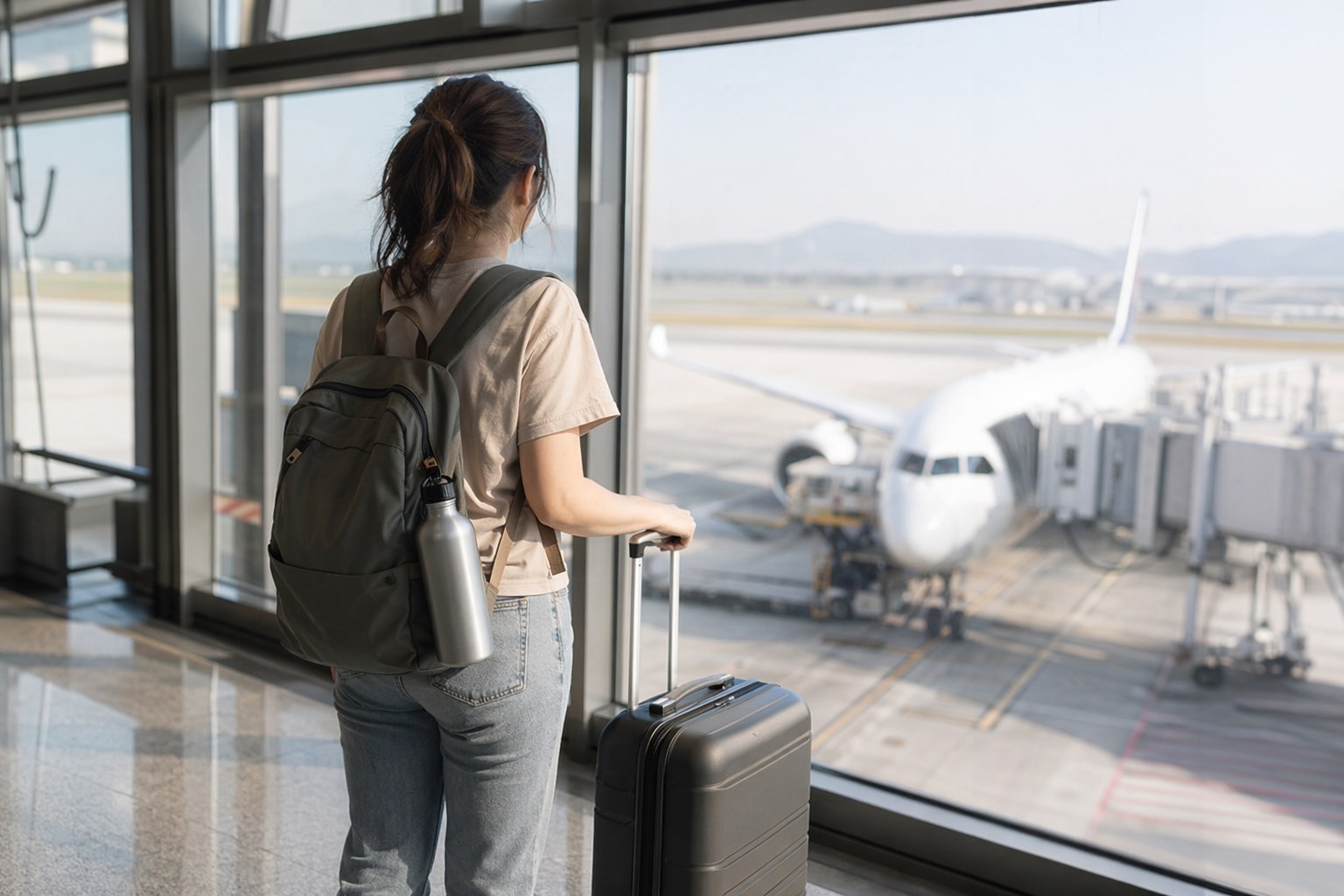
The fix is blunt: get everyone into a carry-on. A standard domestic personal item plus a carry-on bag is still free on most full-service airlines, and on the carriers that do charge for carry-ons, the fee is almost always lower than checking. When I priced my own family's last trip, going carry-on-only saved exactly $300 round trip and shaved 25 minutes off our arrival because we walked straight past baggage claim.
The objection I always hear is "a week of clothes won't fit." It will. That is what the rest of this guide is about. The carry-on itself matters too. You want a true 22-inch bag that meets the 22 x 14 x 9-inch limit most airlines publish, not the slightly oversized "carry-on" that gets gate-checked.
Carry-On Luggage 22-inch TSA Approved
A hardside 22-inch spinner sized to the standard 22 x 14 x 9-inch carry-on limit, so it actually fits the overhead bin instead of getting gate-checked at the worst moment.
Check Price on Amazon →If you have two or three trips a year, a $70 to $90 carry-on pays for itself on the first one. Measure your old bag with a tape before you trust it; a lot of "carry-ons" sold a decade ago are an inch too tall for today's stricter summer enforcement.
Compression Cubes Are the Trick That Makes It Work
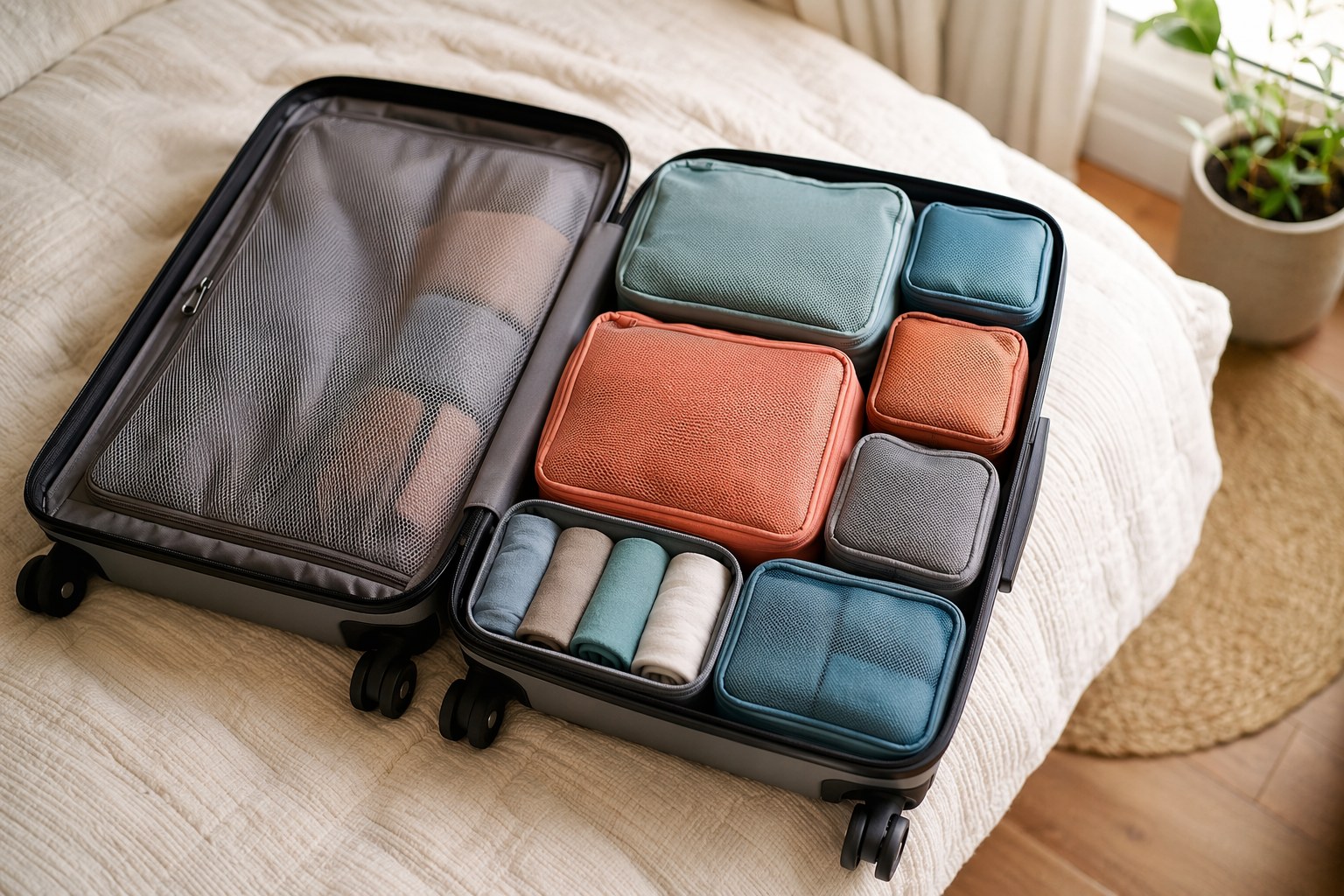
Packing cubes get talked about like an organization gimmick. The real value is compression. A set of cubes with a second zipper that squeezes the air out will fit roughly 30 to 40 percent more clothing into the same space, which is the difference between "we have to check a bag" and "we're carrying on."
Here is how I pack a week for one person into a single carry-on side:
- Roll, then compress. Roll soft items (t-shirts, underwear, pajamas) and pack them tight in a compression cube, then zip it down. Bulky knits and shorts go in their own cube.
- One cube per category, not per day. Tops in one, bottoms in another, undergarments and socks in a small one. You can find anything in two seconds and nothing explodes when security opens the bag.
- Color-code by person. With kids, give each child a cube color. On a four-person trip you can stuff two people's clothes into one shared carry-on and still keep it sorted.
- Wear the bulk. Sneakers, the heaviest jacket, and jeans go on your body for the flight, not in the bag.
Compression Packing Cubes 6-Piece Set
A six-piece set with double-zip compression that squeezes a week of clothes down by roughly a third, the difference between carrying on and paying to check.
Check Price on Amazon →The same swap-and-edit discipline I use when I rotate a seasonal wardrobe applies on the road. You do not need seven outfits for a five-day trip. You need a mix-and-match capsule of neutrals, two pairs of shoes total, and a willingness to re-wear shorts. Nobody at the beach is auditing your outfit repeats.
Stop Buying Travel-Size Everything
The travel-size aisle is a quiet $20 to $40 tax on every trip. Those tiny bottles of sunscreen, shampoo, and toothpaste cost three to five times as much per ounce as the full-size versions you already own. In summer, when you are buying extra sunscreen and after-sun anyway, it adds up fast.
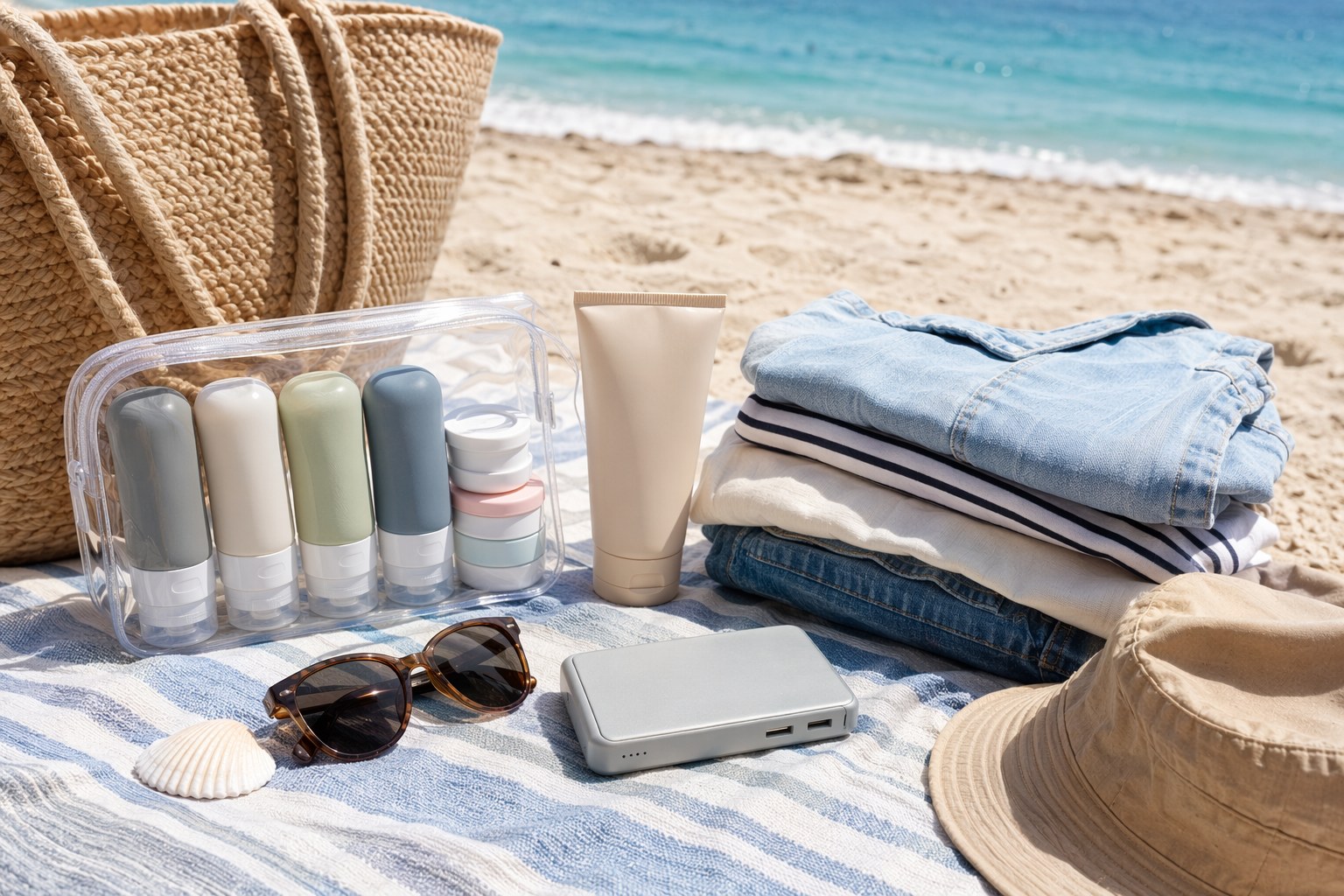
Refill your own. TSA's 3-1-1 rule allows containers up to 3.4 ounces (100 ml) in a single quart bag per passenger, and a set of reusable, leakproof bottles lets you decant the products you actually like. I keep a labeled set permanently packed so prepping for a trip takes five minutes instead of a drugstore run.
Travel Toiletry Bottles TSA Compliant 5 Pack
Leakproof 3-ounce silicone bottles that meet the 3-1-1 carry-on rule, so you refill from the big bottles at home instead of overpaying for travel sizes.
Check Price on Amazon →A few more summer-specific toiletry savers: buy the full-size sunscreen at home and decant what you need, because airport and resort-town prices are brutal. Pack a quart-size reusable zip bag instead of the flimsy disposable kind. And bring a refillable water bottle through security empty, then fill it past the checkpoint. Airport water runs $4 to $6 a bottle, and a family of four hydrating before a flight is a $20 hit you can erase entirely.
Beat the Budget Airline Fee Game
Budget carriers like Spirit, Frontier, and Allegiant advertise eye-catching base fares, and sometimes they genuinely are the cheapest option. But the headline price is bait. The savings live in how you handle the add-ons.
Price the total, not the fare. Before you book any budget carrier, build the full cart: base fare, the bag you'll actually bring, and a seat if you need your family seated together. I have watched a "$49 each way" Frontier fare balloon to $140 once I added a carry-on and seats. Sometimes a full-service airline with a free carry-on and free seat selection ends up $30 cheaper overall. Run both before you commit.
The carry-on is often pricier than a checked bag on these carriers. This is the counterintuitive one. On ultra-low-cost airlines, a carry-on that goes in the overhead can cost more than a checked bag, because they want that bin space. Read the specific fare's rules. If you can get everything into a personal item that fits under the seat, that is usually free, and a slim rolling organizer is built exactly for that slot.
Packing Organizer Rolling Suitcase
A compact rolling organizer sized to slide under the seat as a free personal item, ideal for dodging carry-on and checked-bag fees on budget carriers.
Check Price on Amazon →Pay for bags online, never at the gate. Gate bag fees on budget airlines can hit $79 or more, roughly double the price you'd pay adding the bag during booking. Decide on your bags at checkout and pay then. The gate is where they make their margin on the unprepared.
Buy seats only if it matters. A solo traveler can skip seat selection and take the random assignment. Traveling with young kids, most airlines will seat a child with a parent without a fee if you ask, but confirm the policy for your carrier rather than assuming. For everyone else, the free random seat is fine for a two-hour hop.
Time the Booking and the Trip Itself
When you book and when you fly move the price more than any packing trick. For domestic summer travel, the sweet spot is generally one to three months out. Set fare alerts on Google Flights or Hopper the day you decide to go, and fly midweek when you can. Tuesday, Wednesday, and Saturday departures are usually cheaper than the Friday and Sunday peaks everyone fights over.
Flexibility on dates is worth real money in summer. Flying the Tuesday after a holiday weekend instead of the Sunday of it can save $80 to $150 a ticket. And consider the shoulder edges of the season: late May and the back half of August carry lower fares and thinner crowds than the July 4 crush. For the deeper booking strategy, my full guide on how to save money on vacation and travel breaks down rewards cards, hotel timing, and rental car traps that stack on top of these packing wins.
Don't Get Caught Paying for Power, Snacks, or Phantom Roaming
Three small leaks sink a lot of summer budgets at the gate and beyond.
Power. A dead phone leads to expensive panic decisions, and airport charging is unreliable in peak season when every outlet is taken. A high-capacity power bank keeps four phones alive through a travel day and a long layover, so nobody is buying a $40 emergency charger at a kiosk.
Power Bank 20000mAh Travel Fast Charge
A 20,000mAh fast-charging power bank that refills several phones across a full travel day and layovers, killing the need for overpriced airport chargers.
Check Price on Amazon →(Note the rule: power banks must go in your carry-on, never checked. Lithium batteries are not allowed in the cargo hold.)
Snacks. Pack a stash of granola bars, crackers, and refillable water for the flight and the first afternoon. Airport and in-flight food for a family of four easily tops $50, and hangry kids make expensive decisions for you.
Phone fees. If your trip crosses a border, check your plan before you go. International roaming surprises wreck budgets, and trimming that bill is part of the same audit I cover in how to lower your cell phone bill. Many carriers offer a cheap day pass that beats per-megabyte roaming, but you have to opt in first.

The Pre-Trip Checklist That Locks In the Savings
The reason these savings actually happen is that you decide on them before vacation brain sets in. Here is the quick run-through I do the night before:
- Everyone in a carry-on? Weigh and measure each bag. Compression cubes zipped down.
- Toiletries decanted into TSA bottles, in the quart bag, sunscreen included.
- Bags and seats paid online at the lowest tier you genuinely need, never at the gate.
- Power bank charged and in the carry-on, not checked.
- Snacks and empty water bottles packed for the travel day.
- Phone plan checked if you're leaving the country.
Add it up and a single trip routinely clears $300 in savings for a family of four, most of it from skipping checked bags and refusing to buy at airport prices. None of it costs you a single experience at your destination, which is the entire point.
The same planning energy is worth spending on home before you leave, too. A few minutes setting up self-watering for the garden in my keep your plants alive on vacation guide, and a calm boarding routine for the dog from my traveling with your dog tips, mean you spend your trip enjoying it instead of worrying. Pack light, pay nothing you don't have to, and put the difference toward the part of the trip you'll actually remember.
Get weekly home tips that actually work
Join thousands of homeowners getting practical cleaning hacks, DIY fixes, and money-saving tips every week. Free, and you can unsubscribe anytime.

Written by
Beth SullivanFounder & Editor-in-Chief
Beth Sullivan is the founder of Practical Home Guides. With over a decade of hands-on experience tackling every home challenge imaginable, she started this site to share the practical, no-nonsense solutions she wishes she had found years ago. When she's not testing cleaning hacks or organizing pantries, you'll find her in the garden or working on her next DIY project.
Recommended Products
Looking for specific product recommendations? Check out our tested picks.

Best Outdoor Patio Furniture Deals (2026 Spring Picks)
Late April is the sweet spot for patio furniture deals — pre-summer sales without late-season picked-over selection. Here are the picks worth buying now.

5 Best LED Light Bulbs to Cut Your Electric Bill (2026)
Switch to LED bulbs and save $100+ per year on electricity. We compared the top LED bulbs for brightness, color quality, and longevity — here are the 5 best picks.
Best Smart Thermostats to Lower Your Energy Bill (2026)
The best smart thermostats that actually save money on heating and cooling. We compare 5 top picks from Nest, Ecobee, Honeywell, and more with real energy savings data.
Related Articles

DIY vs. Hiring a Pro: The Real ROI of 8 Popular Home Projects (2026)
A contractor breaks down the real DIY vs. pro cost, time, and resale ROI of 8 popular home projects in 2026, with a decision framework and tool picks.
Hurricane Season 2026: Survival Strategy Beyond Basic Emergency Kits
A complete hurricane season survival strategy for 2026: communication plans, insurance gaps, financial recovery, and power backup that go far beyond the basic emergency kit.

Summer Outdoor Living 2026: Patio, Grill, Garden & Decor Buying Guide
A complete 2026 summer outdoor living buying guide covering patio furniture, grills, lighting, plants, and decor, with real prices and the best week to buy each.
Memorial Day Cookout Prep: Food, Decor & Timing for 30 Guests
Host a patriotic Memorial Day cookout for 30 guests under $200. Bulk shopping math, make-ahead strategies, and an hour-by-hour timeline to skip day-of stress.