Graduation Season Storage: Organizing Dorm Room Essentials on a Budget
This article may contain affiliate links. If you make a purchase through these links, we may earn a small commission at no extra cost to you. Learn more
Quick Answer
Graduation Season Storage: Organizing Dorm Room Essentials on a Budget
You can organize a dorm room for under $300 by spending your budget where it actually counts: vacuum bags and an under-bed roller bin for bulk storage, an over-the-door shoe organizer for accessories, and a closet rod divider to double hanging space. Buy by zone, not by impulse, and measure the room before you order anything.
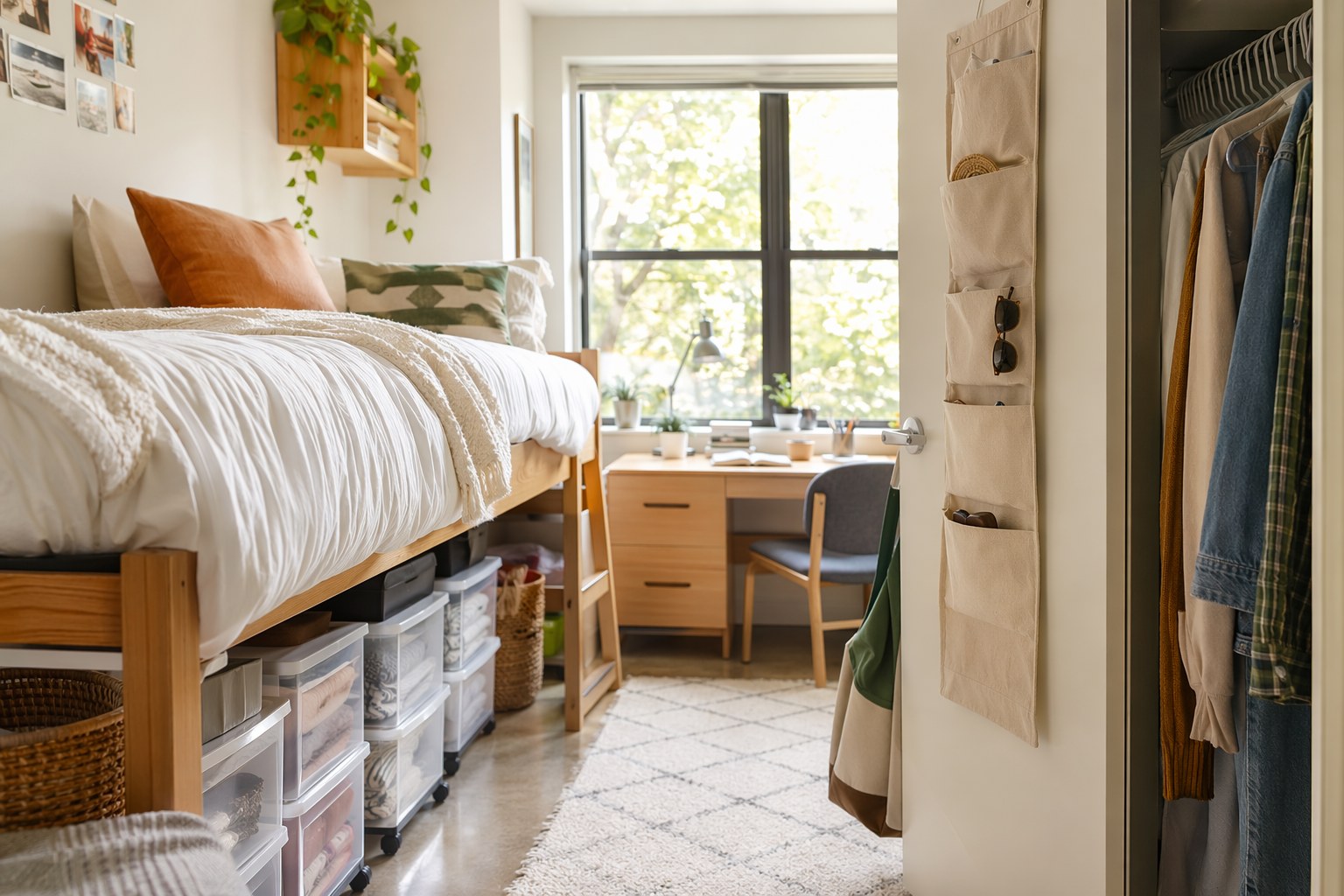
I have helped move three nieces and a nephew into dorm rooms, and I can tell you exactly where the money gets wasted: on a cart full of cute matching bins that never fit the cinderblock shelf, the lofted bed, or the closet that turns out to be 28 inches wide. Every single time.
A standard dorm room is around 12 by 19 feet, and you are splitting that with a roommate. Your actual territory is roughly the size of a king mattress. The good news is that dorm storage is a solved problem if you stop shopping for a bedroom and start shopping for a tiny apartment with one closet, one desk, and a bed you can raise. I have done the math, and you can outfit a smart, genuinely organized dorm for under $300 total. Below is exactly how, by zone, with the products that earn their spot.
Measure First, Shop Second (The Step Everyone Skips)
Before you spend a dollar, get the room's real dimensions. Most universities post residence hall floor plans and furniture specs online, and they will tell you the things that actually decide what you buy: whether the bed lofts, the under-bed clearance once it does, the closet width, and the desk footprint.
Write down four numbers and keep them in your phone:
- Under-bed clearance. A lofted or bunkable bed usually clears 12 to 36 inches. That single number decides whether you get short rolling bins or tall cube shelving underneath.
- Closet width and rod height. Dorm closets are often a narrow alcove, 24 to 36 inches wide, with a single rod around 66 inches up. That is a ton of dead vertical space.
- Desk surface and drawers. Know whether you get drawers at all. Many rooms give you a bare desktop and a hutch.
- Door clearance. Over-the-door organizers need the door to actually close over them, usually 1.5 inches of thickness max.
This is the same measure-then-buy discipline that saves money in any cramped space. The principles I cover in how to organize a small closet apply directly here: empty, measure, zone, then buy targeted solutions instead of a random pile of containers. Skip this step and you will be the one returning three bins on move-out day.
Win the Vertical War: Lofting and Closet Rods
The single biggest mistake in a dorm is treating it like a flat, two-dimensional space. The room is short on floor and rich in height. You win by going up.
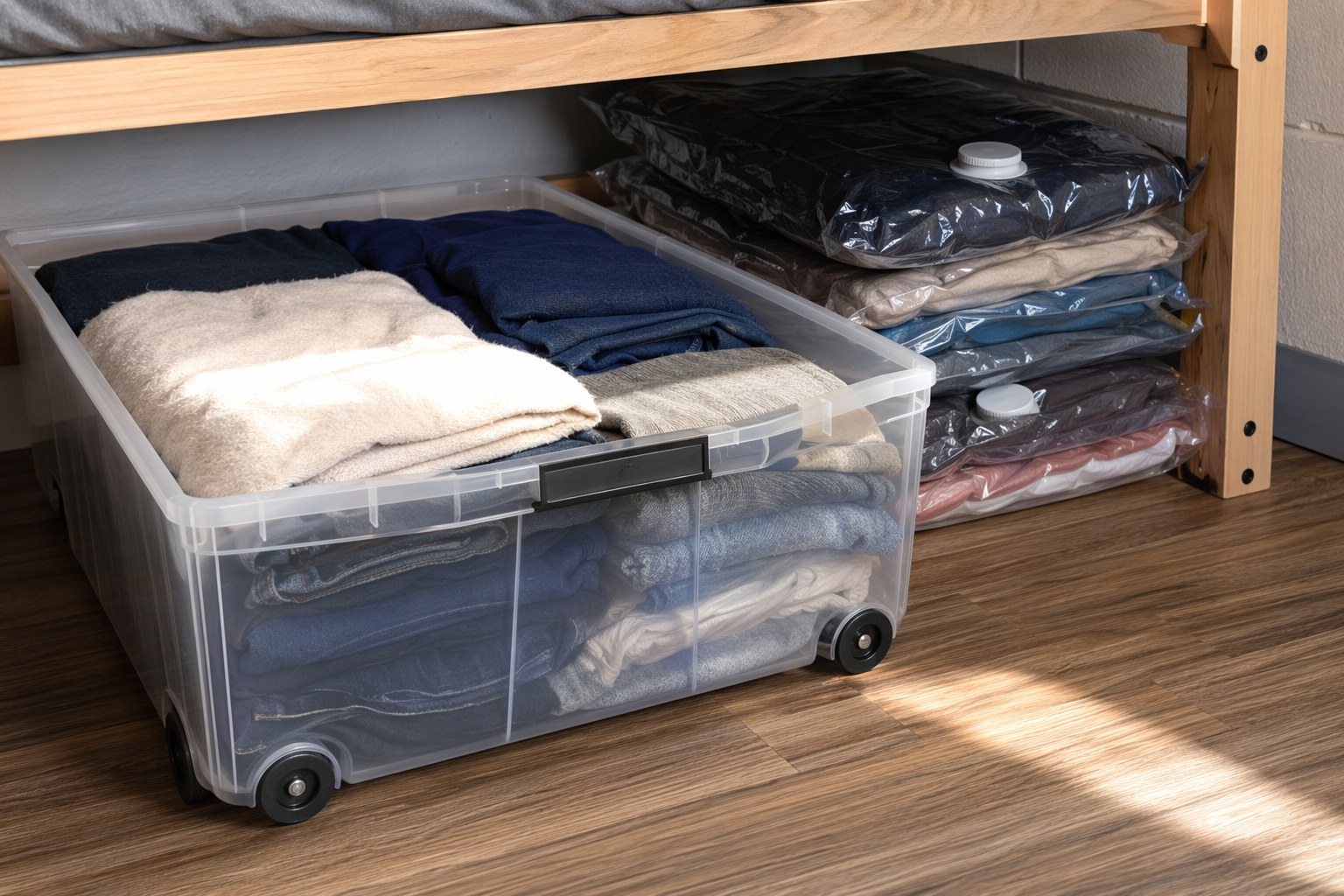
Loft or raise the bed. Almost every dorm bed adjusts. Raising it to its highest safe setting can free up 2 to 3 feet of usable storage underneath, which is the most valuable real estate in the room. If lofting is allowed and the frame supports it, that space alone can swallow most of your bulk storage.
Double the closet rod. A dorm closet with one rod at 66 inches wastes roughly half its hanging height. A hanging closet rod divider or a tension-mounted second rod instantly doubles capacity for folded-length items like shirts, hoodies, and shorts. No tools, no drilling, nothing your RA will flag at inspection.
Whitmor Closet Rod Divider 5-Tier Hanging Organizer
Hangs from the existing rod and adds five tiered hanging slots, effectively doubling closet capacity in a narrow dorm alcove with zero installation.
Check Price on Amazon →While you are thinking vertical, remember the walls. Command hooks and damage-free strips (always check your housing contract first) turn empty wall space into storage for bags, towels, hats, and a calendar. A small mounted mirror on the closet door reflects light and saves desk space.
Conquer the Under-Bed Space
Once the bed is raised, the space underneath becomes your primary storage zone. Treat it like a built-in dresser, not a junk pile, and it will hold an astonishing amount.
The two workhorses here are vacuum bags and rolling bins. Vacuum storage bags are the cheapest square-footage win in the entire dorm. Bulky bedding, a winter coat, and out-of-season clothes compress down to a third of their size, and the sealed bag keeps out dust and that musty closet smell. One six-pack handles an entire seasonal wardrobe.
Spacesaver Vacuum Storage Bags Large 6-Pack
Compresses bedding and bulky clothes to a third their size and seals out moisture and dust. The best dollar-per-cubic-foot value for under-bed and seasonal storage.
Check Price on Amazon →For everyday items you need to reach often, a wheeled under-bed bin beats a static box every time. You slide it out, grab gym clothes or extra towels, and roll it back without crawling under a metal frame. Get one with a clear or labeled lid so you are not guessing.
A few rules that keep this zone from becoming chaos:
- Long, low, and labeled wins. Match the bin height to your measured clearance with an inch to spare so the lid clears the frame.
- Heavy and rarely used goes to the back. Vacuum bags of off-season gear live at the wall; daily bins stay at the open edge.
- One bin, one category. Bedding in one, off-season clothes in another, snacks and supplies in a third. Mixed bins always devolve into digging.
The methodical, room-by-room mindset I lay out in decluttering your home room by room is exactly the muscle you want here. A dorm forces you to be honest about what you actually use, which is the whole game in a small space.
Make the Door and Walls Do Double Duty
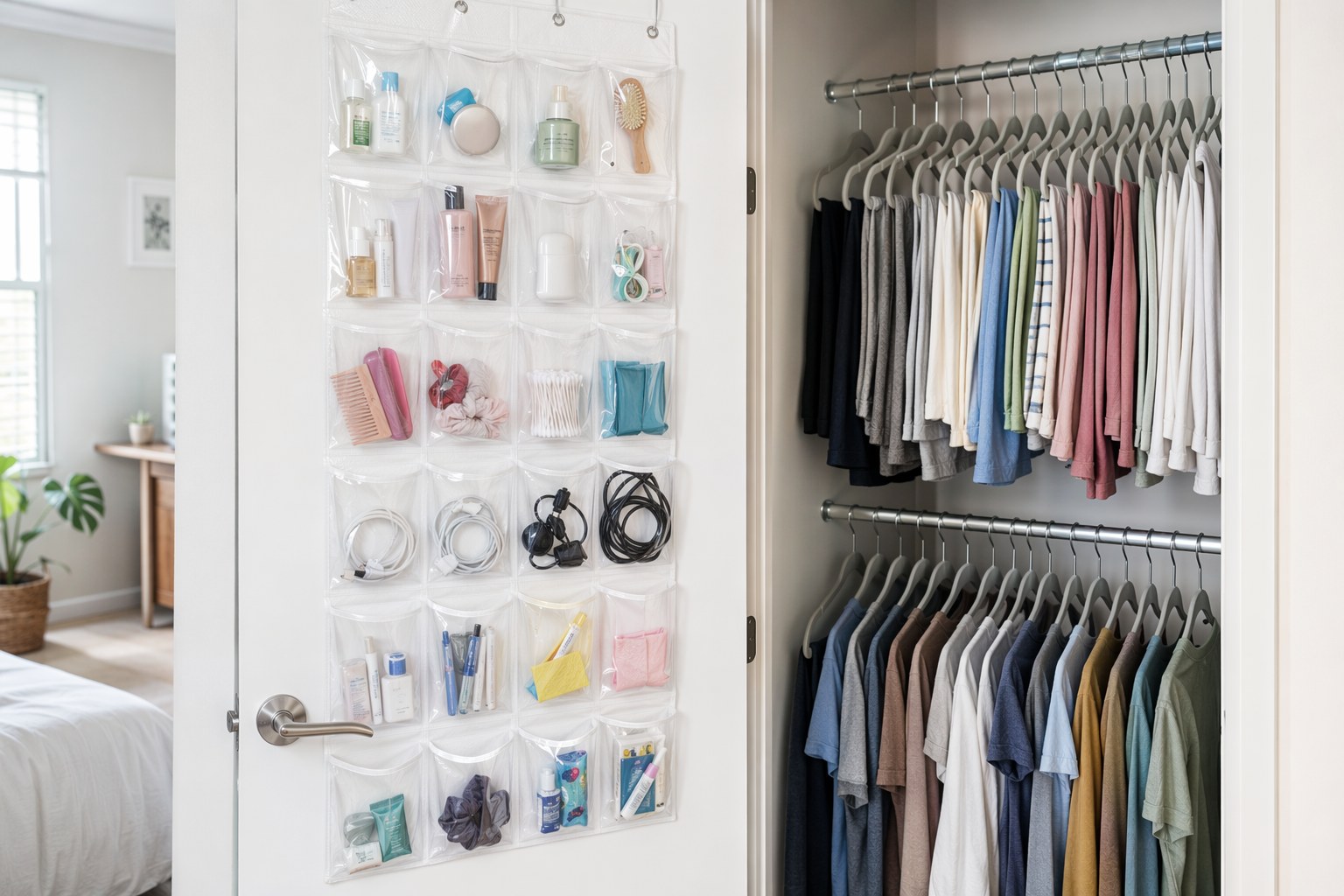
The back of the door is the most underused 18 square feet in the room. An over-the-door shoe organizer is the best three-dollars-per-pocket investment a student can make, and almost nobody uses it for shoes. Those clear pockets are perfect for snacks, toiletries, chargers and cables, school supplies, first-aid odds and ends, and the dozen small things that otherwise colonize every flat surface.
Simple Houseware Over-the-Door Shoe Organizer 24-Pocket
Twenty-four clear pockets that hang on the door without tools. Use it for toiletries, snacks, cables, and supplies to keep the desk and shelf clear.
Check Price on Amazon →Inside the closet, the same door logic applies. If the closet has a door, hang a second organizer there for accessories and laundry supplies. On the walls, a strip of adhesive hooks holds keys, lanyards, and tomorrow's outfit. A hanging mesh shelf that clips to the closet rod adds folding space for sweaters without a single screw.
This is the same vertical-and-door strategy that rescues cramped spaces everywhere. If you want to see how far the door-and-wall approach goes, the under-cabinet tactics in organizing under your kitchen sink translate surprisingly well to a dorm closet floor: tension rods, stacked bins, and door-mounted holders turn an awkward box into real storage.
Set Up a Functional Desk and Closet System
The desk is where productivity lives or dies, and it is usually the first surface to disappear under clutter. Keep the desktop for working and push everything else up or out.
A small desktop shelf riser lifts a monitor or books and creates a second tier underneath for supplies. A few drawer organizer trays (even cheap ones from a dollar store) corral pens, cables, and sticky notes so the one drawer you have stays usable. A monitor riser plus a cup for pens plus a small file holder for papers is genuinely all most students need.
For the closet, build a simple three-zone system once the rod is doubled:
| Zone | What goes there | Tool |
|---|---|---|
| Top shelf | Off-season, extra bedding, rarely used | Labeled fabric bins |
| Hanging (doubled rod) | Daily clothes, by category | Slim velvet hangers |
| Floor | Shoes, laundry, bulk supplies | Stackable cubes or hamper |
Slim velvet hangers are a small spend that pays off daily; they are a third the thickness of plastic and stop everything from sliding into a heap. The same "everyday at eye level, seasonal up high" logic that organizes a small closet keeps a dorm closet from collapsing into chaos by week three.

The Under-$300 Shopping List
Here is the whole kit, priced to land comfortably under $300. Buy in this order; the first five items deliver about 80 percent of the result.
| Item | Approx. cost | Why it earns its spot |
|---|---|---|
| Vacuum storage bags (6-pack) | $25 | Compresses bedding and seasonal clothes; biggest space win |
| Wheeled under-bed bin (set of 2) | $40 | Rolls out for daily access; turns dead space into a dresser |
| Over-the-door 24-pocket organizer | $15 | Toiletries, snacks, cables off every surface |
| Closet rod divider / second rod | $20 | Doubles hanging capacity, no tools |
| Slim velvet hangers (50-pack) | $20 | Triples rod density, stops slippage |
| Desktop monitor/shelf riser | $30 | Reclaims the desk surface |
| Drawer organizer trays | $15 | Keeps the one drawer usable |
| Adhesive hooks + clip mirror | $20 | Wall storage, light, damage-free |
| Collapsible laundry hamper | $20 | Folds flat for move-out, frees floor |
| Stackable closet floor cubes (2) | $35 | Shoes and bulk on the closet floor |
That runs about $240, leaving a cushion for power strips, a small fan, or a few extra bins once you live in the space and see where the real pinch points are. Resist the urge to spend it on day one. The smartest dorm dwellers buy the core kit, live in the room for two weeks, then add one or two targeted pieces.
If you are buying for more than one student or stocking up over the summer, the timing-and-deal strategies in smart ways to save money on Amazon purchases are worth a read before you fill the cart. And the kid-friendly, hard-wearing bin logic from organizing kids' toys is exactly the durability bar you want for stuff that gets shoved under a bed and dragged out daily for nine months.
Frequently Asked Questions
How much should I budget for dorm storage and organization?
Plan on $200 to $300 for a fully organized room, and spend it in order of impact. The first $100 (vacuum bags, an under-bed roller bin, an over-the-door organizer, and a second closet rod) does most of the heavy lifting. Hold back about a third of your budget until you have lived in the room for two weeks, because you will spot specific pinch points that no checklist can predict.
What is the best storage solution for a dorm with limited floor space?
Go vertical and go under the bed. Raising or lofting the bed frees up the most valuable square footage in the room, and a doubled closet rod plus an over-the-door organizer adds storage without touching the floor at all. The mistake is buying freestanding shelving units that eat the little floor you have. Use the height, the door, and the under-bed gap first.
How do I add storage without damaging the walls or losing my deposit?
Stick to damage-free, tension-mounted, and hang-over solutions. Command-style adhesive hooks and strips, tension rods, over-the-door organizers, and clip-on closet shelves all add storage with zero holes. Always check your specific housing contract first, since some schools restrict even adhesive products. When in doubt, anything that hangs from the existing rod or door is a safe bet.
Should I buy everything before move-in or wait?
Buy the core kit before move-in (vacuum bags, under-bed bins, hangers, a door organizer, and a second rod) because those work in any dorm. Wait on the nice-to-haves like extra desk accessories and decorative bins until you have measured the actual furniture and lived in the space. This single habit saves the most money and the most return trips.
What's the most overrated dorm storage purchase?
Bulky standalone storage carts and oversized "dorm in a box" bundles. The carts hog floor space and rarely fit between the bed and desk, and the bundles are padded with cheap items you would never choose individually. Build your kit piece by piece around your measurements instead. You will spend less and end up with storage that actually fits.
Move In Smart, Not Heavy
The students with calm, functional rooms are not the ones who bought the most. They are the ones who measured first, went vertical, and spent their money where a tiny room actually needs it: under the bed, on the back of the door, and on a second closet rod.
Start with the first five items on the list this week, keep your measurements in your phone, and leave a little budget in reserve. A well-organized dorm is not about owning more. It is about giving every square inch a job, which is the same thing that makes any small space livable.
Get weekly home tips that actually work
Join thousands of homeowners getting practical cleaning hacks, DIY fixes, and money-saving tips every week. Free, and you can unsubscribe anytime.

Written by
Beth SullivanFounder & Editor-in-Chief
Beth Sullivan is the founder of Practical Home Guides. With over a decade of hands-on experience tackling every home challenge imaginable, she started this site to share the practical, no-nonsense solutions she wishes she had found years ago. When she's not testing cleaning hacks or organizing pantries, you'll find her in the garden or working on her next DIY project.
Recommended Products
Looking for specific product recommendations? Check out our tested picks.
Best Garage Shelving Systems (2026 Tested)
Wire shelving, freestanding steel, wall-mounted, and overhead — we tested the garage shelving systems that hold real weight without sagging.
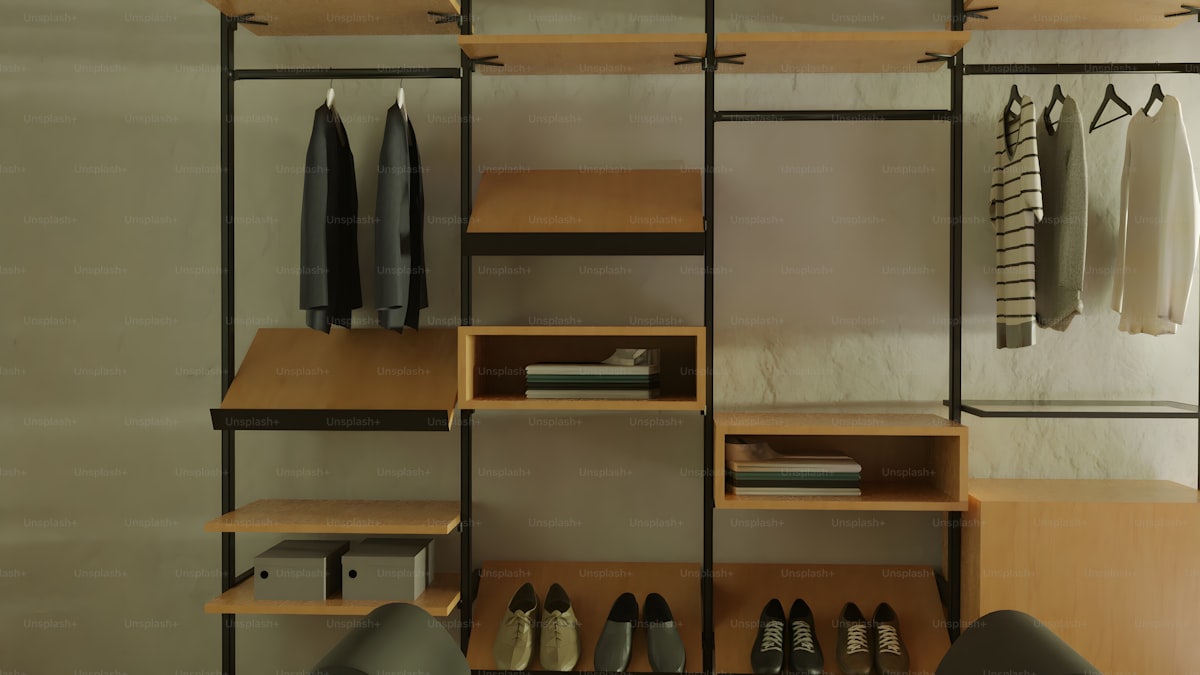
5 Best Closet Organizer Systems Under $100 (2026)
Transform your cluttered closet without spending a fortune. We compared the top closet organizer systems under $100 — here are the 5 best for different closet sizes and needs.
Best Storage Bins and Organizers for Every Room (2026)
The best storage bins, baskets, and organizers for closets, pantries, bathrooms, and garages. Practical picks at every price point to get your home organized.
Related Articles
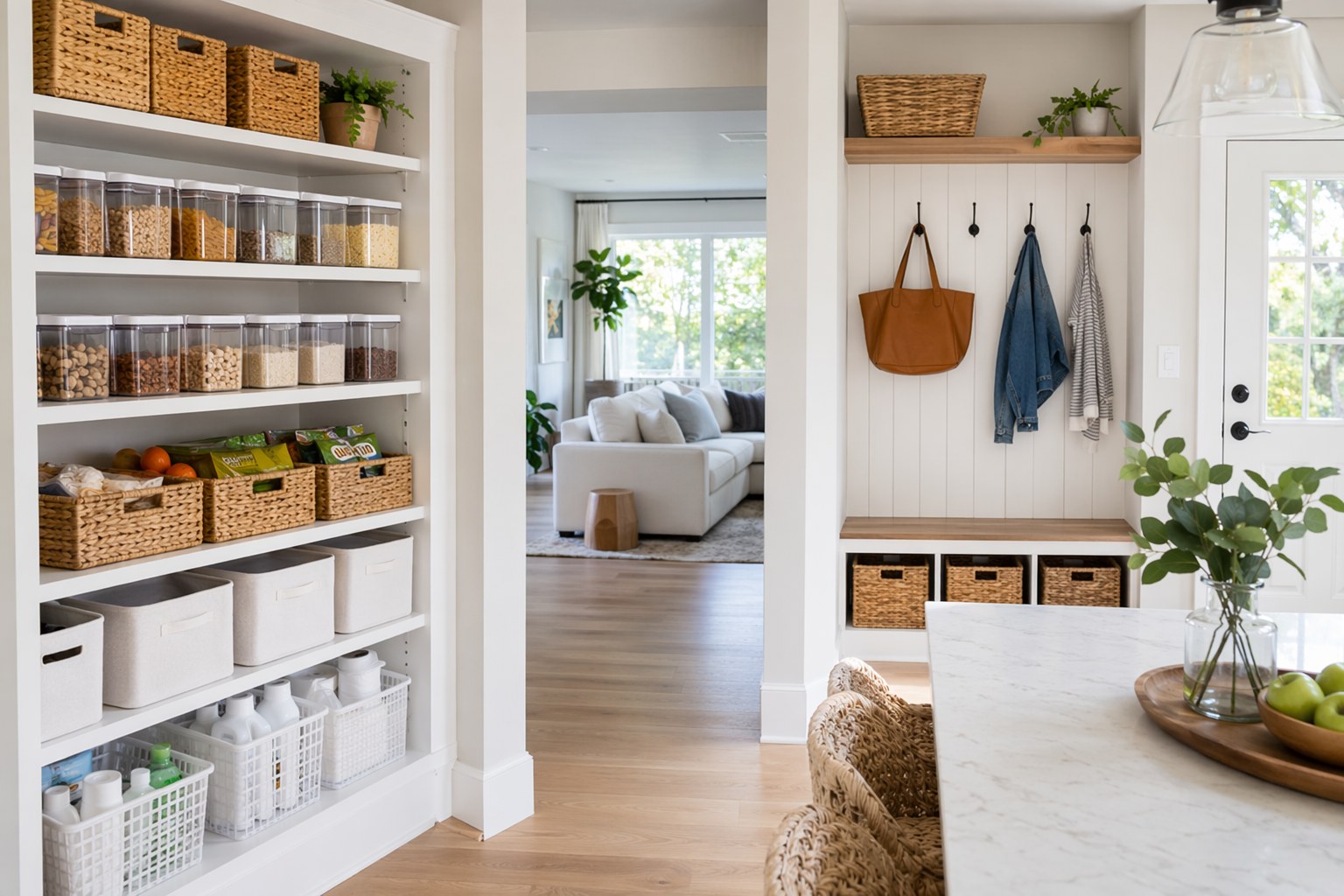
The Complete Home Organization System: A Room-by-Room Master Plan
A room-by-room home organization master plan with a proven system, product picks, and a realistic schedule to organize your entire house without burning out.
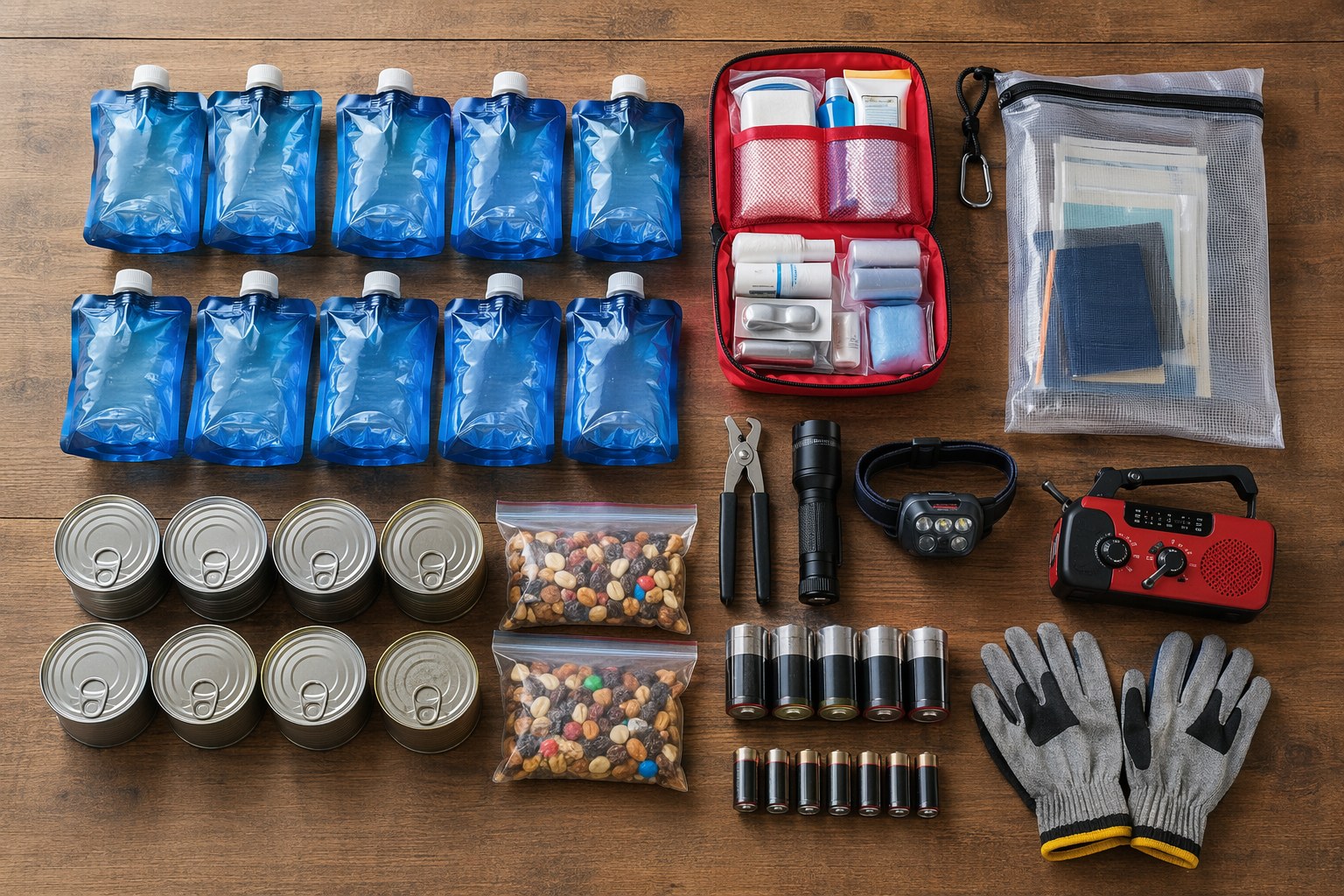
Hurricane Season Prep: June 1 Home Readiness Checklist for Coastal Areas
A June 1 hurricane readiness checklist for coastal homes: build your emergency kit, harden the property, and stockpile supplies before the season peaks in fall.

Graduation Gift: Tech Essentials for College Success
The 2026 graduation tech gift list that balances budget and function: laptop, noise-canceling earbuds, power bank, and the upgrades worth your money.

Summer Bedroom Comfort: Cooling Bedding & Sleep Setup Guide
A sleep coach's guide to staying cool in hot weather: breathable bedding, pillow placement, and temperature hacks for better rest from May through August.