Summer Bedroom Comfort: Cooling Bedding & Sleep Setup Guide
This article may contain affiliate links. If you make a purchase through these links, we may earn a small commission at no extra cost to you. Learn more
Quick Answer
Summer Bedroom Comfort: Cooling Bedding & Sleep Setup Guide
To sleep well in hot weather, get your bedroom to 65-68 degrees, swap heat-trapping cotton and polyester for breathable bamboo or percale sheets, and use a gel-topped pillow that pulls heat away from your head. Block afternoon sun with thermal curtains, run a ceiling fan counterclockwise to move air across your skin, and keep a glass of ice water on the nightstand. Cooling your sleep surface matters more than cooling the whole house.
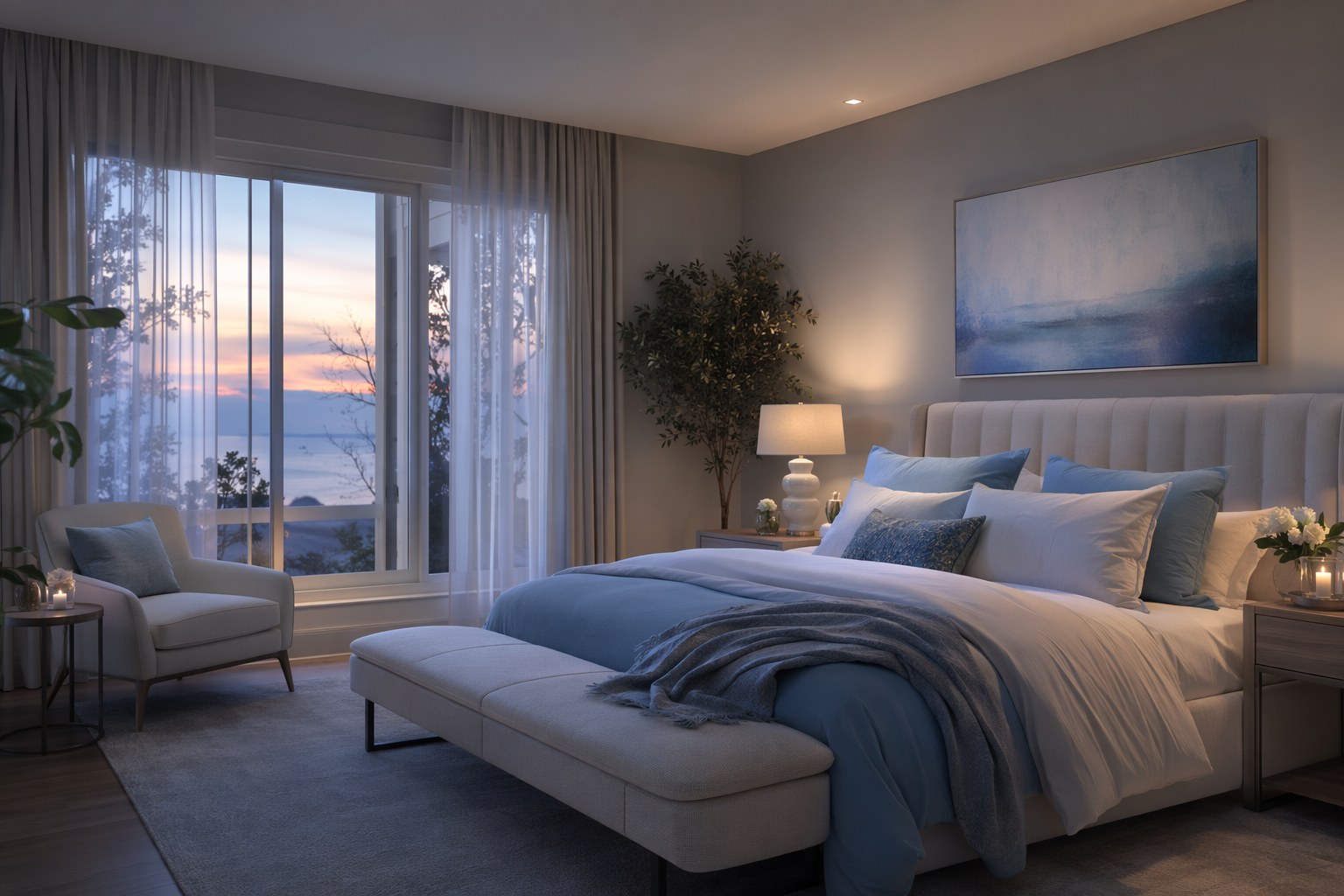
I've spent fifteen years helping people fix their sleep, and every June the same complaint floods my inbox: "I fall asleep fine, but I wake up at 3 a.m. drenched and can't get back down." Summer doesn't usually cause insomnia. It causes fragmented sleep, the kind where you technically spend eight hours in bed but feel like you fought a war all night. The culprit is almost never the person. It's the setup.
Here's the piece most people miss: your body has to drop its core temperature by about two degrees to fall asleep and stay asleep. That's not a wellness slogan, it's basic physiology. In winter your bedroom helps you do that. In July, a hot room and the wrong bedding actively fight against it, and your brain responds by surfacing you out of deep sleep over and over. The good news is that you can fix this for far less money than people assume, and most of the fixes are things you do once and forget.
Let me walk you through exactly how I set up a bedroom for hot-weather sleep, in the order that gives you the biggest return for the least effort and money.
Cool the Surface You Touch, Not Just the Air
The single most common mistake I see is people cranking the air conditioning down to 60 and still sweating through the sheets. Air temperature matters, but the surface pressed against your skin for eight hours matters more. You can heavily influence your sleep quality by changing what touches you, even before you touch the thermostat.
Cotton feels cool when you first lie down, then it absorbs your sweat and holds it against your body like a damp towel. Polyester and microfiber are worse, they trap heat and don't breathe at all. If you're sleeping on the bargain microfiber set from a big-box store, that alone could be why you're waking up soaked.
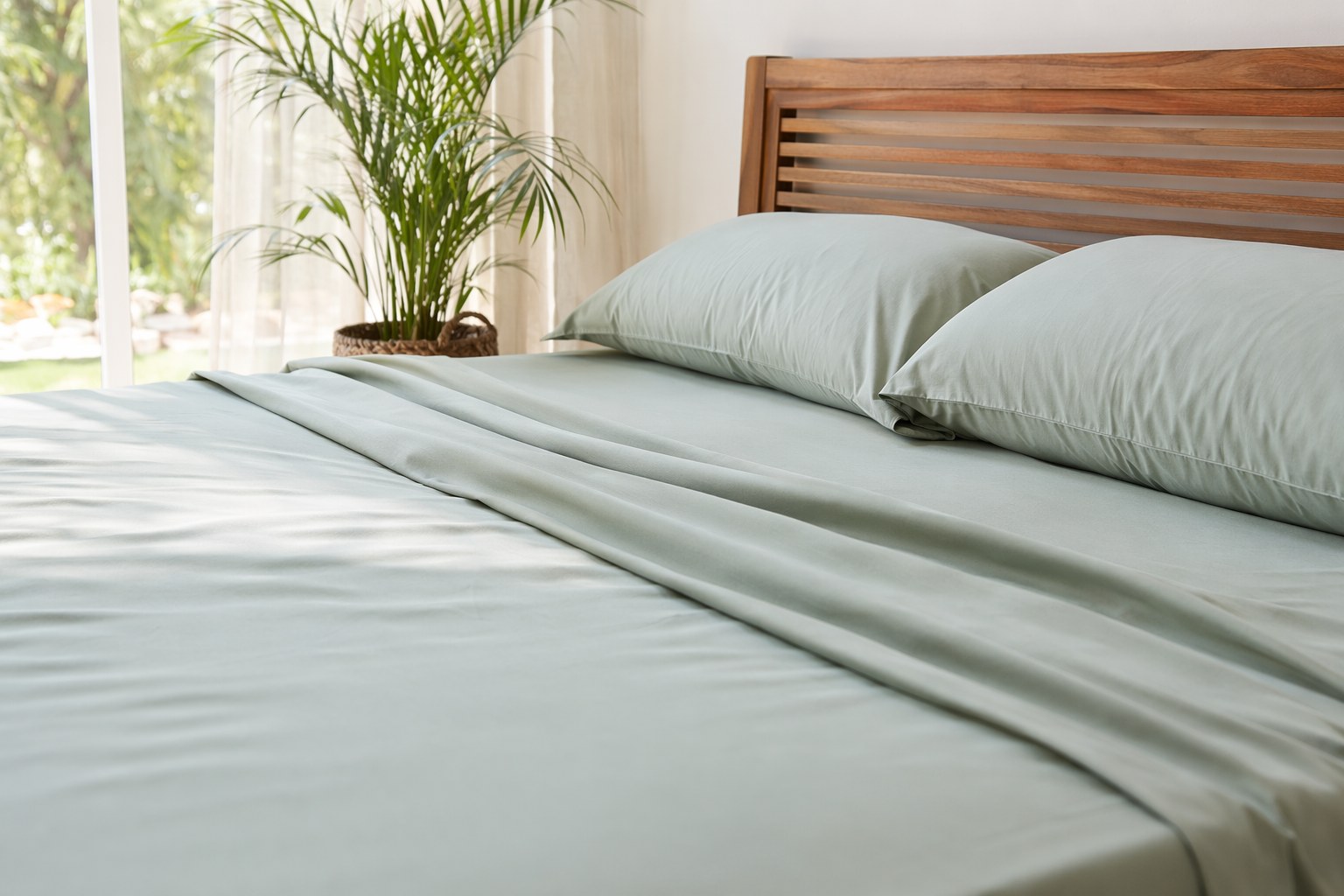
The aim for summer is a sheet that breathes and wicks moisture away instead of holding it. Bamboo viscose and crisp cotton percale both do this well. Bamboo feels silky and runs noticeably cooler to the touch, which is why I steer hot sleepers toward it first. Look for a set in the 300-400 thread count range, counterintuitively, ultra-high thread counts (1000+) are usually tightly woven and sleep hotter, not cooler.
Bamboo Sheets Cooling Queen Size Set
Breathable bamboo viscose sheets that wick moisture and feel cool to the touch, ideal for hot sleepers from May through August.
Check Price on Amazon →While you're rethinking the bed, look at your comforter. A heavy all-season duvet is a furnace in August. Switch to a lightweight summer-weight blanket or just a flat sheet, and keep the heavy stuff stored until fall. A good rule: if you're using the comforter as a weight rather than for warmth, you want a weighted blanket made with breathable cooling fabric instead, not a hot down duvet.
Your Head Runs Hot, So Cool the Pillow
Here's something people overlook: your head and neck shed a disproportionate amount of body heat, and a standard memory foam pillow is one of the worst things you can put under them in summer. Solid memory foam acts like an insulator, it cups your head, traps the heat, and bakes it right back at you. That hot, flip-the-pillow-to-the-cool-side ritual you do at 2 a.m.? That's your pillow failing you.
A gel-infused or gel-topped pillow is built specifically to solve this. The gel layer conducts heat away from your skin instead of holding it, and shredded or ventilated foam underneath lets air actually move through the pillow. The difference is immediate and it's the upgrade my clients thank me for most often. You stop flipping the pillow because there's no hot side to escape.
Gel Cooling Pillow Memory Foam Insert
A gel-topped memory foam pillow that pulls heat away from your head and neck so you stop flipping to the cool side all night.
Check Price on Amazon →Pillow placement matters too, and this is pure sleep-coach territory. If you're a side sleeper, a single supportive pillow that fills the gap between your ear and shoulder keeps your head off the hot mattress and your airway open. Back sleepers want something thinner so the head doesn't tip forward. The mistake is stacking two or three pillows, which traps heat in a pocket right around your face. One well-chosen pillow sleeps cooler than a pile of cheap ones.
One free trick I give everyone: keep a spare pillowcase in the freezer in a zip-top bag. Swap it on right before bed. It buys you a genuinely cold surface for the first 20-30 minutes, which is exactly the window when your body is trying to drop into sleep.
Get the Room to 65-68 Degrees (and Stop Paying to Cool an Empty House)
The research-backed sweet spot for sleep is 65 to 68 degrees Fahrenheit. Most people set their thermostat for daytime comfort, around 72-74, and then wonder why nighttime is miserable. But blasting the AC all night is expensive and often unnecessary. The smarter play is to cool the bedroom specifically, during the hours you're in it.
A programmable or smart thermostat earns its keep here, drop the house to your sleep temperature about 30 minutes before bed, then let it drift back up after you're out the door in the morning. If you want to dig into which units actually do this well without overcomplicating things, I walked through my picks in our guide to the best smart thermostats to save energy. The savings from not over-cooling an empty house during the day usually pay for the thermostat inside a season or two.
That said, your AC shouldn't be doing all the work alone, both for your comfort and your wallet. Two cheap moves take enormous load off it: blocking heat at the windows and moving air across your body. We'll cover both next. And if your summer bills are creeping up, our breakdown of simple AC tweaks that cut cooling costs by up to 40 percent pairs perfectly with everything in this section.
Block the Afternoon Sun Before It Bakes the Room
If your bedroom faces west or south, the afternoon sun pours heat into that room for hours while you're not even in it. By the time you go to bed, you're trying to sleep in a space that's been absorbing radiant heat since noon. No amount of AC catches up efficiently once a room is heat-soaked.
Thermal-insulated blackout curtains solve two problems at once. The blackout layer keeps the room dark, which your brain needs for melatonin production, and the thermal backing reflects and blocks solar heat before it ever gets in. I tell clients to close them by early afternoon on the hottest days, not at bedtime. You'll feel the difference walking into the room that evening, it's the gap between a room that's 78 and one that's 72 before the AC even runs.
Blackout Curtain Thermal Insulated Navy
Thermal-backed blackout curtains that block afternoon solar heat and create the dark room your body needs for deep summer sleep.
Check Price on Amazon →Darkness is doing double duty here. Even a sliver of streetlight or an early summer sunrise at 5:30 a.m. can pull you out of the last, most restorative sleep cycle of the night. If you can't get the room fully dark, or you share it with someone on a different schedule, a contoured cooling sleep mask is the cheapest insurance policy in this whole guide. The gel insert versions add a light, cooling pressure across the eyes that genuinely helps you settle.
Sleep Mask Cooling Gel Insert
A contoured sleep mask with a cooling gel insert that blocks early summer light and adds gentle, soothing pressure across the eyes.
Check Price on Amazon →Move the Air Across Your Skin
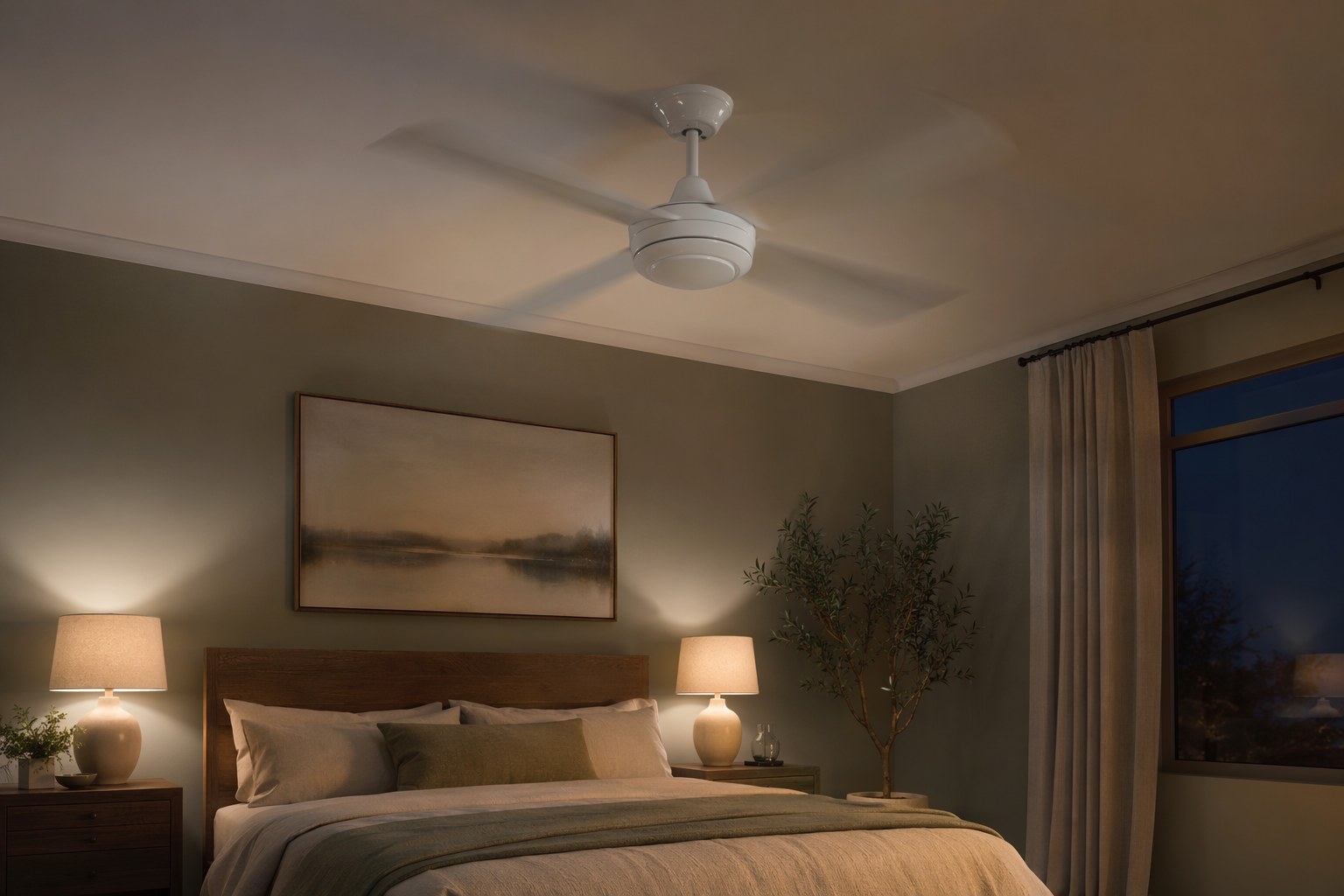
Still air at 72 degrees feels warmer than moving air at 75. That's the whole principle behind a ceiling fan, it doesn't lower the room temperature, it accelerates evaporation off your skin so you feel cooler. A fan running over the bed can make a room feel three to four degrees cooler, which means you can set the thermostat a few degrees higher and still sleep comfortably. That's real money over a summer.
One detail almost everyone gets wrong: the fan direction. In summer, the blades should spin counterclockwise when you look up at them, which pushes air straight down on you. Most fans have a little switch on the motor housing to reverse this. If your fan is blowing but you're not feeling a breeze on the bed, that switch is probably set for winter.
If you don't have a ceiling fan in the bedroom, this is the one upgrade I'd actually push you to install before next summer. It's a modest job for a handy homeowner with a kit, or an hour for an electrician, and it pays for itself in reduced AC runtime year after year.
Ceiling Fan Hunter Installation Kit
A complete ceiling fan kit with the mounting hardware to add quiet, energy-saving airflow directly over your bed.
Check Price on Amazon →
The Free Habits That Tie It All Together
Hardware does most of the heavy lifting, but a few behavioral tweaks close the gap. A warm (not hot) shower an hour before bed actually helps, it pulls blood to your skin's surface, and when you step out, your core temperature drops faster, signaling sleep. Keep a glass of ice water on the nightstand so a 3 a.m. wake-up doesn't turn into a trip to the kitchen and a fully alert brain.
Watch the hidden heat sources, too. Laptops, phone chargers, and the TV on standby all throw off warmth in a small room, and a cluttered bedroom traps it. If you haven't addressed the basics of a calm, cool sleep space, our guide on how to organize your bedroom for better sleep covers the decluttering and layout side that makes all of this work better.
One last seasonal note from someone who's seen it go wrong: an AC unit that quits on the hottest week of the year will undo every fix on this list. A few minutes of maintenance now goes a long way, and our checklist on how to prevent summer AC breakdowns is worth a look before peak heat. And since cooling and water use both spike in summer, the small-house habits in our piece on how to lower your water bill round out a genuinely efficient summer home.
Frequently Asked Questions
What is the best bedroom temperature for sleeping in summer?
Aim for 65 to 68 degrees Fahrenheit. Your body needs to drop its core temperature to fall and stay asleep, and a room in this range supports that. Cool the bedroom specifically about 30 minutes before bed rather than over-cooling the whole house all day.
Are bamboo or cotton sheets cooler for hot weather?
Both beat polyester and microfiber, but bamboo viscose typically sleeps coolest because it breathes well and wicks moisture instead of holding sweat against your skin. Crisp cotton percale is a strong second choice. Skip ultra-high thread counts, which are tightly woven and trap heat.
Why do I wake up hot in the middle of the night?
It's usually heat-trapping bedding, not the room itself. A solid memory foam pillow and sweat-holding cotton or microfiber sheets store body heat and release it back at you, surfacing you out of deep sleep. Switch to breathable sheets and a gel-topped pillow, and the 3 a.m. wake-ups usually stop.
Which way should a ceiling fan spin to cool a room in summer?
Counterclockwise when you look up at it, which pushes air straight down and creates a breeze across your skin. Most fans have a small reverse switch on the motor housing. Moving air can make a room feel three to four degrees cooler without lowering the actual temperature.
Do cooling pillows actually work?
Yes, when they're built right. A gel-topped or gel-infused pillow conducts heat away from your head and neck, which shed a lot of body heat, while ventilated foam lets air move through. The practical sign it's working is that you stop flipping the pillow looking for a cool side.
Build Your Cool-Sleep Setup One Layer at a Time
You don't need to overhaul everything this week. Start with the cheapest, highest-impact change for your situation, usually the sheets and pillow if you're waking up hot, or the thermal curtains if your room bakes in the afternoon. Add a fan, dial in the thermostat, and layer in the free habits as you go.
The families who sleep well in August aren't the ones running the AC into the ground. They're the ones who cooled the surface they actually touch, blocked the heat before it built up, and moved a little air across their skin. Get those three right and summer stops stealing your sleep.
Get weekly home tips that actually work
Join thousands of homeowners getting practical cleaning hacks, DIY fixes, and money-saving tips every week. Free, and you can unsubscribe anytime.

Written by
Beth SullivanFounder & Editor-in-Chief
Beth Sullivan is the founder of Practical Home Guides. With over a decade of hands-on experience tackling every home challenge imaginable, she started this site to share the practical, no-nonsense solutions she wishes she had found years ago. When she's not testing cleaning hacks or organizing pantries, you'll find her in the garden or working on her next DIY project.
Recommended Products
Looking for specific product recommendations? Check out our tested picks.
Best Garage Shelving Systems (2026 Tested)
Wire shelving, freestanding steel, wall-mounted, and overhead — we tested the garage shelving systems that hold real weight without sagging.
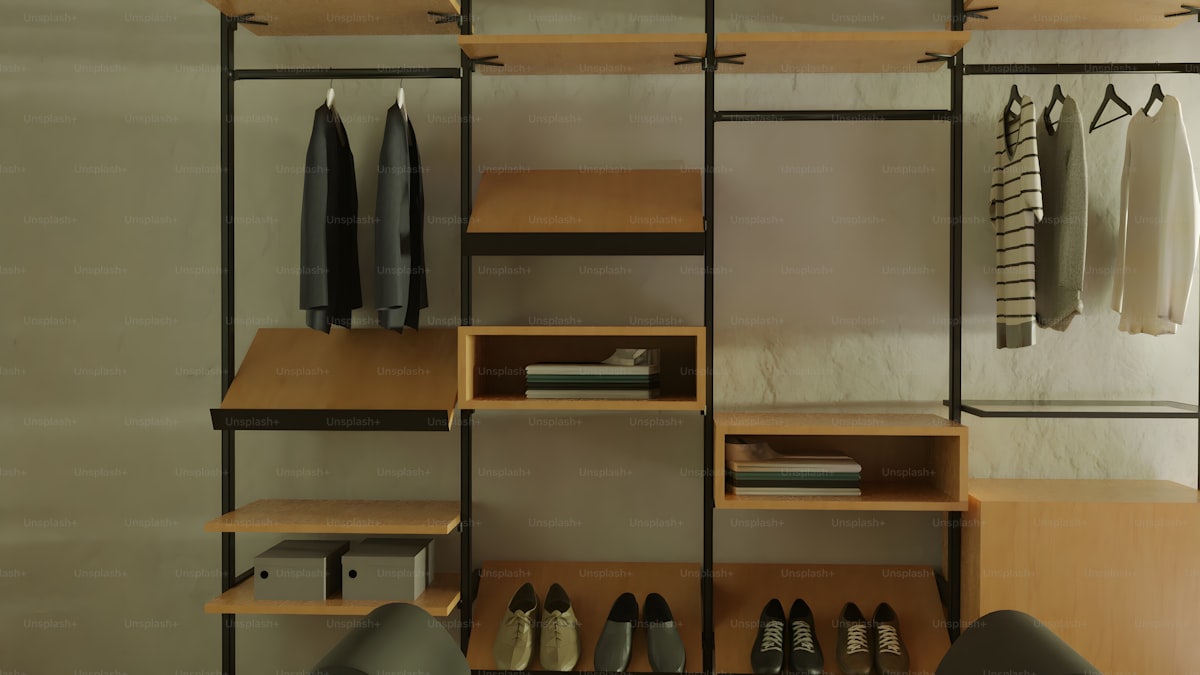
5 Best Closet Organizer Systems Under $100 (2026)
Transform your cluttered closet without spending a fortune. We compared the top closet organizer systems under $100 — here are the 5 best for different closet sizes and needs.
Best Storage Bins and Organizers for Every Room (2026)
The best storage bins, baskets, and organizers for closets, pantries, bathrooms, and garages. Practical picks at every price point to get your home organized.
Related Articles
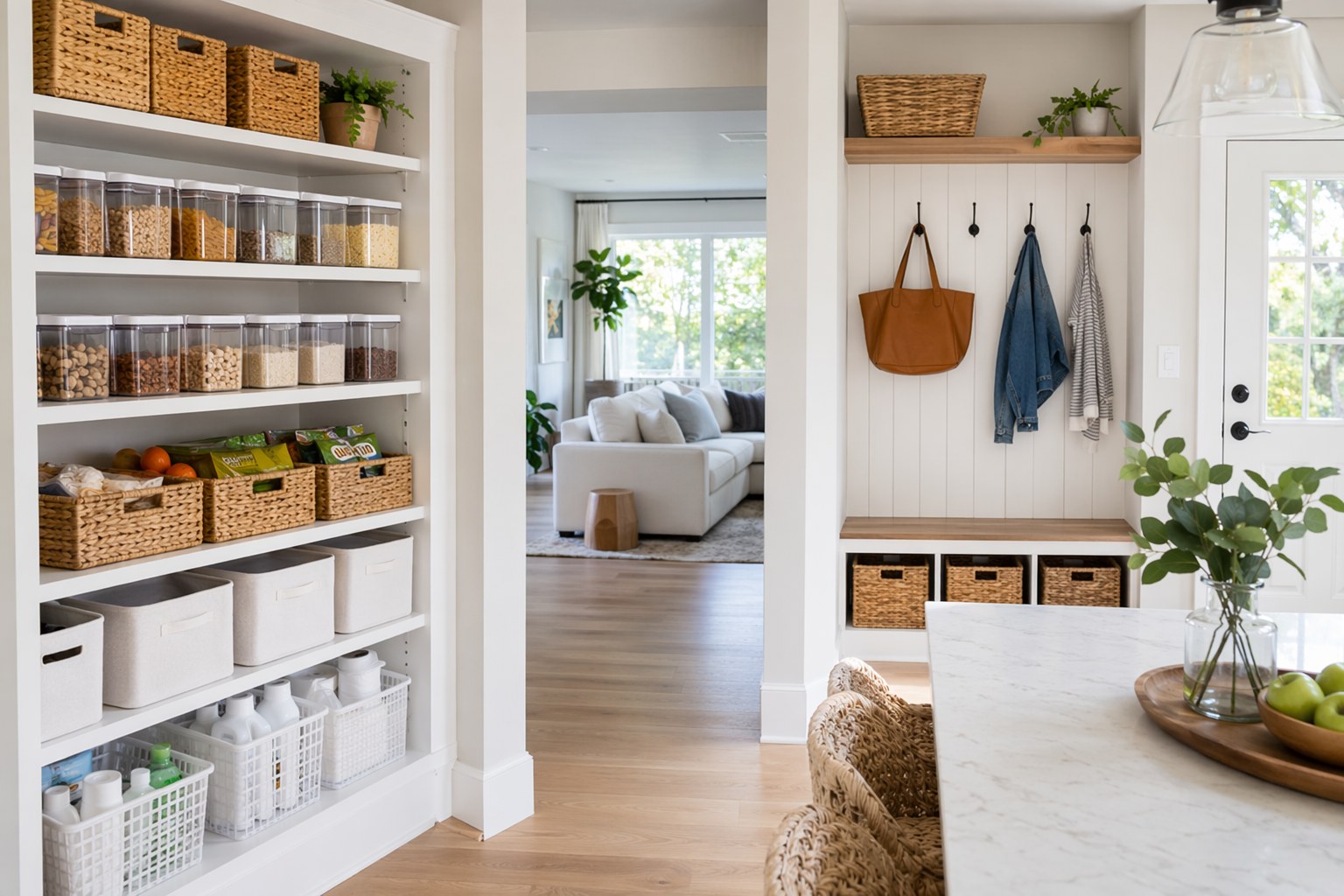
The Complete Home Organization System: A Room-by-Room Master Plan
A room-by-room home organization master plan with a proven system, product picks, and a realistic schedule to organize your entire house without burning out.
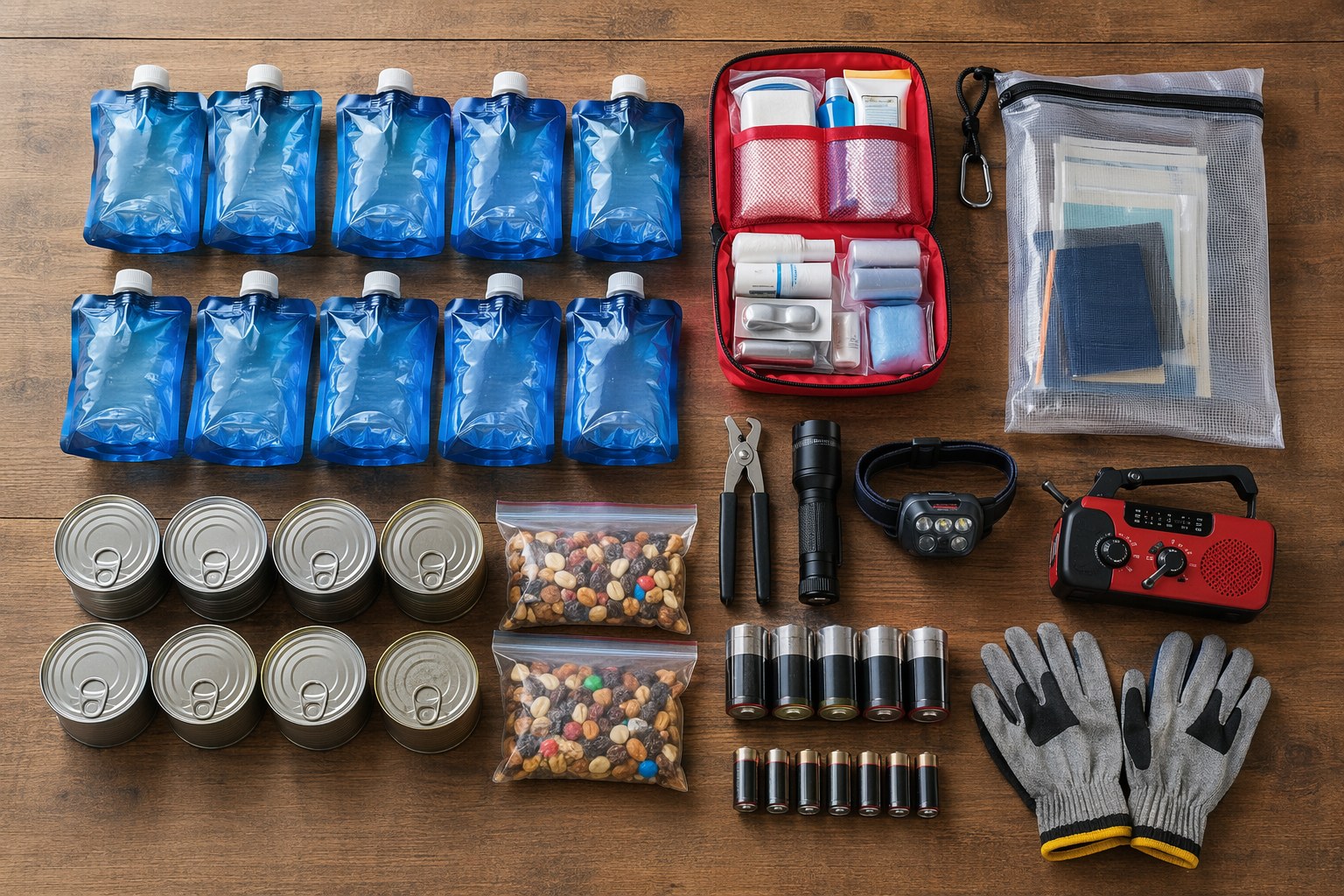
Hurricane Season Prep: June 1 Home Readiness Checklist for Coastal Areas
A June 1 hurricane readiness checklist for coastal homes: build your emergency kit, harden the property, and stockpile supplies before the season peaks in fall.

Graduation Gift: Tech Essentials for College Success
The 2026 graduation tech gift list that balances budget and function: laptop, noise-canceling earbuds, power bank, and the upgrades worth your money.
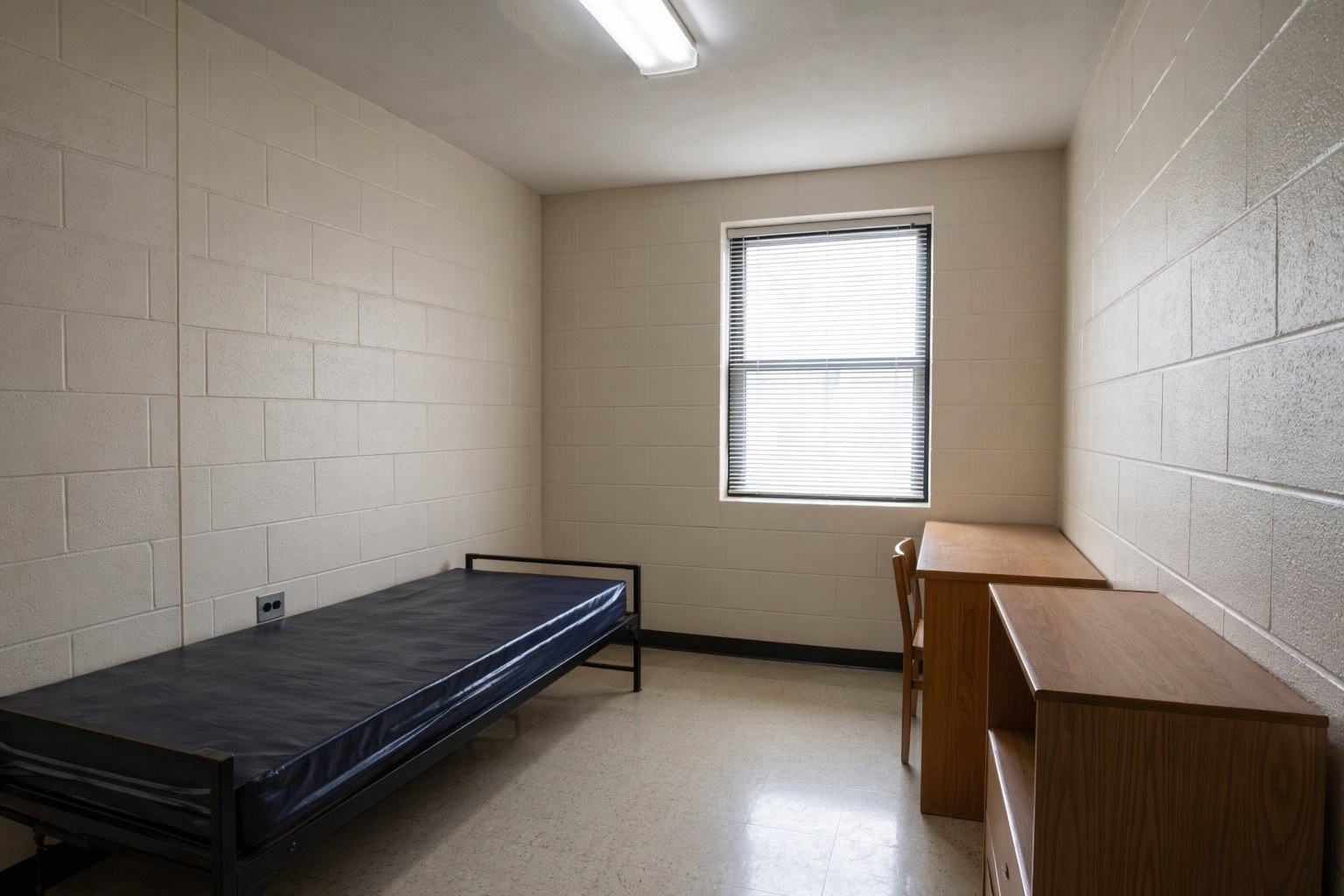
Graduation Room Makeover: Transform Dorm Decor Without Breaking Bank
Transform a blank dorm into a personalized space for under $150. Renter-safe wall decor, warm lighting, layered textiles, and furniture arrangement tricks.