Hurricane Season Prep: June 1 Home Readiness Checklist for Coastal Areas
This article may contain affiliate links. If you make a purchase through these links, we may earn a small commission at no extra cost to you. Learn more
Quick Answer
Hurricane Season Prep: June 1 Home Readiness Checklist for Coastal Areas
By June 1, three things should be done: a 72-hour emergency kit packed and stored where you can grab it, your property physically hardened (shutters or pre-cut plywood, secured outdoor items, cleared gutters, a tested generator), and a two-week supply stockpile of water, food, fuel, and medications. The season runs through November 30 and peaks in September, so use the quiet weeks now to do the physical work calmly instead of fighting empty store shelves when a storm is in the cone.
The Atlantic hurricane season officially opens June 1, and every coastal homeowner I know treats that date one of two ways. Either it sneaks up on them and they're standing in a picked-over hardware store the day before a warning, or they spend a calm Saturday in late May getting it done and then forget about it. I am firmly in the second camp, and after a decade of living where storms make landfall, I can tell you the difference between those two approaches is enormous — in stress, in money, and sometimes in whether your roof stays on.
This is the physical readiness checklist. Not the insurance and recovery strategy (that matters too, and I cover it separately), but the hands-on work: the kit you grab, the house you harden, the supplies you stockpile. The whole thing is a one-weekend project if you start now. It becomes a frantic, expensive scramble if you wait until a storm has a name. Let's do it the calm way.
Why June 1 Is a Deadline, Not a Start Date
Here's the thing nobody tells new coastal residents: the season runs June 1 through November 30, but the statistical peak is mid-August through October, with September the single busiest month. That gap is your gift. You have roughly ten quiet weeks before storms typically threaten, and that's exactly when generators, plywood, water, and batteries are in stock and at normal prices.
The moment a storm enters the forecast cone, three things happen at once: stores sell out of the essentials within hours, prices on what's left climb, and you're now doing physical labor — hauling plywood, hanging shutters — under a deadline and rising anxiety. I've watched neighbors pay double for the last generator on the shelf and then realize they had no oil and no fuel to run it. Treat June 1 as the date everything should already be done, and you sidestep all of that.
Step One: Build a Real Emergency Kit
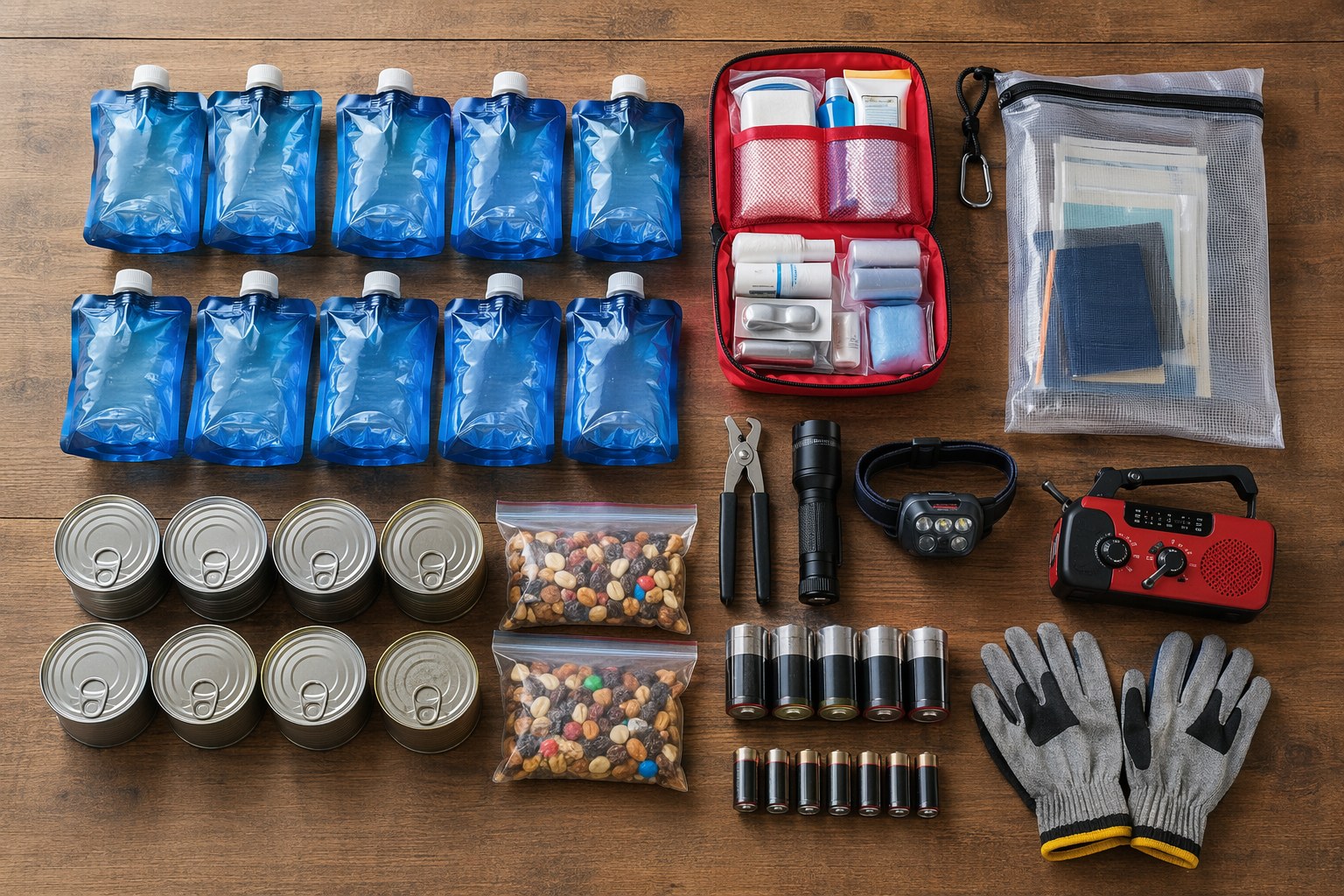
The kit is the foundation. The federal standard is a minimum of 72 hours of supplies per person, but on the coast I plan for longer because power and water restoration after a serious storm routinely stretches past three days. Build for at least three days, aim for a week.
Here's what actually goes in mine, and why:
- Water: one gallon per person per day, minimum, for drinking and basic sanitation. For two people over seven days that's 14 gallons — more than most people picture.
- Food: non-perishable, no-cook items. Canned proteins, peanut butter, crackers, dried fruit, shelf-stable meals. A manual can opener (the number one forgotten item).
- Light and power: LED flashlights and a headlamp per person, plus a deep stock of the right batteries. Skip candles — open flame in a debris-strewn house is asking for trouble.
- First aid and medications: a stocked kit plus at least a two-week supply of any prescription meds, which I'll come back to.
- Information: a battery or hand-crank NOAA weather radio. When the internet and cell towers are down, this is your only reliable line to official evacuation and shelter updates.
- Tools and sanitation: work gloves, a multi-tool, duct tape, garbage bags, wet wipes, and a basic sanitation plan if water service stops.
- Documents and cash: copies of IDs and policies in a waterproof bag, plus several hundred dollars in small bills, because card readers and ATMs are dead without power.
If you'd rather not assemble all of this piecemeal, a pre-built kit gets you 80 percent of the way there and you simply add water, meds, and documents.
Emergency Kit 2-Person 72-Hour Survival
A pre-packed survival kit with food bars, water pouches, first aid, and light that covers the federal 72-hour baseline for two people in one grab-and-go bag.
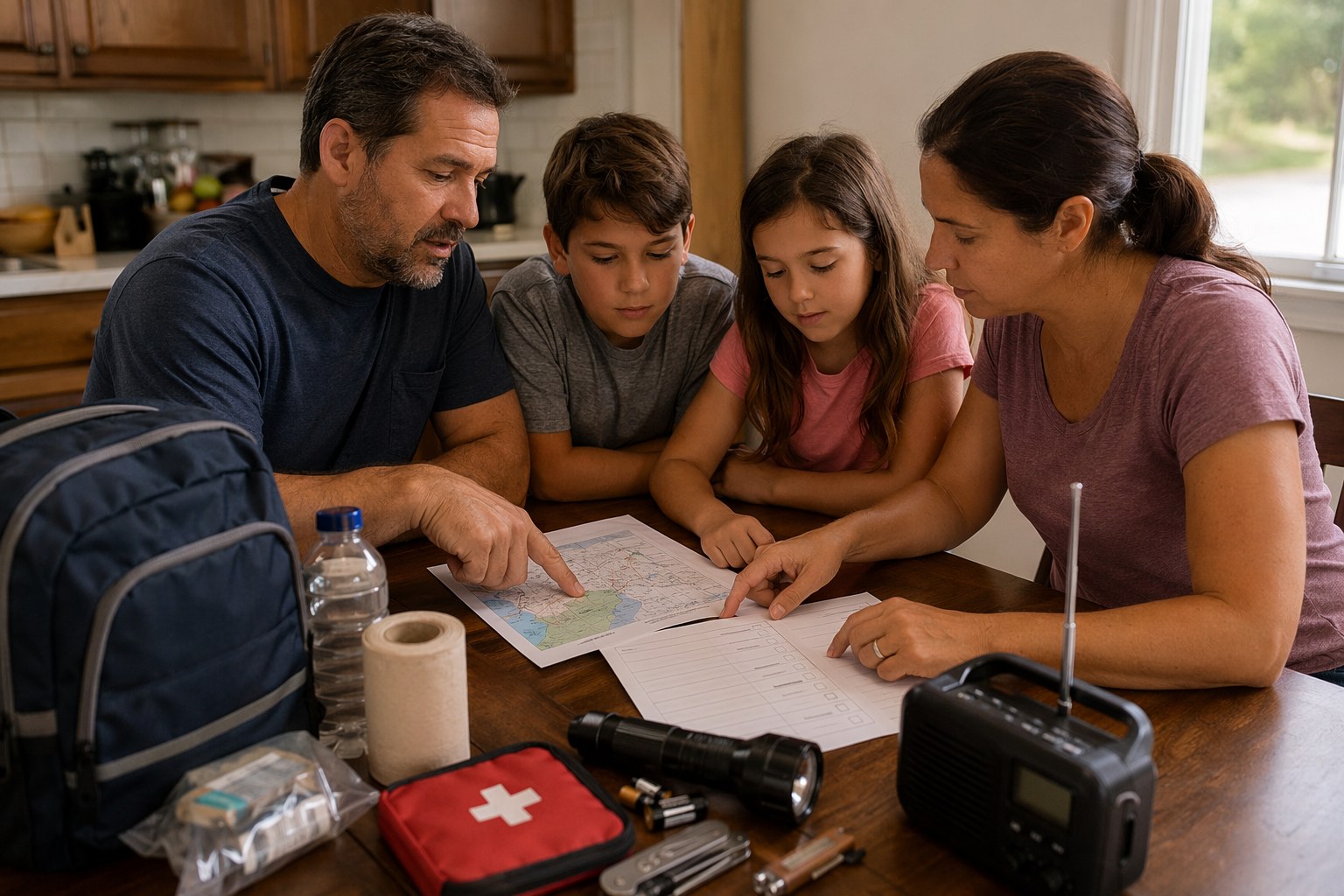
Check Price on Amazon →Store the kit somewhere you can reach in the dark in 60 seconds — a hall closet near the door, not the back of the attic. This is the same grab-it-fast logic behind a family command center: the emergency contact card, meeting points, and a printed checklist belong on that same wall so the whole household knows the plan before they need it, not during the chaos.
Step Two: Harden the Property
This is the part that protects the house itself, and it's the part people skip because it's actual work. Do it now, in shorts and sunshine, instead of in 40 mph gusts.
Protect Your Windows and Doors
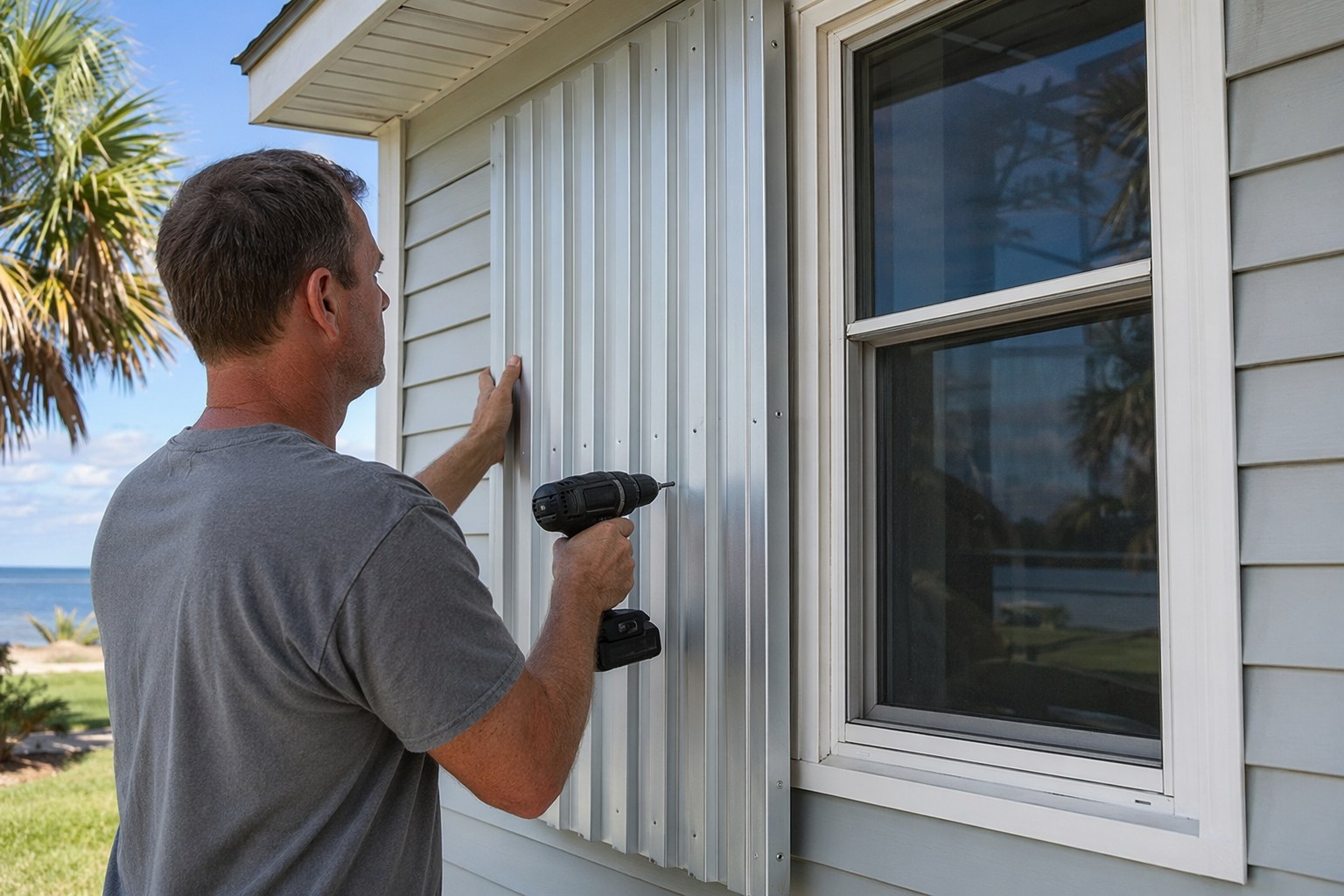
Flying debris breaking a window is what turns a survivable storm into roof failure — once wind gets inside, it lifts the roof from underneath. Your options, in order of how much I trust them:
- Permanent storm shutters (aluminum accordion, roll-down, or removable panels). The gold standard. If your home didn't come with them, an aluminum panel kit is a weekend install and the best money you'll spend on the structure.
- Pre-cut plywood. The budget protection that genuinely works: 1/2-inch or thicker exterior plywood, cut to each window now, labeled by room, with the mounting hardware pre-drilled. Cutting it in advance is the whole trick — you do not want to be measuring windows in a 30 mph wind.
Storm Shutters Aluminum Installation Kit
A removable aluminum panel system that bolts over windows and doors ahead of a storm and stores flat the rest of the year — the strongest DIY-installable window protection.
Check Price on Amazon →Plywood Sheeting 1/2-inch 4x8 Sheet
Exterior-grade 4x8 plywood for boarding windows; cut and label per opening now so installation is a fast bolt-up when a storm approaches.
Check Price on Amazon →A note for renters and budget-conscious owners: even taping windows does almost nothing (that myth needs to die), but pre-cut plywood from a few sheets is real protection for a couple hundred dollars. You can search for exterior plywood sheeting on Amazon if your local lumber yard is picked over.
Clear the Yard and the Gutters
Anything loose becomes a projectile. Walk your property and make a plan for: patio furniture, grills, planters, trash cans, kids' toys, and garden tools. They all come inside the garage or get secured. This is one more reason a garage you can actually organize on a budget pays off — when there's clear floor space, bringing the whole patio indoors takes 15 minutes instead of an hour of Tetris.
Then clear your gutters and downspouts completely. Clogged gutters during the torrential rain of a hurricane back water up under the roofline and into the walls. While you're up there, look for loose shingles and have them fixed now.
Set Up Backup Power — and Test It
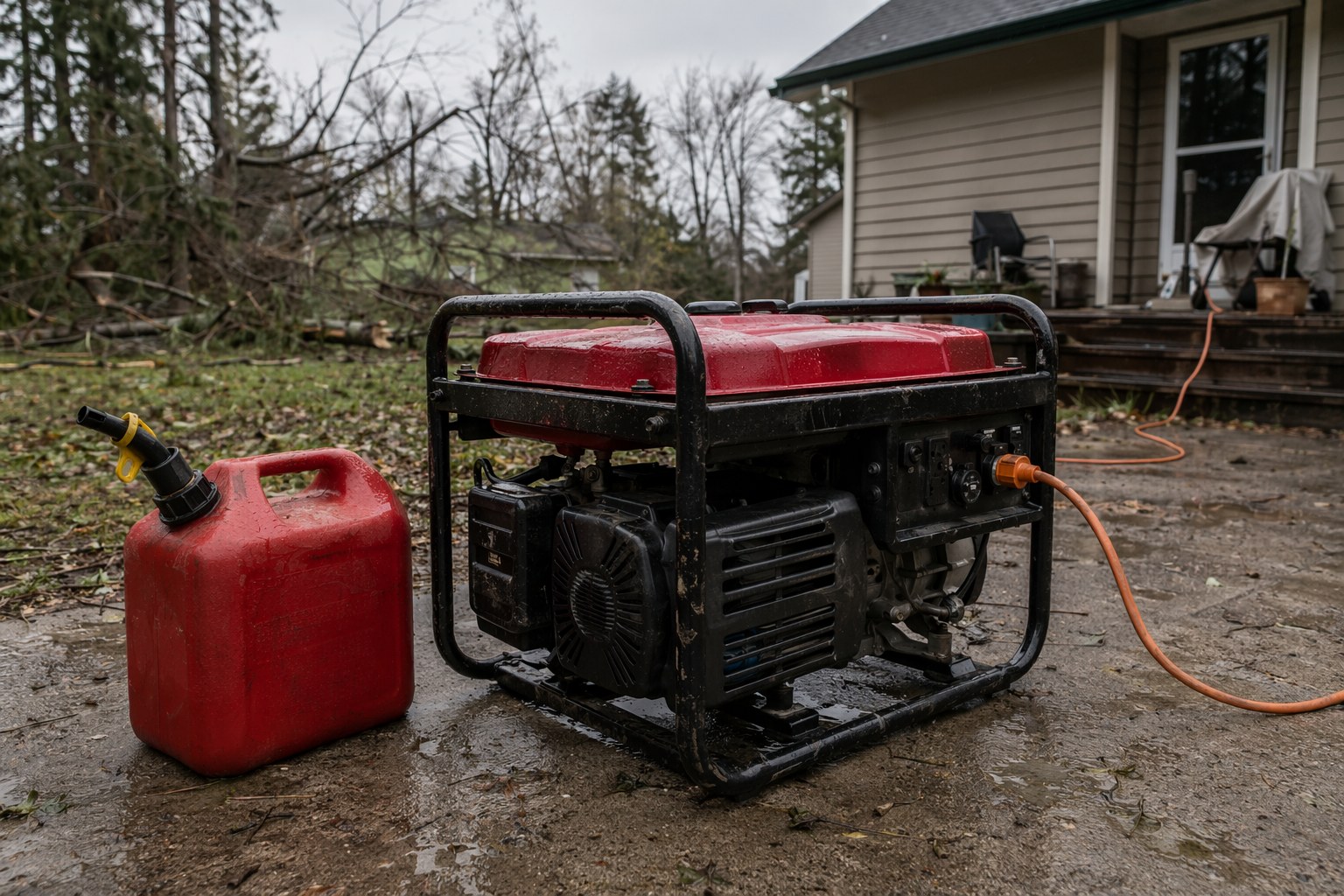
A generator is the single biggest quality-of-life factor after the storm passes. A 7500W portable gas generator runs a refrigerator, several lights, fans, and phone chargers — enough to keep $300 of food from spoiling and the family comfortable through a multi-day outage.
Generator Portable 7500W Gas Powered
A 7500-watt gas generator that powers a refrigerator, lights, fans, and devices through a multi-day outage; size it to your essentials, not your whole house.
Check Price on Amazon →Two non-negotiable safety rules, because carbon monoxide from generators kills more people after hurricanes than the storms themselves: run it outdoors only, at least 20 feet from any window or door, never in a garage. And test it now. Pull it out, add oil, run it for 20 minutes, and confirm you have fresh fuel plus stabilizer stored safely. A generator you've never started is a paperweight when the lights go out.
Step Three: Build the Supply Stockpile
The kit gets you through 72 hours. The stockpile gets you through the two weeks of disrupted normal that often follow — stores closed, roads blocked, deliveries paused.
Water You Can Count On
Beyond the gallon-per-person-per-day in your kit, store sealed emergency water for the longer haul. Pre-bottled emergency drinking water has a long shelf life and removes the variable of remembering to rotate jugs. I keep a case of long-shelf-life bottles plus refillable containers I top off when a storm is days out.
Emergency Drinking Water Storage Bottles
Long-shelf-life sealed water bottles built for emergency storage, so your two-week water reserve is ready year-round without constant rotation.
Check Price on Amazon →Also fill your bathtub with a clean liner (or a purpose-made bladder) right before landfall — that water flushes toilets when the municipal supply fails.
Food, Fuel, and Medications
- Food: keep a deep pantry of shelf-stable staples that store and travel well. This is where a hurricane stockpile and smart pantry management overlap completely — my guide to pantry staples that ship and store well is essentially a hurricane food list with a longer shelf life. Build it now and you're not fighting a crowd at a stripped grocery store.
- Fuel: fill every vehicle when a storm appears in the forecast, not when it's a day out, and stock generator fuel with stabilizer in advance. Gas stations have no power either after the grid goes down.
- Medications: request early refills so you have at least a two-week supply of every prescription before the season's peak. Pharmacies close and supply chains stall; this is the gap that catches people every year.
Don't Forget the Whole Household
Pets need the same planning: a week of food and water, medications, a carrier, and a current photo in case you're separated. And in a coastal summer, a power outage means no air conditioning, which is a genuine health hazard. The shade-hydration-one-cool-room logic in keeping pets cool in summer applies to the entire family when the AC is out for days.
Your June 1 Checklist at a Glance
| Category | Task | Done By |
|---|---|---|
| Kit | 72-hour to 1-week kit packed, stored by the door | Now |
| Kit | NOAA weather radio tested, batteries fresh | Now |
| Property | Shutters installed or plywood cut and labeled | Mid-May |
| Property | Gutters cleared, loose shingles fixed | Mid-May |
| Property | Generator tested, oil and stabilized fuel stored | Mid-May |
| Supplies | Two-week water reserve in place | Late May |
| Supplies | Deep pantry of shelf-stable food built | Late May |
| Supplies | Prescriptions refilled, two-week supply on hand | Late May |
| Household | Pet kit, carrier, food, and meds ready | Late May |
| Plan | Yard-clearing plan and evacuation route reviewed | June 1 |
The Bottom Line
A hurricane is one of the few disasters that gives you a deadline and a warning. June 1 is the deadline; the season's September peak is the warning. The homeowners who come through calmly aren't the lucky ones — they're the ones who packed the kit, hardened the house, and stockpiled the supplies during a quiet weekend in May, while the stores were full and the weather was fine.
Pick the most urgent item on the checklist above and knock it out this week. Once the physical readiness is handled, layer in the deeper recovery planning — power, communication, insurance, and documents — with my hurricane survival strategy beyond the basics. The storms are coming either way. Being scrambled by one is entirely optional.
Get weekly home tips that actually work
Join thousands of homeowners getting practical cleaning hacks, DIY fixes, and money-saving tips every week. Free, and you can unsubscribe anytime.

Written by
Beth SullivanFounder & Editor-in-Chief
Beth Sullivan is the founder of Practical Home Guides. With over a decade of hands-on experience tackling every home challenge imaginable, she started this site to share the practical, no-nonsense solutions she wishes she had found years ago. When she's not testing cleaning hacks or organizing pantries, you'll find her in the garden or working on her next DIY project.
Recommended Products
Looking for specific product recommendations? Check out our tested picks.
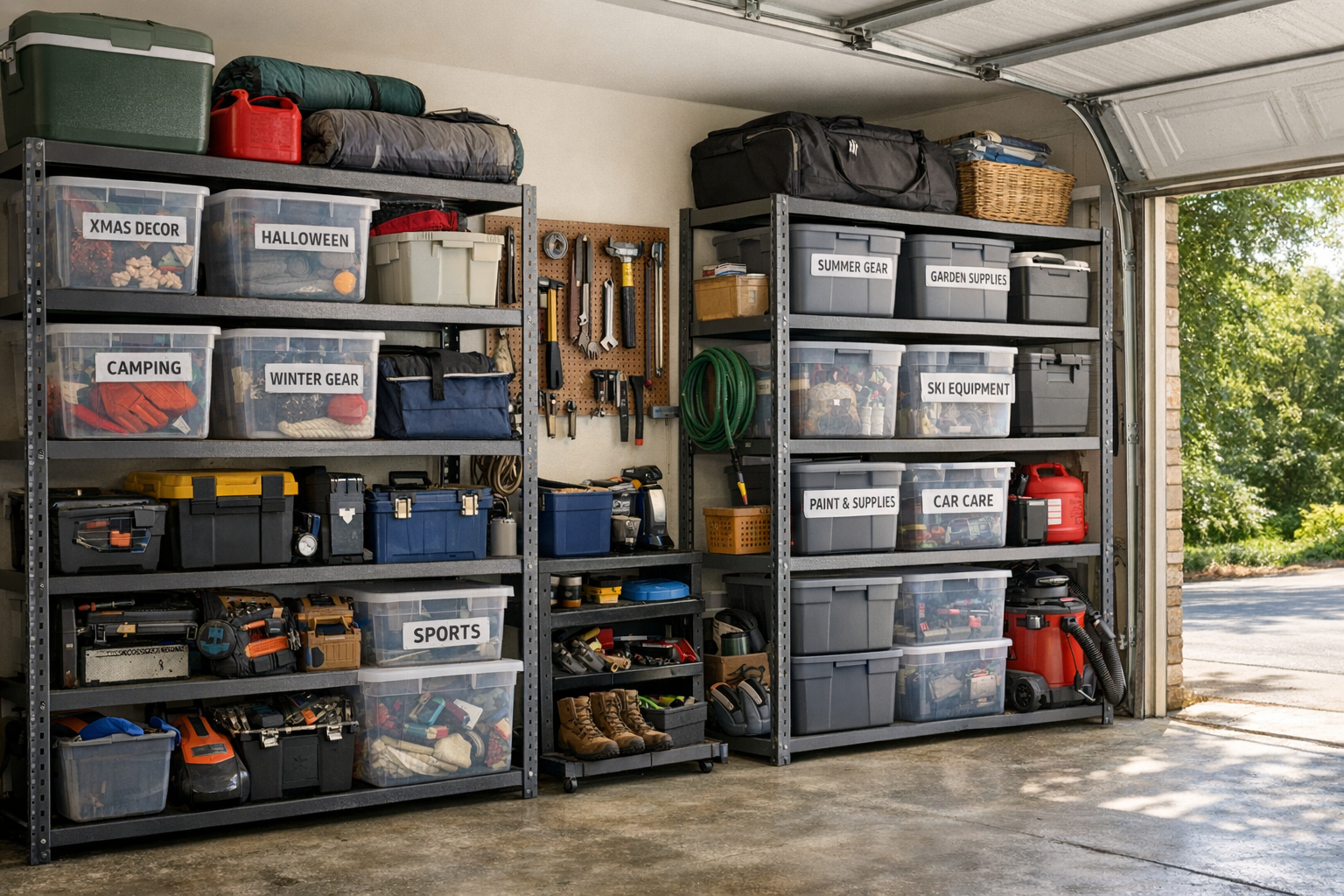
Best Garage Shelving Systems (2026 Tested)
Wire shelving, freestanding steel, wall-mounted, and overhead — we tested the garage shelving systems that hold real weight without sagging.

5 Best Closet Organizer Systems Under $100 (2026)
Transform your cluttered closet without spending a fortune. We compared the top closet organizer systems under $100 — here are the 5 best for different closet sizes and needs.

Best Storage Bins and Organizers for Every Room (2026)
The best storage bins, baskets, and organizers for closets, pantries, bathrooms, and garages. Practical picks at every price point to get your home organized.
Related Articles

The Complete Home Organization System: A Room-by-Room Master Plan
A room-by-room home organization master plan with a proven system, product picks, and a realistic schedule to organize your entire house without burning out.

Graduation Gift: Tech Essentials for College Success
The 2026 graduation tech gift list that balances budget and function: laptop, noise-canceling earbuds, power bank, and the upgrades worth your money.

Summer Bedroom Comfort: Cooling Bedding & Sleep Setup Guide
A sleep coach's guide to staying cool in hot weather: breathable bedding, pillow placement, and temperature hacks for better rest from May through August.
Graduation Room Makeover: Transform Dorm Decor Without Breaking Bank
Transform a blank dorm into a personalized space for under $150. Renter-safe wall decor, warm lighting, layered textiles, and furniture arrangement tricks.