The Complete Home Organization System: A Room-by-Room Master Plan
This article may contain affiliate links. If you make a purchase through these links, we may earn a small commission at no extra cost to you. Learn more
Quick Answer
The Complete Home Organization System: A Room-by-Room Master Plan
The fastest way to organize your whole house is to follow one repeatable system in every room: declutter first, group like with like, assign a 'home' to each category, then contain and label. Work room by room in priority order (kitchen, closets, entryway, then the rest), spend a weekend or two per space, and budget roughly $40-120 per room for bins, shelving, and labels. A complete, well-organized home is achievable in 6-8 focused weekends.
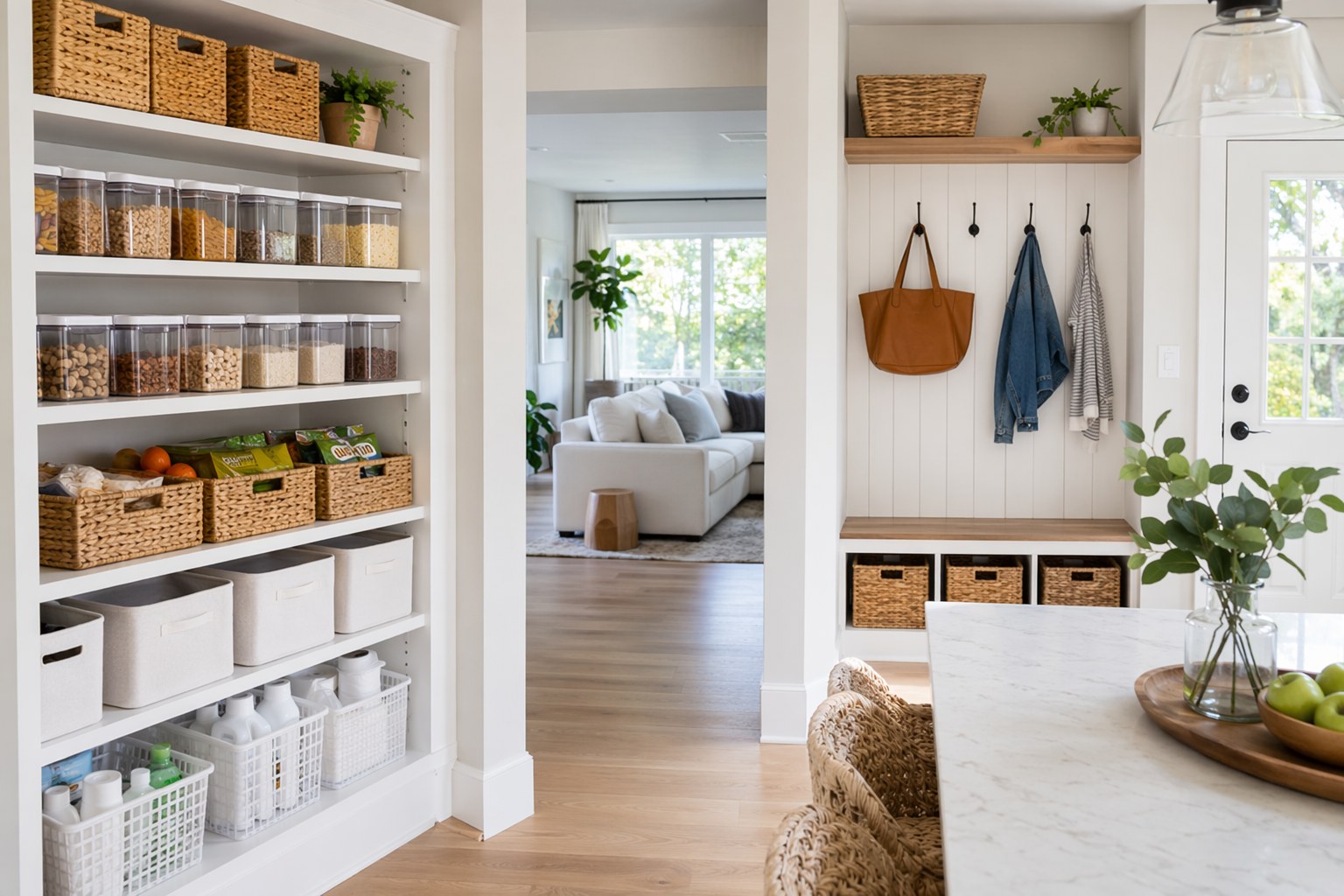
Most home organization advice fails for the same reason: it hands you a list of cute bins and never gives you a system. You buy the containers, fill them, feel organized for about three weeks, and then everything drifts back into chaos because nothing changed about how decisions get made in your home. The bins were a symptom fix. This guide is different. It is the master plan I use with clients and in my own house — one repeatable framework applied to every room, in a sensible order, with realistic time and money estimates.
Think of this as the cornerstone. Each room below gets a focused walkthrough, and where you need a deeper dive, I link out to the full room-by-room guide for that space. If you read nothing else, read the four-step system in the next section. Internalize that, and you can organize a space you have never seen before, in a house that is not even yours.
The Core System: Four Steps That Work in Every Room
Every organized space in your home is built from the same four moves. The rooms differ; the method does not. I call it Declutter, Group, Home, Contain — and the order matters enormously.
-
Declutter. Remove everything that does not belong, is broken, expired, or unloved. You cannot organize clutter; you can only relocate it. This is the step everyone wants to skip and the only step that actually creates space. Our full walkthrough on how to declutter your home room by room breaks down the decision tree for the hard-to-toss items.
-
Group. Gather like with like. Every battery in one pile. Every roll of tape in one pile. You will discover you own nine pairs of scissors and zero working pens, and that knowledge changes what you buy.
-
Home. Assign each group a permanent address based on where you use it, not where it has always lived. Coffee filters belong within arm's reach of the coffee maker. Wrapping paper belongs near a flat surface, not the top shelf of a hall closet.
-
Contain. Only now do you buy containers — sized to the group and the shelf, not the other way around. Then label, because a label is a promise to your future self and to everyone else in the house.
The single biggest mistake is buying containers in step one. Measure and shop after you declutter and group, never before. The right storage bins and organizers only work when they fit a decision you have already made.
Decision Framework: Keep, Relocate, Donate, Trash
When you are holding an object and stalling, run it through four questions:
- Have I used this in the last 12 months (or will I clearly use it next season)? If no, it is a candidate to go.
- Does it belong in this room? If no, it goes to a "relocate" box, not back on the shelf.
- Is it broken, expired, or duplicated beyond what I need? If yes, trash or donate.
- If I lost this tomorrow, would I buy it again at full price? If no, let it go.
Keep one cardboard box per room labeled "Relocate" and one trash bag labeled "Donate." Do not leave the room to put things away mid-session — that is how a two-hour project becomes a six-hour spiral.
The Master Schedule: What Order to Tackle Rooms
You will burn out if you try to organize the whole house in a weekend. The realistic pace is one to two rooms per weekend over six to eight weekends. Order matters: start with the rooms that cause the most daily friction and deliver the fastest visible wins, because momentum is the real fuel here.
| Phase | Room(s) | Typical time | Budget range | Why this order |
|---|---|---|---|---|
| 1 | Kitchen + pantry | 1-2 weekends | $80-200 | Highest daily use; instant payoff |
| 2 | Primary closet + bedroom | 1 weekend | $60-150 | Daily routine, mental clarity |
| 3 | Entryway + command center | Half weekend | $40-100 | Stops clutter at the door |
| 4 | Bathrooms | Half weekend | $30-80 | Quick, high-satisfaction |
| 5 | Home office + paperwork | 1 weekend | $40-120 | Reduces low-grade stress |
| 6 | Kids' rooms + toys | 1 weekend | $50-120 | Needs kid-friendly systems |
| 7 | Laundry + linen | Half weekend | $40-120 | Supports daily chores |
| 8 | Garage + seasonal storage | 1-2 weekends | $100-300 | Biggest space, save for last |
Budget across a full house typically lands between $450 and $1,200 depending on how much shelving you add and whether you reuse containers you already own. You do not need to spend the top of every range; the four-step system saves money because you stop buying containers for things you should have donated.
Phase 1: Kitchen and Pantry
The kitchen is command central, and it is where disorganization costs you real money in forgotten food and duplicate purchases. Start by emptying one zone at a time — never the whole kitchen at once — and group by function: baking, cooking, storage, daily dishes, coffee/tea.
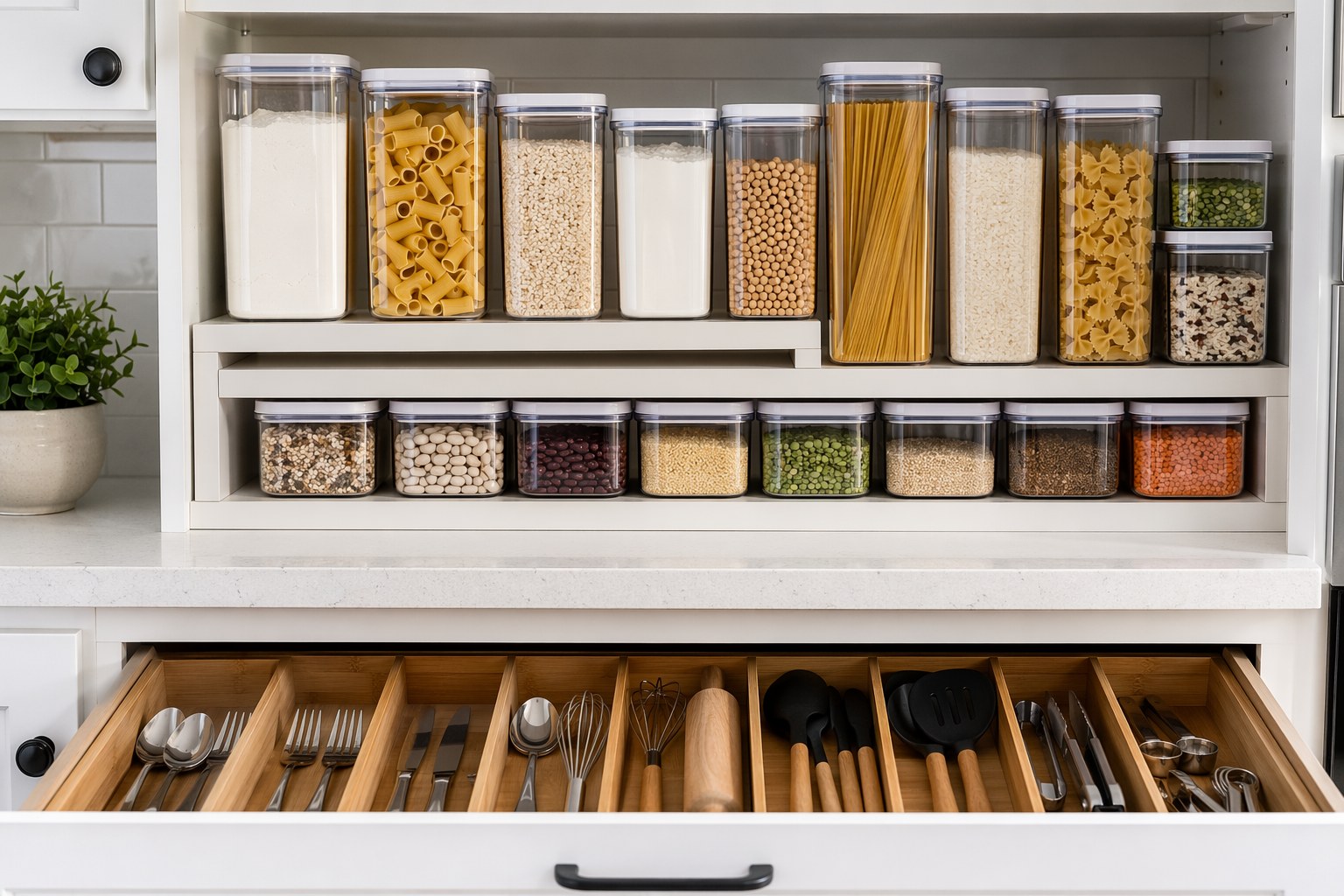
The high-leverage moves in the kitchen are drawer dividers, a few risers to create shelf "tiers," and clear, airtight containers for the pantry so you can actually see when you are low on flour. Our deep dives on how to organize kitchen cabinets and how to organize a deep pantry with no waste cover the cabinet-by-cabinet logic. For a full reset of dry goods, the canonical method is in organize your pantry like a pro.
Vtopmart Airtight Food Storage Containers
Stackable, clear, BPA-free pantry containers that keep dry goods fresh and make inventory obvious at a glance.
Check Price on Amazon →For drawers, a set of bamboo expandable drawer dividers turns a junk-prone utensil drawer into defined lanes in about ten minutes. The rule in the kitchen: if you reach for it daily, it lives between knee and eye level; everything else goes high or low.
Phase 2: Closets and Bedroom
A disorganized closet sets a stressful tone before you have even had coffee. Pull everything out, try the honest 12-month test, and group by type and then color. The two structural upgrades that transform a closet are doubled hanging rods (two short rods reclaim the dead air under shirts) and shelf dividers that keep stacks of sweaters from toppling.
If you are working with a tight space, the vertical-first strategy in organizing a small closet is the playbook. For a built-out modular approach, compare the options in our roundup of the best closet organizer systems. And because organization and rest are linked, the way you set up the bedroom matters — see organize your bedroom for better sleep for nightstand and under-bed strategies.
mDesign Stackable Closet Storage Bins
Clear, sturdy stackable bins that bring order to closet shelves and let you see contents without unstacking.
Check Price on Amazon →Twice a year, run a seasonal swap so your closet only holds what is in rotation. The wrinkle-free, vacuum-bag method in our summer wardrobe swap storage guide keeps off-season clothes compact and protected under the bed or on a high shelf.
Phase 3: Entryway and Command Center
The entryway is your home's clutter checkpoint. If you stop shoes, bags, mail, and keys at the door, you prevent 80% of the mess that migrates into the rest of the house. The system here is dead simple: a landing spot for keys, a tray or bowl for daily-carry items, hooks at adult and kid heights, a bin per family member for shoes, and a mail-sorting station that you process daily, not weekly.
Our guide on how to organize an entryway and stop clutter at the door covers small-foyer and no-foyer setups. Pair it with a family command center — a calendar, a few labeled bins for incoming paper, and a charging zone — to capture the logistics that otherwise pile up on the kitchen counter.
Wall-Mounted Entryway Organizer with Hooks and Mail Slots
Combines hooks, a key rack, and mail slots in one unit to create an instant drop zone at the door.
Check Price on Amazon →Phase 4: Bathrooms
Bathrooms reward organization because they are small, which means a single afternoon yields a dramatic before-and-after. Group by use — daily essentials, weekly/grooming, backstock, first aid — and resist storing backstock in prime cabinet real estate.
The two best space-creators are over-the-door organizers and under-sink tiered shelving that works around the plumbing. For tight powder rooms and shared family baths, our bathroom storage ideas for small spaces and the focused walkthrough on how to organize a bathroom cabinet give you the layout templates. Do a quick expiration sweep of the medicine cabinet while you are in there — it is the single most-neglected zone in the house.
Phase 5: Home Office and Paperwork
The office is where physical clutter and digital clutter meet, so the system extends to both. Physically: clear the desk to a working surface, corral cables, and create a single inbox tray for incoming paper. On paper management, the goal is a two-bucket system — "action needed" and "archive/file" — processed on a set day each week.
Our guide on how to organize a home office for productivity covers cable management and desk zones, and the companion piece on organizing paperwork and going paperless walks through what to shred, what to scan, and what to keep in hard copy. The rule: every piece of paper either gets an action, gets filed, or gets recycled — it never goes back in the pile.
Stackable Letter Tray Desk Organizer Set
A tiered tray system that creates clear inbox, action, and archive lanes to keep paper off the desk surface.
Check Price on Amazon →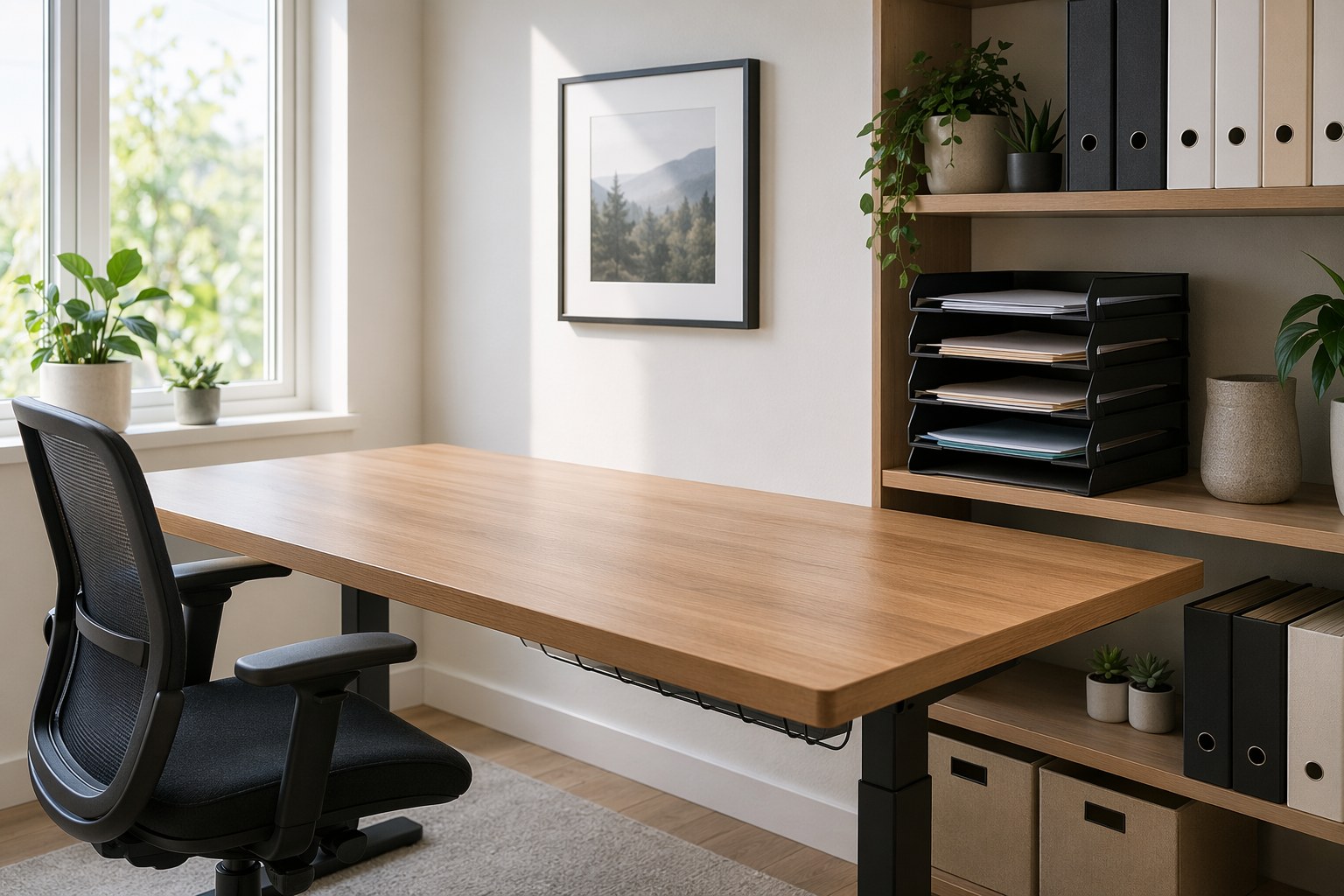
Phase 6: Kids' Rooms and Toys
Kids' spaces need systems a four-year-old can actually maintain, which means open bins over lids and picture labels over text. Group toys by type, keep only what gets played with, and consider a rotation: store half the toys out of sight and swap monthly so the playroom feels fresh without buying anything new.
The full method — including how to handle the avalanche of small pieces and stuffed animals — is in our guide on how to organize kids' toys. The principle that makes it stick: a toy gets put away easily only if its "home" is obvious and within the child's reach. Lower the bins to their level and accept that "good enough" tidy is the real goal in a kid's room.
Phase 7: Laundry and Linen
Laundry stays organized when supplies live above the machines on a shelf, sorting happens before the basket gets to the room, and there is a flat surface for folding. The complete budget setup — sorting station, vertical shelving, and a fold-down counter — is in how to organize a laundry room on a budget.
For linens, the trick is to fold sheet sets inside their matching pillowcase so the whole set travels as one unit, and to store by room and size. Our linen closet organization guide covers shelf-by-shelf placement and how to keep towels from toppling.
Phase 8: Garage and Seasonal Storage
Save the garage for last — it is the largest space and benefits from a home where you have already practiced the system seven times. The strategy is get everything off the floor and onto walls and shelves. Zone the garage by activity: sports, tools, lawn and garden, seasonal decor, automotive.
Vertical wall systems and heavy-duty shelving do the heavy lifting here. Compare options in our roundup of the best garage shelving systems, and for the wall itself, a zoned pegboard setup keeps hand tools visible and accountable. For the broader budget approach, see how to organize a garage on a budget.
Iris USA 72-Quart Weathertight Storage Totes
Thick, gasket-sealed totes that protect seasonal gear from moisture, dust, and pests in non-climate-controlled spaces.
Check Price on Amazon →Seasonal items — holiday decor, off-season clothing, camping gear — go in clearly labeled, opaque-on-the-outside-but-categorized totes on the highest shelves, since you access them only a few times a year. Label the end that faces out so you can read it from a stack.
The Maintenance System: Staying Organized
Organizing is a project; staying organized is a habit. Three small routines prevent the slow slide back into chaos:
- The daily 10-minute reset. Each evening, walk the main living areas and return anything that has drifted to its home. Ten minutes daily beats a four-hour Saturday cleanup every time.
- The one-in-one-out rule. When something new comes in — a gadget, a toy, a sweater — something comparable goes out. This is the rule that keeps the whole system from re-filling.
- The quarterly mini-purge. Once a season, spend an hour in one trouble zone running the four-step system again. The entryway and the kitchen drawers usually need it most.
A good label maker pays for itself many times over here, because labeled systems are the ones the whole household actually respects.
Label Maker for Home Organization
A simple handheld label maker that produces clean, durable labels so every bin and shelf has a clearly marked home.
Check Price on Amazon →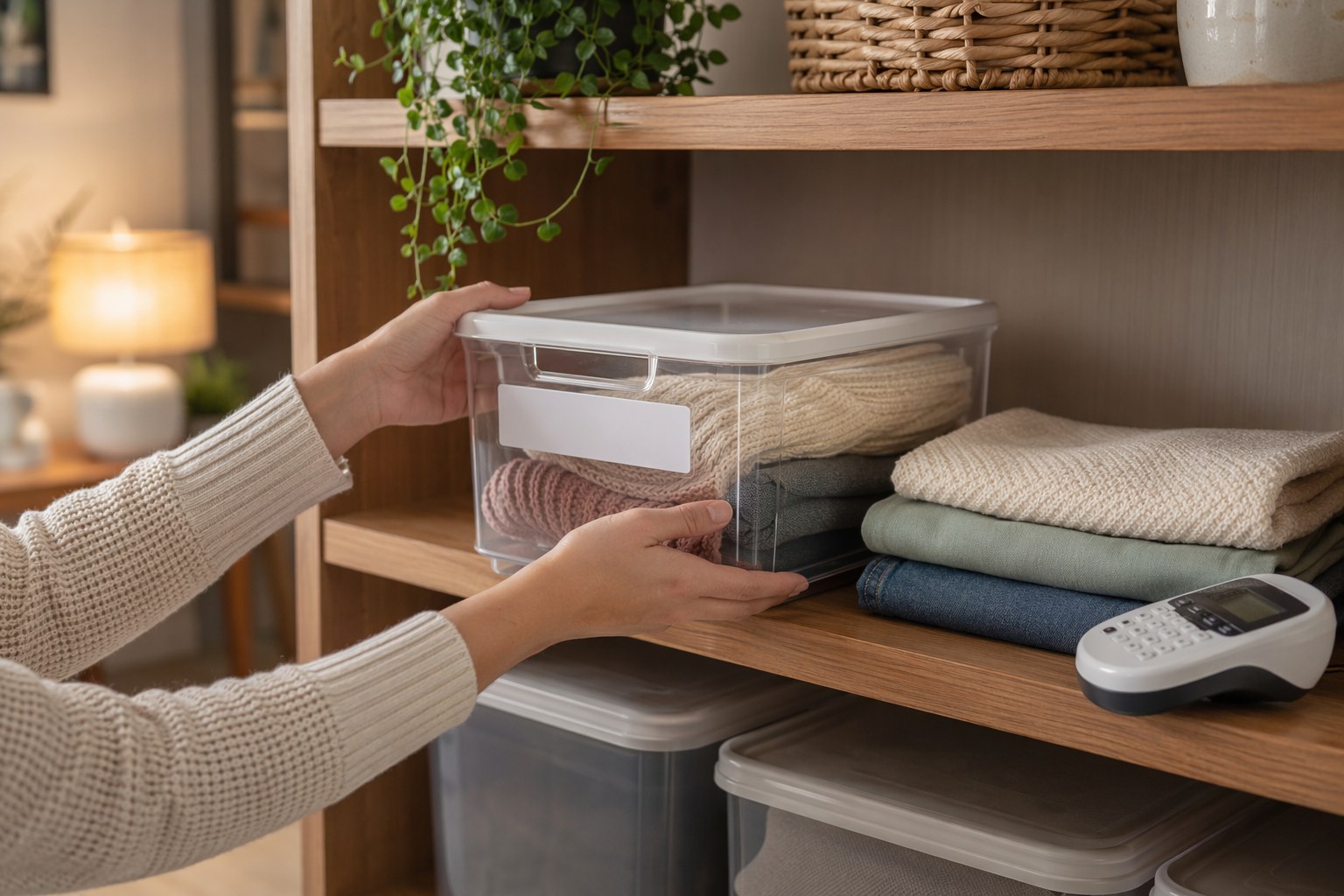
Frequently Asked Questions
How long does it take to organize an entire house?
For most homes, plan on six to eight focused weekends, organizing one to two rooms per weekend. Trying to do it all at once leads to burnout and half-finished rooms. Working in priority order — kitchen and closets first — builds momentum that carries you through the harder spaces like the garage. Spread across consecutive weekends, a complete, maintainable system is realistic in about two months.
What should I buy first when organizing my home?
Buy nothing first. The biggest money-waster in organizing is purchasing bins before you declutter and group. Once you have removed what you do not need and gathered like with like, then measure your shelves and buy containers sized to what remains. Start with versatile clear stackable bins, a few drawer dividers, and a label maker — these work in nearly every room and are rarely wasted.
How much does it cost to organize a whole house?
A full-house organization typically runs $450 to $1,200, with most of the variation coming from how much new shelving you add (garages and closets are the priciest) and how many containers you reuse versus buy. Per room, budget roughly $40-120, with the kitchen and garage on the higher end. Following the declutter-first system actually lowers your cost because you stop buying containers for things you should have let go.
How do I keep my house organized after I finish?
Three habits do the heavy lifting: a daily 10-minute reset to return drifted items to their homes, a one-in-one-out rule so new items do not re-clog your space, and a quarterly hour-long mini-purge of trouble zones. Clear labels on bins and shelves are what make these habits stick, because everyone in the household knows where things belong without asking.
Should I organize room by room or by category?
Room by room is the more practical approach for most people because each finished room is a visible, motivating win, and you avoid the chaos of having an entire category spread across the floor of every room at once. Category-based methods can work for highly motivated organizers tackling a single overwhelming category like clothing or paperwork, but the room-by-room master plan in this guide is the more sustainable path for a whole house.
Your Next Step
The hardest part of organizing an entire home is starting, and the secret is to not start with the whole home. Pick the one room that frustrates you most — for most people that is the kitchen or the primary closet — and run the four-step system this weekend: declutter, group, home, contain. Get that single space fully dialed in before you touch the next one.
Bookmark this master plan and treat each room link above as your detailed map when you get there. The system never changes; only the room does. One organized space has a way of making the next one feel possible, and eight weekends from now you will be living in a house that finally runs the way you do.
Get weekly home tips that actually work
Join thousands of homeowners getting practical cleaning hacks, DIY fixes, and money-saving tips every week. Free, and you can unsubscribe anytime.

Written by
Beth SullivanFounder & Editor-in-Chief
Beth Sullivan is the founder of Practical Home Guides. With over a decade of hands-on experience tackling every home challenge imaginable, she started this site to share the practical, no-nonsense solutions she wishes she had found years ago. When she's not testing cleaning hacks or organizing pantries, you'll find her in the garden or working on her next DIY project.
Recommended Products
Looking for specific product recommendations? Check out our tested picks.
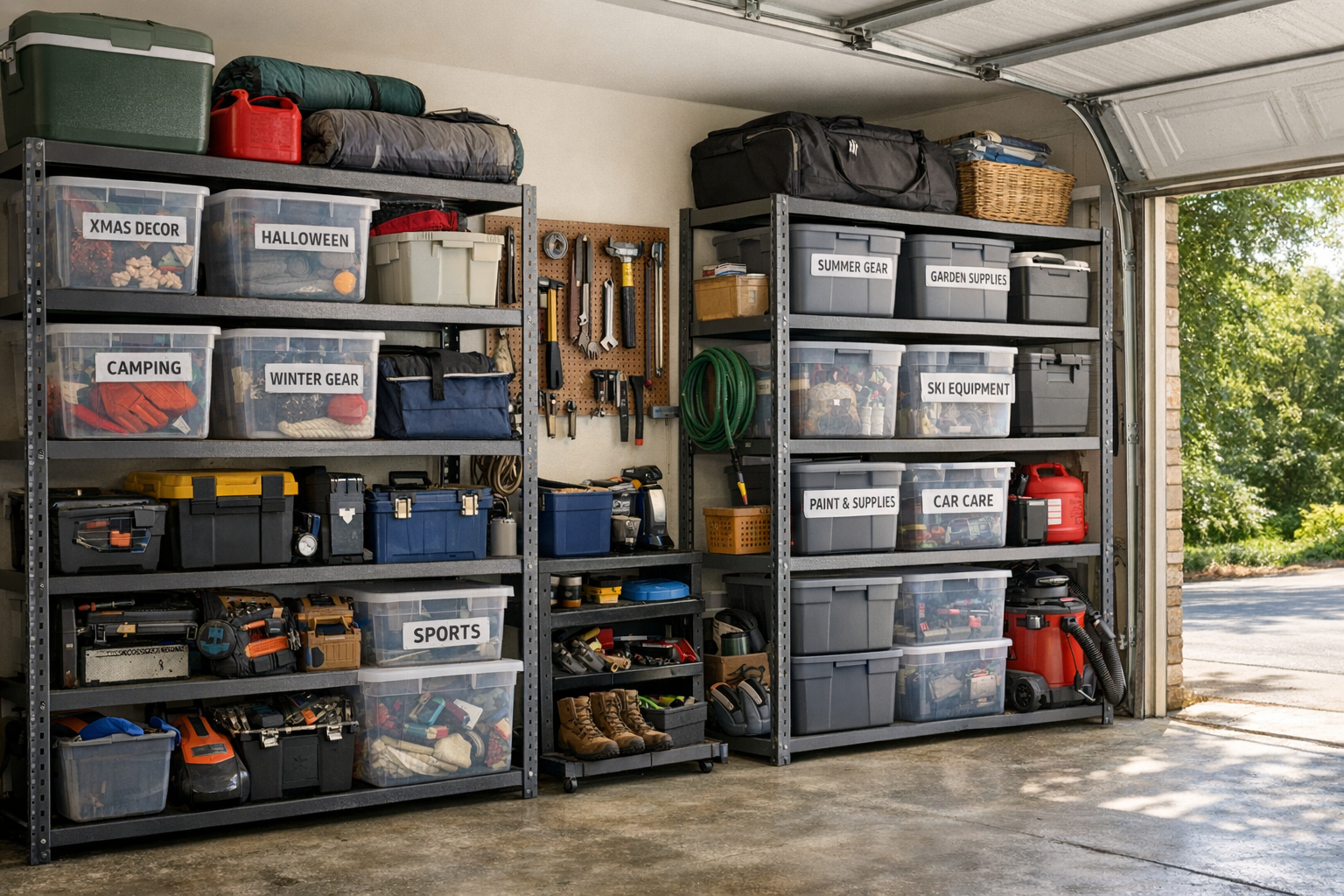
Best Garage Shelving Systems (2026 Tested)
Wire shelving, freestanding steel, wall-mounted, and overhead — we tested the garage shelving systems that hold real weight without sagging.
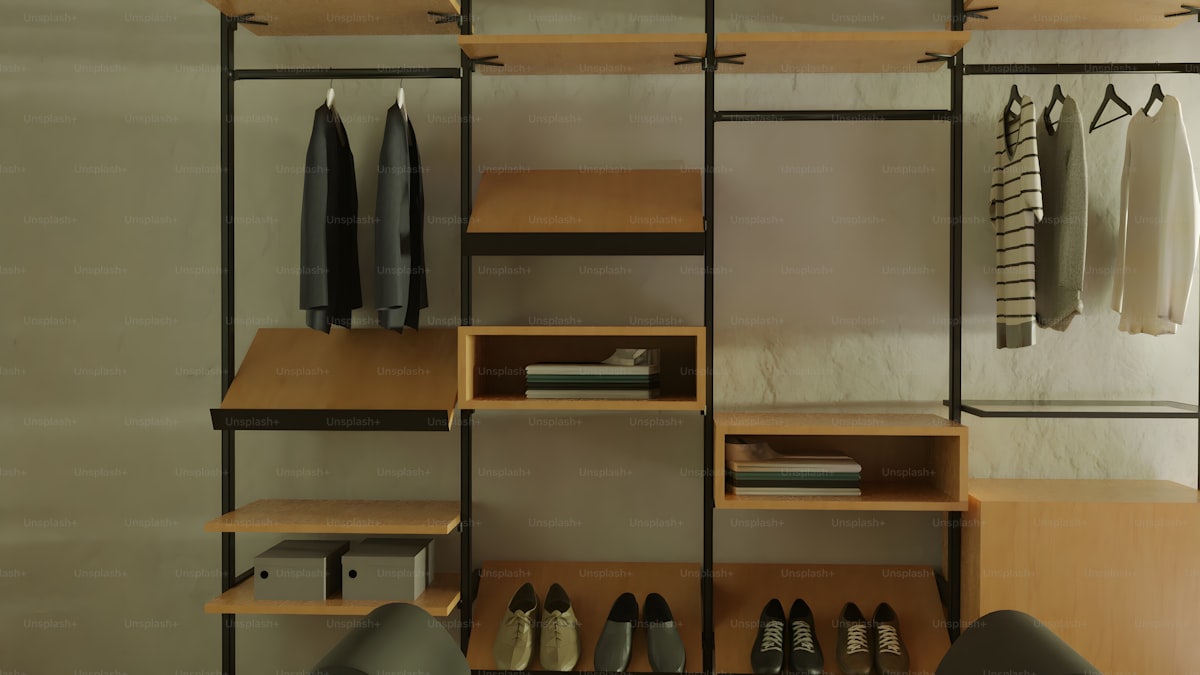
5 Best Closet Organizer Systems Under $100 (2026)
Transform your cluttered closet without spending a fortune. We compared the top closet organizer systems under $100 — here are the 5 best for different closet sizes and needs.
Best Storage Bins and Organizers for Every Room (2026)
The best storage bins, baskets, and organizers for closets, pantries, bathrooms, and garages. Practical picks at every price point to get your home organized.
Related Articles
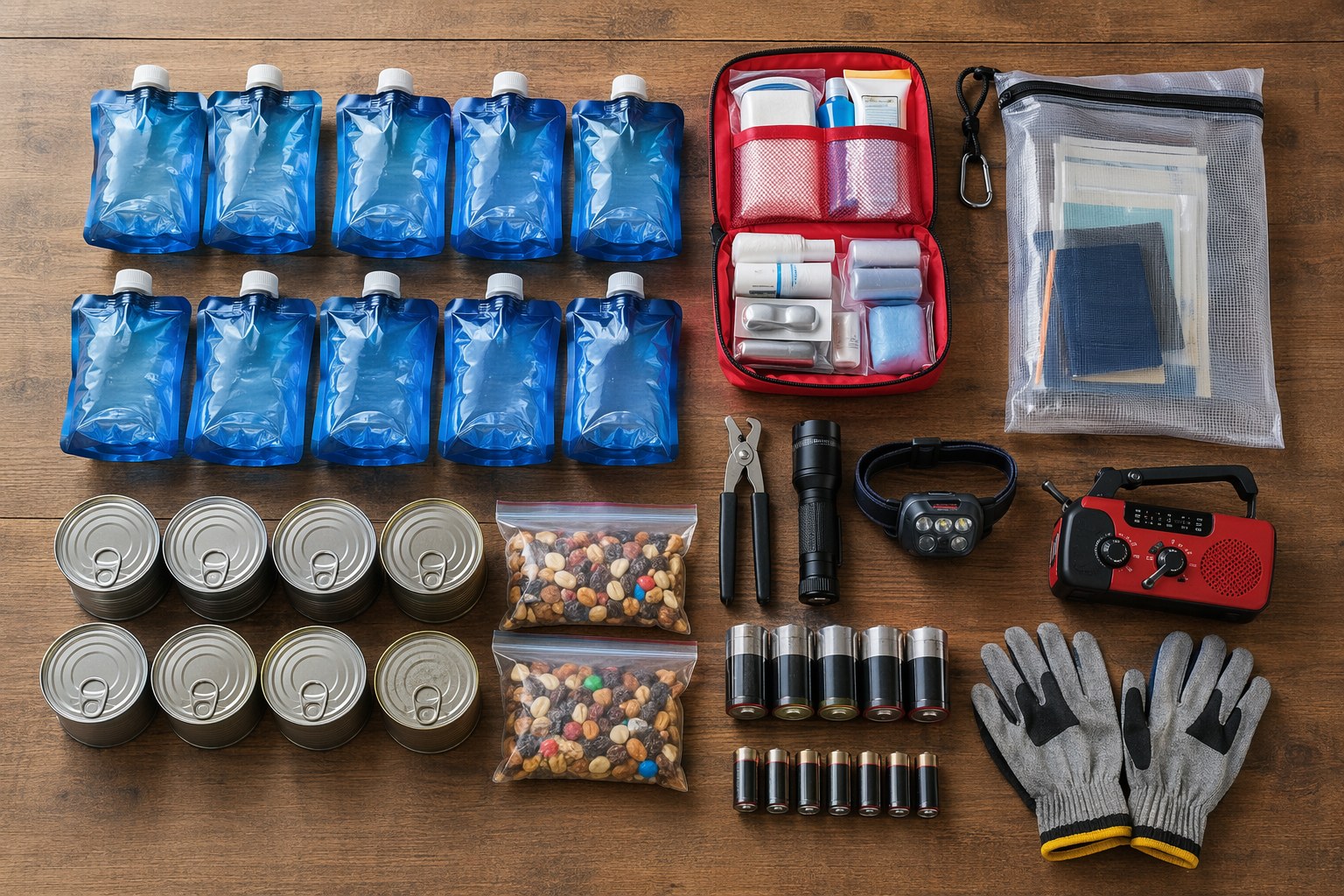
Hurricane Season Prep: June 1 Home Readiness Checklist for Coastal Areas
A June 1 hurricane readiness checklist for coastal homes: build your emergency kit, harden the property, and stockpile supplies before the season peaks in fall.

Graduation Gift: Tech Essentials for College Success
The 2026 graduation tech gift list that balances budget and function: laptop, noise-canceling earbuds, power bank, and the upgrades worth your money.

Summer Bedroom Comfort: Cooling Bedding & Sleep Setup Guide
A sleep coach's guide to staying cool in hot weather: breathable bedding, pillow placement, and temperature hacks for better rest from May through August.
Graduation Room Makeover: Transform Dorm Decor Without Breaking Bank
Transform a blank dorm into a personalized space for under $150. Renter-safe wall decor, warm lighting, layered textiles, and furniture arrangement tricks.