Graduation Room Makeover: Transform Dorm Decor Without Breaking Bank
This article may contain affiliate links. If you make a purchase through these links, we may earn a small commission at no extra cost to you. Learn more
Quick Answer
Graduation Room Makeover: Transform Dorm Decor Without Breaking Bank
You can turn a bare cinderblock dorm into a space that feels like yours for under $150 by spending on four things that change a room the most: warm string lighting, one removable wall treatment, layered soft textiles in a two-color palette, and a smart furniture arrangement. Pick a palette before you buy a single thing, and decorate with light and fabric before you spend on hard decor.
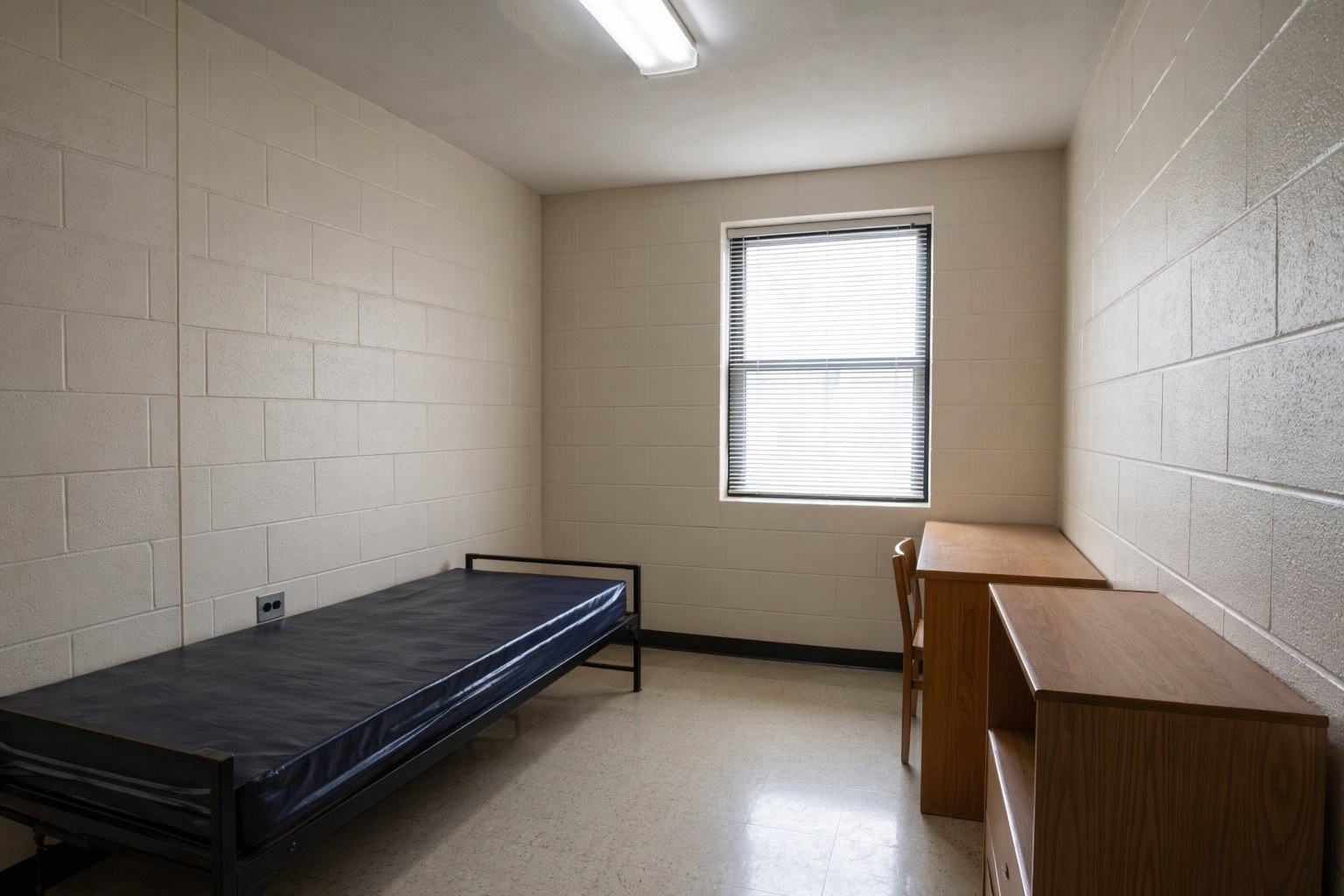
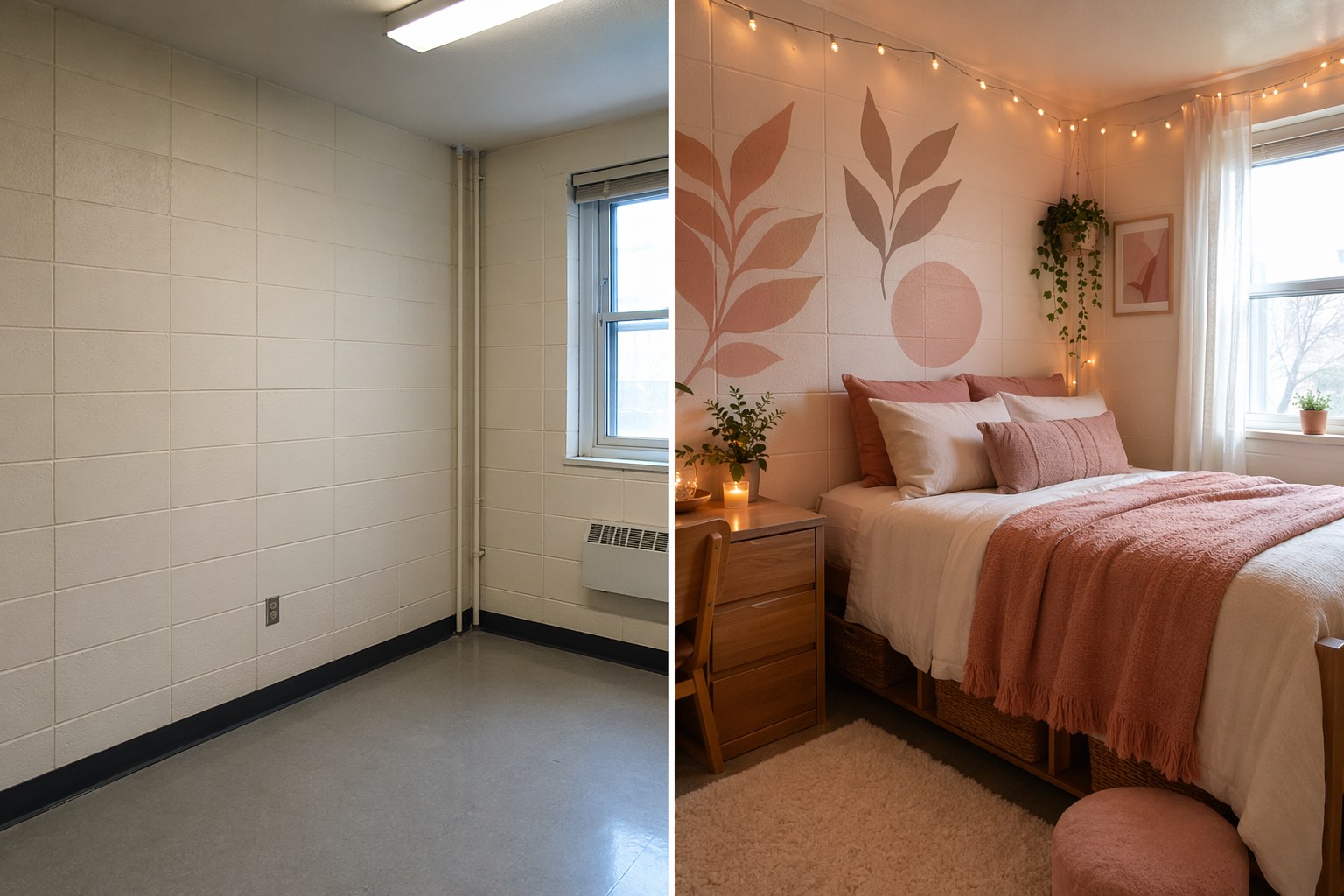
A bare dorm room is the most depressing 100 square feet a graduate will ever stand in. Cinderblock walls painted the color of a manila folder, a vinyl mattress, fluorescent tube lighting overhead, and tile that squeaks. I have walked four relatives into that exact room, and the reaction is always the same flat stare. The good news: the things that make a dorm feel like a home are cheap, and the expensive things barely move the needle. I have done the math, and you can transform a blank dorm into a space that actually feels personal for under $150 total.
The trick is knowing where decor money does real work. Lighting and textiles change a room dramatically and cost almost nothing. Hard decor and furniture pieces cost a fortune and change very little. Most students get that backwards, blow the whole budget on a $90 papasan chair, and still have ugly overhead light and a sad bare bed. Below is exactly how to spend it, in priority order.
Pick a Two-Color Palette Before You Buy Anything
This is the single decision that separates a room that looks intentional from a room that looks like a yard sale. Before you spend a dollar, choose two colors plus a neutral. That is the entire rule. Maybe sage green and cream with natural wood tones. Maybe dusty rose and warm white. Maybe navy and rust with oatmeal. Three colors, no more.
Why this matters so much in a dorm: the space is tiny, and tiny spaces punish visual noise. When every textile, poster, and bin is a different loud color, a 10-foot wall reads as cluttered and cramped. When everything lives in the same restrained palette, even a stuffed room feels calm and curated. This is the same discipline that makes a small closet look organized instead of overwhelming, just applied to color instead of containers.
Write your three colors in your phone and refuse to buy anything outside them. That coral throw is cute, but if your palette is blue and gray, it will fight everything. Color discipline is free and it is the highest-leverage move in the entire makeover.
Spend First on Light: Kill the Overhead Glare
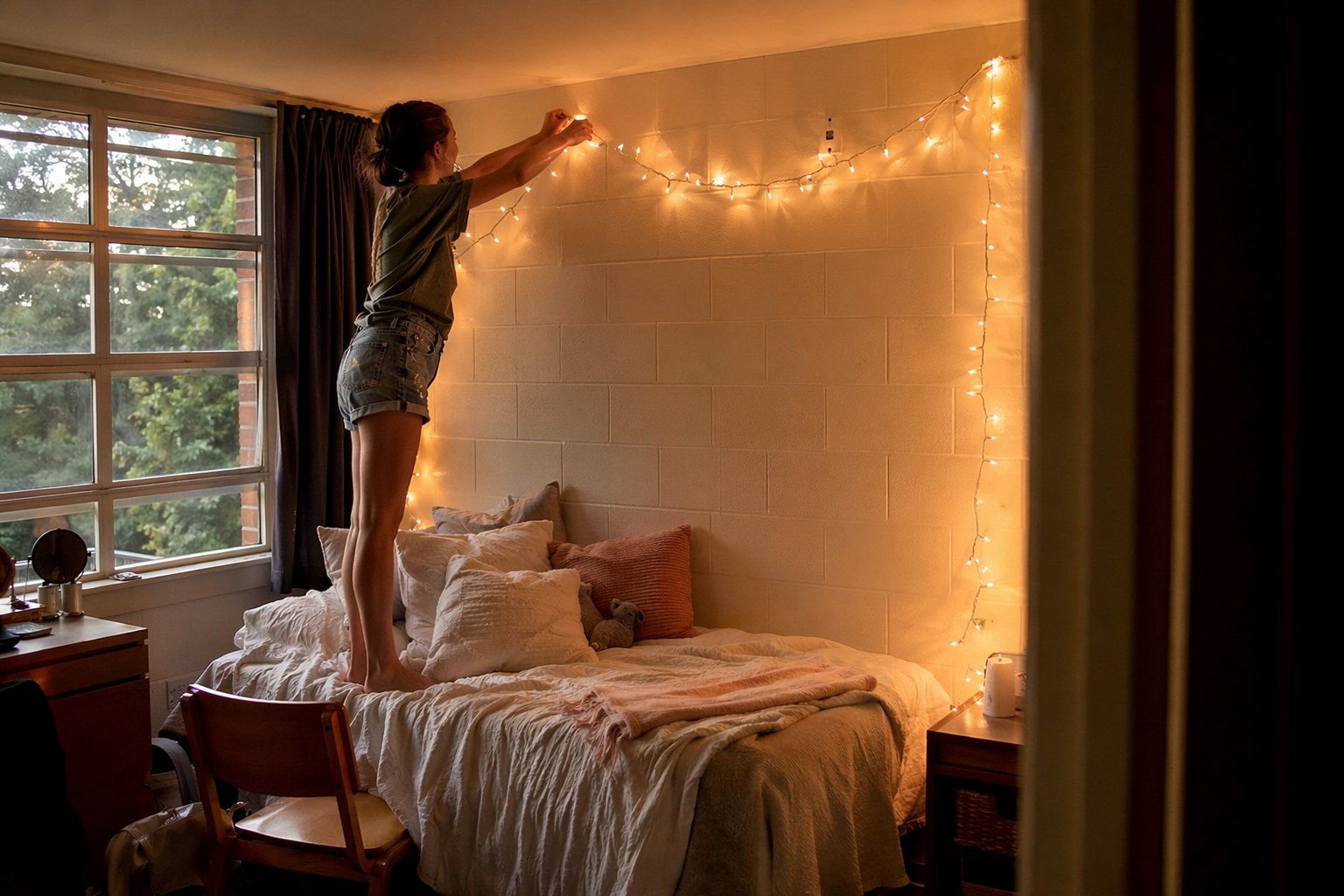
The fastest way to make a dorm feel human is to stop using the overhead fluorescent light. That single fixture is responsible for 80 percent of the institutional feeling. Cold, flat, shadowless light makes skin look gray and makes the room feel like a waiting area. You fix it with warm, layered light at eye level and below.
Start with warm-white string lights. Not the cool blue-white kind that look like a hardware store, but genuinely warm (around 2700K) lights you can drape along the wall behind the bed, around a window, or across a headboard. USB-rechargeable or USB-powered versions matter in a dorm because outlets are scarce and you do not want batteries to die mid-semester.
LED String Lights USB Rechargeable Warm
Warm 2700K string lights that run off a USB port or recharge, so they never eat your two precious wall outlets. The single biggest 'this feels like home' change for under $15.
Check Price on Amazon →Then add one small lamp. A clip-on or compact desk LED lamp with a warm bulb gives you a reading pool of light and a second layer. Two warm light sources at different heights, and you simply never flip on the overhead again. Total lighting spend: about $25, and it changes the room more than any single piece of furniture you could buy. Good lighting is also one of the cheapest upgrades for better sleep in a bedroom — warm light in the evening signals your brain to wind down, while that overhead fluorescent does the opposite.
One Removable Wall Treatment (Read Your Housing Contract First)
Bare cinderblock is the second-biggest offender. But here is the trap students fall into: they cover every wall in posters, tapestries, photos, and decals until the room looks like a teenager's bedroom from 2009. Restraint wins. Pick one wall treatment and do it well.
Removable, damage-free options are the only ones that matter, because most housing contracts charge real money for holes, residue, or paint damage. Check yours before you buy a thing. Three approaches that work:
- A removable wall decal set. A geometric or botanical peel-and-stick set on one wall, usually the wall behind the bed, creates a focal point without committing to a giant tapestry. It comes off clean at move-out.
- A single large tapestry or fabric panel hung with damage-free strips or a tension rod. Soft, warm, and it absorbs sound in a hard-surfaced room.
- A curated photo grid of 9 to 12 prints in your palette, arranged in a tight rectangle with removable strips. Edited and aligned reads as decor; scattered reads as clutter.
Removable Wall Decal Set Geometric Patterns
Peel-and-stick decals that add pattern and a focal wall with zero damage and no deposit risk. Choose a set that stays inside your two-color palette.
Check Price on Amazon →Whatever you pick, do one accent wall, not four. A single intentional wall makes the room feel designed. Four busy walls make a 10-by-12 box feel like the inside of a locker.
Layer the Textiles: Where Cozy Actually Comes From
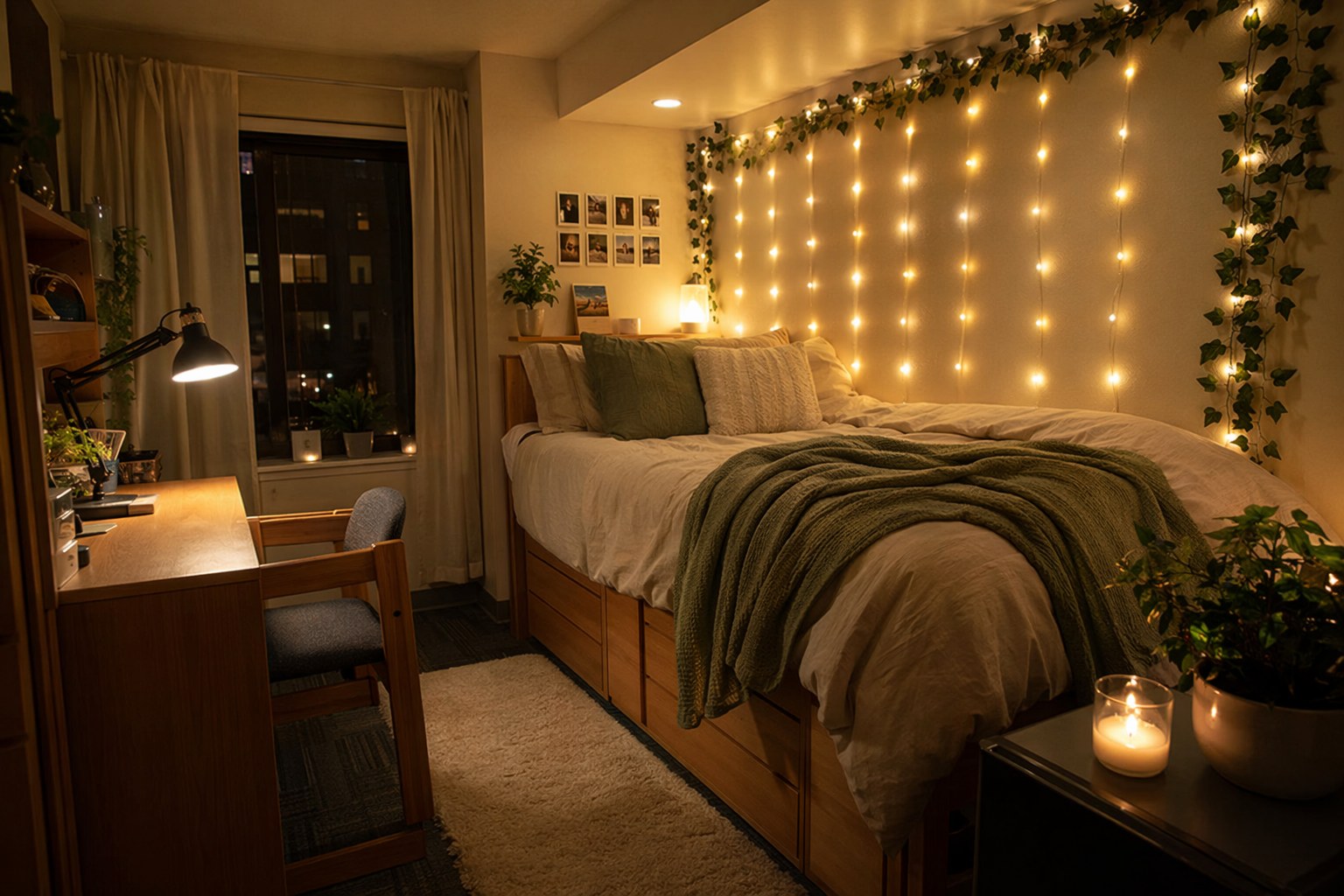
If lighting is the biggest visual change, textiles are the biggest tactile one. A dorm is wall-to-wall hard surfaces — vinyl mattress, laminate desk, cinderblock, tile — and every one of them is cold and loud. Soft goods fix both. This is also where your palette pays off, because textiles are the easiest place to repeat your two colors.
The bed is your largest surface, so it does the most work. You need decent sheets, but the visible layer is what reads from across the room: a throw blanket folded at the foot of the bed and two pillows in your accent color. A plush microfiber throw is cheap, washable, and instantly makes the bed look intentional instead of like a cot.
Throw Blanket Cozy Plush Microfiber
A washable plush throw that anchors the bed and repeats your accent color. Cheap, durable through dorm laundry, and the fastest way to make a vinyl mattress look like a real bed.
Check Price on Amazon →Then put something soft underfoot. Dorm tile or thin commercial carpet is cold and joyless, and standard rooms do not allow full wall-to-wall rugs. A small runner or a 3x5 area rug beside the bed gives you a warm landing spot every morning and visually defines the sleep zone. Get a non-skid one — dorm floors are slick, and a sliding rug is a genuine hazard.
Area Rug Runner Non-Skid 3x5
A non-skid 3x5 runner that warms the floor by the bed and defines a zone without violating wall-to-wall rules. Pick a low pile that survives foot traffic and vacuums clean.
Check Price on Amazon →A blackout curtain or window panel hung on a tension rod adds a third soft layer, blocks the parking-lot light at night, and softens the one window. Between a throw, two pillows, a runner, and a panel, you have introduced warmth, color, and sound absorption for around $50.
Arrange the Furniture Like You Mean It (Free)
This costs nothing and most people never bother. Dorm furniture is heavy and ugly, but it is also movable, and how you place it decides whether the room feels open or like a storage unit. A few arrangement rules I use every move-in:
- Float the bed off the long wall if clearance allows, or push it fully into a corner to open the center. Centering the bed on a wall and balancing it with the desk on the opposite side makes a small room feel composed.
- Create one clear sightline from the door. When you open the door and see a tidy, intentional vignette — the made bed, the lit string lights, the accent wall — the whole room reads as nicer than it is.
- Use the desk as a divider in a shared room to carve out a little personal zone. A desk turned perpendicular to the wall creates a subtle boundary between your half and your roommate's.
- Get furniture off the floor. Raise the bed a few notches and the room instantly feels larger because you can see more floor underneath. Same trick that makes the storage side of the dorm work — vertical thinking opens up a tiny footprint.
Then keep surfaces clear. A desk buried under clutter undoes every other decor choice. One small desk organizer caddy corrals the pens, chargers, and sticky notes so the desktop stays as the clean, lit surface that makes the room feel adult.
Desk Organizer Caddy Office Storage
A compact caddy that keeps the desk surface clear so your decor reads instead of disappearing under clutter. The same clear-surface principle that makes any workspace feel calm.
Check Price on Amazon →A clear, well-lit desk does for a dorm what it does for any productive home office: it signals the brain that this is a real place to live and work, not a temporary holding cell.
The Under-$150 Budget, Itemized
Here is a realistic, complete makeover budget. Numbers are typical street prices, not best-case.
| Item | Estimated Cost |
|---|---|
| Warm USB string lights | $14 |
| Clip-on warm desk lamp | $13 |
| Removable wall decal set | $18 |
| Plush microfiber throw | $16 |
| Two accent pillow covers + inserts | $22 |
| Non-skid 3x5 runner | $24 |
| Blackout window panel + tension rod | $18 |
| Desk organizer caddy | $11 |
| Damage-free hooks and strips | $8 |
| Total | $144 |
You can shave more by repurposing what you own. A throw from home, photos you already have printed, and a lamp from your bedroom all count. The furniture arrangement is free, the palette discipline is free, and turning off the overhead light is free. Those three free moves do more than half the work.
Frequently Asked Questions
What changes a dorm room the most for the least money?
Lighting, hands down. Swapping the overhead fluorescent for warm string lights and one small lamp costs about $25 and transforms how the entire room feels. Layered textiles in a consistent palette come second. Hard decor and furniture pieces cost the most and change the least.
How do I decorate a dorm without losing my deposit?
Use only damage-free, removable products: USB string lights, peel-and-stick decals rated for clean removal, tension rods instead of drilled hardware, and Command-style strips for anything on the wall. Read your specific housing contract first, because some schools prohibit even adhesive strips on painted surfaces.
How do I make a shared dorm room feel like mine?
Define your half with furniture placement and a consistent palette. Turn your desk perpendicular to create a soft divider, keep your accent color on your bedding and wall, and add one personal focal point like a photo grid. You do not need to control the whole room, just make your zone clearly and intentionally yours.
Should I buy decor before or after move-in?
Buy your palette plan before, but hold off on the big textile and lighting purchases until you have measured the actual room and seen the light. Order the warm lights and bedding early since you will need them day one, then add the rug and wall treatment once you know the dimensions and outlet placement.
Start With Light and Color
You do not need a big budget or a design degree to make a dorm feel like a home. Pick your two colors, kill the overhead light, layer in warm lighting and soft textiles, add one intentional wall, and arrange the furniture like it matters. Spend where decor does real work and skip the expensive pieces that do not. Do that, and for under $150 your graduate walks into a room that feels like theirs from the first night instead of a cinderblock box they are counting down the days to escape.
Get weekly home tips that actually work
Join thousands of homeowners getting practical cleaning hacks, DIY fixes, and money-saving tips every week. Free, and you can unsubscribe anytime.

Written by
Beth SullivanFounder & Editor-in-Chief
Beth Sullivan is the founder of Practical Home Guides. With over a decade of hands-on experience tackling every home challenge imaginable, she started this site to share the practical, no-nonsense solutions she wishes she had found years ago. When she's not testing cleaning hacks or organizing pantries, you'll find her in the garden or working on her next DIY project.
Recommended Products
Looking for specific product recommendations? Check out our tested picks.

Best Garage Shelving Systems (2026 Tested)
Wire shelving, freestanding steel, wall-mounted, and overhead — we tested the garage shelving systems that hold real weight without sagging.
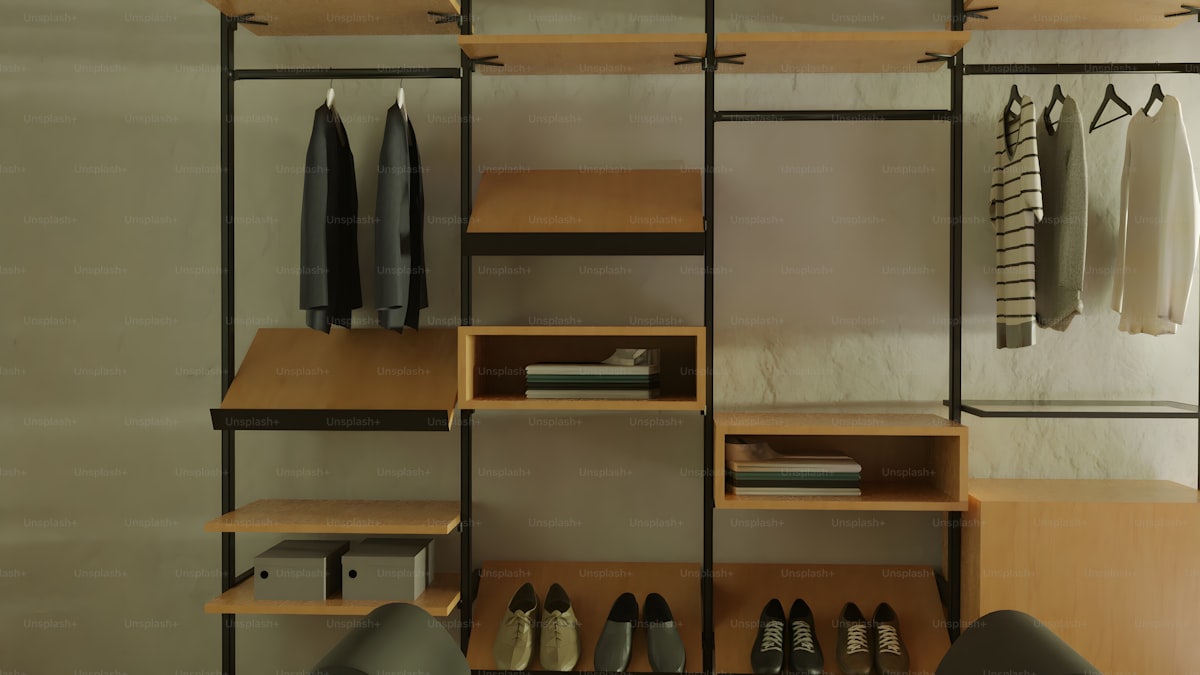
5 Best Closet Organizer Systems Under $100 (2026)
Transform your cluttered closet without spending a fortune. We compared the top closet organizer systems under $100 — here are the 5 best for different closet sizes and needs.
Best Storage Bins and Organizers for Every Room (2026)
The best storage bins, baskets, and organizers for closets, pantries, bathrooms, and garages. Practical picks at every price point to get your home organized.
Related Articles
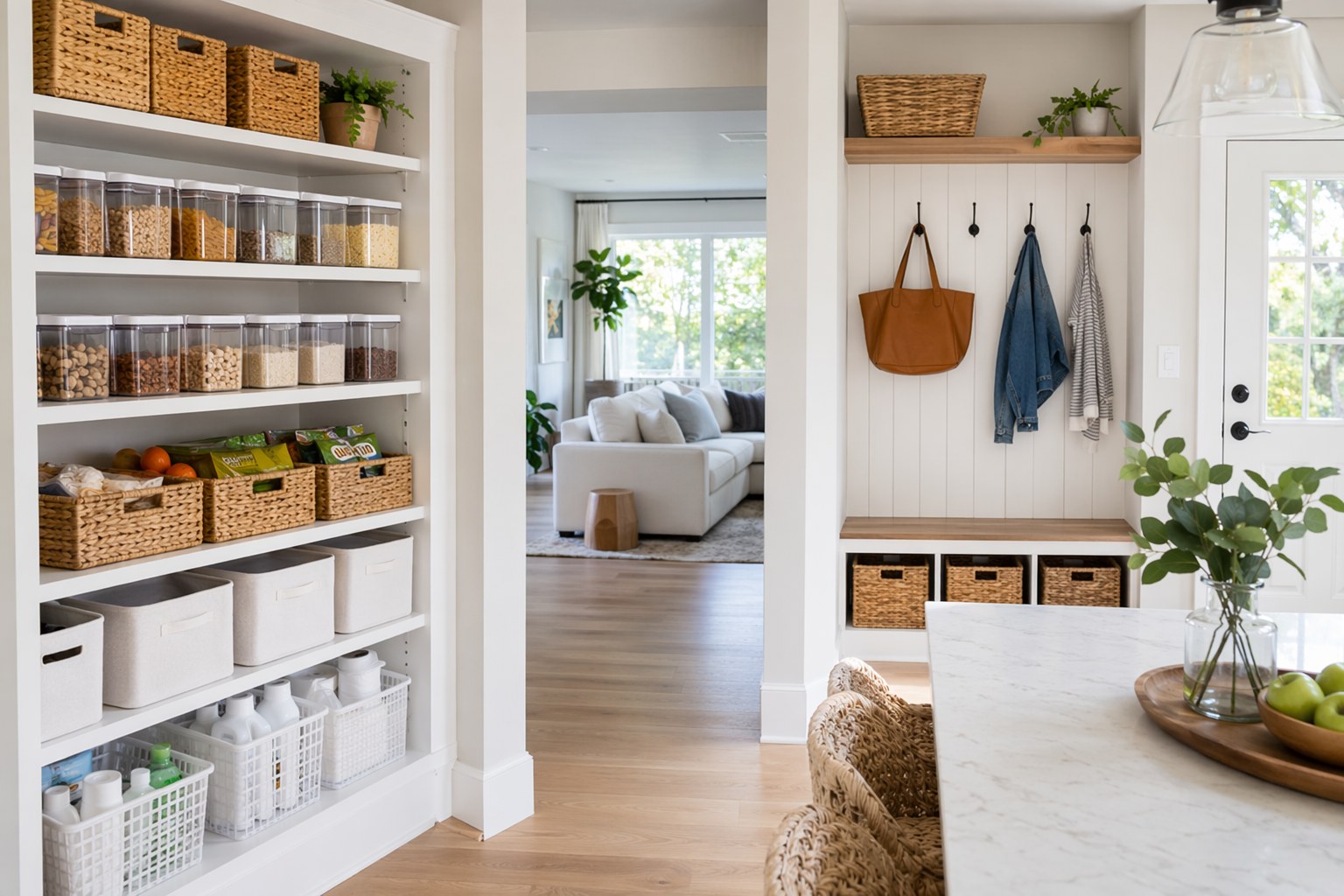
The Complete Home Organization System: A Room-by-Room Master Plan
A room-by-room home organization master plan with a proven system, product picks, and a realistic schedule to organize your entire house without burning out.

Hurricane Season Prep: June 1 Home Readiness Checklist for Coastal Areas
A June 1 hurricane readiness checklist for coastal homes: build your emergency kit, harden the property, and stockpile supplies before the season peaks in fall.

Graduation Gift: Tech Essentials for College Success
The 2026 graduation tech gift list that balances budget and function: laptop, noise-canceling earbuds, power bank, and the upgrades worth your money.

Summer Bedroom Comfort: Cooling Bedding & Sleep Setup Guide
A sleep coach's guide to staying cool in hot weather: breathable bedding, pillow placement, and temperature hacks for better rest from May through August.