Herb Garden on Your Balcony: Fresh Basil to Cilantro in 4 Weeks
This article may contain affiliate links. If you make a purchase through these links, we may earn a small commission at no extra cost to you. Learn more
Quick Answer
Herb Garden on Your Balcony: Fresh Basil to Cilantro in 4 Weeks
You can harvest fast-growing herbs like basil, cilantro, and dill from balcony containers in about 4 weeks if you start with healthy transplants or fast germinating seeds, give them 6 or more hours of sun, use a light potting mix, and water whenever the top inch dries out. Cilantro and dill are ready first, basil follows close behind, and snipping leaves often actually makes the plants grow back fuller.
Herb Garden on Your Balcony: Fresh Basil to Cilantro in 4 Weeks
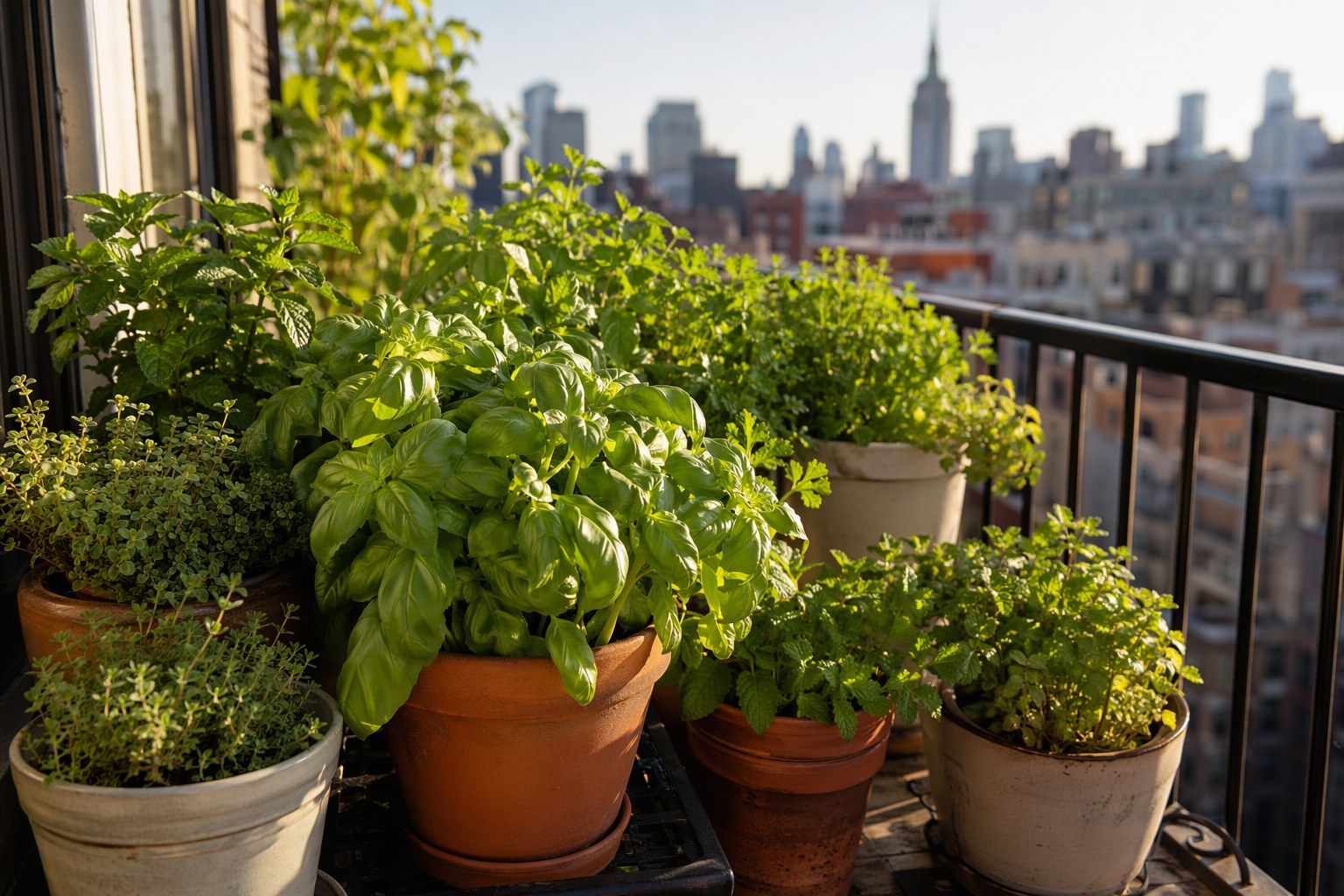
I have grown herbs on everything from a sprawling Texas backyard to a third-floor balcony that got direct sun for exactly five hours a day. And here is the thing nobody tells you when you are standing in the garden center holding a tiny basil plant: a balcony herb garden is actually easier than an in-ground one. The containers warm up faster, you can chase the sun, and you are never more than a few steps from your kitchen when dinner needs a handful of fresh leaves.
Four weeks is a realistic, honest timeline for your first harvest from the right herbs. Not a full bush, but enough to top a pizza, blend a chimichurri, or finish a pot of pho. The trick is choosing the fast growers, setting them up correctly on day one, and harvesting in a way that pushes the plant to grow back even fuller.
If you have already had luck growing tomatoes in pots, you have all the skills you need. Herbs are more forgiving and far quicker to reward you.
Which Herbs Actually Hit Harvest in 4 Weeks?
Not all herbs grow at the same pace. Some, like rosemary and oregano, are slow and woody and take a full season to really fill out. Others race to the finish line. If your goal is fresh leaves on your plate in a month, start with the speedsters.
Here is my real-world timeline based on growing these from seed and transplant on balconies and patios over the years.
| Herb | First Usable Harvest (from seed) | First Harvest (from transplant) | Difficulty |
|---|---|---|---|
| Cilantro | 3 to 4 weeks | 1 week | Easy |
| Dill | 3 to 4 weeks | 1 week | Easy |
| Basil | 4 to 6 weeks | 1 to 2 weeks | Easy |
| Arugula (herb-style greens) | 3 weeks | n/a | Very easy |
| Chives | 4 to 6 weeks | 1 week | Very easy |
| Parsley | 6 to 8 weeks | 1 to 2 weeks | Moderate |
| Mint | 4 to 5 weeks | 1 week | Very easy (contain it!) |
The honest shortcut: if you truly want a harvest in four weeks, buy a few transplants for the slower herbs (basil, parsley) and start the fast germinators (cilantro, dill, arugula) from seed. You get instant gratification from the transplants and the satisfaction of growing from scratch with the rest.
A word on mint: it is wonderful and nearly impossible to kill, but it is a thug. Its roots will choke out anything sharing a pot. Always grow mint in its own container.
The Sunlight Hack That Makes or Breaks a Balcony Garden
Sunlight is the single biggest variable on a balcony, and it is the one most people get wrong. Most culinary herbs want 6 or more hours of direct sun per day. Basil in particular sulks in shade and turns leggy and pale.
Before you buy a single plant, spend one sunny day tracking your light. Take a photo of your balcony every hour from morning to evening and note when direct sun hits the railing. Balconies are tricky because the building, the railing, and the unit above all throw shade you do not notice until you are paying attention.
Here is the hack that changed everything for my shadier balconies: put your pots on a rolling plant caddy or a small wheeled cart. Sunlight on a balcony moves in a narrow band, and a container that catches morning sun may sit in shade by 2 p.m. Being able to roll the whole setup three feet to chase the light can mean the difference between thriving basil and a stretched-out disappointment.
If your best spot honestly gets only 4 to 5 hours, you have two good options. Lean into the shade-tolerant herbs: mint, parsley, chives, and cilantro all tolerate partial shade better than basil. Or supplement with a clip-on LED grow light for a few hours in the evening.
LED Grow Light Clip-On Full Spectrum
A clip-on full-spectrum LED bridges the gap on shady balconies, giving leafy herbs the extra hours of light they need to stay compact and productive.
Check Price on Amazon →Pots, Soil, and Setup: Get Day One Right
The fastest growth comes from getting the foundation right before you plant a single seed. Skimp here and you spend the next month troubleshooting.
Pot Size
Bigger pots are more forgiving because they hold more moisture and do not dry out as fast in summer heat. My minimums:
- Basil, parsley, dill: at least 8 to 10 inches wide and deep
- Cilantro, arugula, chives: 6 to 8 inches works fine
- Mint: its own 8-inch pot, no exceptions
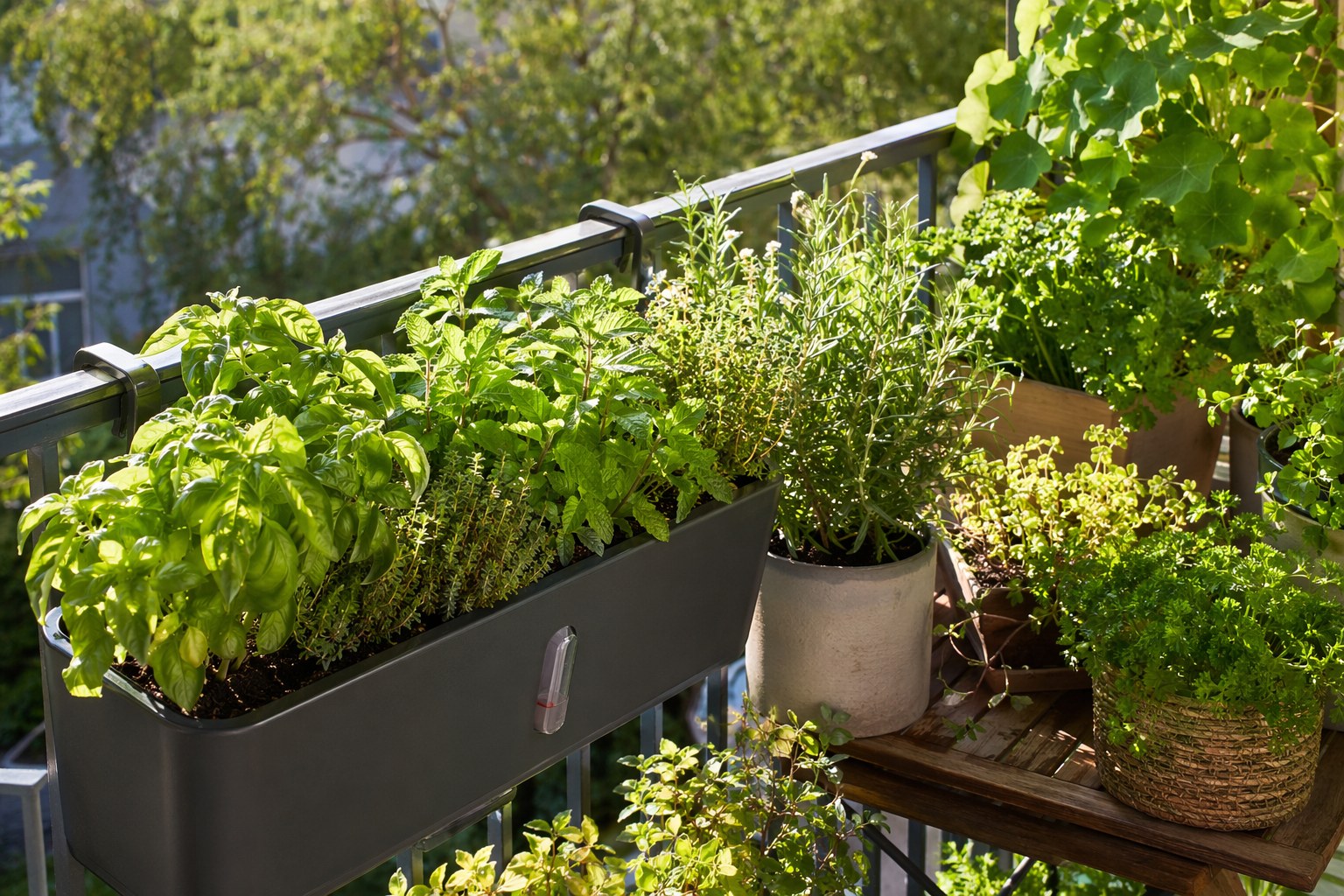
A long window box along the railing is a fantastic use of balcony space and can hold three or four herbs comfortably. Whatever you choose, it must have drainage holes. Herbs hate wet feet, and root rot from a pot with no drainage is the number one killer of container herbs I see.
Soil
Never use garden dirt in containers. It compacts into a brick and drains poorly. Use a light, fluffy potting mix made for containers. I like to blend in about 20 percent extra perlite for drainage and a handful of compost for slow-release nutrition. If you are composting at home or buying it bagged, that organic matter feeds soil microbes and keeps growth steady.
Organic Potting Mix for Containers
A peat or coir based potting mix stays light and well draining, which is exactly what fast-growing herbs need to push out roots quickly.
Check Price on Amazon →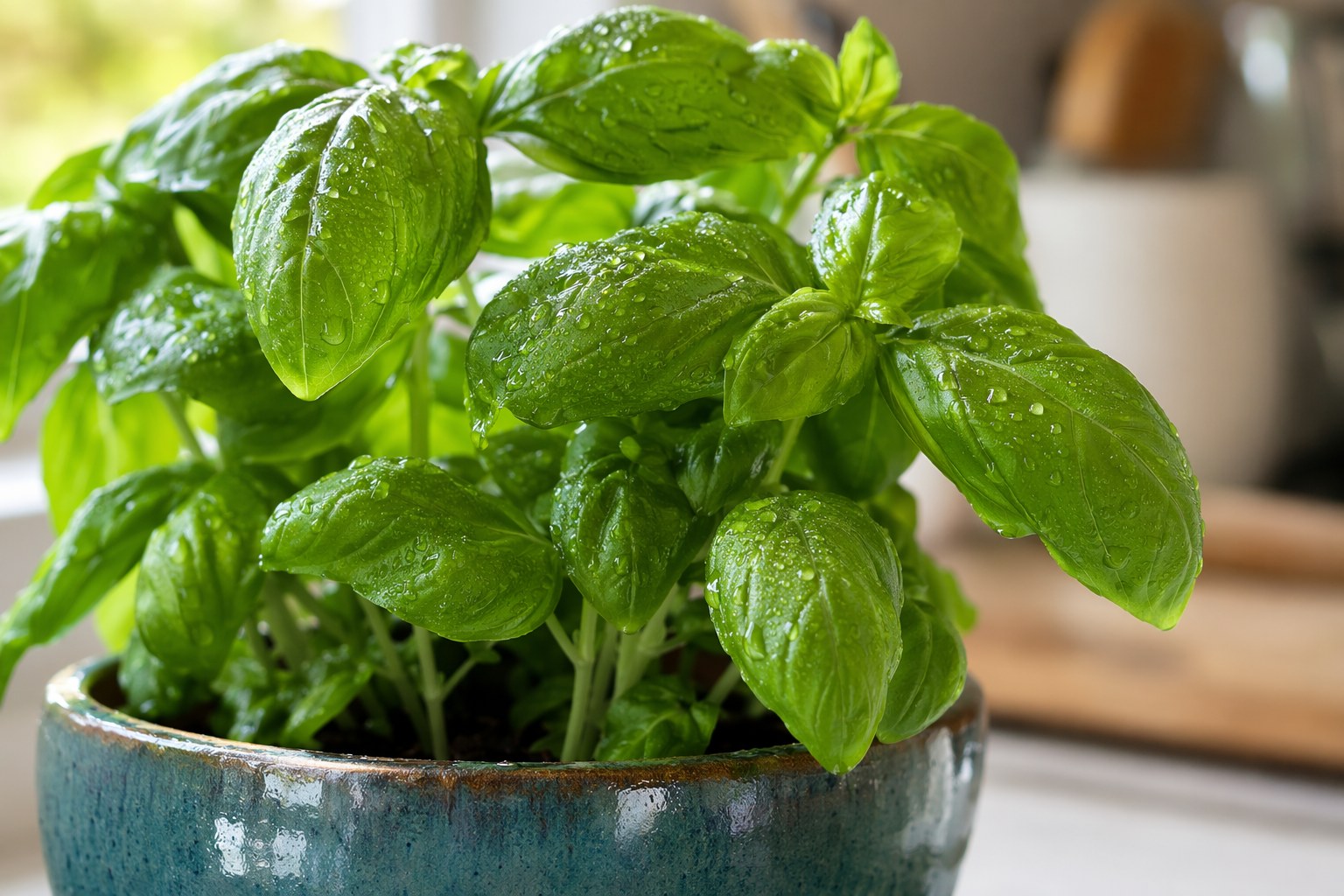
Planting
For transplants, dig a hole the size of the root ball, set the plant at the same depth it was in the nursery pot, firm the soil, and water deeply. For seeds, scatter them thinly and cover with a quarter inch of mix. Cilantro and dill germinate in 7 to 10 days and resent being transplanted, so always direct-sow them right where they will grow.
If you want a more detailed walk-through of the seed-starting side, my guide to starting a container herb garden on a balcony breaks down germination step by step.
The Watering Schedule for Fast, Steady Growth
Watering is where balcony gardeners get into trouble, usually by doing too much or too little with no rhythm. Herbs grow fastest with consistent moisture, never soggy, never bone dry.
The finger test never fails: push a finger one inch into the soil. If it is dry at that depth, water until liquid runs out the drainage holes. If it is still damp, wait.
In practical terms on a sunny summer balcony, that usually means:
- Spring and mild weather: every 2 to 3 days
- Hot summer (90°F and up): daily, sometimes twice for small pots
- Basil specifically: it wilts dramatically when thirsty but bounces back fast once watered, so let it be your visual alarm clock
Water in the morning so leaves dry before evening, which prevents fungal problems. Water at the soil line, not over the leaves. And a small pot in afternoon sun can dry out shockingly fast, so the smaller your containers, the more vigilant you need to be.
Going away for a weekend? Group your pots together in shade and give them a deep soak. For longer trips, my guide to keeping plants alive while on vacation covers self-watering setups and wicking systems that work beautifully for containers.
Feeding for Speed
Container soil runs out of nutrients fast because there is so little of it and you are flushing it every time you water. To keep herbs growing quickly, feed them.
I use a diluted liquid fertilizer at half the recommended strength every two weeks once plants are established. Fish emulsion and seaweed extract are nearly impossible to over-apply and produce lush, fast leaf growth. A balanced general-purpose fertilizer works too.
One caution: do not overdo nitrogen on culinary herbs. A little pushes fast leafy growth, which is what we want, but too much actually dilutes the essential oils that give basil and cilantro their punch. The fastest-growing herb is not always the best-tasting one, so aim for steady, not explosive.
Harvesting: The Counterintuitive Trick to More Herbs
Here is the part new gardeners get backward. They wait for the plant to get big before harvesting. In reality, harvesting often makes the plant grow faster and fuller. This is especially true for basil.
The rule for leafy herbs like basil and mint: pinch or snip just above a pair of leaves where you can see two tiny new shoots forming at the joint. The plant responds by sending out two new stems from that point. Do this regularly and one basil seedling becomes a dense, branching bush in a matter of weeks. Never let basil flower if you want leaves; pinch off flower buds the moment they appear, because flowering signals the plant to stop making tender foliage.
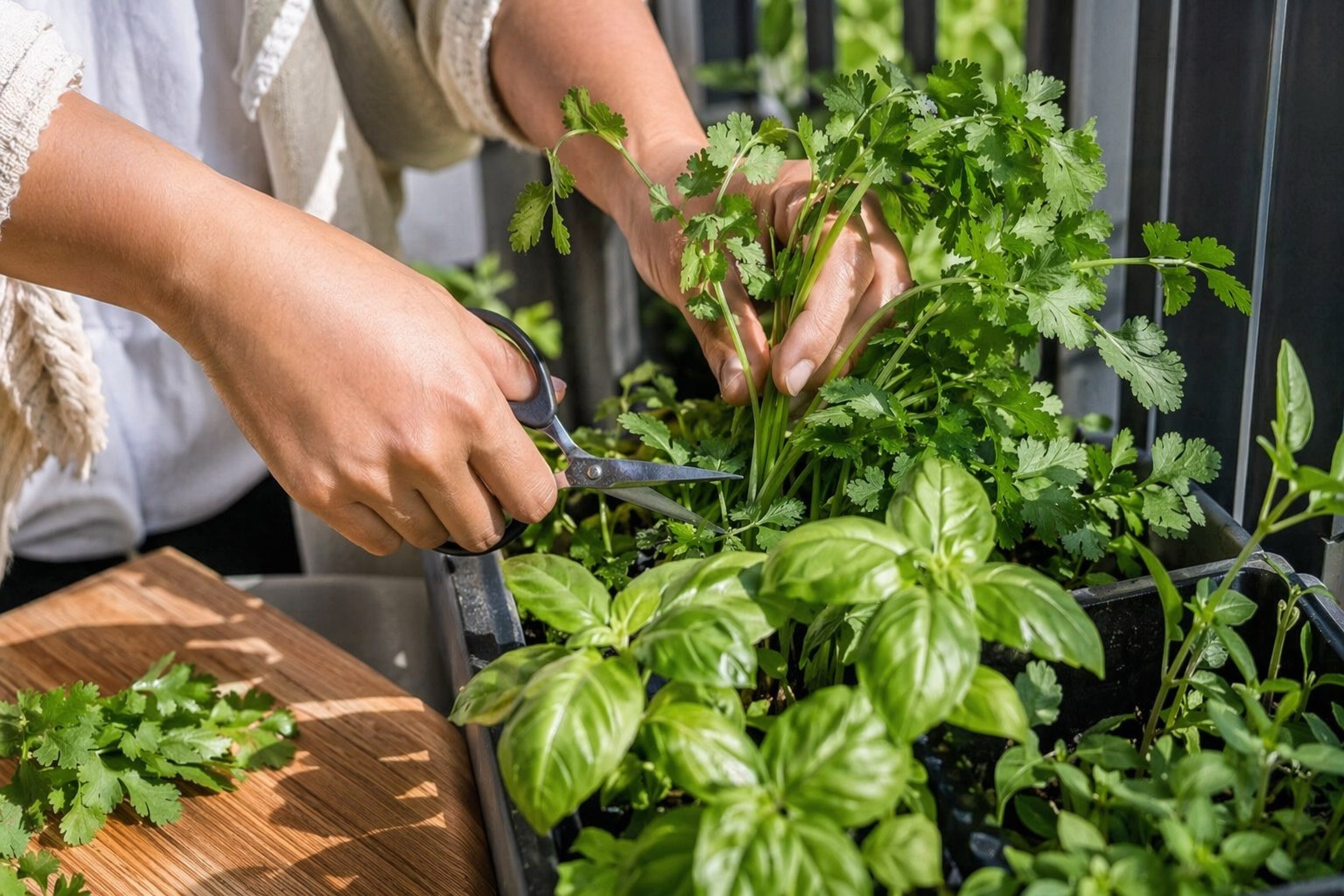
For cilantro and dill, snip the outer leaves first and let the center keep growing. Cilantro bolts (goes to seed) quickly in heat, so harvest aggressively and consider a fresh sowing every 3 weeks for a continuous supply. For chives, cut a handful to within an inch of the soil and they regrow within days.
Never take more than about a third of a plant at once. Leave enough foliage for it to keep photosynthesizing and it will reward you again within the week. Once you are harvesting more than you can use fresh, my guide to storing fresh herbs covers how to keep them crisp for weeks or freeze them in oil for later. And if this kicks off a bigger windowsill habit, here is how I run my kitchen windowsill herb garden year-round.
Garden Snips Pruning Scissors
A sharp pair of small pruning snips makes clean cuts that heal fast, encouraging quicker regrowth than tearing leaves off by hand.
Check Price on Amazon →Common Balcony Herb Problems (and Quick Fixes)
Leggy, stretched basil: Not enough light. Move to a sunnier spot or add a grow light, and pinch the tops to force bushier growth.
Cilantro shoots up and goes to seed: That is bolting, triggered by heat and long days. Harvest fast, plant a heat-tolerant variety like Calypso, and sow fresh seed every few weeks.
Yellowing lower leaves: Usually overwatering or nutrient depletion. Check drainage first, then feed.
Tiny white flies or sticky leaves: Likely whiteflies or aphids. A strong spray of water or a little insecticidal soap knocks them back. Outdoor balconies usually have enough natural predators to keep these in check.
Wilting despite wet soil: Root rot from poor drainage. Repot into fresh mix and make sure the pot drains freely.
Frequently Asked Questions
Can I really harvest herbs in just 4 weeks?
Yes, with the right herbs and a smart start. Cilantro, dill, and arugula reach a usable size from seed in 3 to 4 weeks. Basil and parsley take a little longer from seed but are ready to harvest within 1 to 2 weeks if you start from nursery transplants. The four-week timeline assumes adequate sun (6 or more hours), a light potting mix, and consistent watering. You will not have a giant bush in a month, but you will have plenty of leaves to cook with.
How many herb plants can I fit on a small balcony?
More than you would expect. A single 24-inch railing window box holds three to four herbs comfortably. Add two or three individual 8-inch pots and you can grow six to eight different herbs in just a few square feet. Vertical space helps too: a tiered plant stand or a hanging rail planter doubles your growing area without taking up floor space. The real limit is usually sunlight, not square footage.
Do I need to fertilize herbs grown in containers?
Yes. Container soil holds limited nutrients and loses them quickly through frequent watering. Feed established herbs with a diluted liquid fertilizer (half strength) every two weeks during the growing season. Go easy on nitrogen, though, because too much produces fast but flavorless growth. Steady, moderate feeding gives you the best balance of quick growth and strong flavor.
Which herbs should I never plant together in the same pot?
Keep mint in its own container always; its aggressive roots smother neighbors. Avoid combining herbs with very different water needs, such as moisture-loving basil with drought-tolerant rosemary or thyme. Good combinations that share similar needs include basil with parsley, or cilantro with dill. When in doubt, give each herb its own pot for the fastest, healthiest growth.
My balcony only gets 4 hours of sun. What can I grow?
Plenty. Mint, parsley, chives, cilantro, and chervil all tolerate partial shade better than sun-loving basil. Growth will be a bit slower, so lean on transplants for a head start. You can also add a clip-on LED grow light for a few hours each evening to make up the difference, which keeps leafy herbs compact instead of stretching toward the light.
Start This Weekend
There is no reason to wait. A trip to the garden center for two or three transplants, a bag of potting mix, and a couple of seed packets is all it takes, and the whole setup costs less than a few takeout dinners. Get your pots filled, your fast germinators sown, and your transplants in by Saturday, and you will be snipping fresh basil and cilantro before the month is out.
The best part of a balcony herb garden is how it changes the way you cook. When fresh herbs are six steps from the stove, you reach for them constantly, and your food gets noticeably better for it. Once you taste the difference between just-picked basil and the tired clamshell from the store, you will never want to go back.
Get weekly home tips that actually work
Join thousands of homeowners getting practical cleaning hacks, DIY fixes, and money-saving tips every week. Free, and you can unsubscribe anytime.

Written by
Sarah RodriguezGardening & Pet Care Contributor
Sarah Rodriguez is a certified Master Gardener and former veterinary technician. She lives on a half-acre lot in central Texas with three rescue dogs, two backyard chickens, and a very ambitious vegetable garden. She covers gardening, sustainable yard care, and everyday pet care for Practical Home Guides.
Recommended Products
Looking for specific product recommendations? Check out our tested picks.
Best Garden Kneelers and Seats (2026 Tested)
Gardening shouldn't wreck your knees and back. We tested kneelers, foldable seats, and rolling carts to find the picks worth the price.
Best Pruning Shears for Gardeners (2026 Guide)
We tested bypass and anvil pruning shears across roses, fruit trees, perennials, and tomato vines. Here are the picks worth your money — and the one to avoid.
Best Raised Bed Soil Mixes (2026 Buyer's Guide)
Bagged soil for raised beds is a minefield. We tested the top brands for vegetable yield, drainage, and value to find the soil mixes that actually grow food.
5 Best Garden Hose Nozzles and Sprayers (2026)
Find the perfect garden hose nozzle for watering plants, washing cars, and cleaning patios. We compared the top sprayers — here are the 5 best for every job.
Best Raised Garden Bed Kits You Can Order Online (2026)
The best raised garden bed kits for beginners and experienced gardeners. We compare wood, metal, and composite options with honest reviews and setup tips.
Related Articles
Pest Control Spring Refresh: Natural Solutions for Summer Prevention
Set up your garden's natural defenses now and you'll coast through summer. A master gardener's spring plan using companion planting, neem oil, and trap crops.
Summer Plants & Watering: Automate Your Garden While on Vacation
A master gardener's guide to automating summer watering with timers, drip lines, and moisture sensors so you can travel in June through August worry-free.
Low-Water Garden Design: 8 Beautiful Plants for Drought-Tolerant Landscaping
A Master Gardener's guide to drought-tolerant landscaping. Cut watering by 50% with these 8 beautiful plants, smart drip irrigation, and proven design tips.
End-of-Spring Yard Checklist: Prepare Your Garden for Summer Heat
A week-by-week end-of-spring yard checklist to harden plants, mulch beds, and prevent summer water stress before June heat hits. Master gardener tested.