Low-Water Garden Design: 8 Beautiful Plants for Drought-Tolerant Landscaping
This article may contain affiliate links. If you make a purchase through these links, we may earn a small commission at no extra cost to you. Learn more
Quick Answer
Low-Water Garden Design: 8 Beautiful Plants for Drought-Tolerant Landscaping
The best drought-tolerant garden combines deep-rooted natives like Russian sage, salvia, and lavender with succulents and ornamental grasses, then groups them by water need (hydrozoning) and mulches heavily. Done right, this design cuts irrigation roughly 50% while staying green through a hot summer.
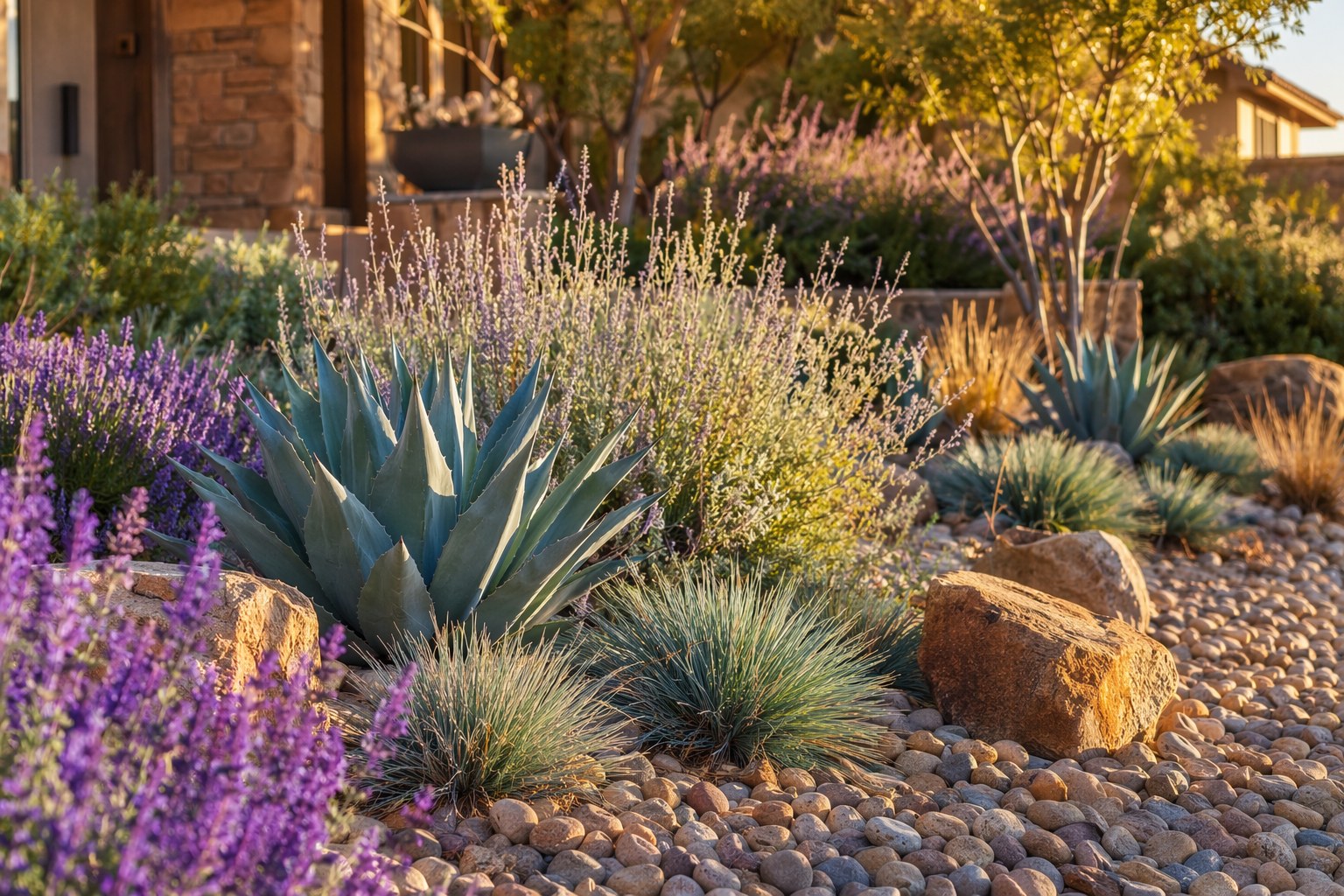
I garden in Central Texas, which means I learned about drought the hard way. My first summer here, I planted a bed of thirsty annuals in full afternoon sun, then watched the water bill climb past $90 in July while half of them crisped anyway. That was the season I went all-in on xeriscaping, and I have never looked back.
Here is the part people misunderstand: a low-water garden is not a yard full of gravel and three sad cacti. Done well, it is lush, colorful, full of bees and butterflies, and it shrugs off a 100-degree week without you standing out there with a hose at 9 p.m. The trick is choosing plants that evolved to handle dry spells, then designing around how water actually moves through your soil.
In this guide I will walk you through the eight plants I recommend most often, the design principles that make them thrive, and the irrigation setup that ties it all together. My goal is to help you cut watering by roughly half without sacrificing a thing on looks.
Why Drought-Tolerant Design Actually Saves Money
Let me give you the real numbers, because "save water" is vague. Outdoor watering accounts for 30 to 60 percent of a typical household's summer water use, and the EPA estimates as much as half of that is wasted to evaporation, runoff, and overwatering. In my own yard, converting two thirsty beds to drought-tolerant plantings dropped my July-August water use by about 4,000 gallons a month.
At my local water rate that is real money, and if your municipality charges tiered rates (where the price per gallon jumps once you cross a usage threshold), the savings compound fast. If you want to dig deeper into trimming that utility cost overall, I walk through the full breakdown in our guide to lowering your water bill.
There is a horticultural payoff too. Plants adapted to dry conditions tend to have deep root systems and waxy or fuzzy leaves that resist heat stress. That means fewer fungal problems (which thrive on constantly wet foliage), less staking, and far less of the wilting-and-reviving cycle that exhausts both you and the plant.
The 8 Best Drought-Tolerant Plants
I have grown every plant on this list personally, in heavy clay and in amended beds, and these are the ones that earn their spot year after year. I have noted the USDA hardiness zones so you can check what works where you live.
1. Russian Sage (Perovskia atriplicifolia)
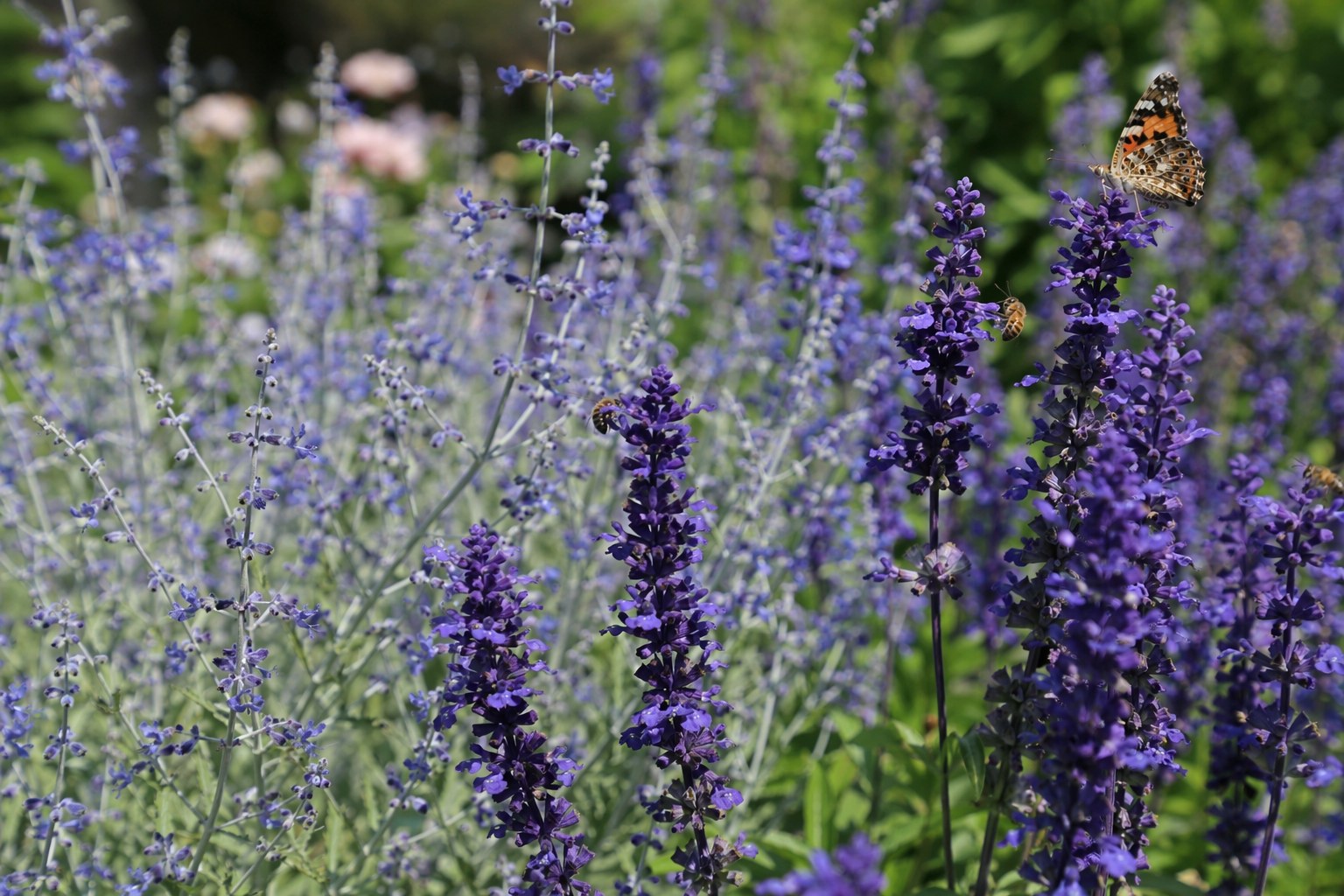
This is my desert-island plant. Russian sage throws up airy clouds of lavender-blue flowers from June through frost, attracts every pollinator in the neighborhood, and asks for almost nothing once established. It tops out around 3 to 4 feet, with silvery stems that look good even out of bloom. Zones 4 to 9. Cut it back hard in late winter and it comes back stronger.
2. Lavender (Lavandula)
Lavender is practically synonymous with Mediterranean dry gardens for good reason. The key with lavender is drainage, not water. It will rot in soggy soil but sail through a drought on sandy, gritty ground. Choose 'Phenomenal' or 'Munstead' for cold hardiness (down to zone 5). Bonus: deer and rabbits leave it alone, and it perfumes the whole bed.
3. Salvia (Salvia greggii and S. nemorosa)
Salvias are the workhorses of my beds. Autumn sage (Salvia greggii) blooms in red, pink, coral, and white nearly nonstop from spring to fall here in Texas, and the spike-flowered perennial salvias like 'May Night' are hardy to zone 4. Hummingbirds adore them. They want full sun and well-drained soil, and that is about it.
4. Yarrow (Achillea millefolium)
Yarrow gives you flat-topped flower clusters in yellow, white, salmon, and red atop ferny foliage. It tolerates poor soil, blazing sun, and neglect, spreading into a tough, weed-suppressing mat. Zones 3 to 9. Deadhead it and you often get a second flush of bloom. It is one of the best plants I know for a tough hell-strip between sidewalk and street.
5. Sedum (Stonecrop)
Succulent sedums store water in their fleshy leaves, which is exactly why they sail through dry spells. Upright 'Autumn Joy' gives you broccoli-like flower heads that shift from pink to rust and feed late-season bees, while creeping varieties carpet the ground and choke out weeds. Zones 3 to 9, and just about indestructible. A starter assortment is the cheapest way to fill a lot of square footage fast.
Succulent Plant Variety Pack (20 Plants)
An affordable mix of hardy sedums and succulents that lets you fill ground-cover gaps and rock borders without buying each plant individually.
Check Price on Amazon →6. Ornamental Grasses (Blue Fescue, Little Bluestem, Muhly Grass)
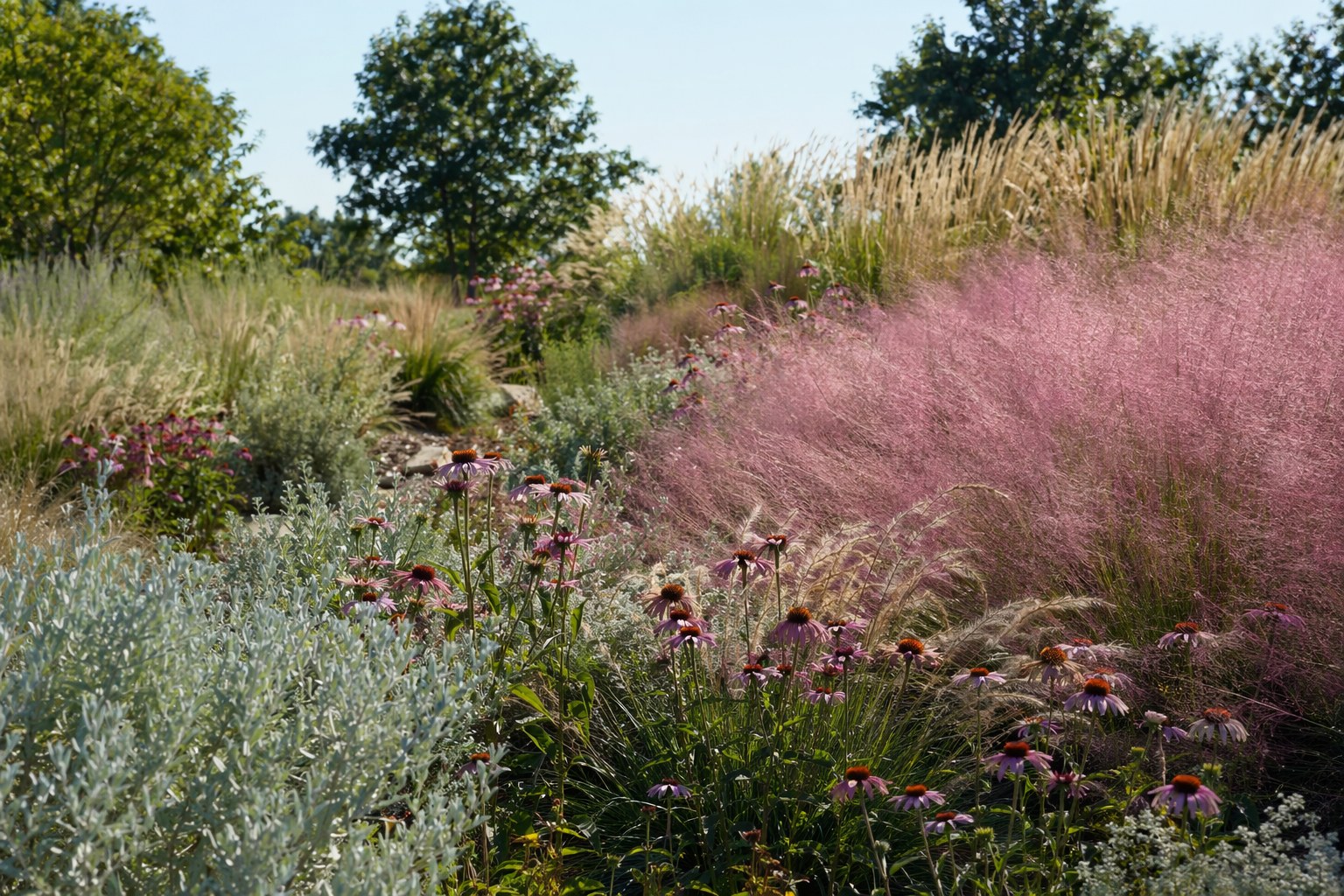
No drought garden is complete without grasses. They add movement, texture, and four-season structure, and most are extraordinarily water-thrifty once rooted. Blue fescue forms tidy silver-blue mounds; little bluestem turns coppery in fall; and pink muhly grass produces a cloud of rosy plumes in autumn that stops people in their tracks. Most are hardy to zones 4 to 9.
7. Coneflower (Echinacea)
Native purple coneflower brings long-lasting daisy-form blooms, drought toughness, and a buffet for goldfinches once the seed heads form. It handles clay better than most plants on this list and self-sows gently. Zones 3 to 8. I leave the seed heads standing through winter for the birds and the architectural interest.
8. Agave and Yucca (Architectural Anchors)
Every design needs a few bold focal points, and these spiky succulents deliver year-round structure with zero summer water once established. A single blue agave or a clump of red yucca (Hesperaloe) anchors a bed the way a piece of sculpture would. Match the species to your zone carefully (some agave are hardy only to zone 8, while yucca and Hesperaloe push into zone 5).
Designing the Garden: Hydrozoning and Soil
Plant choice is only half the equation. How you arrange and prepare the bed determines whether you actually save water.
Group Plants by Water Need (Hydrozoning)
The single most important principle in low-water design is hydrozoning: clustering plants with similar water requirements together. If you scatter a thirsty hydrangea among your sedums, you are forced to water the whole zone to keep the hydrangea alive, which drowns everything else and wastes the water you were trying to save.
Put your most drought-tough plants (agave, yucca, lavender) in the hottest, driest, farthest-from-the-hose spots. Reserve the few plants that want occasional summer water for a single zone near the house where they are easy to reach. This is the same logic I use when I plan an entire bed during spring garden preparation.
Fix the Soil and Improve Drainage
Most drought-tolerant plants fail not from drought but from wet feet in winter. If you have clay, work in 2 to 3 inches of coarse compost and, for the spikier succulents, a generous helping of decomposed granite or coarse sand to open up drainage. In a raised bed or on a slope, that excess water has somewhere to go.
A peat-free soil amendment is my preference here, both for drainage and to avoid the environmental cost of mined peat.
Peat-Free Garden Soil Amendment
A sustainable amendment that improves drainage in clay soils so drought-tolerant perennials and succulents don't rot over a wet winter.
Check Price on Amazon →Mulch Like You Mean It
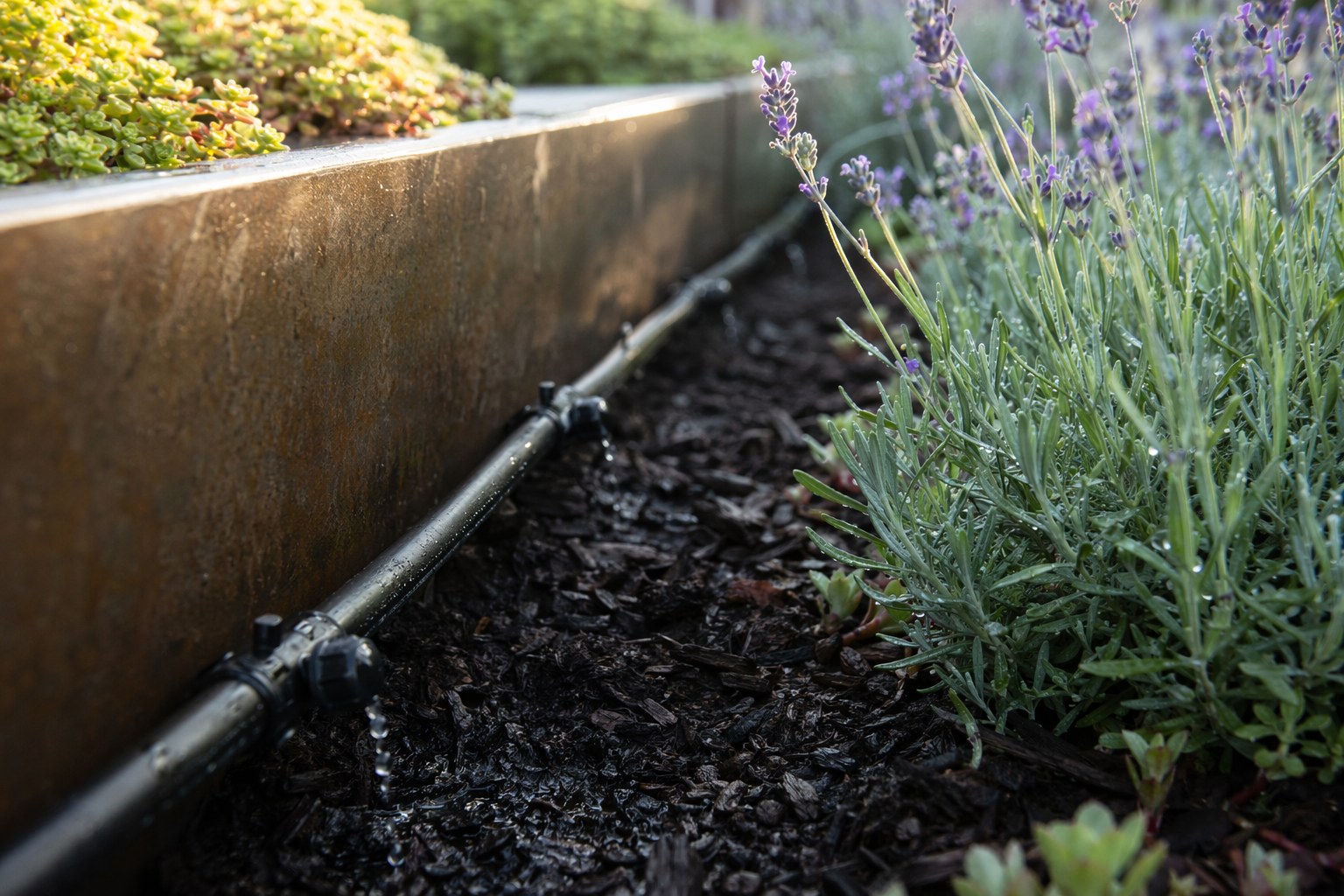
Mulch is your water budget's best friend. A 3-inch layer of mulch can cut soil-surface evaporation by 25 to 50 percent and keeps roots cool during heat waves. For most beds I use shredded bark, but around agave, yucca, and lavender I switch to a 2-inch layer of decorative river rock. Stone reflects heat, keeps the crown of these rot-prone plants dry, and never needs replacing.
Watering Smart: Drip Irrigation and the First Year
Here is the phrase to tattoo on your trowel: drought-tolerant does not mean drought-proof on day one. Even the toughest plant needs regular water for its first growing season while it builds the deep root system that lets it fend for itself later.
The Establishment Schedule
For the first full season, water deeply but infrequently. Deep, infrequent watering (a long soak once or twice a week) trains roots to grow down chasing moisture, while shallow daily sprinkling keeps roots lazy and near the surface where they fry. I water new plantings deeply twice a week for the first month, then taper to once a week, then once every two weeks by late summer. By year two, most of these plants need supplemental water only during extended drought.
Switch to Drip
Overhead sprinklers lose 30 percent or more of their output to evaporation and wind, and they wet foliage in a way dry-climate plants dislike. Drip irrigation delivers water straight to the root zone with almost no waste, and on a timer it runs in the cool early morning whether you are home or not. A basic kit is inexpensive and genuinely beginner-friendly to install with no tools.
Drip Irrigation Kit for Garden Hose
A no-dig, hose-connected drip system that targets water to plant roots and pairs with a timer to automate efficient early-morning watering.
Check Price on Amazon →A drip-and-timer setup is also what keeps a low-water garden thriving when you travel. I lean on the same approach in our guide to keeping plants alive while you are on vacation, and it works just as well for an established xeriscape as for a pot of basil.
If budget is a concern, watch the seasonal sales. Drip components, mulch, and starter plants all go on deep discount at the right times of year, and I round up the best timing strategies in our piece on saving money on yard and garden supplies.
A Quick Reference Chart
| Plant | Best Zones | Sun | Mature Size | Standout Feature |
|---|---|---|---|---|
| Russian Sage | 4-9 | Full | 3-4 ft | Long blue bloom, pollinators |
| Lavender | 5-9 | Full | 1-3 ft | Fragrance, deer-resistant |
| Salvia | 4-10 | Full | 1-3 ft | Hummingbird magnet |
| Yarrow | 3-9 | Full | 2-3 ft | Tough ground cover |
| Sedum | 3-9 | Full/part | 6 in-2 ft | Succulent, late bloom |
| Ornamental Grass | 4-9 | Full | 1-4 ft | Texture, movement |
| Coneflower | 3-8 | Full | 2-4 ft | Bird-friendly seed heads |
| Agave/Yucca | 5-10 | Full | 2-5 ft | Architectural anchor |
Can You Grow Edibles in a Low-Water Garden?
You can, and I do. Established Mediterranean herbs like rosemary, thyme, oregano, and sage are genuinely drought-tolerant and earn a permanent spot in the dry border. Vegetables are thirstier, but you can still grow them efficiently by giving them their own hydrozone, mulching heavily, and using containers with deep soil reservoirs. If you want a low-fuss edible that handles heat in a pot, our walkthrough on growing tomatoes in pots pairs nicely with drip irrigation and a thick mulch cap.
Frequently Asked Questions
How much water will a drought-tolerant garden actually save?
Most well-designed low-water gardens reduce irrigation by 40 to 60 percent compared to a conventional lawn-and-annuals landscape once plants are established. The savings come from three places: plants that need less water, drip irrigation that wastes almost none, and mulch that slashes evaporation. Your exact savings depend on climate, soil, and how thirsty your previous plantings were, but cutting summer outdoor use roughly in half is a realistic target.
Do drought-tolerant plants need any water at all?
Yes, especially in year one. Every plant on this list needs consistent water for its first growing season to develop the deep roots that make it self-sufficient later. After establishment, most need supplemental water only during prolonged drought or extreme heat, and some (like agave and yucca) may need none at all. The phrase "low-water" describes the established plant, not the brand-new transplant.
Will a xeriscaped yard look like a gravel desert?
Only if you design it that way. A thoughtful low-water garden layers flowering perennials, ornamental grasses, and silvery foliage into something lush and colorful that buzzes with pollinators from spring through fall. Gravel and stone are tools for drainage and accent, not the whole palette. My own front bed has more bloom, more wildlife, and more texture than the high-water yard it replaced.
What is the best mulch for a drought garden?
For most beds, a 3-inch layer of shredded hardwood or pine bark works beautifully and feeds the soil as it breaks down. Around rot-prone plants like lavender, agave, and yucca, switch to 2 inches of decorative river rock or decomposed granite, which keeps the plant crown dry and reflects less moisture-trapping warmth. Avoid piling any mulch directly against stems, which invites rot.
When is the best time to plant for low-water success?
Fall is ideal in most regions, because cooler air and warm soil let roots establish before summer heat arrives, and you get months of mild weather to taper off watering. Early spring is the next best window. Avoid planting in the heat of midsummer if you can help it, since new transplants are at their most vulnerable to heat stress before their roots go deep.
Your Garden, Built to Last
The beauty of a drought-tolerant garden is that it gets easier every single year. The first season takes some patience and attentive watering while roots dig in, but by year two you are largely a spectator, watching the bees work the salvia and the muhly grass catch the evening light, all while your water bill stays flat through the worst of the heat.
Start with a single bed. Pick three or four plants from this list that suit your zone, group them by water need, amend the soil for drainage, lay down a thick mulch, and run a simple drip line on a timer. Give it one good year of establishment, and you will have a landscape that looks better and costs less every summer that follows. That, to me, is the best kind of gardening there is.
Get weekly home tips that actually work
Join thousands of homeowners getting practical cleaning hacks, DIY fixes, and money-saving tips every week. Free, and you can unsubscribe anytime.

Written by
Sarah RodriguezGardening & Pet Care Contributor
Sarah Rodriguez is a certified Master Gardener and former veterinary technician. She lives on a half-acre lot in central Texas with three rescue dogs, two backyard chickens, and a very ambitious vegetable garden. She covers gardening, sustainable yard care, and everyday pet care for Practical Home Guides.
Recommended Products
Looking for specific product recommendations? Check out our tested picks.
Best Garden Kneelers and Seats (2026 Tested)
Gardening shouldn't wreck your knees and back. We tested kneelers, foldable seats, and rolling carts to find the picks worth the price.
Best Pruning Shears for Gardeners (2026 Guide)
We tested bypass and anvil pruning shears across roses, fruit trees, perennials, and tomato vines. Here are the picks worth your money — and the one to avoid.
Best Raised Bed Soil Mixes (2026 Buyer's Guide)
Bagged soil for raised beds is a minefield. We tested the top brands for vegetable yield, drainage, and value to find the soil mixes that actually grow food.
5 Best Garden Hose Nozzles and Sprayers (2026)
Find the perfect garden hose nozzle for watering plants, washing cars, and cleaning patios. We compared the top sprayers — here are the 5 best for every job.
Best Raised Garden Bed Kits You Can Order Online (2026)
The best raised garden bed kits for beginners and experienced gardeners. We compare wood, metal, and composite options with honest reviews and setup tips.
Related Articles
Pest Control Spring Refresh: Natural Solutions for Summer Prevention
Set up your garden's natural defenses now and you'll coast through summer. A master gardener's spring plan using companion planting, neem oil, and trap crops.
Summer Plants & Watering: Automate Your Garden While on Vacation
A master gardener's guide to automating summer watering with timers, drip lines, and moisture sensors so you can travel in June through August worry-free.
Herb Garden on Your Balcony: Fresh Basil to Cilantro in 4 Weeks
A master gardener's container herb system for apartments: the sunlight hack, watering schedule, and harvesting tricks to grow fresh basil to cilantro in 4 weeks.
End-of-Spring Yard Checklist: Prepare Your Garden for Summer Heat
A week-by-week end-of-spring yard checklist to harden plants, mulch beds, and prevent summer water stress before June heat hits. Master gardener tested.