End-of-May Home Audit: Fix 5 Summer Safety Issues Before June Heat
This article may contain affiliate links. If you make a purchase through these links, we may earn a small commission at no extra cost to you. Learn more
Quick Answer
End-of-May Home Audit: Fix 5 Summer Safety Issues Before June Heat
Before the first heat wave, run five checks: test every smoke and CO detector, label and inspect your breaker panel, test every kitchen and bathroom GFCI outlet, confirm your attic is actually venting, and install a water leak detector near your AC and water heater. The whole audit takes a Saturday morning and catches the failures that turn into emergency calls once the house is running flat-out in July.
I spent fifteen years as a licensed general contractor, and I can tell you exactly when I got the most desperate phone calls: the second week of real heat. Not the first warm day, the first stretch where the house never cools off overnight and everything is running at full load for days on end. That is when the weak link in a home finally snaps. The AC that limped through spring quits. The overloaded circuit that never tripped before starts tripping. The condensate line nobody flushed backs up and soaks the ceiling below the air handler.
The frustrating part is that almost none of it is a surprise. By the end of May you can find every one of those failures in about three hours, with tools most homeowners already own. This is the last-call audit I run on my own house every year before June. Five checks, four of them safety-critical, all of them cheap to fix now and expensive to ignore.
Why Late May Is the Deadline, Not a Suggestion
Heat is a stress test for a house. When the outdoor temperature climbs into the 90s and stays there, three things happen at once that don't happen the rest of the year.
First, your electrical system runs hot and heavy. Air conditioners, fans, dehumidifiers, and second fridges in the garage all pull hard simultaneously, and that's exactly when a marginal breaker, a backstabbed outlet, or a dead GFCI shows itself. Second, your cooling and plumbing systems run nonstop, so any small leak or clog that was a slow drip in April becomes active water damage. Third, summer is peak season for house fires from overloaded circuits and for carbon monoxide incidents from running generators and gas appliances in poorly ventilated spaces.
So the timing isn't arbitrary. You want these fixed before the systems are under load, not during. A breaker you can reset calmly on a 70-degree Saturday is a very different problem than one tripping every evening during a heat advisory with food in the fridge. Let's go through the five.
Check 1: Test Every Smoke and Carbon Monoxide Detector
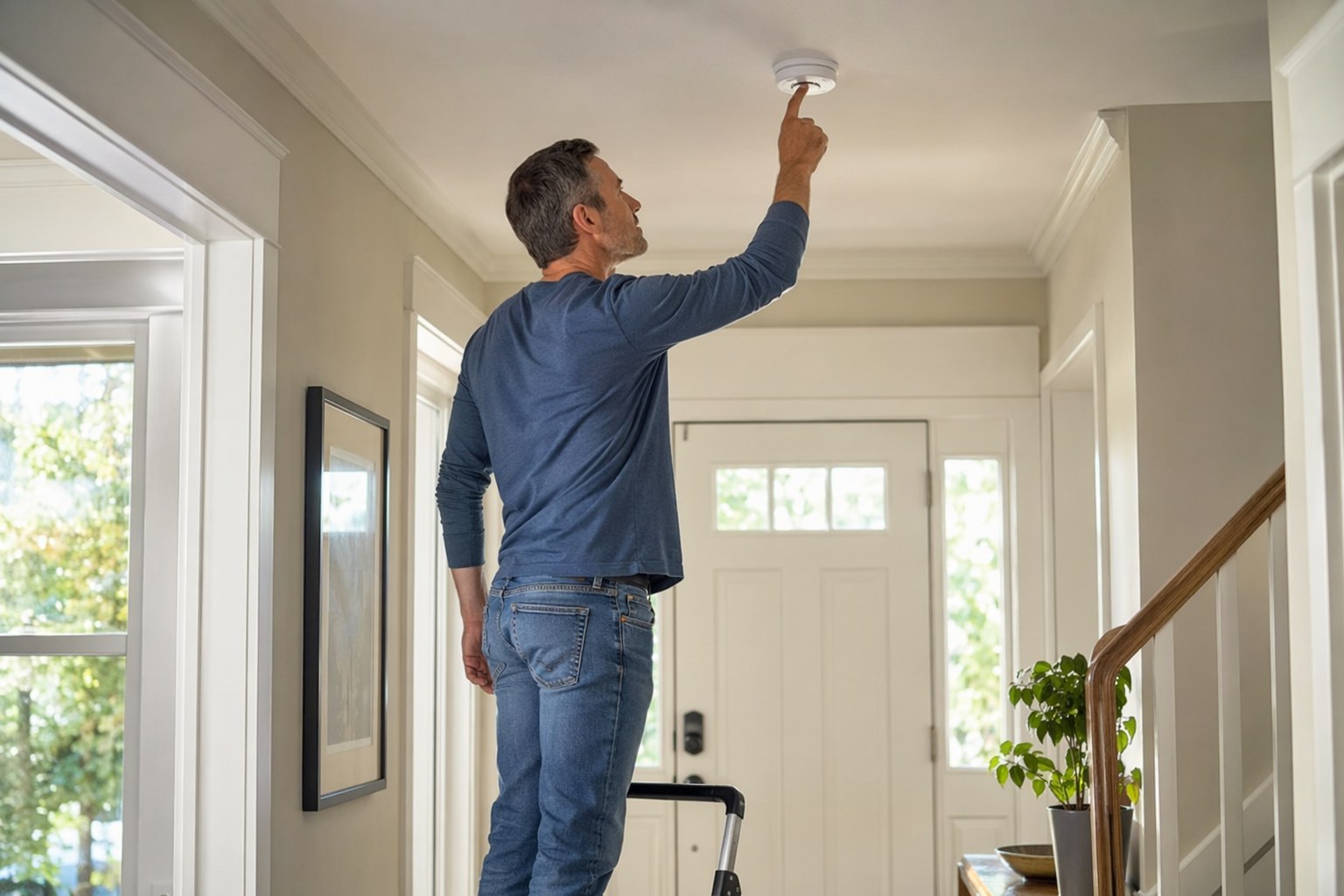
Start here because it's the cheapest insurance in the entire house and the one people skip most. Walk to every detector, press the test button, and confirm it sounds. A chirp on the test button only proves the horn works, though, not that the sensor does.
Here's the part most homeowners don't know: smoke and CO sensors expire. Smoke detectors are good for about 10 years from the manufacture date, CO detectors for 7 to 10. Flip the unit off the ceiling and look at the date stamped on the back. If it's older than a decade, it doesn't matter how fresh the battery is, the sensor itself is past its rated life and needs to be replaced, not re-batteried.
If you're replacing anyway, this is the year to stop buying the cheap units that demand a new 9-volt every spring. A hardwired detector with a sealed 10-year lithium backup eliminates the 3 a.m. low-battery chirp and the temptation to pull the battery and "deal with it later," which is how people end up with no protection at all.
Smoke Detector Hardwired 10-Year Lithium
A hardwired smoke alarm with a sealed 10-year lithium battery backup, so it keeps working through power outages without the annual battery swap and the 3 a.m. chirp.
Check Price on Amazon →Minimum coverage: one smoke alarm on every level, one inside each bedroom, one outside each sleeping area, and a CO detector on every level and near attached garages or gas appliances. If you're short, you can find an interconnected smoke and CO combo unit on Amazon that handles both in one box.
Check 2: Label and Inspect Your Breaker Panel
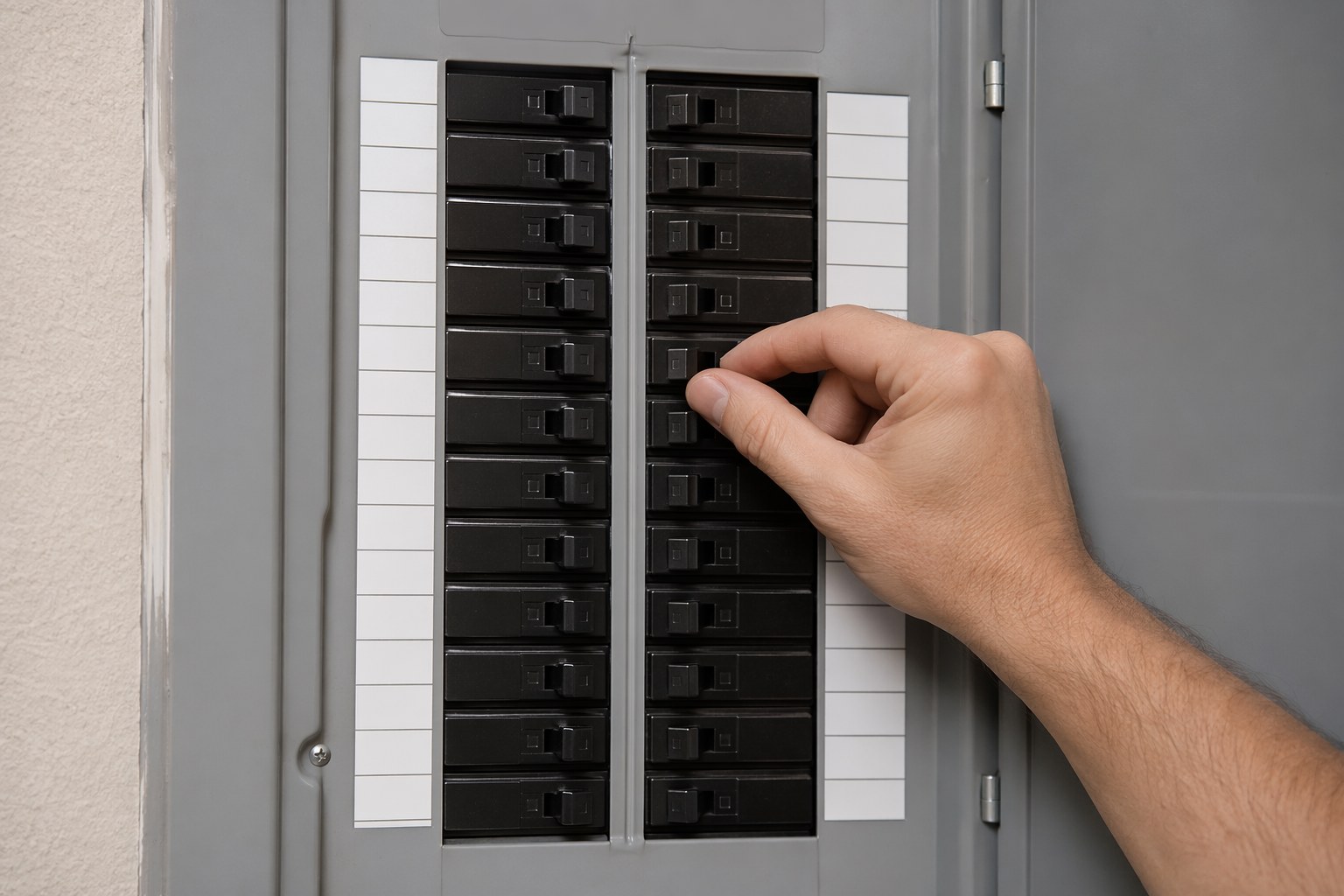
Open your electrical panel and answer one question: if a breaker tripped right now during a storm, could anyone in the house find the right one in the dark? In most homes the labels are faded, wrong, or were never filled in. That's a safety problem, not just an annoyance, because the whole point of a panel is to shut off a specific circuit fast in an emergency.
Spend twenty minutes mapping it. Have someone watch a lamp or plug-in radio while you flip breakers one at a time, and write down what each one actually controls. Use a real label kit, not a Sharpie scrawl that smears, so the next person, an electrician, a future buyer, you in five years, can read it instantly.
Circuit Breaker Label Kit Safety
A printed, peel-and-stick label kit that maps every breaker to its room or appliance, so the right circuit can be shut off in seconds during an emergency.
Check Price on Amazon →While the panel is open, look, don't touch, for warning signs: a burnt or melted-plastic smell, scorch marks or discoloration around any breaker, rust or water staining, or breakers that feel warm. Any of those means you call a licensed electrician, not reach in. Working inside a live panel is one of the jobs I tell people to never DIY, the same line I draw in my breakdown of which home projects to do yourself versus hire out. Labeling is yours. Repairs in the panel are theirs.
One more summer-specific note: if you have breakers that trip when you run the AC plus a window unit plus the microwave, that circuit is overloaded. Note it now and have it evaluated before the heat forces the issue.
Check 3: Test Every GFCI Outlet
GFCIs, the outlets with the little TEST and RESET buttons, are the devices that shut off power in a fraction of a second when current leaks to ground, which is what saves you from electrocution near water. Code requires them in kitchens, bathrooms, garages, laundry rooms, and all exterior outlets. The problem: they wear out silently. A GFCI can look perfectly normal and have a dead protection circuit, meaning you've got a regular outlet by a sink with none of the safety.
This matters more in summer because that's when you're using outdoor outlets for pumps, pressure washers, string lights, and pool equipment, often with wet hands or wet ground.
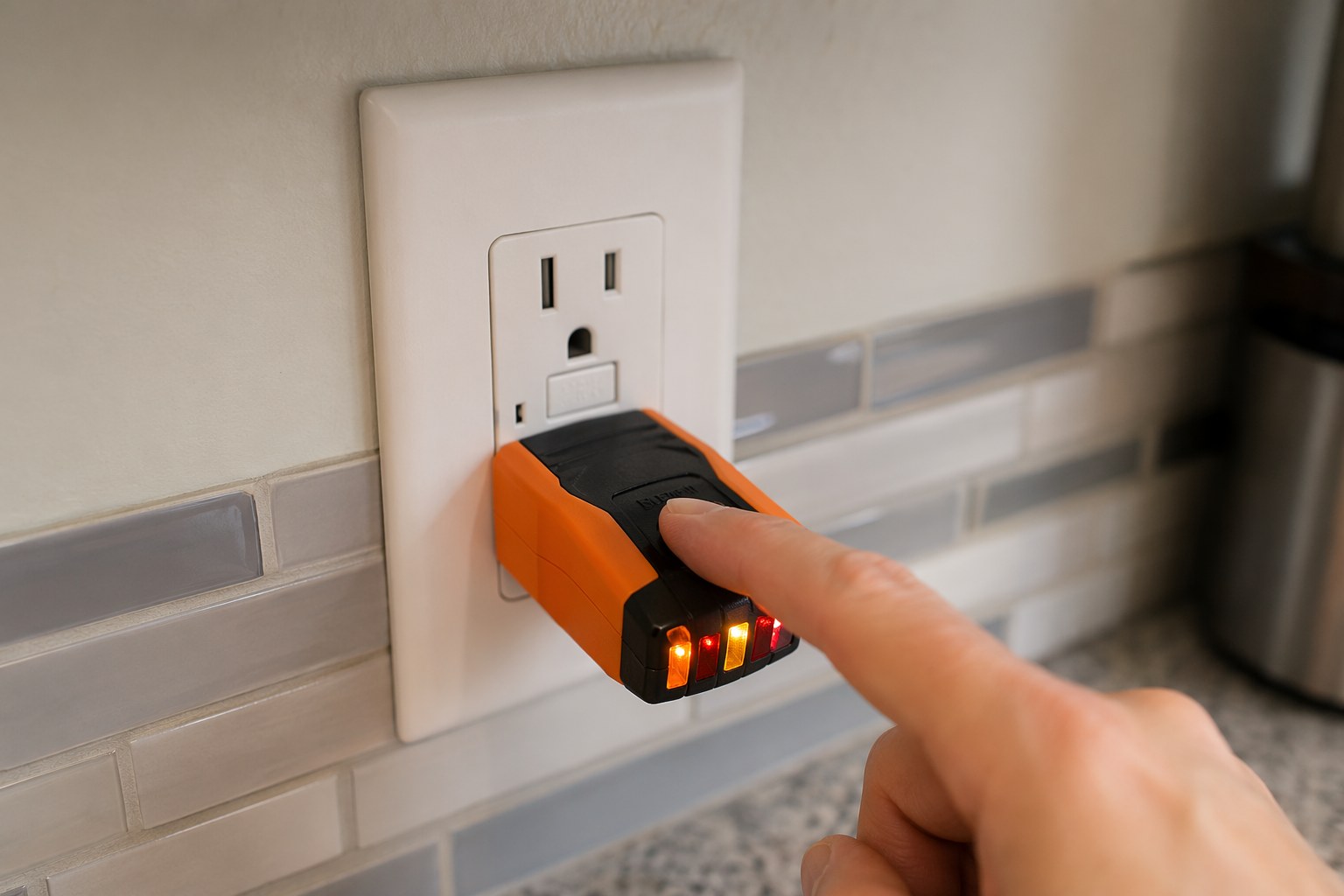
Test them two ways. First, press TEST on each GFCI, confirm the RESET pops out and the outlet goes dead, then press RESET to restore it. If pressing TEST does nothing, the device is bad and needs replacing. Second, and better, use an inexpensive outlet tester with a GFCI trip button. Plug it in, hit the button, and a properly working GFCI cuts power instantly. The same tester also flags miswired outlets, an open ground, reversed hot and neutral, exactly the hidden faults that bite you when you start plugging heavy summer loads into circuits you never used hard before.
GFCI Outlet Tester Outlet Safety Checker
A plug-in tester that verifies GFCI trip function and detects open grounds, reversed wiring, and other faults in seconds, no tools or wiring knowledge needed.
Check Price on Amazon →Replacing a dead GFCI is a genuine DIY job if you're comfortable shutting off the breaker and confirming the power is off first, the same skill level as a standard light switch replacement. If you're not confident the circuit is dead, stop and call a pro.
Check 4: Confirm Your Attic Is Actually Venting
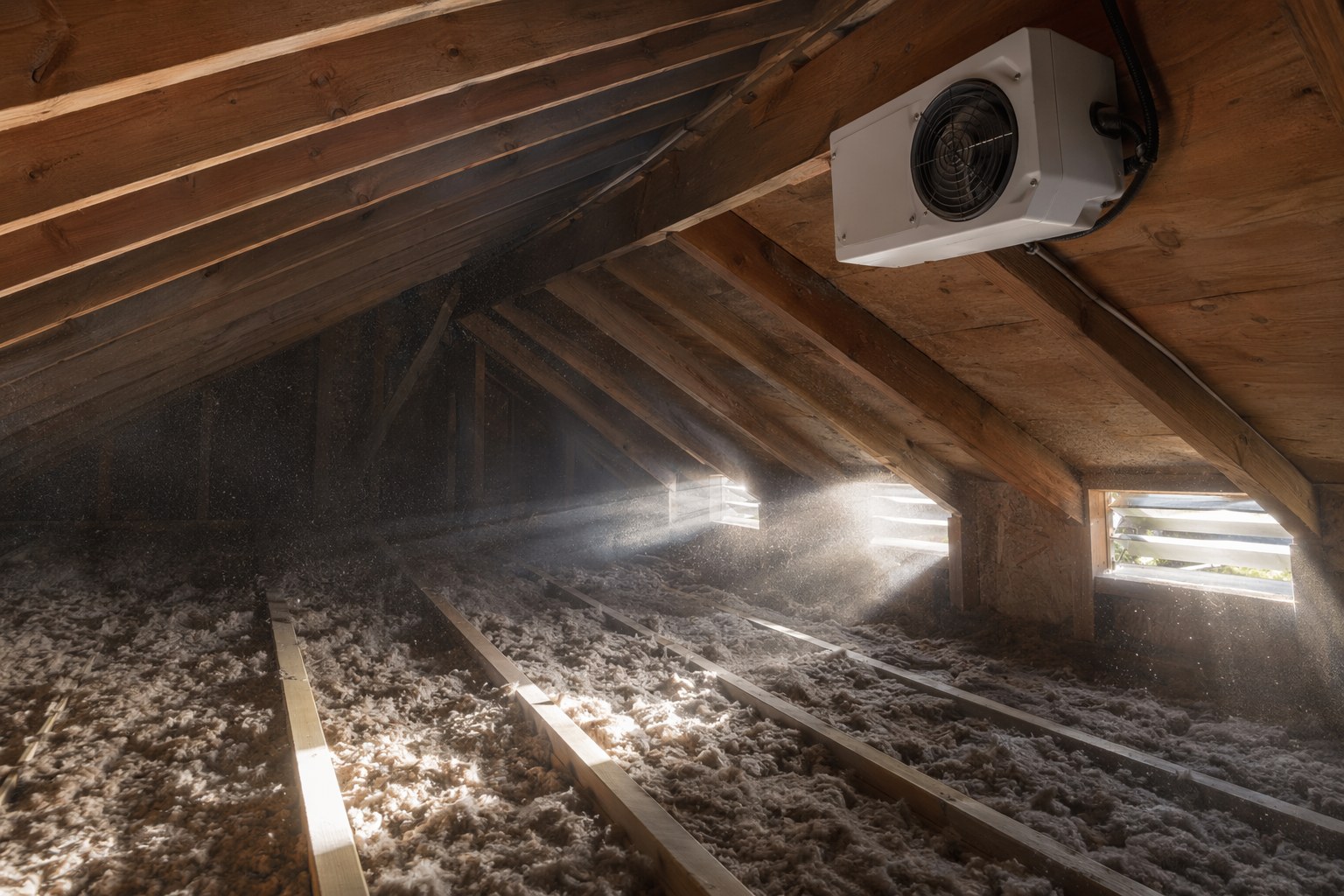
This is the one homeowners forget, and it quietly drives up both your cooling bill and your roof's wear. On a 95-degree afternoon, a poorly vented attic can hit 140 to 160 degrees. That heat radiates down through the ceiling, makes your AC run far longer than it should, bakes your shingles from below, and traps moisture that feeds mold.
Do a quick assessment. On a hot afternoon, carefully put your head into the attic. If it feels like an oven and the air is dead still, your ventilation isn't keeping up. Look for blocked soffit vents, insulation shoved tight against the eaves cutting off the intake, or a ridge vent that's painted over or obstructed. Clearing blocked soffits is often a free fix that makes an immediate difference.
If passive venting isn't enough, an attic fan, a thermostatically controlled exhaust that kicks on when the attic gets hot, pulls the superheated air out and pulls cooler air in through the soffits. It's a meaningful reduction in attic temperature and a direct help to a struggling AC.
Attic Ventilation Fan Installation Kit
A thermostat-controlled attic exhaust fan kit that pulls superheated air out of the attic, lowering ceiling temperatures and easing the load on your air conditioner.
Check Price on Amazon →Good attic ventilation is half the cooling battle; the AC itself is the other half. If you haven't already done it, pair this with my full spring AC tune-up checklist and the deeper June AC maintenance walkthrough, because a vented attic and a clean condenser working together are what keep your system from dying in the first heat wave.
Check 5: Put a Leak Detector Where Summer Leaks Start
The most common summer water damage I got called for didn't come from a burst pipe, it came from the AC. The condensate drain line clogs with algae, the drain pan overflows, and water quietly soaks the ceiling or floor below the air handler for days before anyone notices. Water heaters pick summer to fail too, and a slow tank leak in a closet can rot a subfloor before you ever see a puddle.
The fix is dead simple. A battery-powered smart water leak detector sits on the floor by the AC drain pan, under the water heater, beneath the washer, or near the sump pit, and screams the moment its sensor touches water. The smart versions also push an alert to your phone, which is the whole point when the leak starts while you're at work or away for a summer weekend.
Smart Water Leak Detector with Alarm
A battery-powered sensor that sounds a loud local alarm and sends a phone alert the instant it detects water, ideal for AC drain pans, water heaters, and washers.
Check Price on Amazon →While you're down there, flush the AC condensate line with a cup of white vinegar through the access port, the five-minute step that prevents most of these clogs. And if you've got a slow drip elsewhere making itself known, summer's higher water use is a good reason to knock out that nagging leaky faucet repair now rather than watch the bill climb. Detectors near your outdoor spigots and hose connections are worth it too, since that's where summer leaks hide once the deck and patio season has everything running.
The Saturday-Morning Audit, Start to Finish
Here's the whole thing on one page so you can knock it out in order:
| Check | Time | Tool | The fix it prevents |
|---|---|---|---|
| Smoke/CO detectors | 20 min | Step stool | Sensor dead past its 10-year life |
| Breaker panel | 30 min | Label kit, helper | Can't kill a circuit in an emergency |
| GFCI outlets | 20 min | Outlet tester | No shock protection near water |
| Attic ventilation | 30 min | Flashlight | 150-degree attic killing your AC |
| Leak detectors | 20 min | Detectors, vinegar | Ceiling soaked by a clogged AC line |
None of this is glamorous, and none of it is hard. But the difference between a homeowner who sails through July and one who's making frantic calls is almost always one of these five things, caught in May instead of discovered in August.
Frequently Asked Questions
How do I know if my smoke detector is too old to trust?
Take it off the ceiling and read the manufacture date stamped on the back. Smoke detectors are rated for about 10 years and CO detectors for 7 to 10. Past that date, replace the whole unit, the sensor degrades regardless of battery health. A fresh battery in an expired detector is not protection.
Is it safe to test and reset my own breakers?
Yes. Flipping a breaker off and on, and labeling the panel by watching what each circuit controls, is normal homeowner territory. What you should never do is reach inside the panel to touch wiring, bus bars, or a breaker that's warm, scorched, or smells burnt. Those are signs to call a licensed electrician immediately.
Why does my GFCI outlet need testing if it still gives power?
Because a GFCI can supply power normally while its life-saving protection circuit is dead. The only way to know it'll actually cut power during a ground fault is to press the TEST button or use a plug-in GFCI tester and confirm the outlet trips. Do this at least twice a year, more for outdoor outlets.
How hot should my attic get in summer, and when do I need a fan?
A well-vented attic typically runs 10 to 20 degrees above the outdoor temperature. If yours feels like an oven and the air is still on a hot day, your venting isn't keeping up. First clear blocked soffit vents and pull insulation back from the eaves; if that isn't enough, add a thermostat-controlled attic exhaust fan.
Where exactly should I place water leak detectors?
The highest-payoff spots are the AC air handler's drain pan, under or beside the water heater, behind the washing machine, near the sump pit, and under any sink with a history of drips. These are where summer's heavy cooling and water use cause the leaks that do the most hidden damage.
The Bottom Line
Extreme heat doesn't create new problems in a house so much as it exposes the ones already there. Every failure I ever got called for in July was sitting in plain sight in May, a dead detector, an unlabeled panel, a worn GFCI, a baking attic, a clogged AC drain. Give the audit one Saturday morning before June. Test the alarms, label the panel, check the GFCIs, get air moving through the attic, and drop a leak detector where the water starts. It's a few hours and under a couple hundred dollars in parts, and it's the difference between watching the heat wave from a comfortable chair and dialing an emergency number with sweat running down your back.
Get weekly home tips that actually work
Join thousands of homeowners getting practical cleaning hacks, DIY fixes, and money-saving tips every week. Free, and you can unsubscribe anytime.

Written by
Marcus ChenDIY & Home Repair Editor
Marcus Chen spent fifteen years as a licensed general contractor in the Pacific Northwest before joining Practical Home Guides full time. He specializes in plumbing, electrical, and weekend warrior projects that save homeowners thousands. Marcus has personally tested every tool he recommends in his own century-old fixer-upper.
Recommended Products
Looking for specific product recommendations? Check out our tested picks.

Best Cordless String Trimmers (2026 Tested)
Battery-powered string trimmers have caught up to gas. We tested the top models on bermuda, fescue, and overgrown areas to find the picks worth your money.
Best Basement Dehumidifiers (2026 Buyer's Guide)
Damp basements destroy stored items, grow mold, and stink. We tested dehumidifiers for capacity, durability, and energy use to find the picks worth the money.

Best Wet/Dry Shop Vacs (2026 Tested)
Whether you need to clean a flooded basement, dust the garage, or pick up workshop debris, here are the wet/dry shop vacs worth the money.

Best Electric Leaf Blowers (2026 Buyer's Guide)
Cordless and corded electric leaf blowers tested for power, runtime, and noise. Our picks for small yards, large yards, and pro-grade home use.

Best Cordless Lawn Mowers (2026 Spring Buyer's Guide)
Battery-powered mowers have caught up to gas. We tested the top cordless mowers on grass length, slopes, and runtime to find the picks worth your money.

5 Best Cordless Drills for Homeowners (2026)
Find the right cordless drill for home projects without overspending. We compared the top drills for DIYers — here are the 5 best for everyday home use.

Best Home Tool Kits for Beginners (2026)
The best home tool kits for new homeowners and renters. We compare 6 tool sets from basic to comprehensive, so you can handle common repairs without calling a handyman.
Related Articles

Cordless vs. Corded vs. Pneumatic: The Homeowner's Tool System Buying Guide
Cordless, corded, or pneumatic? A homeowner's guide to choosing a power tool ecosystem (DeWalt, Milwaukee, Makita, Ryobi) with a starter-to-advanced path.

Backyard Lighting Design: Create Ambiance for Summer Evenings
An electrician's guide to safe backyard lighting design. Layer string lights, path lights, and uplighting in zones for ambiance plus task lighting that lasts.

Budget Outdoor Dining: Building a Patio Table & Bench Setup
A carpenter's plans for a sturdy 2x4 outdoor dining table and bench set that seats 8, costs about 300 dollars in materials, and lasts 20 years.

Grilling Season Setup: Build the Perfect Backyard Cook Station
A contractor's guide to a backyard grill station setup for outdoor cooking: gas hookup, clearances, ventilation, and a prep counter so you cook cool and safe all summer.